
News
Global economy dangerously close to a recession: World Bank

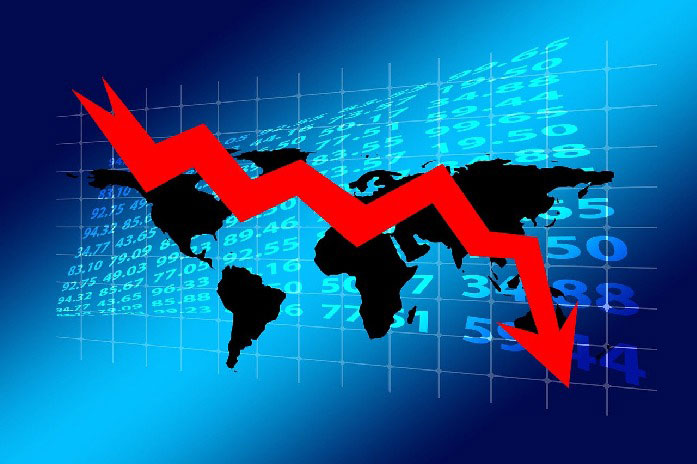
The global economy is “dangerously close” to a recession, as inflation remains elevated, interest rates rise, and growing debt burden hits the developing world, World Bank President David Malpass said.
“We’ve lowered our 2023 growth forecast from 3 per cent to 1.9 percent for the global growth, that’s dangerously close to a world recession,” Malpass said at a press conference during the IMF and World Bank annual meetings on Thursday.
“All of the problems that people have taken note of, the inflation problem, the interest rate rises, and the cutoff of capital flow to developing world hit the poor hard,” he said, highlighting the buildup of debt for developing countries.
“That’s a world recessions could happen under certain circumstances,” Malpass said.
In a study published in mid-September, the World Bank warned that as central banks across the world simultaneously hike interest rates in response to inflation, the world may be edging toward a global recession in 2023, with a growth forecast of only 0.5 per cent, reports Xinhua news agency.The World Bank chief noted at the press conference that world population growth is estimated at 1.1 per cent per year.
“So if you get much slower in terms of world growth, that means people are going backward,” Malpass said in response to a question from Xinhua.
Citing a recent World Bank report, Malpass said that the Covid-19 pandemic dealt the biggest setback to global poverty-reduction efforts since 1990, pushing about 70 million people into extreme poverty in 2020, and the war in Ukraine threatens to make matters worse.According to the Poverty and Shared Prosperity Report, global median income declined by 4 per cent in 2020, the first decline since its measurements of median income began in 1990.
“So if we have a world recession now, that would also depress median income, meaning that the people in the lower half of the income scale are going down,” Malpass said.The World Bank chief also noted that he has been concerned about the concentration of capital in the world in the top end of the advanced economies.
“So that’s, I think, one of the issues that the world has to deal with to allow capital to flow to new businesses and to developing countries, that would take a change in the direction of fiscal and monetary policies in the advanced economies,” said Malpass.
The world is facing very challenging environment from the advanced economies, and that has serious implications, dangers for the developing countries, he said.
“My deep concern is that these conditions and trends might persist into 2023 and 2024.”









The Ministry of Industries and Entrepreneurship Development has recommended the establishment of Sri Lankan Standards, i.e. the import testing methodology for imported tires used for passenger cars and pneumatic tires for three-wheelers with the aim of ensuring a fair competitive environment for local
manufactures and ensuring consumer safety and security.
Taking into the said recommendations, “Import and Export (control regulations N0.08 of the 2026)” has been enacted to amend the existing regulations by means of the Extraordinary Gazette Notification No. 2508/27 dated 2026-10-01, prescribing Sri Lanka standard 1212 for the import of passenger types (HS Code 4011.10.90) and Sri Lanka standard 1347 for the import of
pneumatic tires for three – wheeled vehicles (HS Code 4011.90.10).
Accordingly, the Cabinet of Ministers has approved the resolution furnished by the President in his capacity as the Minister of Finance, Planning, and Economic Development to submit the aforementioned regulations to Parliament for approval.
Approval of the Cabinet of Ministers was granted at their meeting held on 02.06.2025 to introduce a new act to promote and providing legal provisions for facilitating the Public Private Joint Enterprises within Sri Lanka as well as the establishment of the National Agency for Public Private Partnership Joint Enterprises.
Accordingly, the Legal Draftsman has formulated the relevant draft bill and the Attorney General has given his clearance to the said draft bill.
The Cabinet of Ministers approved the resolution furnished by the President in his capacity as the Minister of Finance, Planning and Economic Development to publish the said
draft bill in the government gazette notification and thereby submit it to the Parliament for its concurrence.
Regulation, development and control of indigenous medical sector in Sri Lanka comprised of Ayurvedha, Sidhdha, Unani, Local Therapies are carried out under the provisions of Ayurvedha Act No. 31 of 1961.
Although amendments were made to the act from time to time as per the requirements, the necessity of further amending the Ayurvedha Act has been identified to enable efficiently maintaining all activities of local medical field productively, further formalizing the regulation of the sector, taking actions to providing licenses applicable to export of local medicines, and achieving the progress and sustainable development goals in the local medical sector.
Based on the said factors, the Cabinet of Ministers granted approval to the resolution furnished by the Minister of Health and Mass Media to direct the Legal Draftsman to formulate a draft bill to amend the Ayurvedha Act No. 31 of 1961.

Import and Export (Control) Regulations No. 08 of 2026
Draft Bill of the Public Private Partnership Enterprises Act to be gazzetted
Amendment of the Ayurvedha Act No. 31 of 1961

Cabinet nod to amend the Sri Lanka Development Administration Institute Act No. 9 of 1982
Establishment of the National Higher Performance Centre
State patronage for the cremation ceremony of the late deputy prelate (Anu Nayaka Thero) of the Sri Laka Ramangya Maha Nikaya, Gatambe Rajopawanramadhipatha, Siri Chandawimala Wanshalankara, Chandrakeerthi Sri Amarawansha, Sadhdharmawageeshwara, Shasanashobhanna Most Venerable Keppetiyagoda Siriwimalabhidhana Thero

‘Dates have the highest sugar content to fight Coronavirus’

Sunday Island 27 December – Headlines

#SundayIsland 17th December – Headlines

Sunday Island – 28th March

Sunday Island Headlines – 21 March

Sunday Island – 21st February – Headlines
-

 Features3 days ago
Kotahena:A Small Enclave, An Extraordinary Legacy
-

 News7 days ago
Sri Lanka, India caught in US-Iran ship crisis
-
 News4 days ago
Asgiri Mahanayake calls for immediate release of Gnanasara Thera
-

 News3 days ago
Record 1,600 students take Russian Classical Ballet examination in Sri Lanka
-
 News6 days ago
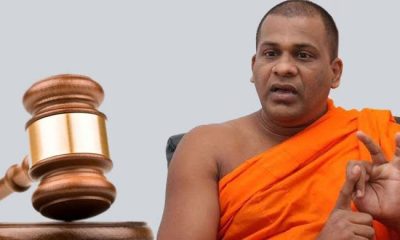
AC President recuses himself from hearing prison attire case pertaining to Gnanasara Thera
-
 News5 days ago
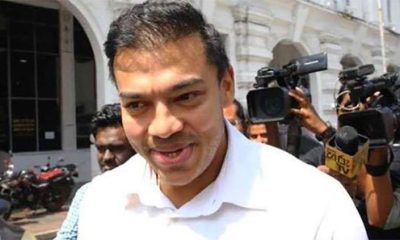
Naval officer testifies Yoshitha received Rs. 5.15 mn in salaries during SLN service
-

 Latest News7 days ago
Heavy showers above 100 mm are likely at some places in the Western, Sabaragamuwa, Southern, Central, and North-western provinces and in Anuradhapura district.
-

 News3 days ago
Karannagoda pushed for £24,536 for Yoshitha’s UK training, Court told