
News
Three out of every four young Indians choose video dating to find love

BY S VENKAT NARAYAN,
Our Special Correspondent
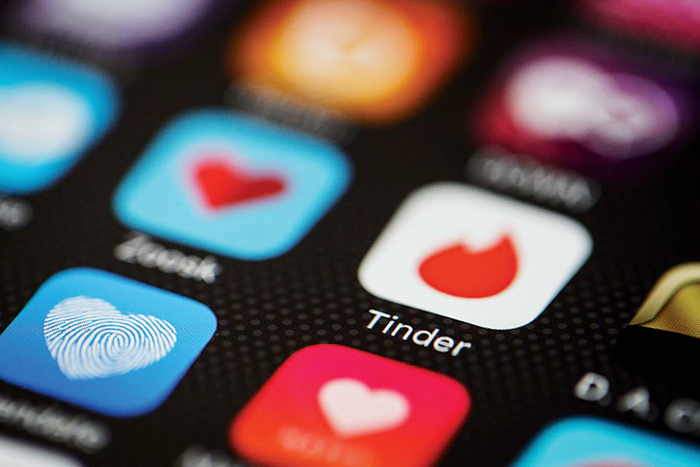
NEW DELHI, October 1:More and more young Indians, even in small towns, are relying on dating apps to find love and companionship. They are choosing video calls over in-person dating to know each other. The surge in usage is especially strong outside metro cities, which now account for 70% of users of the dating apps such as Tinder, Bumble and TrulyMadly, company executives said.Cities such as Ahmedabad, Surat, Lucknow, Jaipur, Chandigarh and Patna are seeing a significant surge in usage, catching up with the country’s major cities.
With virtual dates becoming a norm, a substantial number of women are now becoming more vocal on dating platforms.Nearly 72% of users believe finding love online without meeting them in person is possible, the executives at dating apps said.
“The distinction between our online and offline world is blurring. As a result, the time spent online is on the rise,” said Shalini Singh, founder of Andwemet, a dating service for 25-plus single Indians that has seen its user-base triple annually in the past two years.
Singh said there is more trust in online platforms in the post-pandemic era, and people are willing to pay for the convenience of online dating.Usage in these cities has also been boosted with many moving to their hometowns from metros after the pandemic, she said. Dating apps are attracting affluent users even in small-town India.
According to Tinder’s Year in Swipe 2021, video dates have become a first-date staple for singletons, with mentions of ‘video call’ in Tinder bios growing by 52% globally.
Many Indians took to video dating on Tinder, where Hyderabad reigned supreme as the chattiest city, followed closely by Chennai and Bengaluru. Yet, young adults were also looking to make a connection with new people close to them for real-life hangouts with ‘nearby’ and ‘close by’, both increasing by 20% in Tinder bios globally, showing that real-world dating isn’t going out of fashion anytime soon.
“As we shift back to IRL (in real life) dating in 2022, the trends of last year are guiding the way India’s young adults navigate the world of dating, friends, connections and relationships,” said Papri Dev, senior director, APAC communications lead, Tinder Inc.
Snehil Khanor, co-founder and chief executive officer of TrulyMadly, said that most first dates are still on video, and if things work out, users plan an offline date.Sybil Shiddel, country manager for Gleeden, a platform designed for extramarital relationships, said during the pandemic, a large part of its user base found virtual exchanges satisfying.
“They were happy with having found companionship and that their online exchanges allowed them to unwind, laugh, flirt and sext without putting them at risk. Time spent on the app has tripled,” Shiddel said.
“In 2022, when the ghost of the pandemic is no longer lingering above our heads with the same strength as previous years, Indian users still spend an average of 3.5 hours chatting,” Shiddel said. Before March 2020, most Gleeden users came from Delhi, Bengaluru, Kolkata, Mumbai, Ahmedabad and Chennai.
During 2020, 2021 and the first part of 2022, the maximum traction was seen from Gurugram (currently the platform’s No. 5 city), Chandigarh, Kochi, Jaipur, Lucknow, Noida, Nagpur, Indore, Navi Mumbai, Burdwan, Howrah and Thane.
Agreeing that video calls are now a part of the screening process before an in-person date, Able Joseph, founder and CEO of dating app Aisle, said casual hook-ups may be on a slow decline. “Loneliness—coupled with a few years of uncertainty—has led to a certain sense of collective fatigue that’s developed in the Indian dating landscape. Singles are found moving away from the endless loop of swiping across dating platforms and are now looking for more substance in a relationship,” Joseph added.
Since the majority of the new users are signing up from smaller towns and cities, with limited matches in their location, they are looking online for suitable partners across the country, said Ravi Mittal, founder and CEO of dating service QuackQuack, which has seen an 11% jump in female users.Samarpita Samaddar, India communications director at Bumble, said the pandemic has made “more than half of us (62%)” realize that it’s okay to be alone for a while.
“People are consciously deciding to be single, with the majority of single people (54%) being more mindful and intentional in how and when they date,” she said.
A nationwide survey conducted in 2021 showed that after the second covid wave in India, emotional connection (60%) and kindness (55%) top the charts as being the most important to single Indians in dating, Samaddar said.
“Social good in terms of volunteering, donating to social causes (48%) especially rank high in preferences for millennials in India,” she added.

News
Introduction of Flora and Fauna (Regulation of actions of the Indigenous Community within the nominated areas) Regulations


With the objective of securing the traditional livelihood and the eco system of the indigenous community, it has been recognized the necessity of introducing a formal regulation methodology to secure their engagement in livelihood activities by being more sensitive to the existing laws.
Thereby, the Fauna and Flora (regularizing) regulations under the Fauna and Flora Protection Ordinance (Authority 469) have been prepared so that nominated activities within the prescribed area to a member of the indigenous community
who has been registered for securing the rights acquired from law or custom or usage or traditional stance to execute an act within a certain state land that is fundamental to the survival of the indigenous community permission can be granted
Accordingly, the Cabinet of Ministers granted approval to the resolution furnished by the Minister of Environment to publish the said regulations in the government gazette notification and thereby submit to the Parliament for its concurrence.
Latest News
M. M. D. J. Senarathne, appointed Director General of the Department of National Botanical Gardens
The Cabinet of Ministers approved the resolution furnished by the Minister of Environment to appoint M. M. D. J. Senarathne, who is the senior most officer in Grade I of Sri Lanka Scientific Service se
President Anura Kumara Dissanayake has appointed Air Chief Marshal Kolitha A. Gunathilake (Retd.) as the new Chancellor of General Sir John Kotelawala Defence University.
The letter of appointment was presented to Air Chief Marshal Kolitha A. Gunathilake (Retd.) by Secretary to the President Dr Nandika Sanath Kumanayake at the Presidential Secretariat on Monday (05) afternoon.
Air Chief Marshal Kolitha A. Gunathilake(Retd.) has served as Commander of the Sri Lanka Air Force and as Chief of Defence Staff.
(PMD)

Introduction of Flora and Fauna (Regulation of actions of the Indigenous Community within the nominated areas) Regulations
M. M. D. J. Senarathne, appointed Director General of the Department of National Botanical Gardens

Harmanpreet Kaur steps down as India captain

Turkiye, Pakistan agree Saudi Arabia military deployment under Mecca pact

Rumesh Tharanga among nominees announced for World Athlete of the Year 2026
New Chancellor appointed to General Sir John Kotelawala Defence University

‘Dates have the highest sugar content to fight Coronavirus’

Sunday Island 27 December – Headlines

#SundayIsland 17th December – Headlines

Sunday Island – 28th March

Sunday Island Headlines – 21 March

Sunday Island – 21st February – Headlines
-

 Latest News7 days ago
Gold winner Tharanga gets brand-new Honda Vezel from SLAAJ
-

 News6 days ago
US-assisted ‘Ice’ detection: NPC to examine IGP’s move to transfer drug-busting team
-

 Features7 days ago
Why Sri Lanka needs an Inclusive Civic Nationalism – urgently
-

 Editorial5 days ago
Colombo Port drug bust: The plot thickens
-

 News7 days ago
Civil society activist accuses govt. of favouring Ven. Gnanasara
-
 Midweek Review7 days ago
Dappula’s Easter Sunday ‘grand conspiracy’ claim demolished
-

 Editorial7 days ago
When crime bosses rise above law and shrines
-
Editorial6 days ago
Drug busting, transfers and trust deficit