
News
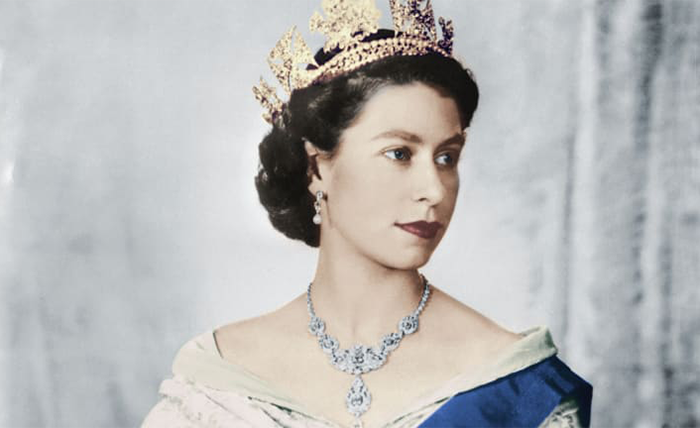
Bidding the Queen goodbye in typical British fashion!

By Dr Upul Wijayawardhana
Brits are known the world over for one thing––queueing, which they have developed to a fine art, the very antithesis of what we do in Sri Lanka! Perhaps, we lack the discipline of the British. Though Britain was once a society that depended on trust and honesty, unfortunately, it is no longer so, winds of change having had the adverse effect of moral degradation, not only in Britain but globally, too. But, if there is one thing that has not changed in Britain, it is queueing. Interestingly, even immigrants seem to embrace the British tradition of queueing, shedding the jostling tendencies inherited in their countries of birth. By the way, the word queue originates from the Latin word cauda, which means the tail. Americans, wanting to be different, call it a line which perhaps is simpler but, again, the beauty of English is in its complexity!
The demise of their much-loved Monarch has given the opportunity for Brits to show their tenacity for queueing in addition to demonstrating to the world their reverence and affection for the monarchy. Perhaps, what they value most is the continuity the monarchy provides which politicians miserably fail to do. Following the failed experiment of a republic in the 17th century, a happy compromise was reached; the Constitutional Monarch reigns but does not rule, and all rules being laid down by the parliament. The last absolute monarch was Charles I, who governed without parliament for over a decade setting off a train of events that led to his execution in 1649. The ‘Rump’ Parliament that followed was ineffective and after its dissolution in 1653, the Army Council appointed Oliver Cromwell as the Lord Protector of the “Commonwealth of England, Scotland and Ireland”. Due to the failures of Cromwell and his son, Richard, who succeeded him, the Rump Parliament was recalled leading to the restitution of the monarchy in 1660 with Charles II, the son of the executed king. There was wide speculation that Prince Charles may adopt a different regnal name to prevent harking back to these troubled times but was bold enough to succeed as King Charles III on the death of his beloved mother, Queen Elizabeth II.
The queue to pay last respects to the Queen started two days before Her Majesty’s Lying-in-State commenced at the Westminster Hall in the Palace of Westminster, in the evening of Wednesday 14th September. The first to join the queue was Vanessa Nanthakumaran of Sri Lankan origin, who stood in the queue, in pouring rain at times, for more than 50 hours before she could stand before the catafalque on which the Queen’s closed coffin lay draped in the Royal Standard. She told PA news agency that once in, she had curtsied, said prayers in her head and thanked the Queen for her great services. She added that the experience helped her to deal with the death of her husband in February. Thousands and thousands have followed her in a never-ending procession and will continue to do so till 6.30am on Monday 19th, the day of the funeral; an occasion like no other.
On Friday 16th, shortly after 9am, the entrance to the queue was closed as Southwark Park, which was the holding area at the end of the queue spanning just under 7 miles, was full. Reopening around 5pm, with a warning that the wait may be up to 24 hours and the night would be very cold, did not deter mourners from joining! However, many seem to have had a wait of around 13 hours. Therefore, the waiting times indicated in the government ‘queue tracker’ perhaps are a bit exaggerated to discourage too many joining. Still, even the minimum of six hours is a long wait and begs the question why so many are joining like this facing many hardships? To his credit, the famous ex-footballer David Beckham did not try to find his way in through influence but queued for 13 hours to pay his respects to the Queen.
Is it mass-hysteria like what happened following the accidental death of Diana, Princess of Wales, when there was a sudden outpouring of grief? Far from it. The Queen’s death, though sudden, was not unexpected. After all, she was 96 and there were visible signs of declining physical health since the death of her husband Prince Philip in April last year. It is very well known that the death of a spouse, specially of a long partnership as theirs, hastens the demise of the remaining spouse. However, she remained bright as a button mentally carrying out all her royal duties till the very end; wishing goodbye to her fourteenth PM and requesting the fifteenth to form a government on 6th September. Alarm bells started ringing when, the following day, she cancelled a Privy Council meeting even though it was to be conducted via Zoom. The following evening came the sad news of her demise which plunged the nation to sorrow.
Numerous interviews conducted by many TV stations giving almost continuous coverage provide the answers and the main reason is that they want to pay homage to Her Majesty for the selfless devoted service she rendered for seven decades. In fact, many comment: “What is a few hours inconvenience when you think of all her hard work for seventy years” What is often forgotten is that when Elizabeth became the Queen in 1952 UK was in pretty bad shape. Though it was able to defeat Nazi Germany, the coffers were empty due to the heavy cost of the war. Over seven decades, keeping pace with revolutions in technology, she has guided UK to prosperity and has made the Commonwealth a force to reckon with. Her popularity and influence spread far and wide which is shown by the large numbers that have flown from many countries to join the Brits, young and old, queueing to honour Her Majesty. Watching the live-feed from Westminster Hall, which I have been doing frequently, is absorbing, to say the least. Though at the beginning of the queue there is some joviality with new friendships developing and exchange of stories, as they approach Westminster Hall a sad silence pervades. As they reach the catafalque with sombre faces, some bow, some curtsy, some worship, some cross their hearts and an occasional flying-kiss is thrown too! When they come out, there are tears and smiles, everyone forgetting the tedium of the long wait. The ‘British Queue’ has been therapeutic and served the purpose bringing all together. Not that there were no hiccups; a man had been charged with sexual harassment and another for attempting to remove the Royal Standard from the coffin. Unsurprisingly, many have fainted while queueing, a few needing hospital admissions.
Though it is a security and logistic nightmare, hopefully everything will go according to plans drawn years ahead and approved by Her Majesty before her death. More world leaders would be assembled than on any previous occasion in addition to thousands of ordinary folks. We are bound to witness a sombre goodbye to the greatest of our era.


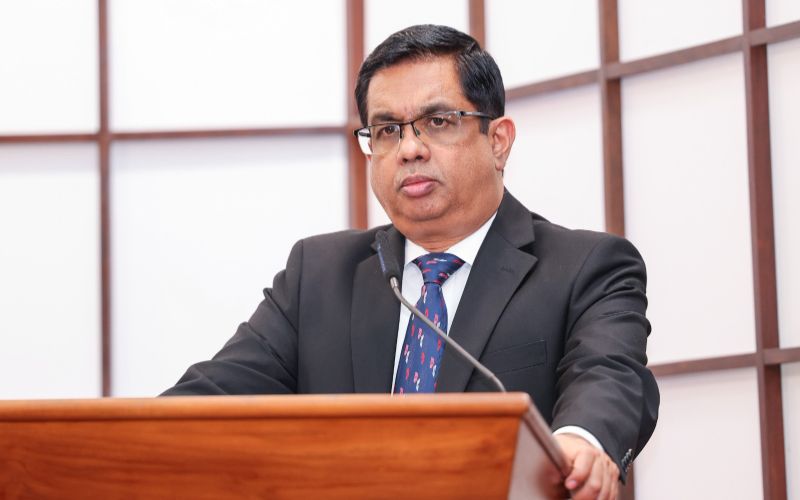
The Memorandum of Understanding (MoU) relating to the project to provide technological solutions to prevent wild elephants from being hit by trains was signed yesterday (01) afternoon at the President’s Media Centre, under the patronage of Secretary to the President Dr Nandika Sanath Kumanayake.
Coordinated through the “Clean Sri Lanka” programme, the project is being implemented as a public-private partnership, with the Railway Department, the Department of Wildlife Conservation and the Forest Conservation Department working together, with full financial support from People’s Bank.
The system consists of three-beam detection, passive infrared (PIR) sensors, automatic temperature sensors and a tamper alarm system to detect animals weighing more than 20 kilogrammes and unauthorised interference. Signal lights (red/yellow/green) installed on either side of the railway tracks, together with a special screen installed inside the locomotive cab, will alert the driver in advance to the exact location of an elephant.
A demonstration test of the system was successfully conducted at the Pinnawala Elephant Orphanage premises in the presence of the relevant officials, following which a report on the system was prepared.
The system will be implemented as a pilot project from next month at 13 locations where wild elephant accidents are frequent. A newly developed website is also scheduled to be launched to enable the progress of the project to be viewed live.
Additional General Manager of Railways P.D.S.B. Chandrasena, Director General of Wildlife Conservation M.S.L.R.P. Marasinghe, Conservator General of Forests S.C. Palamakuumbura and Chairman of People’s Bank Chandana Guniyangoda signed the relevant MoU. Officials from the Clean Sri Lanka Secretariat, including Presidential Additional Secretary (Clean Sri Lanka) Engineer S.P.C. Sugeeshwara, as well as senior officials from the Railway Department, Department of Wildlife Conservation, Forest Conservation Department and People’s Bank, were also present.
[President’s Media Division]

The Commissioner General of Examinations has announced that the results of the 2026 Grade 5 Scholarship Examination have been released online, and can be viewed on the department’s official website: www.doenets.lk

Prime Minister Dr. Harini Amarasuriya departed Sri Lanka on Monday, 31 August, to undertake an official visit to Bhutan to participate in the Global Conscious Food Systems Summit, scheduled to be held in Bhutan.
During her visit, Prime Minister Dr Amarasuriya participated in the opening plenary of the Summit on 1 September, where she delivered a keynote address under the theme “Rising to the Moment: Igniting Consciousness to Address the Polycrisis.”
The Prime Minister will also engage in discussions with international leaders and representatives on strengthening cooperation towards sustainable food systems, food security and resilient communities.

[Prime Minister’s Media Division]

Winners to receive medals at Western Province School Games after many years

MoU signed for technology to prevent wild elephant-train collisions

Grade 5 scholarship exam results released

Prime Minister participates in Global Conscious Food Systems Summit in Bhutan

Bouchier century sets England up for record 282-run chase against Ireland

Muneeba, Pakistan’s spinners knock Thailand out of Asia Cup

‘Dates have the highest sugar content to fight Coronavirus’

Sunday Island 27 December – Headlines

#SundayIsland 17th December – Headlines

Sunday Island – 28th March

Sunday Island Headlines – 21 March

Sunday Island – 21st February – Headlines
-

 News6 days ago
Eight politicians in drug kingpin probe
-

 Features4 days ago
“Wrap Me Up in My Blazer”— A Gentlemanly Bradby Reminiscence
-

 Business6 days ago
Sri Lanka opens up: A new season of direct connectivity
-

 Features6 days ago
Redefining ageing in Sri Lanka
-

 Features3 days ago
When Sri Lankan stories find their own voice
-

 Latest News6 days ago
Nepal-Tibet floods: What happened, what caused them and who is missing?
-

 Editorial7 days ago
Unfolding El Niño and burning issues
-

 Editorial6 days ago
The toxic legacy of two lakes