
Sports
Cricket-nomics: Can sports support economic recovery in Sri Lanka?

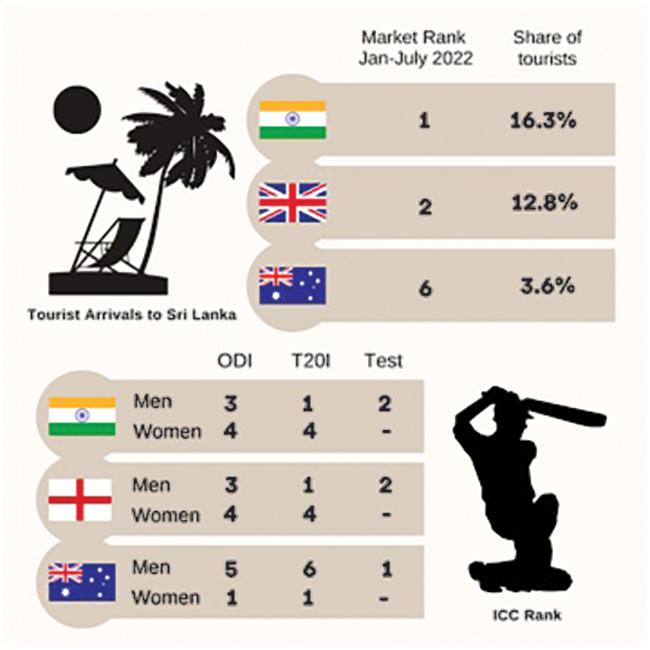
by Ranmalee Nanayakkara and Thisuri Ekanayaka
In June 2022, Sri Lanka was thrust into the international spotlight during the tour of the Australian cricket team which coincided with the recent political and economic crisis in the country. The public’s reaction to the tournament was mixed; some criticized the shift in focus towards a sporting event while citizens were experiencing extreme difficulties in their daily lives, while several others focused on the tournament’s potential positive impacts. A similar debate was raised once again with the recent decision by Sri Lanka Cricket (SLC) to shift the Asia Cup to the UAE from its initial venue in Sri Lanka. This then begs the question of whether or not hosting international sporting events such as cricket tournaments during this sensitive period is beneficial for the country and how it may be done if at all possible.
Sports for Economic Recovery
According to analysts, the current economic adversities are a result of the lack of both foreign currency earnings and government revenue to meet the necessary expenses due to a variety of underlying causes. Tourism which has remained among the top three foreign exchange earners of Sri Lanka in particular has suffered from multiple crises since the Easter attacks in 2019. In such a situation, hosting an international sporting event can be helpful to boost the sector by encouraging visitors. Sports tourism is in fact recognized by the World Tourism Organization as a rapidly growing area. Since tourist arrivals are influenced by the perceptions of the destination, an international sporting competition can not only attract fans for that specific event but also provide positive branding to promote the country for future visitors, which is useful since the number of spectators is limited by the capacity of the venue. Aside from attracting foreign exchange to the country, such a sporting event can provide much needed income for local businesses in the vicinity and support them in improving their financial position and retaining employees. This in turn would translate into higher tax income for the government and less reliance on welfare payments.
Beyond tourism and ticket sales, international sporting events also generate income through the sale of broadcasting rights and sponsorships. Currently Sony Pictures Networks India (SPN) has been awarded the Global Media Rights for Sri Lanka Cricket’s Inbound Tours for 2020-2023. According to one source, it’s estimated that the initial bid was around US$ 22.5 million. Although such deals might not have a major impact on the wider economy, they are an important source of revenue for a sporting body allowing them to fund their operations including welfare activities. Since the value generated through such transactions depend on the performance and popularity of the team, it is also important to create opportunities to showcase the skills of the players. Beyond these financial benefits, sporting competitions are known to have numerous psychological benefits such as providing fans with an opportunity to relax, fostering a sense of solidarity with fellow citizens and building stronger ties between countries.
Why Cricket?
Hosting international tournaments is undoubtedly a costly process, which include expenses on operating the venue, employing staff, and providing facilities such as lodging, food and transport for the teams and other personnel. The unique advantage in the case of cricket is that Sri Lanka already possesses the basic infrastructure and experience required to host large scale competitions. The country currently owns multiple international cricket stadiums. In the 1970s-80s the major venues for international matches were within Colombo with the Kandy Asgiriya and Galle stadiums being the two exceptions. The High-end neighborhoods of Colombo were home to stadiums such as the Sinhalese Sports Club and the Colombo Cricket Club while other stadiums renovated to meet the international level included the Khettarama Stadium (later named the R. Premadasa Stadium) and the Paikiasothy Saravanamuththu (P Sara) stadium. The first of the two is one of the largest in the country with a seating capacity of 35,000 while the second has a capacity of 15,000. Construction of large-scale stadiums beyond Colombo began in the 2000’s and consist of the Rangiri Dambulla International Stadium with a capacity of 30,000 as well as the Pallekele and the Sooriyawewa Stadiums (later named the Mahinda Rajapaksa International Stadium) with a capacity of 35,000 each. Yet, whether these resources have been put to their best use is debatable.
For instance, in October 2016, former Sports Minister Dayasiri Jayasekara revealed in a Tweet that the cricket stadium that was built spending Rs. 4.2 billion in Hambantota is being hired for wedding receptions in order to generate revenues. According to Jayasekara, the opening and closing ceremonies of the 2018 Commonwealth Games were supposed to be hosted at the stadium. However, Sri Lanka lost the bid. The Sooriyawawa Mahinda Rajapaksa Stadium has hosted only six international matches suggesting that this is yet another white-elephant project completed under poor guidance.
On the other hand, this also indicates that there is untapped potential in promoting cricket-tourism in the country. For instance, India, the United Kingdom and Australia boasting internationally renowned cricket teams have also consistently been among the top 10 sources of tourists to Sri Lanka. As such, focusing on competitions that involve these teams could have a positive impact on the economy.
Opportunities Amid Challenges
Having said that, there are certainly challenges that need to be addressed. Although Sri Lanka has achieved some stability recently, continued shortages of certain goods, disruptions in power and limitations in fuel supplies can raise concerns among potential visitors. In this context, it’s unclear whether organizing a large-scale international competition involving multiple teams is within the country’s capacity at the moment, as was the professed case for the Asia Cup. Along with this, there is also the issue of public perception shaped by fears of political unrest due to the sensationalized international headlines during the preceding months. Finally, at a global level too, we are at a critical point in time where travel restrictions have been eased since the pandemic on one hand, but a global recession is looming in the horizon on the other.
This being the case, it’s necessary to identify strategic opportunities and make use of existing resources in a timely manner to promote sports-tourism in Sri Lanka. Indeed, as a cricket playing nation and also a reputed tourist destination that has attracted spectators and visitors from far and wide, Sri Lanka now has the potential to navigate through these trying times by remaining proactive.
Real Madrid, Vinicius Junior condemn racist criticism of goal celebration
Real Madrid have condemned racist comments made about their forward Vinicius Junior as the Brazilian star said in a video statement that he won’t change his celebration and the critics are bothered by a “victorious black Brazilian in Europe.”
While appearing as a panellist on a Spanish soccer show Friday, leading agent Pedro Bravo said Vinicius was not respecting his opponents with his celebrations, comparing his behaviour to that of a monkey — which immediately sparked backlash on social media. Vinicius, 22, said that Bravo’s criticism was not the first time he had been targeted by racist remarks about his celebrations, while mentioning other players who showcase similar dances after scoring.
“They say that happiness bothers,” Vinicius said in a video posted to social media. “The happiness of a victorious black Brazilian in Europe bothers much more.
“But my desire to win, my smile and the sparkle in my eyes are much bigger than that. You can’t even imagine it. I was a victim of a xenophobic and racist comment. But none of that started yesterday.”
“Weeks ago they began to criminalize my dances. Dances that are not mine.
“They belong to Ronaldinho, Neymar, [Lucas] Paqueta, [Antoine] Griezmann, Joao Felix, Matheus Cunha… they belong to Brazilian funk and samba artists, reggaeton singers, and black Americans. Those are dances to celebrate the cultural diversity of the world. Accept it, respect it. I’m not going to stop.”
In their own statement, Real Madrid threatened legal action against anyone who makes racist remarks about their players.
“Real Madrid CF rejects all kinds of racist and xenophobic expressions and behaviors in the field of football, sport and life in general, such as the regrettable and unfortunate comments made in recent hours against our player Vinicius Junior,” Real Madrid said in a statement.
“Real Madrid wants to show all its love and support for Vinicius Junior, a player who understands football as an attitude towards life based on joy, respect and sportsmanship.
“Football, which is the most global sport that exists, must be an example of values ??and coexistence. The club has instructed its legal services to take legal action against anyone who uses racist expressions towards our players.”
Bravo, who is the president of the Association of Spanish Agents, later took to Twitter to issue a clarification, saying he used the “monkey” expression to say Vinicius was “doing stupid things.”
“I want to clarify that the expression ‘playing the monkey’ that I have misused to qualify Vinicius’ goal celebration dance was done metaphorically,” he said.
“Since my intention was not to offend anyone, I sincerely apologize. I am sorry!”
But his comments were also condemned by Brazilian great Pele and Brazil’s football federation, which came out in defense of Vinicius.
“Football is joy. It is dancing. It is truly a party. Despite the fact that racism still exists, we will not allow it to stop us from continuing to smile,” Pele wrote. “And we will continue to fight racism in this way, fighting for the right to be happy.”
The Brazil federation also used the hashtag #DanceViniJr. and wrote: “There will be dancing, dribbling, but above all, respect. On Thursday night (15), our athlete @vinijr was the target of racist statements. The CBF stands in solidarity and supports: #BailaViniJr.”
Paris Saint-Germain forward Neymar, meanwhile, has encouraged his national teammate Vinicius to continue dancing after scoring.
Neymar, who was left angry after he was booked for his goal celebration in PSG’s 3-1 win at Maccabi Haifa in the Champions League, tweeted: “DANCE VINI Jr.”
The Brazil star had further words of advice for Vinicius, writing in an Instagram post “Dribble, dance and be you. Happy just the way you are. Keep it up my boy, next goal we dance.”
Vinicius responded to Neymar’s comments on Twitter with the word “Always” and a picture of the pair dancing when playing for Brazil.Speaking earlier Friday, Atletico Madrid captain Koke said Vinicius can expect “trouble” in the Sunday derby against Real Madrid if he performs his trademark dancing celebration after scoring.
Asked if he would understand the reaction of Atletico fans at the Wanda Metropolitano if Vinicius celebrated in his usual way, Koke said: “There would be trouble, for sure, [that is] to be expected.”
But Koke said Vinicius, like any other player, is free to celebrate goals how he wishes.
“If in the end he scores and decides to dance, well, it’s what he wants to do,” Koke said.
“Would I understand it or not? Everyone has their own way of being and of celebrating goals as they please.”
Real Madrid coach Carlo Ancelotti has said he does not understand the controversy surrounding Vinicius’ goal celebration.
“He is a Brazilian, he dances very well, and I don’t think it bothers anyone,” Ancelotti said.
“He doesn’t need to change anything regarding his attitude because he respects his rivals and the referee a lot.
“He is a special player because of how he plays, although at times, because of his way of playing, rivals might get angry.”
Atletico head into the league showdown Sunday five points behind LaLiga leaders Real Madrid after five games played.
(ESPN)



The Rose Bowl, which has been awarded to the winner of ODI series between the women’s teams of Australia and New Zealand since 1985, has now been expanded to include T20Is as well.
New Zealand’s three match T20I tour of Australia, which begins on Sunday at the North Sydney Oval, will be the first T20I edition of the Rose Bowl. The teams will get to face off again for the trophy in March 2027 when they meet again for three ODIs, also in Australia.
For Rose Bowl series that include matches in both white-ball formats, the trophy will go to the team with the most wins overall. In case of a drawn series, the current holder will retain the trophy.
“The Rose Bowl is a prestigious trophy that holds a lot of meaning to current and past players, and it’s a series we’ve always taken a lot of pride in competing in,”Catherine Campbell, NZC’s chief cricket operations officer and a former New Zealand player, said. “With so much T20I cricket now being played, this is a brilliant opportunity to keep the Rose Bowl relevant and to build on the history between us and our Australian rivals.”
New Zealand captain Melie Kerr was excited by the broadening of opportunities to compete for the Rose Bowl.
“We’re all aware of what the Rose Bowl represents and the importance it holds in the White Ferns whakapapa [genealogy],” said Kerr. “Great players and teams have fought for it over the years and we’d love the opportunity to claim our own piece of that history.”
Australia have held the Rose Bowl continuously since wresting it back from New Zealand in 2000. Since that 3-0 win, Australia have won 18 times with one series – in 2008-09 – shared 2-2. Overall, Australia have won 26 of the 31 ODI series played for the Rose Bowl, with New Zealand winning three times and three series drawn.
North Sydney will host all three T20Is of the upcoming Rose Bowl series, on October 18, 20 and 22.
[Cricinfo]
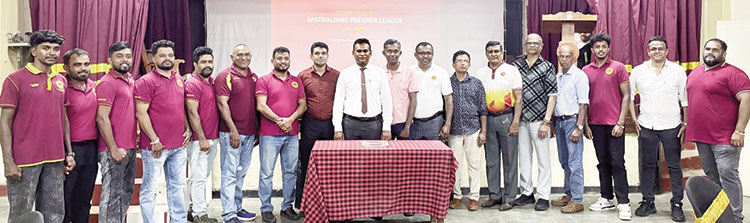
The inaugural Sastralian Premier League (SPL), a T10 cricket tournament aimed at strengthening the cricketing fortunes of Ananda Shasthralaya National School, Matugama, will get underway next month, bringing together eight teams.
Organised by the Old Sastralians Cricket Association in collaboration with the school, the tournament is designed to provide a platform for emerging talent while generating much needed financial support for the school’s cricket development programme.
Each franchise will be required to assemble a squad of 16 players, excluding the captain, with the competition featuring a unique set of regulations aimed at encouraging participation across different age groups.
Cricketers from other schools in the Matugama area will also have an opportunity to showcase their skills under the ‘Guest Players’ category. Each team can recruit up to six guest players, with four required to feature in the playing XI.
In a move designed to nurture the next generation, every team must include two current school cricketers in its squad, with at least one guaranteed a place in the playing XI.
The tournament will also accommodate experienced campaigners, with teams permitted to select five players over the age of 20 and three over 40. The provision to use an ‘Impact Player’ is another feature of the competition.
The eight teams have been divided into two groups. Group A comprises JSD Challengers, Jagath Express, Liveka Power Lions and Rexhill Warriors, while JPI Royals, Five Star Heroes, Marine Titans and Finnk Falcons make up Group B.
A total of 16 matches will be played across November 7, 8 and 15, with November 16 set aside as a reserve day.
Beyond the action on the field, organisers hope the tournament will provide a financial boost to school cricket while forging stronger ties between past and present cricketers.
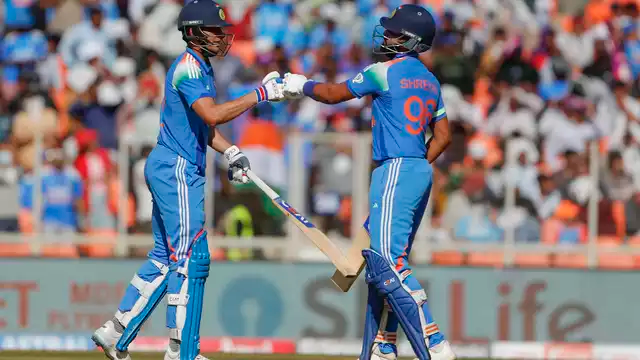
Squad for the first three ODIs: Shubman Gill [C], Rohit Sharma, Virat Kohli, Shreyas Iyer [VC], KL Rahul [WK], Nitish Kumar Reddy, Axar Patel, Naman Dhir, Anshul Kamboj, Gurnoor Brar, Ruturaj Gaikwad, Arshdeep Singh, Ishan Kishan [WK], Mohammed Siraj, Prasidh Krishna*, Kuldeep Yadav
Squad for fourth and fifth ODIs: Shreyas Iyer [C], Rohit Sharma, Virat Kohli, Tilak Varma, Ishan Kishan [WK, VC], Nitish Kumar Reddy, Axar Patel, Naman Dhir, Auqib Nabi, Gurnoor Brar, Ruturaj Gaikwad, Arshdeep Singh, Kumar Kushagra [WK], Mohammed Siraj, Yash Thakur, Kuldeep Yadav
[Cricbuzz]

Review of progress in reforms and modernisation of key state revenue-collecting institutions

Rose Bowl expanded to include Australia vs New Zealand T20Is

Trump claims US Navy blockade stops Iranian ships in Hormuz

Showers above 75 mm are likely at some places in the Western, Sabaragamuwa, Central and North-central provinces and in Trincomalee and Mullaitivu districts

Cut power bills by 3-5%, don’t hike them, consumers demand

Asgiri Mahanayake calls for immediate release of Gnanasara Thera

‘Dates have the highest sugar content to fight Coronavirus’

Sunday Island 27 December – Headlines

#SundayIsland 17th December – Headlines

Sunday Island – 28th March

Sunday Island Headlines – 21 March

Sunday Island – 21st February – Headlines
-

 News6 days ago
Sri Lanka escalates anti-graft drive with Shiranthi’s jailing
-

 Latest News6 days ago
Farhan and Sadaqat help Pakistan seal series in style
-

 News6 days ago
Iranian ships stranded, Lanka fears US sanctions
-

 Latest News4 days ago
Nissanka’s return headlines Sri Lanka’s Test squad against Pakistan
-

 Features5 days ago
Intake 16: 45 years of duty and honour
-

 News5 days ago
Malwathu Chapter issues statement on talks with President over Gnanasara Thera’s robes
-

 News6 days ago
Navi Pillay’s Lankan affairs in focus as she wins 2026 Nobel Peace Prize
-

 News5 days ago
CP alleges NPP has taken the blame for illegal US sanctions on Iranian vessels