
News
UN warns 345 million people face starvation worldwide


A ‘tsunami of hunger’ and ‘real and dangerous risk of multiple famines this year’, head of UN World Food Programme warns.
(Al Jazeera) The United Nations food chief has warned the world is facing “a global emergency of unprecedented magnitude” with up to 345 million people marching towards starvation – and 70 million pushed closer to starvation by the war in Ukraine.
David Beasley, executive director of the UN World Food Programme, told the UN Security Council on Thursday the 345 million people facing acute food insecurity in the 82 countries where the agency operates is more than twice the number of acutely food insecure people before the COVID-19 pandemic hit in 2020.
He said it is incredibly troubling that 50 million of those people in 45 countries are suffering from very acute malnutrition and are “knocking on famine’s door”.
“What was a wave of hunger is now a tsunami of hunger,” he said, pointing to rising conflict, the pandemic’s economic ripple effects, climate change, rising fuel prices and Russia’s invasion of Ukraine.
Since Russia invaded its neighbour on February 24, Beasley said, soaring food, fuel and fertiliser costs have driven 70 million people closer to starvation.
Despite an agreement in July allowing Ukrainian grain to be shipped from three Black Sea ports blockaded by Russia and continuing efforts to get Russian fertiliser back to global markets,
“there is a real and dangerous risk of multiple famines this year”, he said.
“And in 2023, the current food price crisis could develop into a food availability crisis if we don’t act.”
The Security Council was focusing on conflict-induced food insecurity and the risk of famine in Ethiopia, northeastern Nigeria, South Sudan and Yemen. But Beasley and UN humanitarian chief Martin Griffiths also warned about the food crisis in Somalia, which they both recently visited, and Griffiths also put Afghanistan high on the list.
“Famine will happen in Somalia. Be sure it won’t be the only place either,” Griffiths said.
He cited recent assessments that identified “hundreds of thousands of people facing catastrophic levels of hunger” – meaning they are at the worst famine level.
Beasley recalled his warning to the council in April 2020 “that we were then facing famine, starvation of biblical proportions”. He said then the world “stepped up with funding and tremendous response, and we averted catastrophe”.
“We are on the edge once again, even worse, and we must do all that we can – all hands on deck with every fibre of our bodies,” he said. “The hungry people of the world are counting on us and … we must not let them down.”
Griffiths said the widespread and increasing food insecurity is a result of the direct and indirect effect of conflict and violence that kills and injures civilians, forces families to flee the land they depend on for income and food, and leads to economic decline and rising prices for food they cannot afford.
After more than seven years of war In Yemen, he said, “some 19 million people – six out of 10 – are acutely food insecure, an estimated 160,000 people are facing catastrophe, and 538,000 children are severely malnourished”.
Beasley said the Ukraine war is stoking inflation in Yemen, which is 90 percent reliant on food imports. The World Food Programme hopes to provide aid to about 18 million people, but its costs have risen 30 percent this year to $2.6bn.
As a result, it has been forced to cut back so Yemenis this month are getting only two-thirds of their previous rations, he said.
Beasley said South Sudan faces “its highest rate of acute hunger since its independence in 2011” from Sudan. He said 7.7 million people, more than 60 percent of the population, are “facing critical or worse levels of food insecurity”.
Without a political solution to escalating violence and substantial spending on aid, “many people in South Sudan will die”, he warned.
In northern Ethiopia’s Tigray, Afar and Amhara regions, more than 13 million people need life-saving food, Griffiths said. He pointed to a survey in Tigray in June that found 89 percent of people food insecure, “more than half of them severely so”.
Beasley said a truce in March enabled WFP and its partners to reach almost five million people in the Tigray area, but resumed fighting in recent weeks “threatens to push many hungry, exhausted families over the edge”.
In northeast Nigeria, the UN projects that 4.1 million people are facing high levels of food insecurity, including 588,000 who faced emergency levels between June and August, Griffiths said. Almost half of those people could not be reached because of insecurity, and the UN fears “some people may already be at the level of catastrophe and already dying”.
Griffiths urged the Security Council to “leave no stone unturned” in trying to end these conflicts, and to step up financing for humanitarian operations, saying UN appeals in those four countries are all “well below half of the required funding”.


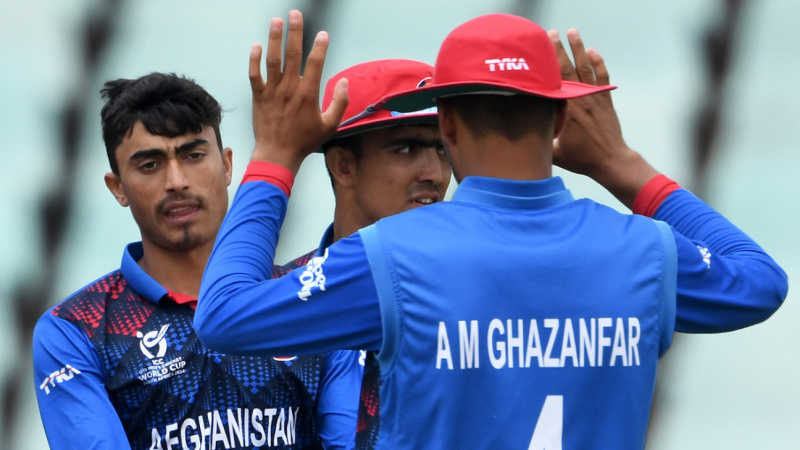
Right-arm wristspinner Arab Gul, took 4 for 8 on T20I debut and left-arm spinner Nangeyalia Kharote picked up 3 for 19 as Afghanistan successfully defended a modest 129 against Japan to open their Asian Games men’s competition campaign with two points in Group A.
Two days after nearly beating India in a rain-shortened game in Sano, hosts Japan made a steady start to the chase and reached 53 for 2 in the eighth over before losing their way.
Gul did much of the damage, taking two wickets apiece in the 12th and 14th overs as Japan slid from 60 for 4 to 63 for 8. Abdollah Ahmadzai and Kharote then finished off the lower order, with Japan bowled out for 81 in 19.3 overs.
Asked to bat first, Afghanistan had posted 129 for 6, with Mohammad Akram making 34, captain Darwish Rasooli 29 and Karim Janat 21.
But it was Mohammad Ishaq’s unbeaten 25 off 17 balls from No. 6 that provided the late impetus after Japan had kept Afghanistan to under six an over for the first 15 overs. Right-arm seamer Shoma Sugaya-Slater and offspinner Ibrahim Takahashi took two wickets apiece for Japan.
The two sides have games against Nepal lined up in Group A. The top two teams from the group will proceed to the quarter-finals.
Scores:
Afghanistan 129 for 6 in 20 overs (Mohhamad Akram 34, Karim Janat 21, Darwish Rasooli 29, Mohammad Ishaq 25*; Reo Sakurano Thomas 1-05, Shoma Sugaya-Slater 2-18, Ibrahim Takanashi 2-19) beat Japan 81 in 19.3 overs (Reo Sakurano- Thomas 23, Kendel Kadowwaki Fleming 14, Benjamin Ito Davis 17; Arab Gul 4-8, Abdullah Ahmadzai 2-13, Nangeyalia Khan 3-19, Najibullah Zadran 1-07 ) by 48 runs
(Cricinfo)


The Bar Association of Sri Lanka (BASL) yesterday called on all political parties, represented in Parliament, to allow their members to vote on the proposed 22nd Amendment to the Constitution according to their conscience, stressing that the responsibility for deciding whether the Bill should be enacted now rests with Parliament.
In a statement issued after the Supreme Court’s determination on the 22nd Amendment Bill, BASL President Rajeev Amarasuriya and General Secretary Nalin de Silva have said the SC’s determination should not be interpreted as an endorsement of the proposed constitutional amendment as a matter of policy.
The BASL has said the SC’s jurisdiction, under Articles 120, 121 and 123 of the Constitution, was to determine the constitutional requirements for the enactment of the Bill, including whether the Bill, or any of its provisions, required approval at a referendum under Article 83.
“The determination is therefore not a determination as to whether the proposed amendment is good or bad policy, desirable or undesirable, wise or unwise, or whether Parliament ought to enact it,” the BASL said.
Full text of the BASL statement: The Supreme Court has now delivered its Determination on the Twenty-Second Amendment to the Constitution Bill and determined that the Bill does not require the approval of the People at a Referendum.
In terms of Articles 120, 121 and 123 of the Constitution, the jurisdiction of the Supreme Court in relation to the Bill is to determine the constitutional requirements for its enactment, including importantly whether the Bill, or any provision thereof, requires the approval of the People at a Referendum by virtue of Article 83.
The Determination is therefore not a determination as to whether the proposed Amendment is good or bad policy, desirable or undesirable, wise or unwise, or whether Parliament ought to enact it.
This distinction is also evident from Sri Lanka’s previous constitutional amendments. During the 48 year history of the second republican Constitution there have been many amendments which passed constitutional muster but nevertheless had a negative effect on democracy, constitutionalism, the independence of the judiciary and the rule of law.
The question that now arises is whether Parliament ought to enact the proposed Amendment. That responsibility rests with Parliament and with each individual Member of Parliament when they vote on the Bill.
In making that decision, Members of Parliament should be mindful of the possible and probable consequences the 22nd Amendment will have on our nation. They should also consider the lack of transparency and a proper consultative process in the introduction of the 22nd Amendment. As representatives of the people they should also consider the concerns that have been expressed in relation to the proposed Amendment by a broad cross-section of society including the Maha Nayakes of the Three Nikayas, the Catholic Bishops’ Conference in Sri Lanka, the Church of Ceylon, the Bar Association of Sri Lanka, the Judicial Service Association, the Commonwealth Lawyers Association, LAWASIA, the International Association of Judges, the United Nations Special Rapporteur on the Independence of Judges and Lawyers, the French National Bar Council, and more than 40 Professional Associations and Unions, including the Government Medical Officers’ Association and other leading professional bodies.
Accordingly, the Bar Association of Sri Lanka calls upon all the political parties in Parliament to allow the Members of Parliament to speak and vote on the 22nd Amendment according to their conscience.
The responsibility now lies with Members of Parliament, when called upon to vote, to take a principled position according to their conscience giving due consideration to their constitutional responsibility, their representative capacity and most importantly their duty to the sovereign People of Sri Lanka.

SL to regain access to international financial and capital markets next year in line with IMF projections
Sri Lanka is on course to regain access to international financial and capital markets around 2027, in line with the International Monetary Fund’s (IMF) current economic projections, IMF Mission Chief Evan Papageorgiou said yesterday.
Papageorgiou said the IMF’s core assumptions under Sri Lanka’s economic programme continued to envisage the country returning to international capital markets in 2027.
“Our previous assumption that Sri Lanka will go back to capital markets still stands. We still have a good trajectory to achieving this in 2027 or thereabouts, and that should be the goal,” he said.
Papageorgiou stressed that Sri Lanka could not rely solely on domestic sources of financing to build long-term economic resilience and would need a diversified funding strategy.
“Every country needs to have a good ability to access funds both in domestic markets, as it already has, as well as international markets for eurobonds and other modes,” he said.
He said a return to international capital markets would have significant implications for Sri Lanka’s external debt composition, while strengthening foreign exchange reserves would remain essential as the country prepares to meet future debt-servicing obligations.
The IMF’s assessment comes amid improving international investor sentiment towards Sri Lanka and positive developments in the country’s sovereign credit ratings.
Papageorgiou cited Fitch’s recent upgrade of Sri Lanka’s credit rating as a positive development, saying global investors were increasingly viewing the country from a more constructive perspective.
Sri Lanka remains under the IMF’s Extended Fund Facility (EFF) programme, which is scheduled to continue until March 20, 2027. Regaining access to international capital markets remains a key milestone under the country’s broader economic recovery.
The IMF has stressed the importance of rebuilding Sri Lanka’s foreign exchange buffers and maintaining stability in domestic financial markets as the country approaches substantial external debt repayments.
A sustained improvement in these areas would help strengthen the country’s capacity to return to international markets while safeguarding macroeconomic stability, the IMF has indicated.

Muhammad Shahzad smashes fastest first-class hundred by a Pakistani batter

Gul, Kharote spin Afghanistan to victory over Japan in Asian Games opener

Showerss above 100 mm are likely at some places in the Western, Sabaragamuwa, Central and North-western provinces and in Galle and Matara Districts

Mirabai Chanu wins Asian Games silver as Ri breaks weightlifting record

Trump greets China’s Xi Jinping on arrival for three-day US

BASL calls for conscience vote on 22nd Amendment

‘Dates have the highest sugar content to fight Coronavirus’

Sunday Island 27 December – Headlines

#SundayIsland 17th December – Headlines

Sunday Island – 28th March

Sunday Island Headlines – 21 March

Sunday Island – 21st February – Headlines
-

 News6 days ago
Shanakiyan urges urgent action over reported death sentence for Lankan in Saudi Arabia
-

 News7 days ago
Bid for Basil’s extradition nears final stage: Police
-

 News5 days ago
Namal Rajapaksa Buddhist gambit fails, bail denied
-

 Features5 days ago
Why the spelling Sri Lankan names in English vary
-

 Features5 days ago
Three bands, a new identity: Sri Lankan wolf snake recognised as distinct species
-

 Business5 days ago
SLIIT holds largest-ever convocation
-

 News5 days ago
Govt monitors reported Saudi death sentence – Foreign Ministry
-

 News5 days ago
Vehicle prices drop by up to Rs. 1 mn, says importers’ body