
Features
The Winter Adventure In 16 Countries – Part B

CONFESSIONS OF A GLOBAL GYPSY
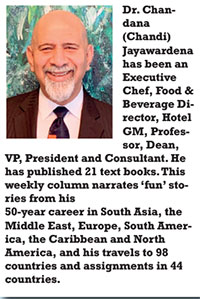
By Dr. Chandana (Chandi) Jayawardena DPhil
President – Chandi J. Associates Inc. Consulting, Canada
Founder & Administrator – Global Hospitality Forum
chandij@sympatico.ca
 Continuing from Wales, Ireland, a 24-hour voyage, quick visits to three French cities…
FRANCE
We left Paris just before midnight in a train to Bordeaux. Due to the bad winter weather, the train was late by an hour. We could not get any sleep in the freezing compartments. There was no running water in the washrooms as the taps were frozen. After moving from compartment to compartment, finally around 3:00 am, we found a relatively warmer place to get a few hours of sleep.
Bordeaux
We reached our destination for the day around 7:00 am. Having recently completed the Higher Certificate program in Wines and Spirits at the world headquarters of the Wine and Spirit Education Trust (WSET) in London, I was particularly pleased to be in Bordeaux. It is the hub of a famed wine-growing region in the world. As the taps in the station were also frozen, we were compelled to have an expensive, quick wash with a few bottles of Perrier Sparkling Water. After leaving our backpacks in a locker and having a quick breakfast at a café near the railway station, we commenced a day of exploration of a very interesting city.
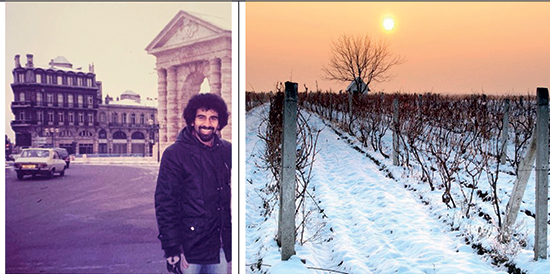
Bordeaux is a port city on the Garonne River in southwestern France. Apart from some of the best-known wines, it is known for its Gothic Cathédrale Saint-André, 18th century mansions and notable art museums such as the Musée des Beaux-Arts de Bordeaux. With around 650,000 residents, Bordeaux was the sixth-most populated city in France after Paris, Lyon, Marseille, Lille, and Toulouse.
Bordeaux is home to the world’s main wine fair, Vinexpo. Bordeaux is also one of the French centres of gastronomy and business tourism for the organization of international congresses. Bordeaux is an international tourist destination for its architectural and cultural heritage with more than 350 historic monuments making it, after Paris, the city with the most listed or registered monuments in France.
We then boarded a crowded train for a 30-hour ride from Bordeaux to Porto in Portugal travelling right across Spain. Due to high demand for sleeping berths, with some difficulty we managed to obtain two sleepers in a car occupied by an old Portuguese couple travelling with their little granddaughter. They were very kind and hospitable. They shared their snack dinner with us. Pão com chouriço (yeasted dough rolls that are filled with the famous pork sausage known as chouriço) were delicious. We shared our bottle of sweet Madeira fortified wine with them.
Up to the time we crossed the French-Spanish border passing a Spanish railway station in a small city, Irun, our train was punctual. After that we experienced several long stops and delays. As we were very tired, we went to sleep soon after sunset and got up long after sunrise to find that the winter storm had continued. The scenery was diverse and breathtakingly beautiful. Unfortunately, we were not comfortable as all the taps were frozen and the train toilets were not functioning. We eventually reached the Spanish-Portuguese border near a small city, Fuentes de Oñoro and finally reached Porto, after a six-hour delay.
PORTUGAL
Portugal is a country whose mainland is located on the Iberian Peninsula of Southwestern Europe, and whose territory also includes the Atlantic archipelagos of the Azores and Madeira. It features the westernmost point in continental Europe. Its Iberian portion is bordered to the west and south by the Atlantic Ocean and to the north and east by Spain, the sole country to have a 1,232 km long land border with Portugal. Its territory had been continuously settled, invaded and fought over since prehistoric times. It was inhabited by Ancient Greek traders, the Romans, Germanic peoples, the Moors, among others.
In the 15th and 16th centuries, Portugal established the first, global maritime and commercial empire, becoming one of the world’s major economic, political and military powers. During this period, today referred to as the Age of Discovery, Portuguese explorers pioneered maritime exploration with the discovery of what would become Brazil. Portugal acquired great riches by exploiting the trade in spices, slaves, sugar, textiles and other goods.
Arriving in Portugal, I thought of the many influences (culture, customs, cuisine, words, religion and names) of the Portuguese in Sri Lanka through a period of around 150 years. The first Europeans to visit Sri Lanka in modern times were the Portuguese in 1505. The Portuguese built a fort in the port city of Colombo in 1517 and gradually extended their control over the coastal areas of the island.
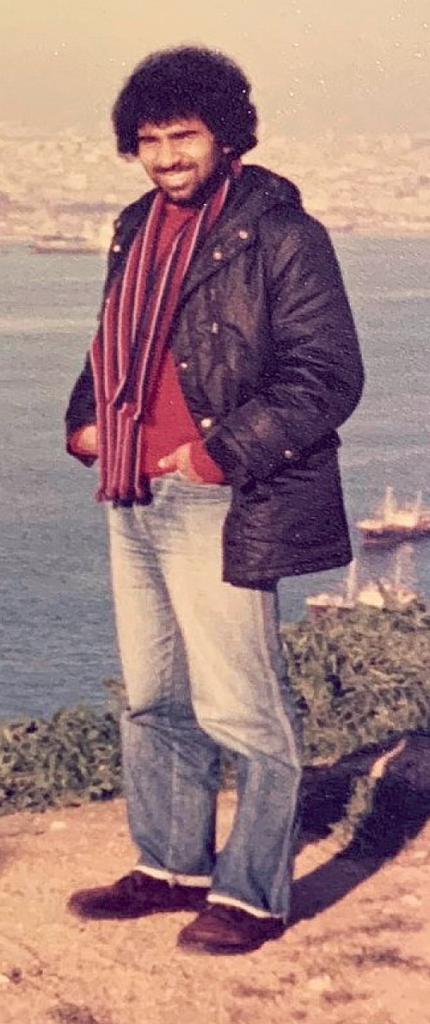
In Sri Lanka, the Portuguese used incentives, as well as brutal methods of terrorising residents to force them to change religions, culture and names. Many modern Sri Lankan names can be traced from the Portuguese, and 6% of the population of Sri Lanka today, are Catholics. Many friends I grew up with, have Portuguese family names such as Perera, Fernando, Mendis, De Silva, De Alwis, De Almeida, etc. Resulting from a treaty the King of Kandy made with the Dutch, the Portuguese invaders were gradually eliminated by 1658.
Portugal has left a profound cultural, architectural and linguistic influence across the globe, with a legacy of around 250 million Portuguese speakers around the world. It is the ninth most spoken language in the world. Indian troops invading Portuguese occupied Goa in 1961 and the handover of Macau to China in 1999 marked the end of what can be considered one of the longest colonial empires in history. I wondered how a relatively small country with a small population made such an impact around the world.
Three 20th century revolutions in 1910, 1927 and 1974 have shaped modern-day Portugal. The first, the October 5, 1910 revolution, brought an end to the Portuguese monarchy and established the highly unstable and corrupt Portuguese First Republic. In 1985, Portugal had just reached a population milestone of 10 million. Out of that national total, over 25% lived in the capital, Lisbon and over 10% lived in the second city, Porto.
Porto
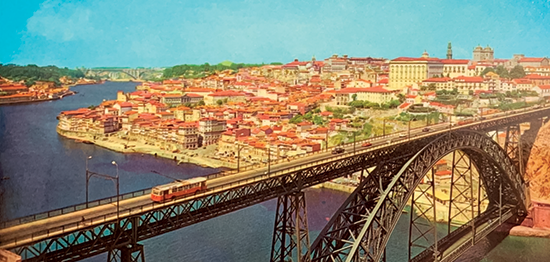
On entering Porto, we were impressed with a massive bridge over The Douro, the highest-flow river of the Iberian Peninsula, where it flows to the Atlantic Ocean at Porto. It is a beautiful view. Porto is a coastal city in north west Portugal known for its stately bridges and port wine production.
We found a room for the night in an old hotel for only £5 and walked in the medieval riverside district founded in the 12th century. The narrow-cobbled streets, merchants’ houses and small cafés were all very quaint. The next day we did a three-hour city tour by bus. Before catching a train to Madrid, I told my wife, “Our friends were correct. A short visit to a city like Porto is not enough. We must return here for at least a week to further explore the region.”
Twenty years later, I returned to Porto, as an invitee of the National Portuguese Hotel Association. I was very happy to get that opportunity in 2005, to spend a week in this beautiful city and taste varieties of the best Port Wine and do many tours of the region. I delivered a keynote address on the topic, ‘Branding of Hotels’ at the XIX National Congress on Hotel and Tourism Industry.
I am seated in the middle of the stage before my keynote address in Porto in 2005
Lisbon
Most of the Portuguese expeditions of the Age of Discovery departed from Lisbon during the period from the end of the 15th century to the beginning of the 17th century, including Vasco da Gama’s expedition to India in 1498. The following years of the 16th century started off Lisbon’s golden era: the city was the European hub of commerce between Africa, India, the Far East and later, Brazil.
The express train from Porto took only three and half hours to arrive in Lisbon. Portugal’s hilly, coastal capital city was very impressive. We enjoyed a three-hour city tour by bus, which covered the imposing São Jorge Castle, de Abril suspension bridge and the National Azulejo Museum. We also visited the 16th-century monuments, Belém Tower and Jerónimos Monastery, which were declared UNESCO World Heritage Sites in later years. Just outside Lisbon is a series of Atlantic beaches, from Cascais to Estoril. After the tour we had a long walk in the city centre, and watched a beautiful sunset.
We boarded a night train from Lisbon to the Spanish capital, Madrid. In out compartment, we chatted with a few young Australian travellers. They were travelling like hippies for a year in between their university studies. They were friendly and we shared some common adventurous attitudes about world travel. I taught them to play the popular South Asian card game, 304. We played several rounds of this game, until it was bed time.
SPAIN
Although we travelled from France to Portugal, right across Spain, we did not detrain in any Spanish railway station. This was our first visit to this historically significant country. We planned to see the two main cities of Spain, Madrid and Barcelona, and a couple of smaller cities en route. Compared to Portugal, Spain was much larger. In 1985, it had a population of 38 million.
We were excited to visit Spain as Spanish art, music, literature and cuisine have been influential worldwide, particularly in Western Europe and the Americas. As a reflection of its large cultural wealth, today Spain has the world’s fourth-largest number of World Heritage Sites (49) and is the world’s second-most visited country. Its cultural influence extends over 570 million Hispanophones, making Spanish the world’s second-most spoken native language.
Madrid
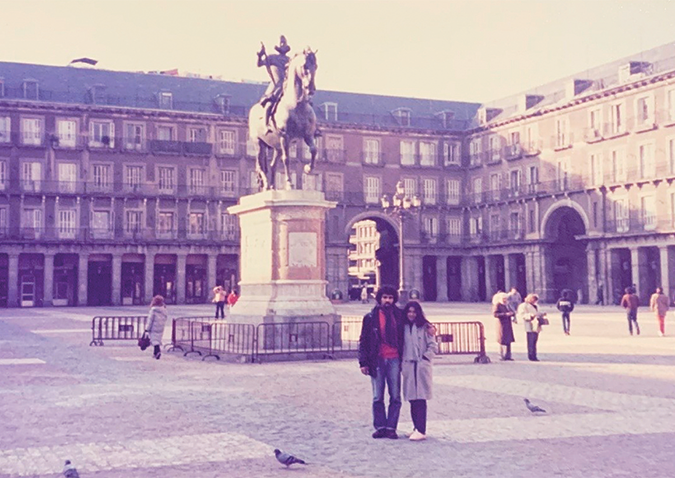
We reached Madrid by mid-morning. In 1985, Madrid had a population of 4.5 million. Up to that point of our six-week trip, Madrid was the second largest city we visited, after Paris. Our plan was to spend the full-day in Madrid and catch another night train to our next destination. Unfortunately, the luggage storage facility in the train station was full, so we had to carry our bags with us during our tours.
In Madrid we did a long city tour and visited many key attractions, including Gran Vía (the main tourist and shopping artery in the centre of the capital), the Royal Palace, the Prado Museum, and Plaza Mayor, which was considered the iconic spot in the heart of the city’s historic district. We also visited the largest university in Madrid, La Universidad Complutense de Madrid. It had over 80,000 students, including many from other Spanish-speaking countries, who were on scholarships.
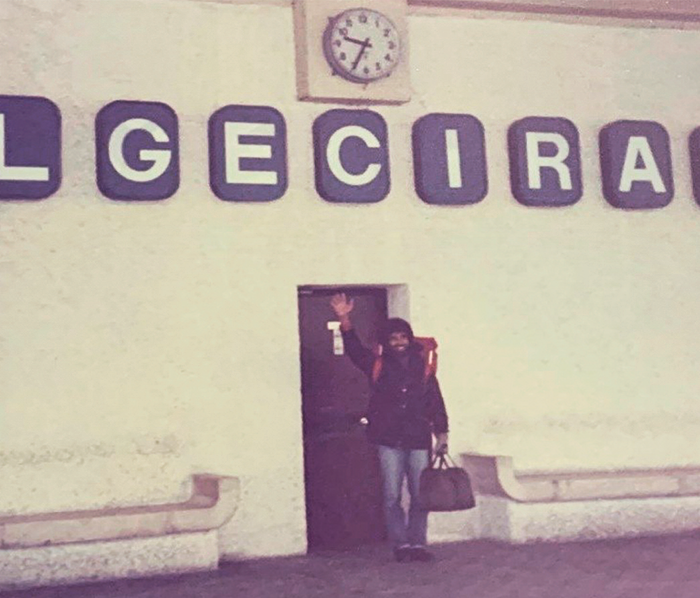
The heating in the next night train was not very effective. Now experienced winter train travellers, we were quick to move from compartment to compartment until we found a relatively warmer place for a good night sleep. As we travelled closer to the southern tip of Spain, Algeciras, the weather became a little warmer.
Ship from Algeciras to Africa
Our voyage from Algeciras in Spain to Africa took less than four hours. We met three university students on the ship, and had lunch together. Robert and Fritz were from West Germany, and were travelling with their Moroccan university mate, Kalik, who had invited his friends to his family home in Casablanca.
Our plan was simply to visit the port city, Tangier in Morocco for the day and then take a ship back to Spain. After some persuasion by our new friends, we changed our plan. In London, my wife and I had recently seen the 1942 movie classic ‘Casablanca’, and loved its famous song, ‘As Time Goes By’, played on the piano by a character in the movie, Sam.
Stealing a line from the movie, I said to my wife playfully, ‘Play it again, Sam!”. We then decided to extend our trip to Morocco by going to its commercial capital, Casablanca.
Will continue in next week’s article:THE WINTER ADVENTURE IN 16 COUNTRIES – Part “C”,
with adventures in Morocco, Spain, and France …


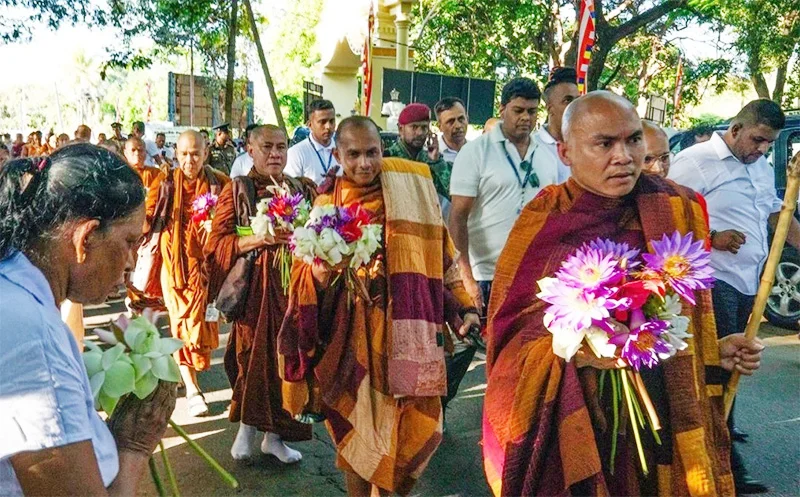
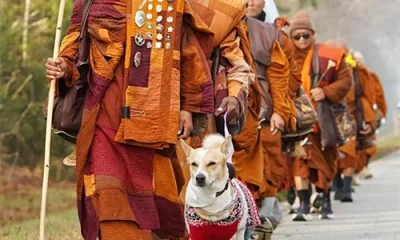
The ongoing peace march by a group of international Buddhist monks has captured the sentiment of Sri Lankans in a manner that few public events have done in recent times. It is led by the Vietnamese monk Venerable Thich Pannakara who is associated with a mindfulness movement that has roots in Vietnamese Buddhist practice and actively promoted among diaspora communities in the United States. The peace march by the monks, accompanied by their mascot, the dog Aloka, has generated affection and goodwill within the Buddhist and larger community. It follows earlier peace walks in the United States where monks carried a similar message of mindfulness and compassion across communities but without any government or even media patronage as in Sri Lanka.
This initiative has the potential to unfold into an effort to nurture a culture of peace in Sri Lanka. Such a culture is necessary if the country as the country prepares to move beyond its history of conflict towards a more longlasting reconciliation and a political solution to its ethnic and religious divisions. The government’s support for the peace march can be seen as part of a broader attempt to shape such a culture. The Clean Sri Lanka programme, promoted by the government as a civic responsibility campaign focused on environmental cleanliness, ethical conduct and social discipline, provides a useful framework within which such initiatives can be situated. Its emphasis on collective responsibility and shared public space makes it sit well with the values that peacebuilding requires.
government’s previous plan to promote a culture of peace was on the occasion of “Sri Lanka Day” celebrations which were scheduled to take place on December 12-14 last year but was disrupted by Cyclone Ditwah. The Sri Lanka Day celebrations were to include those talented individuals from each and every community at the district level who had excelled in some field or the other, such as science, business or arts and culture and selected by the District Secretariats in each of the 25 districts. They were to gather in Colombo to engage in cultural performances and community-focused exhibitions. The government’s intention was to build up a discourse around the ideas of unity in diversity as a precursor to addressing the more contentious topics of human rights violations during the war period, and issues of accountability and reparations for wrongs suffered during that dark period.
Positive Response
The invitation to the international monks appears to have emerged from within Buddhist religious networks in Sri Lanka that have long maintained links with the larger international Buddhist community. The strong support extended by leading temples and clergy within the country, including the Buddhists Mahanayakes indicates that this was not an isolated effort but one that resonated with the mainstream Buddhist establishment. Indeed, the involvement of senior Buddhist leaders has been particularly noteworthy. A Joint Declaration for Peace in the world, drawing on Sri Lanka’s own experience, and by the Mahanayakes of all Buddhist Chapters took place in the context of the ongoing peace march at the Gangaramaya Temple in Colombo, with participation from the diplomatic community. The declaration, calling for compassion, dialogue and sustainable peace, reflects an effort by religious leadership to assert a moral voice in favour of coexistence.
The popular response to the peace march has also been striking. Large numbers of people have been gathering along the route, offering flowers, water and support to the monks. Schoolchildren have been lining the roads, and communities from different religious backgrounds extend hospitality. On the way, the monks were hosted by both a Hindu temple and a mosque, where food and refreshments were provided. These acts, though simple, carry a message about the possibility of harmony among Sri Lanka’s diverse communities. It helps to counter the perception that the Buddhist community in Sri Lanka is inherently nationalist and resistant to minority concerns that was shaped during the decades of war and reinforced by political mobilisation that too often exploited ethnic identity.
By way of contrast, the peace march offers a different image. It shows a readiness among ordinary people to embrace values of compassion and coexistence that are deeply embedded in Buddhist teaching. The Metta Sutta, one of the most well-known discourses in Buddhism, calls for boundless goodwill towards all beings. It states that one should cultivate a mind that is “boundless towards all beings, free from hatred and ill will.” This emphasis on universal compassion provides a moral foundation for peace that extends beyond national or ethnic boundaries. The monks themselves emphasised this point repeatedly during the walk. Venerable Thich Pannakara reminded those who gathered that while acts of generosity are commendable, mindfulness in everyday life is even more important. He warned that as people become unmindful, they are more prone to react with anger and hatred, thereby contributing to conflict.
More Initiatives
The presence of political leaders at key moments of the march has emphasised the significance that the government attaches to the event. Prime Minister Harini Amarasuriya paid her respects to the peace march monks in Kandy, while President Anura Kumara Dissanayake is expected to do so at the conclusion of the march in Colombo. Such gestures signal an alignment between political authority and moral aspiration, even if the translation of that aspiration into policy remains a work in progress. At the same time, the peace march has not been without its shortcomings. The walk did not engage with the Northern and Eastern parts of the country, regions that were most affected by the war and where the need for reconciliation is most acute. A more inclusive geographic reach would have strengthened the symbolic impact of the initiative.
In addition, the positive impact of the peace march could have been increased if more effort had been taken to coordinate better with other civic and religious groups and include them in the event. Many civil society and religious harmony groups who would have liked to participate in the peace march found themselves unable to do so. There was no place in the programme for them to join. Even government institutions tasked with promoting social cohesion and reconciliation found themselves outside the loop. The Clean Sri Lanka Task Force that organised the peace march may have felt that involving other groups would have made it more complicated to organise the events which have proceeded without problems.
The hope is that the positive energy and goodwill generated by this peace march will not dissipate but will instead inspire further initiatives with the requisite coordination and leadership. The march has generated public discussion, drawn attention to the values of mindfulness and compassion, and created a space in which people can imagine a different future. It has been a special initiative among the many that are needed to build a culture of peace. A culture of peace cannot be imposed from above nor can it emerge overnight. It needs to be nurtured through multiple efforts across society, including education, religious engagement, civic initiatives and political reform. It is within such a culture that the more difficult questions of power sharing, justice and reconciliation can be addressed in a constructive manner.
by Jehan Perera
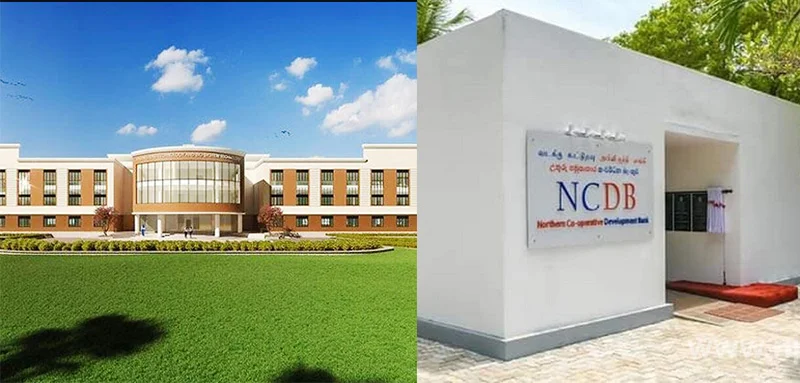
 The countryside and peripheral regions have been neglected in the national imagination for many decades. This has also been the case with regional universities which were seen as mere appendages to the university system, and sometimes created to appease political constituencies in the regions. The exclusion of the rural world and the institutions in those regions was not accidental nor inevitable, but the consequence of conscious policies promoted under an extractive and exploitative global order. Neoliberalism globalisation, initiated in the late 1970s with far-reaching policies of free trade and free flow of capital, or the “open economy,” as we call it in Sri Lanka, is now dying. The United States and the Western countries that promoted neoliberalism, as a class project of finance capital to address the falling profits during the long economic downturn in the 1970s, are themselves reversing their policies and are at loggerheads with each other. However, those economic processes will continue to have national consequences into the future.
At the heart of such policies is the neoliberal city, which has become the centre of the economy with expanding financial businesses and a real estate boom. Such financialised cities also had their impact on universities, in lower income countries, where commercialised education with high fees, rising student debt, research for businesses and transnational educational linkages with branch campuses of Western universities, have become a reality.
In the case of Sri Lanka, while neoliberal policies began with the IMF and World Bank Structural Adjustment Programmes, in the late 1970s, the long civil war forestalled the accelerated growth of the neoliberal city. I have argued, over the last decade and a half, that it is with the end of the civil war, in 2009, coinciding with the global financial crisis, that a second wave of neoliberalism in Sri Lanka led to global finance capital being absorbed in infrastructure and real estate in Colombo. The transformation of Colombo into a neoliberal city was overseen by Gotabaya Rajapaksa as Defence Secretary with even the Urban Development Authority brought under the security establishment. While Colombo was drastically changing with a skyline of new buildings and shiny luxury vehicles drawing on massive external debt, there were also moves to promote private higher education institutions. The Board of Investment (BOI) registered many hundred so-called higher education institutions; these were not regulated and many mushroomed like supermarkets and disappeared in no time when they incurred losses.
In contrast to these so-called private higher education institutions that proliferated in and around Colombo, Sri Lanka, drawing on its free education system, has, over the last many decades, also created a number of state universities in peripheral regions. However, these regional universities lack adequate funding and a clear vision and purpose. The current conjuncture with the neoliberal global order unravelling, and the immediate global crisis in energy and transport are grim reminders of the importance of local economies and self-sufficiency. In this column I consider the role of our regional universities and their relationship to the communities within which they are embedded.
Regional context
The necessity and the advantage of robust public services is their reach into peripheral regions and marginalised communities. This is true of public transport, as it is with public hospitals. Private buses will always avoid isolated rural routes as their margins only increase on the busy routes between cities and towns. And private hospitals and clinics flock to the cities to extract from desperate patients, including by unscrupulous doctors who divert patients in public hospitals to be served in the private health facilities they moonlight. Similarly, it is affluent cities and towns that are the attraction for private educational institutions.
Public institutions, including universities, can only ensure their public role if they are adequately funded. Over the last decade and a half, with falling allocations for education, our state universities have been pushed into initiating fee levying courses, both at the post-graduate level and also for undergraduate international students. These programmes are seen as avenues to decrease the dependence of universities on budgetary support. However, the reality is that it is only universities in Colombo that can draw in students capable of paying such high fees. Furthermore, such fee levying courses end up pushing academics into overwork including by offering additional income.
Therefore, allocations for underfunded regional universities need to be steadily increased. Housing facilities and other services for academics working in rural districts would ensure their continued presence and greater engagement with the local communities. Increased time away from teaching and research funding earmarked for community engagement will provide clear direction for academics. Indeed, such funding with a clear vision and role for regional universities can provide considerable social returns. In a time when repeated crises are affecting our society, agricultural production to bolster our food system as well as rural income streams and employment are major issues. Here, regional universities have an important role today in developing social and economic alternatives.
Reimagining development
In recent months, there have been interesting initiatives in the Northern Province, where the Universities of Jaffna and Vavuniya have been engaging state institutions on issues of development. In an initiative to bring different actors together, high level meetings have been convened between the staff of the Agriculture Faculty and officials of the Provincial Agriculture Ministry to figure out solutions for long pending agricultural problems. Similar meetings have also been organised between provincial authorities and the Faculties of Technology and Engineering in Kilinochchi. These initiatives have led to academics engaging communities and co-operatives on their development needs, particularly in formulating new development initiatives and activating idle projects and assets in the region. Such engagement provides opportunities for academics to share their knowledge and skills while learn from communities about challenges that lead to new problems for research.
One of the most rewarding engagements I have been part of is an internship programme for the Technology Faculty of the University of Jaffna, where four batches of final year students, from food technology, green farming and automobile specialities, have been placed for six months within the co-operative movement through the Northern Co-operative Development Bank. This initiative has created a strong relationship between the Technology Faculty and the co-operative movement, with a number of former students now working fulltime in co-operative ventures. They are at the centre of developing solutions for rural co-operatives, including activating idle factories and ensuring quality and standards for their products.
I refer to these concrete initiatives because universities’ role in research and development in Sri Lanka, as in most other countries, are often narrowly conceived to be engagement with private businesses. However, for rural regions, the challenge, even with technological development, is the generation of appropriate technologies that can serve communities.
In Sri Lanka, we have for long emulated the major Western universities and in the process lost sight of the needs of our own youth and communities. Rethinking the development of our universities may have to begin with an understanding of the real challenges and context of our people. Our universities and their academics, if provided with a progressive vision and adequate resources and time to engage their communities, have the potential to address the many economic and social challenges that the next decade of global turmoil is bound to create.
Ahilan Kadirgamar is a political economist and Senior Lecturer, University of Jaffna.
(Kuppi is a politics and pedagogy happening on the margins of the lecture hall that parodies, subverts, and simultaneously reaffirms social hierarchies)
by Ahilan Kadirgamar
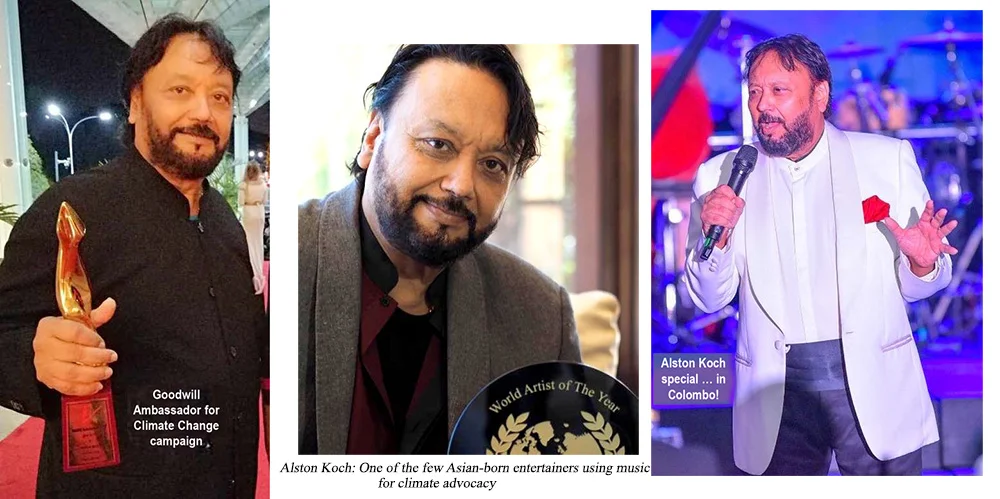
 The name Alston Koch is generally associated with the hit song ‘Disco Lady.’ Yes, he has had several other top-notch songs to his credit but how many music lovers are aware that Alston is one of the few Asian-born entertainers using music for climate advocacy, since 2008.
He is back in the ‘climate change’ scene, with SUNx Malta, to celebrate Earth Day 2026, with the release of ‘A Symphony for Change’ – a vibrant Dodo4Kids video by Alston.
The inspiring musical video highlights ocean conservation and empowers children as future climate champions, honouring Maurice Strong’s legacy through education, creativity, and global collaboration for a sustainable planet.
The four-minute animated musical, composed and performed by platinum award-winning artiste Alston Koch, brings to life a resurrected Dodo, guiding children on a mission to clean up marine environments.
With a catchy melody and an uplifting message, the video blends entertainment with education—making climate awareness accessible and engaging for the next generation.
SUNx Malta is a Climate Friendly Travel system, focused on transforming the global tourism sector that is low-carbon, SDG-linked, and nature-positive.
Professor Geoffrey Lipman, President of SUNx Malta, described the project as a joyful collaboration with purpose:
“It’s always a pleasure to produce music with Alston for the good of our planet. And this time, to incorporate our Dodo4Kids in the video urging the next generation of young climate champions to help save our seas.”
For Alston, now based in Australia, the collaboration continues a long-standing journey of climate-focused creativity:
Says Alston: “I have been working on climate songs since the first release, in 2009, of the video ‘Act Now.’ Since then, I’ve performed at major global events—from Bali to Glasgow. I wrote this song because the climate horizon is darkening, and our kids and grandkids are our best hope for a brighter future.”
Alston’s very first climate song is ‘Can We Take This Climate Change,’ released in 2008.
It was written by Alston for the World Trade Organisation presentation, in London, and presented at ‘Live the Deal Climate Change’ conference in Copenhagen.
The Sri Lankan-born singer was goodwill ambassador for the campaign, and the then UK Minister Barbara Follett called it a “gift in song to the world suffering due to climate change.”
Alston said he wrote it after noticing butterflies, birds, and fruit trees disappearing from his childhood days.
In 2017, his creation ‘Make a Change’ was released in connection with World Tourism Day 2017.
Alston Koch’s work on climate advocacy is pretty inspiring, especially as climate change is now creating horrifying problems worldwide, and in Sri Lanka, too.
Alston also indicated to us that he has plans to visit Sri Lanka, sometime this year, and, maybe, even plan out a date for an Alston Koch special … a concert, no doubt.
Can’t wait for it!

Plane crashes near South Sudan’s Juba, killing all 14 on board

Gunmen kidnap 23 children from Nigerian orphanage

US press gala shooting suspect charged with attempting to kill Trump

Showers above 75 mm are likely at some places in the Western, Sabaragamuwa, Central, North-western, North-central and Southern provinces and in Mannar district

Hazlewood and Bhuvneshwar lead rout of Delhi Capitals

Govt. assures UN of readiness to introduce ‘vetting process’ for troops on overseas missions

‘Dates have the highest sugar content to fight Coronavirus’

Sunday Island 27 December – Headlines

#SundayIsland 17th December – Headlines

Sunday Island – 28th March

Sunday Island Headlines – 21 March

Sunday Island – 21st February – Headlines
-
 News5 days ago
Lanka faces crisis of conscience over fate of animals: Call for compassion, law reform, and ethical responsibility
-
 News4 days ago
Whistleblowers ask Treasury Chief to resign over theft of USD 2.5 mn
-

 News4 days ago
No cyber hack: Fintech expert exposes shocking legacy flaws that led to $2.5 million theft
-

 News1 day ago
BIA drug bust: 25 monks including three masterminds arrested
-

 Business2 days ago
Nestlé Lanka Announces Change in Leadership
-

 News1 day ago
Banks alert customers to phishing attacks
-
 News2 days ago
Hackers steal $3.2 Mn from Finance Ministry
-
 News5 days ago
USD 2 mn bribe: CID ordered to arrest Shasheendra R, warrant issued against ex-SriLankan CEO’s wife