
Business
Purchasing Managers’ Indices for Manufacturing and Services spike in August

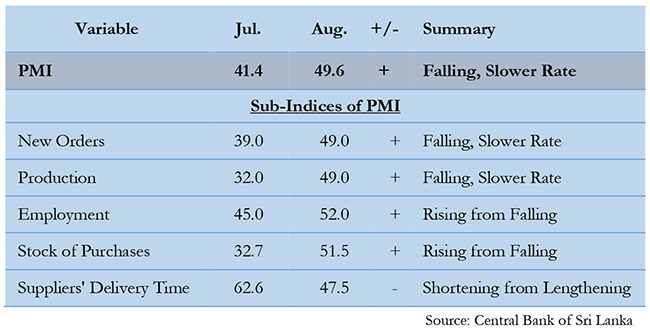
Manufacturing PMI recorded an index value of 49.6 in August 2022, up from July, yet at slightly below the neutral threshold level. The rate of decline of manufacturing activities was softened with the improvements reported in Employment and Stock of Purchases compared to the previous month while Production and New Orders declined at a slower pace. Further, the Suppliers’ Delivery Time was shortened with the improved mobility.
Overall Production and New Orders declined marginally in August 2022 compared to July 2022. However, considering the largest manufacturing sub-sectors, an increase in Production and New Orders was reported in manufacture of textile and apparel sector, limiting the overall decline to a marginal level, while the manufacture of food & beverage sector maintained Production and New Orders at the same level as of July 2022. Many respondents revealed that improved fuel availability on a month-on-month basis positively affected manufacturing activities. Meanwhile, Employment increased in August 2022, particularly in the manufacture of textile and apparel sector which frequently suffered by scarcity of employees. The increase reported in Stock of Purchases was mainly due to higher activity levels anticipated in the coming months. Some respondents mentioned that slightly improved foreign exchange availability in the market allows them to open letters of credit to import materials.
Expectations for manufacturing activities for the next three months indicated an improvement in August 2022, for the first time since February 2022, reflecting an improved business sentiment on gradually restoring stability and anticipating a more conducive environment for manufacturing activities in the coming months despite demand side impediments.
Services PMI returned to the growth territory in August 2022, recording an index value of 51.7 after declining for four consecutive months. This expansion was driven by the increases observed in New Businesses, Business Activities and Expectations for Activity. New Businesses expanded in August 2022 compared to July 2022, particularly with the improvements observed in financial services, real estate, transportation and other personal activities sub-sectors. With the increase in mobility amid the easing of fuel crisis Business Activities in the services sector increased in August following a continuous decline for four months in a row. Accordingly, the business activities mainly related to financial services, other personal activities, real estate and insurance sub-sectors showed improvements compared to the previous month. Nevertheless, as highlighted by many respondents, the other supply side constraints continued to negatively affect the business activities of some sub-sectors. In addition, the low demand lead by high inflation reportedly weighed on business activities. As such, wholesale and retail trade sub-sector showed a major decline during the month. Employment continued to fall in August due to increasing resignations besides halt in new recruitments, non-renewal of existing employment contracts and retirements. Meanwhile, Backlogs of Work dropped during the month mainly with the ease of transportation difficulties faced by the staff.


The inaugural Sri Lanka Fintech Summit 2025 concluded with industry leaders and regulators establishing two critical national priorities: a bold target to reduce physical cash usage and a push for consolidated regulatory oversight.
In a key decision, participants set a clear three-year goal to lower the ratio of cash in circulation to GDP from 4.5% to 3.5%. The strategy will focus on digitizing high-cash sectors like transport, utilities, and SME payments, while expanding digital access through post offices and cooperatives.
For the long-term health of the ecosystem, stakeholders agreed to lobby for the creation of a single, unified regulatory authority dedicated to fintech oversight. This aims to streamline approvals and provide clearer guidance for innovators.
“Our members needed to leave with concrete action points,” said Channa de Silva, Chairman of the Fintech Forum, Sri Lanka. The summit, designed as a series of closed-door roundtables with regulators including the Central Bank, produced actionable frameworks. “It was about defining KPIs, setting targets, and giving the industry a shared direction,” de Silva explained.
The outcomes signal a concerted shift from discussion to execution, aiming to build a more inclusive, efficient, and secure digital financial economy for Sri Lanka.
By Sanath Nanayakkare ✍️
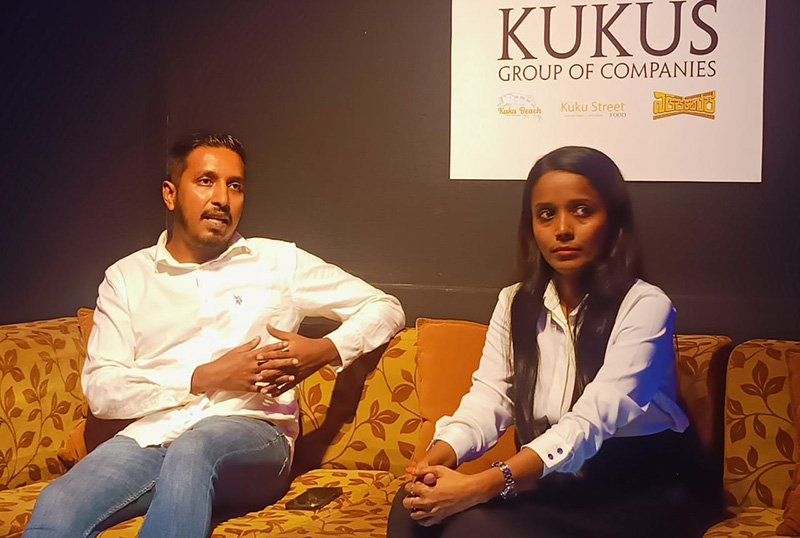
A new force in Sri Lanka’s food industry, Kukus Group, is gaining momentum with a clear vision to deliver authentic cuisine, high hygiene standards, and affordability. Founded by young entrepreneurs Nadeera Senanayaka, Lakmini Gurusinghe, and Randila Gunasinghe, the group has successfully launched its pilot outlet and is now preparing for a significant nationwide expansion.
The inaugural in Kotte has served as a successful proof of concept. Operating for five months, this modern street-food outlet has garnered a strong customer response, confirming market demand and providing the confidence to fund the group’s ambitious growth strategy.

The inaugural in Kotte
“The positive reception has been overwhelming and has solidified our plans,” said Lakmini Gurusinghe and Randila Gunasinghe. “Our Kotte outlet is the operational model we will replicate – ensuring consistent quality, disciplined operations, and excellent service across all future locations.”
The group’s expansion strategy is built on three distinct thematic brands:
Kukus Street: Targeting young urban customers, these outlets offer a vibrant, casual dining experience with a menu of Sri Lankan rice and curry, kottu, snacks, and BBQ, with most meals priced under Rs. 1,500. Services include dine-in, takeaway, and delivery.
Kukus Beach: Planned for coastal areas, beginning in the South, this concept will feature an urban-style beach restaurant and pub designed for relaxed social dining.
Kukus Bioscope: Celebrating Sri Lanka’s cinematic heritage, this dedicated restaurant concept will create a nostalgic cultural space inspired by the golden eras of Sinhala cinema, with the first outlet slated for Colombo.
The immediate plan includes transforming the flagship Kotte location into Kukus Pub & Bar, pending regulatory approvals. The long-term vision is to develop 18 outlets nationwide: 10 Kukus Street locations, 5 Kukus Beach venues, and 3 Kukus Bioscope establishments.
“Kukus Group is more than a hospitality brand; it’s a celebration of Sri Lankan flavors and culture,” the founders concluded. “Our mission is to build trusted, recognizable brands that connect deeply with communities and offer lasting cultural value alongside authentic cuisine. We are dynamic and excited to proceed with this strategic expansion,” they said.
By Sanath Nanayakkare

Fcode Labs marked its seventh anniversary by hosting its annual Awards Night 2025 at Waters Edge, celebrating team achievements and reinforcing its organizational values.
The event featured keynote addresses from Co-Founders & CEOs Buddhishan Manamperi and Tharindu Malawaraarachchi, who reflected on the company’s annual progress and future strategy. Chief Operating Officer Pamaljith Harshapriya outlined operational priorities for the next phase of growth.
Awards were presented across three key categories. Prabhanu Gunaweera and Dushan Pramod received Customer Excellence awards for partner collaboration. Performance Excellence awards were granted to Munsira Mansoor, Thusara Wanigathunga, Thushan De Silva, Adithya Narasinghe, Avantha Dissanayake, Amanda Janmaweera, Sithika Guruge, and Sandali Gunawardena. The Value-Based Behaviour awards were given to Thilina Hewagama, Udara Sembukuttiarachchi, and Kavindu Dhananjaya for exemplifying company values.

Australia great Alyssa Healy to retire from cricket

Meta blocks 550,000 accounts under Australia’s social media ban

Grace Harris’ day out helps RCB thump Warriorz

AFCON 2025 organisers investigate clashes at Nigeria, Morocco games

BCB’s integrity unit finds ‘credible suspicion’ during BPL

Devine’s 95 trumps Lee, Wolvaardt fifties in see-saw thriller

‘Dates have the highest sugar content to fight Coronavirus’

Sunday Island 27 December – Headlines

#SundayIsland 17th December – Headlines

Sunday Island – 28th March

Sunday Island Headlines – 21 March

Sunday Island – 21st February – Headlines
-

 News2 days ago
Sajith: Ashoka Chakra replaces Dharmachakra in Buddhism textbook
-

 Business2 days ago
Dialog and UnionPay International Join Forces to Elevate Sri Lanka’s Digital Payment Landscape
-

 Features2 days ago
The Paradox of Trump Power: Contested Authoritarian at Home, Uncontested Bully Abroad
-

 News7 days ago
Interception of SL fishing craft by Seychelles: Trawler owners demand international investigation
-

 Features2 days ago
Subject:Whatever happened to (my) three million dollars?
-

 News2 days ago
Level I landslide early warnings issued to the Districts of Badulla, Kandy, Matale and Nuwara-Eliya extended
-

 News7 days ago
Broad support emerges for Faiszer’s sweeping proposals on long- delayed divorce and personal law reforms
-

 News2 days ago
National Communication Programme for Child Health Promotion (SBCC) has been launched. – PM