
Business
Seylan Cards partners KOKO to enable Buy Now, Pay Later Easy Payment Schemes


Keeping up with the trends of customer behaviour in financial payments, Seylan Bank partnered with popular online payment app Koko, to enable its cardholders many benefits in a range of online and in-store shopping outlets. Both Seylan Debit and Credit card holders receive discounts, 3-month easy payment plans and 0% interest when using the Seylan Card to pay through Koko.
An exclusive offer will be available until 30th September 2022, for Seylan Debit Card holders when they download the Koko app and begin transactions, with 10% waived off for bills over Rs. 5,000/-, up to a maximum discount of Rs. 1,000/-. The key feature of using KOKO is that it is enabled for both debit and credit cards, and the total can be divided into 3 instalments with no interest fee. The wide variety of merchants registered under Koko, give Seylan customers an added benefit of choosing their favourite outlet from both online and physical stores.
Seylan Cards give customers a simplified solution as they use their cards to pay through Koko when shopping and dining at online or on-site stores of Simplytek, Life Mobile, Fitness Island, Spa Ceylon and Catch Me, as well as at leading restaurants and cafes such as Barista, Arthurs Pizza, Cafe Kumbuk, Acropol, English Cake factory and many more.


“Opportunities do not wait. If you hesitate, someone else will seize them.” — Lee Kuan Yew
When policymakers, investors and industry leaders discuss Sri Lanka’s economic transformation, the conversation almost always arrives at the same conclusion. The gap between where the country is and where it needs to be is real, but the ingredients to close it are already present.
That observation is correct. But it misses something important.
Ingredients alone do not build a competitive economy. What converts potential into performance is a platform, a concentrated environment where the right regulatory conditions, physical infrastructure, and commercial frameworks exist together, at a standard that global enterprises demand.
Without such an assurance, multinational companies are unlikely to commit the significant capital required to shift or establish operations in a new location. Sri Lanka has been building toward that platform for some time. However, in light of the ongoing and unprecedented shifts in the global economy, the time for bold and decisive action is now.
What the Next Decade Can Look Like
When Dubai Internet City made its foundational infrastructure decisions in the early 2000s, few predicted it would grow to host over 4,000 companies and 31,000 professionals, adding AED 100 billion to the emirate’s economy over fifteen years, drawing not just technology firms, but financial services, media, and professional services enterprises seeking a stable regulatory platform.
Similarly, GIFT City in India, dismissed as overambitious when first ideated in 2007, crossed 1,150 registered entities by February 2026 with yearly growth that few analysts had modelled. Today it hosts banks, asset managers, insurance firms, and technology companies, a multi-sector ecosystem built on institutional certainty.
Companies come, talent follows, education institutions establish, and supporting services build around the ecosystem. What begins as a zone becomes an economy within an economy. That is the trajectory Port City Colombo is positioned to follow.
What Port City Colombo Brings to the Table
Port City Colombo’s architecture is designed for exactly this kind of investment. Dollarised transactions, an independent regulatory commission, English-language commercial frameworks, and a structure that lets international companies establish fully on their own terms. The independent regulatory framework ensures institutional continuity beyond political cycles, a critical factor for long-term capital deployment. For multinational enterprises evaluating where to establish regional operations, whether in financial services, technology, logistics, or professional services, these are the conditions that determine whether a location makes the shortlist at all.
The early traction is visible. More than half of the companies registered as Authorised Persons operate in IT and technology-enabled services. By late 2025, approximately 1 million square feet of office space was occupied, with the Business Centre reflecting occupancy levels above 95%. IFS has announced a facility expected to create 1,000 jobs. Recent amendments to the Colombo Port City Economic Commission Act have strengthened governance and streamlined regulatory oversight.
What converts early momentum into sustained growth is infrastructure readiness: reliable connectivity, stable power, and clear regulatory frameworks around cross-border operations. Get that right early, and the impact compounds. From resilience to transformation, Port City Colombo plays a pivotal role. It expands Sri Lanka’s economic capacity rather than substituting for existing hubs, creating new opportunities that strengthen the entire system. Infrastructure brings companies, companies bring talent, talent brings capital, and that sequence, once started, turns into a virtuous cycle that can help revitalize other sectors of the Sri Lankan economy.
Sri Lanka already has natural advantages. Five subsea cable landing stations connect the country to the global data network. Port City Colombo adds the institutional and commercial layer that converts that connectivity into something a global company can actually build on.
The Corridor and the Talent
Sri Lanka’s geography is one of its most underused arguments. Sitting at the intersection of the Asia-Middle East-Africa maritime and data corridor, handling over 15% of South Asia’s transshipment volume, and able to engage Indian, Gulf, Chinese and Western commercial interests simultaneously without alignment to any single bloc, few locations in the Indian Ocean can offer the same reach. For global enterprises, that neutrality translates directly into commercial resilience.
Sri Lanka is building toward a national workforce target of 300,000 professionals across technology, finance, logistics, and advanced services. Brain drain has complicated that trajectory, but global education institutions establishing within Port City Colombo represent a direct structural solution. Training talent for zone-based companies while positioning Colombo as a regional destination for skilled professionals across multiple sectors.
Sri Lanka’s Digital Decade: Port City is the Platform We Need
Regional competitors are investing heavily in the economic infrastructure and institutional frameworks that attract high-value cross-sector investment. The decisions that determine which cities and zones capture the next wave of global capital and enterprise activity are being made now, not in five years.
Sri Lanka has what it needs to compete. Realised FDI inflows grew 72% in 2025, crossing $1 billion for the first time. The conditions are converging in a way they have not before. What this moment requires is the institutional and infrastructure certainty that converts that potential into something global companies can actually point to and say: this works, and we are building here.
Dubai Internet City took fifteen years to add AED 100 billion to Dubai’s economy. GIFT City crossed 1,150 registered entities after two decades of sustained institutional commitment. Sri Lanka now has everything those success stories started with: the geography, the framework, the connectivity infrastructure, and investment confidence that grew 72% in a single year.
If we play our cards right, Port City Colombo is where Sri Lanka’s digital decade gets built.
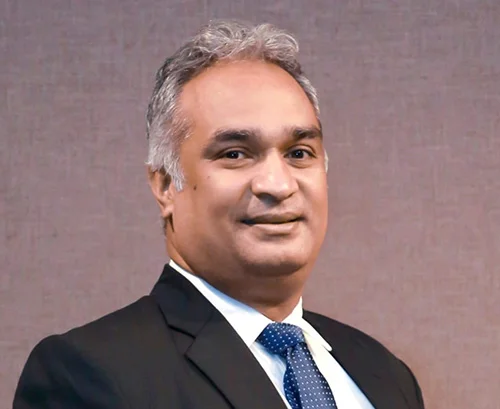
By Indika de Zoysa, Vice President, Computer Society of Sri Lanka; Immediate Past Chairman, FITIS
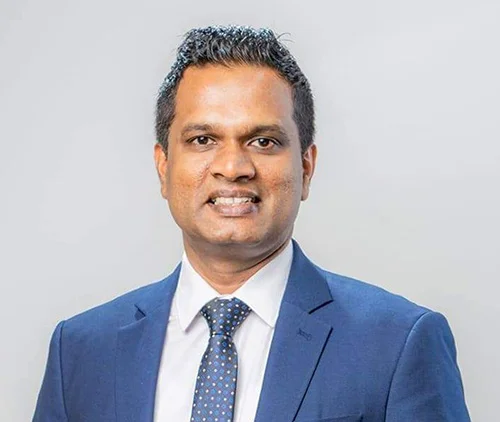
HNB General Insurance (HNBGI) announces the appointment of Dilshan Perera as Chief Operating Officer (COO). This appointment reinforces the company’s commitment to strengthening its leadership pipeline and advancing its strategic transformation agenda in the insurance industry.
Dilshan is an accomplished C-suite senior manager with over 20 years of experience spanning Strategic Management, Digital Transformation, Marketing and Brand Management, Sales Management, Business Development, and Customer Experience Management. His diverse career spans the Life Insurance, General Insurance, Telecommunications, Banking, and Retail sectors, equipping him with a broad and dynamic perspective on business leadership.

CSE trading picked-up yesterday due to a slight rupee appreciation together with positive news from West Asia that negotiations are progressing in a positive direction between the US and Iran, market analysts said.
Buying interest was noted in blue-chip counters, especially the banking sector. The All Share Price Index went up by 458.75 points while the S and P SL20 rose by 129.70 points.
Turnover stood at Rs 2.42 billion with four crossings. Those crossings were reported in LB Finance, where 441,800 shares crossed to the tune of Rs 71.8 million; its shares traded at Rs 152.50, Softlogic Life Insurance 250,000 shares crossed for Rs 23 million; its shares traded at Rs 92, Hemas Holdings 150,000 shares crossed for Rs 20.9 million; its shares traded at Rs 32.20 and HNB 50000 shares crossed for Rs 20.1 million; its shares sold at Rs 403.
In the retail market top seven companies that have mainly contributed to the turnover were: TJ Lanka Rs 159.7 million (5.1 million shares traded), CCS Rs 123.5 million (953,000,shares traded), Colombo Dockyard Rs 89.4 million (655,000 shares traded), Softlogic Life Rs 88.7 million (954,000 shares traded), Dialog Axiata Rs 85.2 million (1.2 million shares traded), Commercial Bank Rs 72.3 million (351,000 shares traded) and LMF Rs 60.5 million (151,000 ,shares traded). During the day 106.1 million share volumes changed hands in 26324 transactions.
It is said that banking sector counters, especially HNB, performed well, while the manufacturing sector, especially TJ Lanka, and consumer based companies, including Lanka Milk Food, performed significantly well.
Yesterday, the rupee was quoted at Rs 328.00/335.00 to the US dollar in the spot market on, weaker from Rs 329.00/331.00 on Friday, dealers said, while bond yields held firm on the back of news of a possible US-Iran deal.
The telegraphic transfer rate for Sri Lanka’s rupee against the US dollar was 325.5000 buying, 334.5000 selling.
By Hiran H Senewiratne

Buddha Bhivandana Vesak Zone in Panadura from May 30th

Sri Lanka’s Digital Decade: ‘The role Port City Colombo must play’

HNB General Insurance appoints Dilshan Perera Chief Operating Officer

Slight pick-up in the rupee’s fortunes sends happy ripples to bourse

Sri Lanka name Kusal Mendis as ODI and T20I captain for West Indies tour

Cambodia’s former opposition leader receives royal pardon for 27-year sentence

‘Dates have the highest sugar content to fight Coronavirus’

Sunday Island 27 December – Headlines

#SundayIsland 17th December – Headlines

Sunday Island – 28th March

Sunday Island Headlines – 21 March

Sunday Island – 21st February – Headlines
-

 Features6 days ago
Octopus, Leech, and Snake: How Sri Lanka’s banks feast while the nation starves
-
 Sports6 days ago
Sri Lanka women’s volleyball team ready for Central Asian challenge
-
 Opinion5 days ago
Murder of Ehelepola family, Bogambara Wewa and Sightings of Wangediya
-
 News5 days ago
Steps underway to safeguard Sri Lanka’s maritime heritage
-

 Business4 days ago
Historic launch of CCWE Fashion Week & International Summit 2026
-

 Features2 days ago
The NPP’s pivot to the past
-

 News24 hours ago
Police probe underway to ascertain links between criminals deported from UAE and local politicians
-

 Editorial5 days ago
A play without its protagonist