
Features
Tribute to Professor Dr Ronald Lewcock

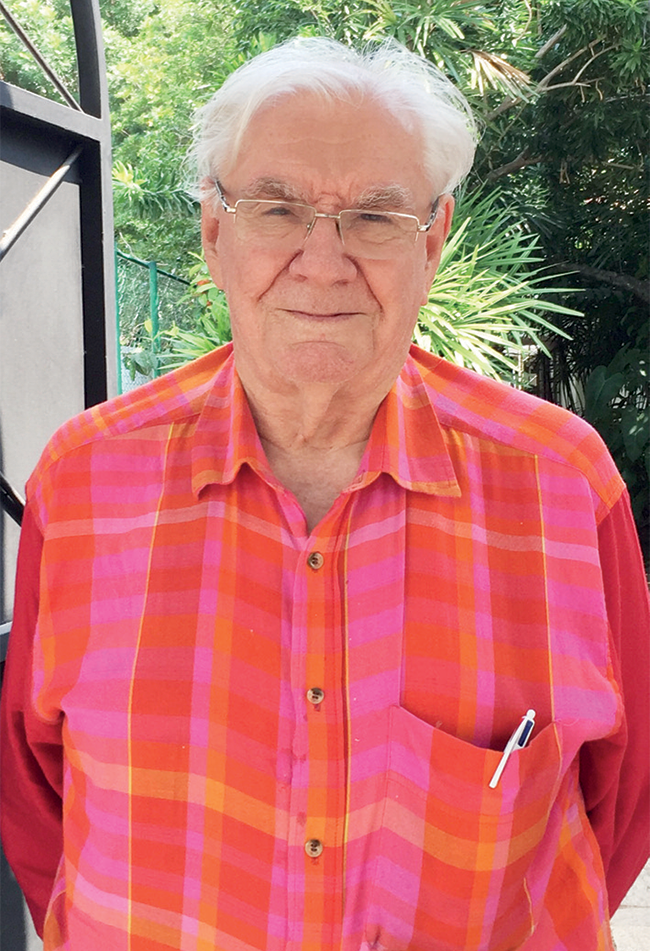
We all die. The goal isn’t to live forever; the goal is to create something that will.
Chuck Palahnuik
I felt very sad when I heard of the death of Ron Lewcock on August 13. He had not been his usual self ever since Barbara Sansoni Lewcock, his wife of 42 years, died just two and a half months previous. They were in Sri Lanka and at home in Anderson Road, Colombo 5, when she passed away. Ron continued living here, well looked after by Barbara’s son Dominic, daughter-in-law Nazrin, their grandchildren and members of the household – Kavidas and Mallika. I personally feel Ron just could not accept the fact that Barbara was no more. They shared life completely; and when she was declining in health he had been so concerned and considerate to her.
Ron was a truly distinguished architect, world renowned, and a university lecturer in demand. His special field of research was the architecture of the Middle East and Asia about which he wrote much. He was also deeply interested in the vernacular and colonial-era architecture of South Asia, particularly of Sri Lanka.
I first met Ron in the early 1990s. Tall and gentle, always smiling and with a twinkle in his eye, he seemed to be the quintessential absent-minded professor. He and Barbara made a great team and when you met them you felt uplifted by their sense of humour and joy for life.
Student and professional life
Ron, an only child, was born in Brisbane, Australia in 1928. As a sailor from age nine, he was keen on the design of boats, houseboats and houses up until age 15. In 1947, he started his architectural degree at the University of Queensland, and completed it in 1951 at the University of Cape Town, South Africa. While a lecturer in architecture at the University of Natal, he obtained his Doctorate from the University of Cape Town for a thesis titled Early 19th Century Architecture in South Africa: the interaction of two cultures – Dutch & English.
He earned a visiting fellowship to Columbia University, New York. His subject of study, which he continued to explore throughout his career, was European Colonial Architecture in Africa and Asia. In 1968-69, during his sabbatical, he undertook fieldwork on this subject. This brought Ron to Sri Lanka, where he met Barbara Sansoni. He travelled extensively through the country and became enchanted by its varied architecture. He also found an affinity to the Arab and colonial architecture of the East African Coast and South Africa. This led him to the study of Asian and African indigenous architecture, especially to Islamic, but also Hindu and Buddhist architecture
In 1970, he was awarded a research fellowship to Clare Hall in Cambridge, England and became a Foundation Fellow two years later. He taught at Cambridge University and the Architectural Association in London.
Ron returned to Sri Lanka for three months of each year during the 1970s and early 80s for his colonial architectural research, broadening it to include the local vernacular. In this he was assisted by Barbara Sansoni and Laki Senanayake, who became his close friends. The previous year he was commissioned by Habitat to undertake the listing and preservation of historic buildings and zones in the Colombo urban area which was completed the next year. He began to prepare his magnum opus The Architecture of an Island for publication with Barbara Sansoni, who did almost all of the perspectives, and Laki Senanayake, vastly extending the archive of measured drawings which had been initiated by Ulrik Plesner in the early 1960s. The book was hand collated and produced with the help of Architect C Anjalendran; not yet being the age of digital technology. Unfortunately more than half the 100 examples in the tome have disappeared – mostly brought down, destroyed!
In 1972, Ron was appointed architect of the America Research Center in Egypt’s conservation of Bayt al-Razzaz, the largest Mamluk Palace of the 15th century. Subsequently he was requested by the World Bank to prepare a proposal for the conservation of the northern half of the old walled city of Cairo. Having obtained funding from the “Seven Pillars of Wisdom” Fund, administered by Lawrence of Arabia’s family, he participated in the University of Cambridge expedition to Yemen in 1972. Here, though arrested seven times, Ron single handedly measured 40 major buildings and exposed over 40 rolls of film. When the exhibition of this work titled Nomad and the City was held at the Museum of Mankind – a section of the British Museum – as part of The World of Islam Festival in 1976, it became the most attended British Museum exhibition up until that time.
Kuwait and the Northern Gulf
was published in 1976 and Ron was appointed UNESCO consultant and advisor to the Sultan on the conservation of the heritage of Muscat and Oman. In 1983, he led a four month conservation mission to China for the Aga Khan Trust for Culture. A year later, Ron became the first Aga Khan Professor of Architecture at MIT and was also often chairman of the Aga Khan Programme at Harvard and MIT.
From 1991 Ronald taught at the Georgia Institute of Technology as Professor of the Doctoral Programme in Architecture, and was appointed Professor Emeritus in 2008. In the same year he was appointed an Honorary Professor at the University of Queensland, where he conducted a senior course on Architecture in Asia. Till very recently he advised on the conservation of the Great Mosque of San’a, which is one of the oldest mosques in the Islamic world, originally built in the lifetime of the Prophet.
I quote from the presentation made by Architect C Anjalendran at the third cycle of the Geoffrey Bawa Awards 2013/14 for Excellence in Architecture, celebrated at Park Street Mews on the evening of 23 July 2014.
“Ronald has three segments in his illustrious career. Firstly, his research and writing on architecture of Sri Lanka, Africa as well as of the Islamic and Colonial world. Secondly, his contribution to the building of several educational institutions. Thirdly, and perhaps, most importantly, the empowerment of younger generations of architects in their understanding and appreciation of architecture and art, appropriate to their countries of origin.”
Ronald Lewcock has many more publications and honours to his name; more than a hundred articles; and contributions to major architecture, art and culture encyclopedias – 1970 onwards.
Ron the humane person
He married Barbara Sansoni in 1980 and was devoted to her, insisting she travel with him to Australia, Cambridge and the US, right up to 2020. Christmas was always spent in Colombo with family and local friends.
I must add here that Ron was a perfect person, truly so; kind, considerate, humorous and fun loving. He would have moved with kings and nations’ presidents but he never lost his generous ability to speak showing genuine interest and friendliness to the very ordinary person. I have chatted to him and Barbara at the Galle Literary Festivals; visited them in their home, had them in my home and met more often and for longer evenings when I holidayed with my son in Atlanta, where Ron and Barbara moved to from Boston. They looked to my son’s well being when he was new in Boston.
Then he moved to Atlanta for his higher degrees and when Ron and Barbara moved to Atlanta, he was helpful to them in various ways. My son would invite them both along with other friends for drinks enjoyed on the rooftop of the building. Ron would make it a point to sit with me, often on the half wall of the entertaining area, and listen with interest to what I chatted about. He was such a kind and affectionate person.
Within Ron’s many accomplishments is the significant legacy of hundreds, nay thousands of students who studied under him, many of them pursued their PhDs under his guidance. Most are now academics and leaders in their fields, heading departments and making their own contributions to the realm of architecture. So Ron’s influence, his humanism, his love for buildings and the people who inhabit them, will continue to live on.Every man’s life ends the same way. It is only the details of how he lived that distinguish one man from another. Ernest Hemingway.


I was recently given several books dealing with religion, and, instead of looking at questions of church union in current times, I turned first to Buddhism in the 19th century. Called Locations of Buddhism: Colonialism and Modernity in Sri Lanka, the book is a study by an American scholar, Anne M Blackburn, about developments in Buddhism during colonial rule. It focuses on the contribution of Ven. Hikkaduwe Sri Sumangala who was perhaps the most venerated monk in the latter part of the 19th century.
Hikkaduwe, as she calls Ven. Sumangala through the book, is best known as the founder of the Vidyodaya Pirivena, which was elevated to university statues in the fifties of this century, and renamed the University of Sri Jayewardenepura in the seventies. My work in the few years I was there was in the Sumangala Building, though I knew little about the learned monk who gave it its name.
He is also renowned for having participated in the Panadura debates against Christians, and having contributed to the comparative success of the Buddhist cause. It is said that Colonel Olcott came to Sri Lanka after having read a report of one of the debates, and, over the years, Ven. Sumangala collaborated with him, in particular with regard to the development of secondary schools. At the same time, he was wary of Olcott’s gung ho approach, as later he was wary of the Anagarika Dharmapala, who had no fear of rousing controversy, his own approach being moderate and conciliatory.
While he understood the need for a modern education for Buddhist youngsters, which Olcott promoted, free of possible influences to convert which the Christian schools exercised, he was also deeply concerned with preserving traditional learning. Thus, he ensured that in the pirivena subjects such as astrology and medicine were studied with a focus on established indigenous systems. Blackburn’s account of how he leveraged government funding given the prevailing desire to promote oriental studies while emphatically preserving local values and culture is masterly study of a diplomat dedicated to his patriotic concerns.
He was, indeed, a consummately skilled diplomat in that Blackburn shows very clearly how he satisfied the inclinations of the laymen who were able to fund his various initiatives. He managed to work with both laymen and monks of different castes, despite the caste rivalry that could become intense at times. At the same time, he made no bones about his own commitment to the primacy of the Goigama caste, and the exclusiveness of the Malwatte and Asgiriya Chapters.
What I knew nothing at all about was his deep commitment to internationalism, and his efforts to promote collaboration between Ceylon Lanka and the Theravada countries of South East Asia. One reason for this was that he felt the need for an authoritative leader, which Ceylon had lost when its monarchy was abolished by the British. Someone who could moderate disputes amongst monks, as to both doctrine and practice, seemed to him essential in a context in which there were multiple dispute in Ceylon.
Given that Britain got rid of the Burmese monarchy and France emasculated the Cambodian one, with both of which he also maintained contacts, it was Thailand to which he turned, and there are records of close links with both the Thai priesthood and the monarchy. But in the end the Thai King felt there was no point in taking on the British, so that effort did not succeed.
That the Thai King, the famous Chulalongkorn, did not respond positively to the pleas from Ceylon may well have been because of his desire not to tread on British toes, at a time when Thailand preserved its independence, the only country in Asia to do so without overwhelming British interventions, as happened for instance in Nepal and Afghanistan, which also preserved their own monarchies. But it could also have been connected with the snub he was subject to when he visited the Temple of the Tooth, and was not permitted to touch the Tooth Relic, which he knew had been permitted to others.
The casket was taken away when he leaned towards it by the nobleman in charge, a Panabokke, who was not the Diyawadana Nilame of the day. He may have been entrusted with dealing with the King, as a tough customer. Blackburn suggests it is possible the snub was carefully thought out, since the Kandyan nobility had no fondness for the low country intercourse with foreign royalty, which seemed designed to take away from their own primacy with regard to Buddhism. The fact that they continued subservient to the British was of no consequence to them, since they had a façade of authority.
The detailed account of this disappointment should not, however, take away from Ven. Sumangala’s achievement, and his primacy in the country following his being chosen as the Chief Priest for Adam’s Peak, at the age of 37, which placed him in every sense at the pinnacle of Buddhism in Ceylon. Blackburn makes very clear the enormous respect in which he was held, partly arising from his efforts to order ancient documents pertaining to the rules for the Sangha, and ensure they were followed, and makes clear his dominant position for several decades, and that it was well deserved.
by Prof. Rajiva Wijesinha
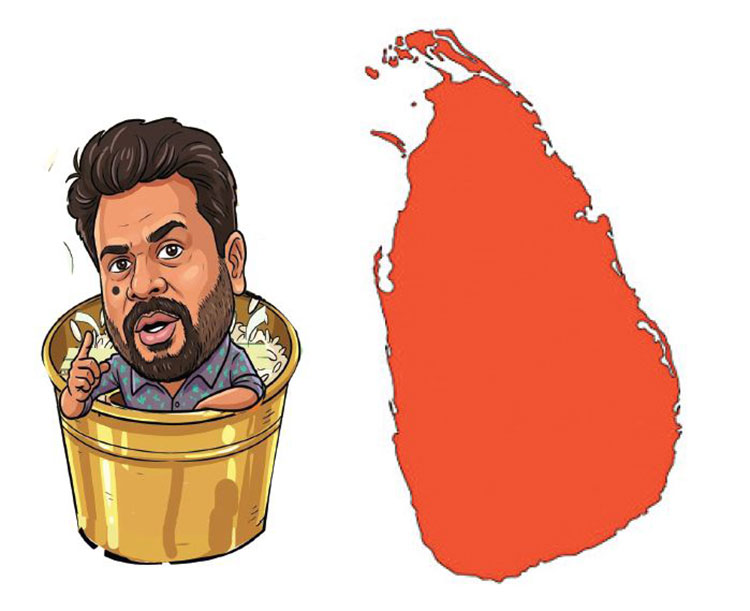
Attempting to bask in the glory of the past serves no purpose, some may argue supporting the contention of modern educationists who are advocating against the compulsory teaching of history to our youth. Even the history they want to teach, apparently, is more to do with the formation of the earth than the achievements of our ancestors! Ruminating over the thought-provoking editorial “From ‘Granary of the East’ to a mere hunduwa” (The Island, 5th March), I wished I was taught more of our history in my schooldays. In fact, I have been spending most of my spare time watching, on YouTube, the excellent series “Unlimited History”, conducted by Nuwan Jude Liyanage, wherein Prof. Raj Somadeva challenges some of the long-held beliefs, based on archaeological findings, whilst emphasising on the great achievements of the past.
Surely, this little drop in the Indian ocean performed well beyond its size to have gained international recognition way back in history. Pliny the Elder, the first-century Roman historian, therefore, represented Ceylon larger than it is, in his map of the world. Clicking on (https://awmc.unc.edu/2025/02/10/interactive-map-the-geography-of-pliny-the-elder/) “Interactive Map: The Geography of Pliny the Elder” in the website of the Ancient World Mapping Centre at the University of North Carolina at Chappel Hill, this is the reference to Anuradhapura, our first capital:
“The ancient capital of Sri Lanka from the fourth century BCE to the 11th century CE. It was recorded under the name Anourogrammon by Ptolemy, who notes its primary political status (Basileion). It has sometimes been argued that a “Palaesimundum” mentioned by Pliny in retelling the story of a Sri Lankan Embassy to the emperor Claudius is also to be identified with Anourogrammon. A large number of numismatic finds from many periods have been reported in the vicinity.”
Ptolemy, referred to above, is the mathematician and astronomer of Greek descent born in Alexandria, Egypt, around 100 CE, who was well known for his geocentric model of the universe, till it was disproved 15 centuries later, by Copernicus with his heliocentric model.
It is no surprise that Anuradhapura deservedly got early international recognition as Ruwanwelisaya, built by King Dutugemunu in 140 BCE, was the seventh tallest building in the ancient world, perhaps, being second only to the Great Pyramids of Giza, at the time of construction. It was overtaken by Jetawanaramaya, built by King Mahasena around 301 CE, which became the third tallest building in the ancient world and still holds the record for the largest Stupa ever built, rising to a height of 400 feet and made using 93.3 million baked mud bricks. Justin Calderon, writing for CNN travel under the heading “The massive megastructure built for eternity and still standing 1,700 years later” (https://edition.cnn.com/travel/jetavanaramaya-sri-lanka-megastructure-anuradhapura) concludes his very informative piece as follows:
“Jetavanaramaya stands today as evidence of an ancient society capable of organising labour, materials and engineering knowledge on a scale that rivalled any civilisation of its time.
That it remains relatively unknown beyond Sri Lanka may be one of history’s great oversights — a reminder that some of the ancient world’s most extraordinary achievements were not carved in stone, but shaped from earth, devotion and human ingenuity.”
Extraordinary achievements of our ancestors are not limited to Stupas alone. As mentioned in the said editorial, our country was once the Granary of the East though our present leader equated it to the smallest measure of rice! Our canal systems with the gradient of an inch over a mile stand testimony to engineering ingenuity of our ancestors. When modern engineers designed the sluice gate of Maduru Oya, they were pleasantly surprised to find the ancient sluice gates designed by our ancestors, without all their technical knowhow, in the identical spot.
Coming to modern times, though we vilify J. R. Jayewardene for some of his misdeeds later in his political career, he should be credited with changing world history with his famous speech advocating non-violence and forgiveness, quoting the words of the Buddha, at the San Francisco Conference in 1945. Japan is eternally grateful for the part JR played in readmitting Japan to the international community, gifting Rupavahini and Sri Jayewardenepura Hospital. Although we have forgotten the good JR did, there is a red marble monument in the gardens of the Great Buddha (Daibutsu) in Kamakura, Japan with Buddha’s words and JR’s signature.
It cannot be forgotten that we are the only country in the world that was able to comprehensively defeat a terrorist group, which many experts opined were invincible. Services rendered by the Rajapaksa brothers, Mahinda and Gotabaya, should be honoured though they are much reviled now, for their subsequent political misdeeds. Though Gen-Z and the following obviously have no recollections, it is still fresh in the minds of the older generation the trauma we went through.
It is to the credit of the democratic process we uphold, that the other terrorist group that heaped so much of misery on the populace and did immense damage to the infrastructure, is today in government.
As mentioned in the editorial, it is because Lee Kuan Yew did not have a ‘hundu’ mentality that Singapore is what it is today. He once famously said that he wanted to make a Ceylon out of Singapore!
Let our children learn the glories of our past and be proud to be Sri Lankan. Then only they can become productive citizens who work towards a better future. Resilience is in our genes and let us facilitate our youth to be confident, so that they may prove our politicians wrong; ours may be a small country but we are not ‘hundu’!
By Dr Upul Wijayawardhana

The election in Nepal last week was not merely a political exercise; it was an eruption of pentup fury, a rejection of the old guard that had throttled any semblance of progress for decades. But what now stares the country in the face is a stark question: have the people truly changed their future, or simply traded one set of illusions for another?
For years, Nepalis endured the same trio of power brokers — the Nepali Congress, the CPNUML, and the socalled Communist Party — as these entities pirouetted through government halls, recycled leadership, and maintained an endless cycle of impressive promises and microscopic delivery. Institutions decayed, corruption metastasized, unemployment worsened further. Youth unemployment stands north of 20 per cent — more than double the national average. Around 1,500 young Nepalis leave their homeland every single day seeking work abroad, a staggering exodus that undermines any future the country might hope to sculpt for itself.
So, when the uprising erupted, when Gen Z and youth frustration boiled over into the streets, it was not just rage — it was despair. For a generation raised on unfulfilled promises, the old guard simply had no authority left to persuade a battered population of its relevance. History remembers political decay, but seldom the emotional collapse that precedes a revolt.
Into this void surged Balendra Shah, the rapperturnedKathmandu mayor better known as Balen. He became the face of something many claimed they wanted: a break with the past. The Rastriya Swatantra Party (RSP), a party as new as its leader’s rise from outside the entrenched political class, swept to an unprecedented majority: 125 of the 165 firstpastthepost seats. A single party holding nearly twothirds control in Nepal is almost unheard of, a brutal indictment of the old establishment’s collapse.
Yet, beneath the celebrations, the mood of unrestrained optimism conceals something far darker: a population battered into radical decisionmaking by emotion, not strategy. It is a politics driven not by reflection, debate, or longterm planning, but by hatred — hatred of “corrupt leaders,” hatred of stagnation, hatred of a system that failed to deliver rice (dal bhat), work, dignity. This emotional current, once unleashed, is merciless. It propels movements forward with the force of steam but leaves them to sputter once the fire runs out.
Nepal’s new leadership inherited not opportunity but catastrophe. The economic foundation is weak and brittle. Public debt hovers around 40–45 per cent of GDP, but it is the quality of the economy that terrifies: a narrow tax base, enormous dependence on remittances accounting for roughly onequarter of GDP, and a private sector too fragile to absorb the burgeoning army of young jobseekers. Tourism, once thought a panacea, remains exquisitely sensitive to global disruptions. Agriculture remains archaic and unproductive. Power outages and distribution inefficiencies plague even the most basic enterprises. Crucially, the labour force — the very youth that marched in protests — has no obvious outlet for meaningful employment.
The RSP manifesto, the socalled “2082 Vision,” is nothing if not audacious: 1.2 million jobs in five years; GDP expansion to almost $100 billion; per capita income rising to $3,000; 15,000 megawatts of installed capacity; halving LPG imports; digital services exports of $30 billion in ten years; the construction or upgrade of 30,000 kilometres of national highways. These numbers are ambitious — some might say visionary — but independent observers see them as fantasy built on the emotional reservoir of hope, not on deeply rooted economic analysis. Nepal’s energy grid cannot reliably distribute current capacity; transportation infrastructure routinely buckles under seasonal rains; foreign direct investment remains underwhelming; and the digital economy is throttled by regulatory unpredictability and an underdeveloped legal regime for international payments.
These are the grim realities. A promise to reduce imports without addressing critical bottlenecks in trade policy or crossborder logistics is a promise destined for frustration. A pledge to build tens of thousands of kilometres of roads without sustained institutional capacity to manage land acquisition, competitive bidding, quality control, and anticorruption oversight offers little more than ritual groundbreaking and even more ceremonial delays.
This mismatch between aspirational rhetoric and structural capacity points to a far more troubling truth: Nepalis have been deceived not by individuals but by narratives. The uprising was not wrong in its desire for change. But it was driven by visceral emotion — a collective impulse to reject the old, often without a coherent alternative blueprint that could realistically transform the economy and provide stability. Angry protests and street fervour commandeered the engine of politics, and once that engine is running on emotion rather than evidence, it becomes dangerously unpredictable.
Look at Chile. Gabriel Boric was once lauded as a youthful saviour, riding a wave of antiestablishment fervour following mass protests. He came to power promising transformation, only to be bogged down by economic crises, political fragmentation, and opposition so ferocious that his capacity to govern was severely curtailed. Boric faced impeachment, suffered plummeting approval ratings, and struggled to balance reformist zeal with the weight of practical governance. If Nepal is honest with itself, it must question whether Balen may tread a similar path: overwhelmed by the emotional thunder that elevated him, yet unprepared to deliver the institutional and economic stability the nation desperately needs.
Here’s the painful truth: Gen Z politics, fuelled by emotion, creates momentum but not mechanisms. Momentum wins rallies; mechanisms build nations. The current administration’s inexperience — not merely in government, but in managing a modern economy under immense pressure — sets the stage for something grim: a crescendo of disappointed expectations. When job creation fails to materialize at the promised scale, when infrastructure projects lag, when remittances cool and capital flight accelerates, the emotional energy that once propelled this movement may transform into a bitter sense of betrayal. That betrayal has a name in political history: radicalization without deliverables.
Worse still, emotional politics is ripe for exploitation by external actors. Nepal is geostrategically hemmed in by its two giant neighbours. India — the largest source of trade, investment, energy supplies, and transit routes — watches with both interest and caution. China, shareholder in multiple infrastructure ventures and a central actor in Belt and Road projects, has its own expectations. Both have engaged with the RSP, seeking alignment with their own strategic interests. But emotion is a currency external powers love to leverage: where national confidence is high and institutional clarity is low, foreign influence finds entry points. A government fuelled by public passion — but lacking robust policy anchors — becomes pliable, attractive, and dangerous.
The question is: did the electorate truly choose a path to prosperity, or merely a dream of it? Emotional politics gave the people a mirror — a reflection of their hurt, their labour unrecognized, their aspirations denied. But mirrors do not map roads; they only reveal what is already before us.
Balenomics may become a lesson in hubris — not because the goals are unworthy, but because goals without disciplined implementation, institutional reform, and credible governance remain poetry when the country needs engineering. Nepal needs a systemic recalibration of labour markets, transparent rulemaking, competitive commerce, legal certainty for investments, and infrastructural credibility — not just slogans that rouse crowds.
When citizens see delays, when promised jobs fail to materialise, when inflation stubbornly erodes incomes, and when foreign capital does not flood in simply because of optimism, the inevitable question will surface: was this all just emotional theatre? If the answer is yes, Nepal risks entering a phase worse than the old guard’s mismanagement: disillusionment with revolt itself.
by Nilantha Ilangamuwa

From Que Sera, Sera … to QR

Plant-based tourism could be Sri Lanka’s overlooked growth opportunity: Andrea Diaz

Social and political aspects of Buddhism in a colonial context

Kidney awareness drive at Kegalle hospital

NPP pre-poll promises still unfulfilled – SLUNBA

Iran, Lanka FMs discuss regional developments over telephone

‘Dates have the highest sugar content to fight Coronavirus’

Sunday Island 27 December – Headlines

#SundayIsland 17th December – Headlines

Sunday Island – 28th March

Sunday Island Headlines – 21 March

Sunday Island – 21st February – Headlines
-

 News7 days ago
Repatriation of Iranian naval personnel Sri Lanka’s call: Washington
-

 News6 days ago
Prof. Dunusinghe warns Lanka at serious risk due to ME war
-

 News4 days ago
Historic address by BASL President at the Supreme Court of India
-

 Sports5 days ago
Royal start favourites in historic Battle of the Blues
-

 Sports4 days ago
The 147th Royal–Thomian and 175 Years of the School by the Sea
-

 Business5 days ago
BOI launches ‘Invest in Sri Lanka’ forum
-

 News5 days ago
CEBEU warns of operational disruptions amid uncertainty over CEB restructuring
-

 Features7 days ago
Pay attention or pay the price: Sri Lanka’s maritime imperative in a fractured ocean