
News
Weerawansa urges President to fast-track interest-free university student loan scheme

By Sanath Nanayakkare
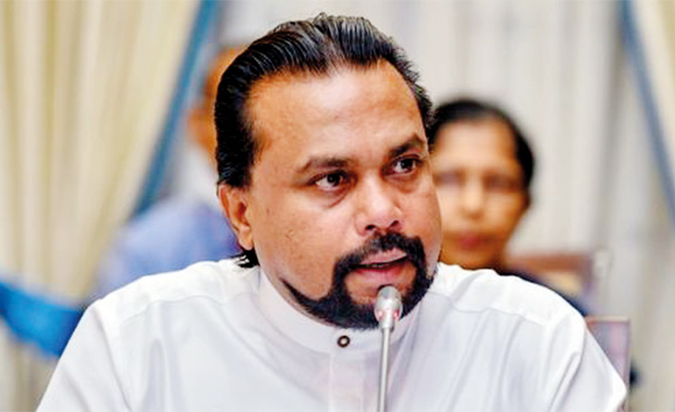
National Freedom Front (NFF) Leader Wimal Weerawansa yesterday urged the Finance Minister and President Ranil Wickremesinghe to expedite the enrollment of students selected to enter non-state/private universities under the student loan scheme initiated by the Yahapalana government in 2017.
“As you are well aware, due to the limited
capacity of enrolling students to state universities, not all students who are eligible for university entrance in Sri Lanka get the opportunity. Against this backdrop, the interest-free loan scheme for selected students to enter private universities was introduced in 2017 while you were the prime minister of that administration.
Under this programme, five consecutive student groups are to be enrolled in private universities, however, the students selected by the Ministry of Higher Education to enter nominated private universities for the Academic Year 2021/2022, have not yet been registered.
The anxiously awaiting students are very concerned about this delay as years don’t wait for them and they can’t reverse the damage caused by it on their future,” Weerawansa stated writing a letter to the President on the matter.
“Providing the opportunity of enrollment to such students to private universities under the above interest-free student loan scheme would be a progressive measure because the capital we invest as a nation for tomorrow’s academic and professional excellence of our students would be a meaningful investment for the future.
“About 15,000 students who belong to this aspirant group are told by the Ministry of Higher Education that financial institutions including the Bank of Ceylon are citing the prevailing higher interest rates as a barrier to implementing this scheme as planned earlier. So I kindly request you to pay immediate attention to this matter as the finance minister and take appropriate action to resolve this issue and accelerate the registration process and intake of these students.”
Several students selected to enter private universities under this scheme told The Island that they were told by Higher Education Ministry authorities at a Zoom meeting that the state bank involved in the project is not willing to give out these loans at the previous rates (12%-13%) as current bank interest rates have exceeded 22% per annum. So we got the impression that either the government would have to give a fresh guarantee to the Bank of Ceylon (BOC) on the new interest payments or our parents would have to pay the increased part of the interest. Most of us are from low and middle income levels of the society, and therefore, it would be practically impossible for our parents to bear a significant share of the interest cost.”
According to the Higher Education Ministry’s website, the total interest-free loan period is 12 years. The repayment of the loan should be started after the study period and one-year grace period.

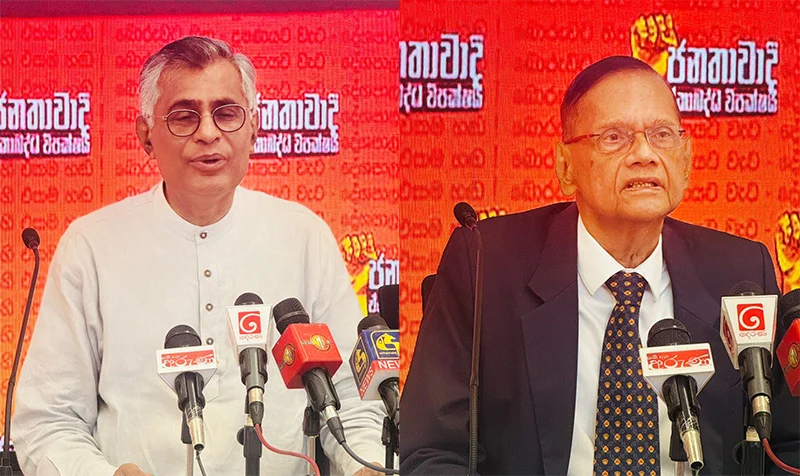
The People’s United Opposition yesterday (01) alleged that the International Monetary Fund (IMF) had turned a blind eye to serious corruption allegations against the NPP government and was going ahead with the USD 2.9 bn loan in terms of the Extended Fund Facility (EFF) programme, finalised in 2023.
Addressing the regular weekly media briefing at the Flower Road Office of former President Ranil Wickremesinghe, former Ministers Prof. G. L. Peiris and Patali Champika Ranawaka questioned the failure on the part of the IMF to act in spite of the NPP government engaging in open corrupt practices, contrary to the terms and conditions of the agreement/understanding with the lending agency.
The media was told that the IMF couldn’t absolve itself of the responsibility for the actions of the government, especially because Sri Lanka, experiencing severe economic difficulties, was receiving loans from IMF at over 8%. Ex-parliamentarian Ranawaka pointed out that what Sri Lanka received from the IMF was not JAICA-type soft loans and the country was further burdened.
Prof. Peiris and Ranawaka alleged that the IMF appeared to have chosen not to take up the serious and growing accusations, particularly over coal and fuel scams that caused massive losses. They claimed the government had taken decisions at the expense of the country but for the benefit of certain businessmen close to them.
Both Prof. Peiris and Ranawaka explained the circumstances under which certain persons and companies received privileged status to import very costly vehicles and even helicopters and aircraft as the government
wasted precious foreign reserves for the benefit of friends. Ranawaka named two companies that benefited from government actions while alleging that those engaged in lucrative coal and fuel business made a killing.
They pointed out that the IMF released the latest USD 695 mn amidst stepped up serious allegations against the government. (SF)
News
Shavendra tells Beijing meet Sri Lanka should not become an arena for geopolitical rivalry among major powers

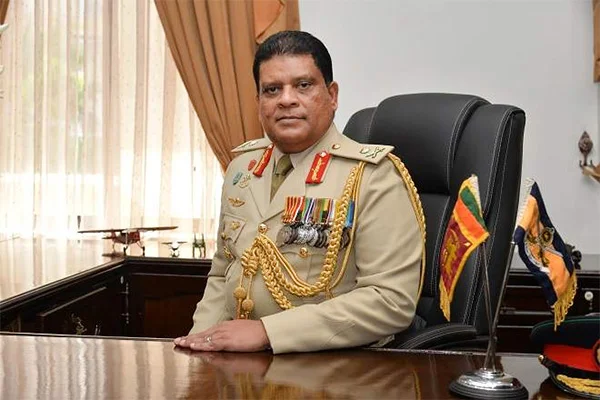
Former Commander of Sri Lanka Army with possibly the best battlefield record, having recovered the most amount of enemy occupied territory by troops he led from the front in the Vanni theatre of operations (2007-2009), General Shavendra Silva recently discussed growing challenges faced by smaller countries, like Sri Lanka, in what he called the evolving global environment.
Stressing that responsibilities must be shared across all states, the former Commander of the Sri Lanka Army told the 5th edition of the Wanshou Dialogue on Global Security in Beijing: “Major powers bear a special responsibility to exercise strategic restraint, avoid coercive practices, uphold international law, and contribute toward global stability rather than fragmentation.
Emerging and middle powers have an increasingly important role as bridge builders promoting dialogue, cooperation, and institutional reform.
For countries such as Sri Lanka, the path forward lies in principled and balanced diplomacy.
This requires maintaining constructive relations with all nations while safeguarding sovereignty, strategic independence, and national interests.
Sri Lanka has consistently maintained that its territory should not become an arena for geopolitical rivalry or military confrontation among larger powers.
Instead, our focus remains on strengthening national resilience through economic development, institutional stability, maritime awareness, modern defence capabilities, and agile diplomacy.
Credible domestic institutions, accountable governance, and national cohesion ultimately strengthen sovereignty while reducing opportunities for external interference.”
Referring to his service as Ambassador and Deputy Permanent Representative of Sri Lanka to the UN in New York, General Silva said that his engagements at the UN and other international forums reinforced the importance of defending national interests while remaining committed to reconciliation, development, and peaceful coexistence.
The celebrated battlefield commander discussed the transformation of global security, the future direction of the international order and the responsibilities of states in this transitional era. Silva said: “Today, security threats extend far beyond conventional warfare.
Cyber threats, terrorism, disinformation, economic coercion, artificial intelligence, and the weaponisation of technology increasingly influence global stability. At the same time, climate change, pandemics, food insecurity, and economic disruptions have demonstrated how closely national security and human security are now interconnected.
For Sri Lanka, located at the centre of the Indian Ocean along one of the world’s most important maritime trade routes, these developments carry direct strategic significance. Sri Lanka’s own experience offers valuable lessons.
The defeat of the LTTE, in 2009 demonstrated the importance of decisive state action against terrorism, while also revealing how modern conflicts become internationalised through financing networks, propaganda, illicit arms flows, and external geopolitical pressures.
The post-conflict period further reinforced the importance of reconciliation, economic recovery, institutional rebuilding, and long-term national resilience.
Smaller states increasingly face pressures arising from great-power rivalry, economic dependency, and strategic competition.
Sri Lanka has, therefore, consistently sought to maintain strategic balance while safeguarding sovereignty and constructive engagement with all partners.
China has remained an important development and economic partner for Sri Lanka over many decades. The relationship, strengthened through the 1952 Rubber-Rice Pact, expanded significantly in the post-war period through cooperation in infrastructure, connectivity, logistics, energy, and economic recovery. Projects associated with the Belt and Road Initiative have contributed to Sri Lanka’s development, regional connectivity, and post-crisis resilience. China also extended support during the COVID-19 pandemic and Sri Lanka’s recent economic stabilisation efforts.
The future international order must be shaped not by confrontation or exclusive blocs, but through pragmatic cooperation, institutional reform, and balanced multilateral engagement.
International institutions, particularly the United Nations system, must evolve to better reflect contemporary geopolitical realities and the growing voice of the Global South.
Without greater inclusivity and legitimacy, multilateral institutions risk losing effectiveness in addressing increasingly complex global challenges.
Equally important is preserving a rules based maritime order grounded in international law, particularly the principles of the United Nations Convention on the Law of the Sea.
The international community must also establish clearer norms governing emerging technologies, cyber operations, artificial intelligence, autonomous weapons systems, and outer space security.
Sri Lanka’s recent economic stabilisation efforts further demonstrated that internal resilience is essential for maintaining strategic autonomy and an independent foreign policy.
It is also an opportunity to build a more inclusive, balanced, and resilient international order capable of responding to the realities of the 21st century.
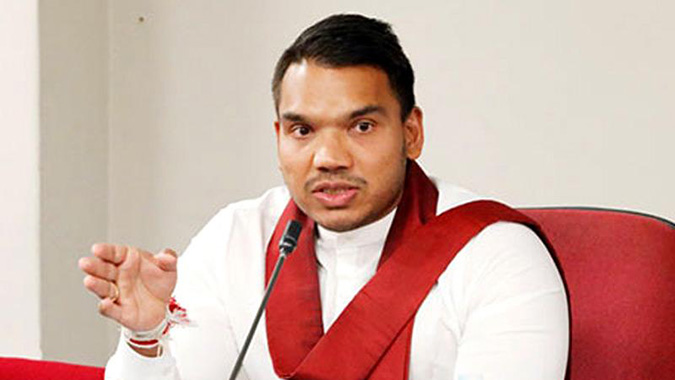
SLPP MP Namal Rajapaksa has defended former Finance Minister Basil Rajapaksa following questions over his continued stay in the United States, despite facing scrutiny over several legal and corruption-related matters in Sri Lanka.
Speaking to the media, Namal Rajapaksa rejected claims that Basil Rajapaksa was absconding, stating that he did not believe any member of the Rajapaksa family is evading legal proceedings.
“People in the government speak to my uncle more often than I do. Whether he is remaining abroad, based on their advice, I do not know. You will have to ask them and my uncle. However, he continues to be represented within the judicial process,” Namal Rajapaksa said.
He noted that Basil Rajapaksa was represented before Sri Lankan courts through his lawyers and that the relevant legal processes were continuing.
Responding to criticism that members of the Rajapaksa family were avoiding court proceedings by remaining overseas, Namal Rajapaksa said legal representation was taking place through the proper channels and that the judicial process was being followed.
He also questioned the Government’s priorities, claiming that greater attention was being placed on investigations involving Rajapaksa family members, while several issues, affecting the public, remained unresolved.
Namal Rajapaksa pointed to challenges faced by farmers, including rising fertiliser costs and difficulties in selling produce, as well as concerns in the tea sector, factory closures, job losses and the resignation of public officials.
He alleged that the Government was attempting to gain political advantage by focusing on some investigations rather than addressing economic and governance issues facing the country.

Sri Lanka Cricket relieved at ICC’s mild response to Transformation Committee

ICC approves red-to-pink ball change to reduce bad-light impact in Test cricket

LPL introduces impact subs for 2026 season

Protesters call on Kenyan government to halt femicide crisis

US Defense Department bars journalists from its press office

Rainy conditions are expected to increase in the southwestern parts of the island from this evening (02 June)

‘Dates have the highest sugar content to fight Coronavirus’

Sunday Island 27 December – Headlines

#SundayIsland 17th December – Headlines

Sunday Island – 28th March

Sunday Island Headlines – 21 March

Sunday Island – 21st February – Headlines
-
 News3 days ago
IMF urges Lanka not to meddle with exchange rate
-
 Business4 days ago
Sri Lanka’s construction industry losing ground while no one watches
-
 News3 days ago
State of emergency extended
-
 Midweek Review6 days ago
Israeli-US aggression won’t go unanswered -Iranian Ambassador
-

 Features4 days ago
The Division Bell Mystery
-

 News1 day ago
UNP challenges NPP move to amend Vihara – Devalagam Act
-
 News5 days ago
RTI query of Ditwah funds: Presidential Secretariat mum on key questions
-
 News3 days ago
Fort Magistrate to announce whether to summon Arsecularatne PC to testify at Kapila’s inquest