
Features
Sugathapala senarath Yapa: The one who went away

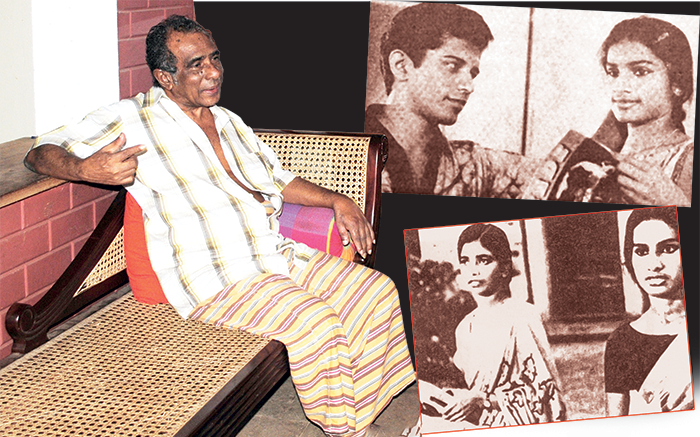
By Uditha Devapriya
Archive images courtesy of Gordon de Silva
In 2016 Torana Video Movies released Hanthane Kathawa. One of the last Sinhala films to depict university students in a romantic light, Hanthane Kathawa (1969) marked the debut of the man who became the Sinhala cinema’s most popular star, Vijaya Kumaratunga. It was also the last in a series of films which revolved around the theme of unrequited love, the others including Dahasak Sithuvili, Romeo Juliet Kathawak, Bakmaha Deege, and arguably the best of them all, Golu Hadawatha. Though classical in their conception, these works are important, in that they heralded both the end of an era in the Sinhalese cinema and marked the entry of those who would play a major role in the new cinema.
Probably no other film epitomised this shift than did Hanthane Kathawa. Kumaratunga would, of course, figure prominently in the new Sinhala cinema. Also making their debuts alongside him were the likes of Amarasiri Kalansooriya and Daya Tennakoon. Tennakoon and Dharmasena Pathiraja, then studying at the Peradeniya University, where the story is set, made a significant contribution to the mood and the tenor of the film. Though very few critics have noted this aspect to the film, Pathiraja’s repertoire of actors – who he would use again and again – included those who made their entry in Hanthane Kathawa. In that regard, the latter marked an interregnum between two historical eras.
On its own, Hanthane Kathawa stands out rather well. The acting is convincing – perhaps because many of the cast members were real-life university students – and the music, by Premasiri Khemadasa, who for the first and last time in his career worked with Mahagama Sekara, figures in among the best he composed for any film. It marked the last time Tony Ranasinghe played the role of a sympathetic everyman: practically every role he got in the 1970s were as hardened, cynical protagonists or antagonists. It also signalled the return of Swarna Mallawarachchi, who would soon leave Sri Lanka. As for the story, it is captivating, if not simple, revolving around a theme one can identify with at once. For me, it is one of the few Sinhala films that remain as fresh today as it was at the time of its release.
More than anything, the film reveals the eclecticism of its director. There are references to other films and works of art which one can easily miss. Its theme – a contest between two completely different teenagers over a woman – borrows from two somewhat interrelated stories: the bandit’s version of events in Kurosawa’s Rashomon, and the last few sequences in Sarachchandra’s Maname. To this one can add another reference: Roman Polanski’s Knife in the Water. Neither Rashomon nor Knife in the Water was playing at mainstream halls in Sri Lanka at the time; these were art-house works, screened at places like the British Council and the American Center. That the director had absorbed these influences obviously tells us that he was an avid cinephile eager to come up with a different work of art.
And yet, very little has been written about the director, Sugathapala Senarath Yapa. This may be because Yapa never directed a feature film again. He had his reasons for not doing so. The critical fraternity, long wooed over by what directors like Lester James Peries were doing in the Sinhala cinema, were beginning to turn and rebel against them. Like the Cahiers du Cinema critics in France, they were not disposed towards directors they associated with classical films: what they called “le cinéma de papa”, or “daddy’s cinema.” At the screening of Dharmasena Pathiraja’s Ahas Gawwa, a group of critics distributed pamphlets directed at, and against, Peries: following their French counterparts, they termed the latter’s conception of the cinema “Apochchige Cinemawa.” Yapa became one of their targets.
Sugathapala Senarath Yapa was born in Akuressa in 1935. Both his parents died when he was young. He would be brought up by his grandmother, a “generous woman” as he remembered her for me. His childhood, he recalled, had been rather boisterous, amounting to a series of misadventures which frequently landed him in trouble. These misadventures reached their peak when together with a friend of his called Abeywickrama, Yapa spread a rumour around his first school, Rakvana Maha Vidyalaya, that the buns served to children during the interval contained worms. The outcry this provoked and the discovery of the two culprits who had spread the rumour led to Senarath Yapa being expelled. Out of one school, he managed to get into another, Pelmadulla Central College some miles away.
Pelmadulla Central had been headed by a stern but well-meaning principal, A. V. Gunapala. A member of the Hela Havula, Gunapala had just one message for young Yapa: stick to your studies, don’t indulge in antics. Heeding Gunapala’s message, Yapa managed to get through his SSC Preparatory Exams. However, the school he had applied for to do his SSC Exams, St Anthony’s College, rejected him. The Rector at St Anthony’s, “one Father Moses”, told him to wait for another year. “I didn’t want to wait that long. I would have wasted time getting into all kinds of mischief and into fights with boys my age.” Having abandoned his hopes for a career in the civil service, Yapa ultimately decided to let go of his studies.
At the time cinema halls were limited to the cities. Villages like Akuressa and Rakvana, on the other hand, had to do with “moving theatres”, which were essentially makeshift camps. These would screen the popular attractions of the day: Bollywood romances and Hollywood thrillers. Yapa made his way to these theatres: “I got to watch the entire Zorro series there.” His first job was as a movie title painter for one of the many touring theatres. Having seen his work, the owner of the hall, the MP Reggie Perera, asked him to pay visit. When he met Yapa, Perera offered him a better job: “as a kind of advertiser for the company.” This would be followed by another more lucrative job: as a counter clerk at a touring cinema owned by a distant cousin, “the comedian L. M. Perera.” It was while at this job that Senarath Yapa did his clerical exams, passed them, and began work at the Labour Department.
Offering a more stable and lucrative career, the Labour Department encouraged Yapa to get more fully and actively involved in the arts, starting off with a series of radio drama that included a translation of Tagore’s Gitanjali. His stint at the radio service a few years later got him to meet Mahagama Sekara. The radio service also helped Yapa land a role in a newly established drama troupe. Headed by G. D. L. Perera, the troupe was called Kala Pela. The role was not in a play as Yapa had expected, but in a film: Perera’s debut, the searing and beautifully poignant Sama, which also marked the debuts of Denawaka Hamine and Leonie Kothalawala. Sama would win a number of awards, locally and internationally.
Senarath Yapa wound up as the Secretary and Treasurer of Kala Pela. Later he left the group, determined to carve his own path. In his first few years at the Labour Department, he had made it a habit to visit the British Council, to watch films and read books about the cinema, to brush up his knowledge of Western culture. “I wanted to get away from what I had been watching and savouring at the touring theatres.” He could not have picked on a better time and era to transition from the one to the other: the 1950s, when he was at the prime of his youth, was when exciting new strides were being made in the Japanese, Indian, and even Sri Lankan cinema, with Satyajit Ray and Akira Kurosawa taking the lead.
Recalling the films he saw and the books he read, Yapa had this to tell me”
“What I understood about the cinema, from what I watched and came across back then, was that art is not always about action. A good film is built not just on what characters say and do, but what they hide from other characters. Two films that inspired me in this regard were Vittoria de Sica’s Bicycle Thieves and Kurosawa’s Rashomon. Bicycle Thieves is about a father who can’t bear to tell his son that he is trying to steal a bicycle for him. Rashomon is about a group of people who have got involved with a murder, who can’t come out and tell us what really happened. Not even the dead Samurai can speak the truth.”
Interview with Sugathapala Senarath Yapa, December 21, 2015
Good art, in other words, revealed as much as it concealed, and in the movies and plays he saw, the characters, even the heroes, hid their intentions from one another. This aspect surfaced more sharply in the 1960s, with the arrival of a new generation of directors in the West, particularly in Europe. Two films in particular epitomised this trend: Antonioni’s Blow-Up and Roman Polanski’s Knife in the Water. Having seen Knife in the Water, Sugathapala Senarath Yapa finally decided to make his own film. In it he combined three stories: not just Polanski’s and Kurosawa’s films, but also Sarachchandra’s Maname.
Because the story revolved around a woman whose intentions and desires are never clear, Yapa asked the lead actress, Swarna Mallawarachchi, “to watch My Fair Lady and model herself on Audrey Hepburn’s performance.” There is a point in the story, in fact, where the male characters jokily taunt Mallawarchchi for being a “fair lady.” What this showed clearly was a director who wanted everything to be pitch-perfect, a director who wanted his work to reflect his own love for the cinema. In this Yapa differed very little from Lester James and Sumitra Peries, except probably in the circumstances from which he hailed: unlike the latter, he came from an altogether less affluent and privileged background.
Perhaps, it was these circumstances that, tragically, prevented him from moving into what could have been a promising career. “I was soon among the directors attacked by critics who felt their conception of the cinema was the only one that mattered.” While the two Perieses could bear the brunt of these attacks, Yapa found himself increasingly side-lined and ostracised, to a point where he had to limit himself to the Government Film Unit. At the GFU, he revealed his talents once again: his debt documentary (really a docudrama), Minisa saha Kaputa, won the Silver Peacock at the New Delhi Film Festival. Like Peter Bogdanovich and William Friedkin, however, Senarath Yapa was pushed to making lesser works: his next two films, Pembara Madu and the much better Induta Mal Mitak, are deeply commercialist in their outlook. At the GFU, meanwhile, he directed 28 documentaries.
Despite his less than memorable encounter with radical left-wing film critics and directors, Yapa holds those who demand a greater and superior conception of the cinema in high regard. “Today, films have become an extension of fantasies, of dreams,” he told me, as we wrapped up our interview. This may seem like an unfair judgement – aren’t all films, at the end of the day, extensions of dreams? – yet viewed from a certain angle, there is really no denying that the commercial cinema, while sustaining the industry, has fallen far short of the production and aesthetic values which epitomise it in countries like India. I sense some bitterness in Yapa’s recollections of the past, but this is only to be expected: no one who has seen Hanthane Kathawa can fail to be entranced by its romantic sweep. This is a movie that should have heralded a brilliant career. That it did not is utterly saddening.
The writer is an international relations analyst, researcher, and columnist who can be reached at udakdev1@gmail.com


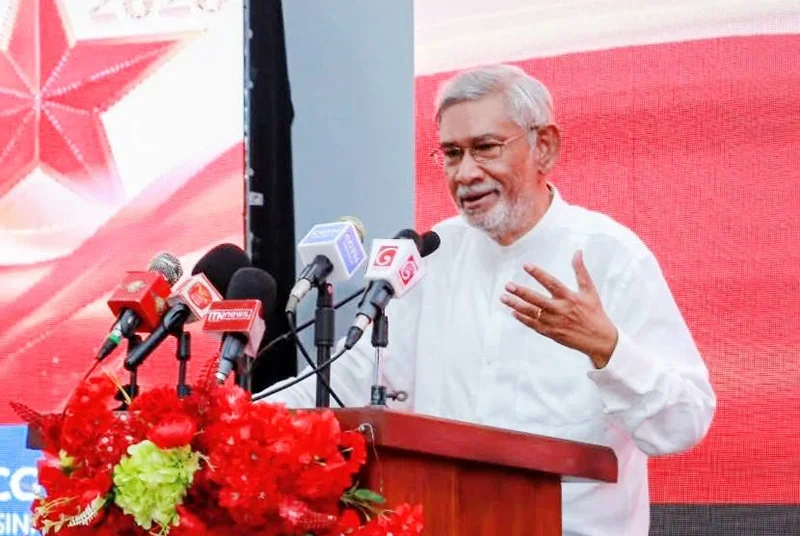
[Translation from the original Sinhala speech delivered at the 105th anniversary celebration of the Communist Party of China, organised by the CGTN Sinhala Service and hosted by the Communist Party of Sri Lanka. Watch full speech. https://www.youtube.com/watch?v* C90V4qY7iGQ]
Before the MoU between the United States and Iran was signed, President Trump let slip something crucial at the G7 meeting in France. When he was asked how Iran’s enriched uranium was to be removed from the country, Trump said that the enrichment facility had been placed beneath a mountain by the Iranian government but US B2 bombers caved-in the mountain itself, burying the uranium under its rubble, making it almost impossible to retrieve. He claimed that the United States was the only country in the world which had the capacity to retrieve it, pausing momentarily and adding “and China”.
So, by President Trump’s admission, this impossible task could be handled by only two countries on the planet: the US or China.
China arrived at this point of development, not by having been a colonial power for centuries like the UK and much of Western Europe. Nor by transnational corporations extracting resources for many decades from around the world. Not by establishing over hundreds of military bases all over the globe. But today, even the US accepts that China has now reached the status of a “peer competitor”.
Some would say that China is a civilisational state, and was able to do so because of nationalism built on their ancient civilisation. But it is while this same civilisation was in place that Genghis Khan’s Mongols were able to breach the Great Wall, enter China and conquer it. It is during this same civilisation that Britain was able to use its warships’ cannons to force China to buy and consume opium (‘the Opium Wars’). Therefore, the great and rapid rise of China is not purely attributable to its ancient civilisation.
China’s economic development has eliminated absolute poverty within a short period of 40 years, for the first time in the economic history of the world and done so without a history of colonialism.
So how did China achieve this miracle and when did this happen?
The initial efforts were under the leadership of Sun Yat-Sen, who founded the Guomindang, a patriotic, modernising, progressive party. His party was supported by Lenin but the character of that party completely changed after his death. In 1926 the party was an honorary member of the Executive Committee of the Communist International, but in 1927, under the leadership of Chiang Kai-shek, they collaborated with the colonial powers and foreign capitalists based in China to turn on and massacre the Communist Party of China in Shanghai and Canton.
We cannot conclude that the Guomindang party was the driver of the rise of China, because they were unable to protect China from Japan’s war of aggression against it (1937).
Mao Zedong
That task could only be achieved by the Communist Party of China (CPC) which was born in 1921, 105 years ago. Among the founders of that party was young Mao Zedong. Mao became the leader of the Communist Party during 7th Congress in Zunyi in 1935.
So how did the leadership of the Communist Party of China (CPC) initiate and steer the rise of China to its current Great Power status?
The secret of its success can be grasped by understanding the CPC through three major periods of its history, under the leaderships respectively of Mao Zedong, Deng Xiaoping and Xi Jinping.
In September 1959, Mao Zedong himself explained the secret of China’s success, in an address to the Military Commission of the Central Committee of the CPC. Mao explained that if the political and military lines are correct, then you will receive all that you don’t have, such as cadre, people, weapons and eventually power. But if the political and military lines are incorrect, you will lose all that you have– cadre, the people, weapons and power.
Therefore, the secret which is revealed is that of the correct line, i.e. correct thinking; the thought process. The Chinese Communist Party has never claimed that they always had the correct line of thinking from its inception through to the present day. According to the official history of the party, there were at least 11 struggles between ‘two lines’ in the history of the party.
That’s how we know that there were struggles against Chen Du Xiu’s ‘rightist deviation’ and Li LiSan’s and Wang Ming’s ultra-left lines. The people were informed about these struggles through the published writings and speeches of Mao and other leaders throughout the history of the party. The CPC didn’t attempt to hide the line-struggles.
Mao was not only a great political leader, but also a great military leader, philosopher and poet. He taught that in order to arrive at the correct line; one has to correctly identify contradictions; distinguish between antagonistic contradictions (with the enemy) and non-antagonistic contradictions (among friends); recognise the primary and secondary contradictions; understand the main and secondary aspects of the contradiction and how the secondary becomes the primary and vice versa. It is according to this philosophical methodology that the correct line could be established.
For example, when Japan invaded China, the main enemy became this external aggressor. But when there was no external threat, the CPC taught that the main enemy was the comprador capitalists, bureaucrat capitalists and semi-colonialism. The ‘comprador capitalist’ class is the intermediary class between the imperialist power and the country; the agent of colonialism.
Mao and the CPC also recognised the role of the ‘national bourgeoisie’. This is the nationalist capitalist class that stood for a national industrialisation and the national market, and had some contradictions with colonialism. One cannot achieve a victory without distinguishing between these different factions and strata of the capitalists. One cannot embrace the comprador capitalists and/or bureaucrat-capitalists in order to develop a country. That was not the way China achieved its victories.
The Chinese Communist Party understood the contradictions correctly, and when there was an incorrect understanding of the contradictions, they fearlessly engaged in ‘line-struggles’ and ensured the correct line prevailed. It is in 1935 that the CPC under the leadership of Mao arrived at last, at the correct line. Even after that there were struggles of rectification, as in 1942.
The Countryside and the Peasantry
The great victories during Mao’s period were the victory in the struggle for national liberation by defeating Japan, and the peasant-based revolution. An important feature of Mao’s thinking was that in countries like ours, in the global south, the primary force was the rural peasantry. Without considering the rural peasantry as the main force, one cannot arrive at the correct line. This is the reason that while India is a great economic power, China has become an economic superpower. Why? Because there are no semi-feudal residues of casteism among the peasantry in China unlike in India. This is because the national liberation struggle of the CPC had as its
main force, the rural peasantry and its main arena, the countryside.
Mao Zedong recognized clearly the reality of China at the time. He said it was a semi-feudal, semi-colonized country. Why semi-colonized? Because all of China was colonized not by one colonial power but different parts of the country, especially the coastal ports and cities, were dominated by different foreign powers. This was done through China’s comprador- bureaucratic capitalist class.
Having put an end to all these challenges, the foundation for the China we see today was laid by Mao Zedong. On October 1st 1949, addressing the people at a meeting to celebrate the victory of the Chinese Revolution and the liberation of China, the first sentence he uttered was “The Chinese people have stood up!”
Deng Xiaoping
The second period was of Deng Xiaoping. During the armed people’s revolution in China, there was a huge province-wide liberated zone under Deng. The pragmatic economic policies he implemented in that province were different from the policies adopted in other liberated zones under other CPC leaders. What he had was a model of economics that enabled and provided opportunities for the rural areas and the peasantry to grow prosperous.
Decades after the Revolution Deng was expelled from power but Zhou Enlai rehabilitated him. When he assumed the CPC leadership there were three great contributions that Deng made. First, he introduced an objective historical analysis of Chairman Mao to the party and the country. He didn’t completely reject Mao the way that the Soviet Communist Party did to Stalin, nor did he say that Mao was holy and infallible. He didn’t maintain a cult of Mao but didn’t negate him.
He followed Mao method regarding Stalin. Mao said that Stalin got more things right than wrong– 70% right and 30% wrong. Deng did a similar analysis of Mao. Because of that balanced perspective China was able to move forward taking the best from the past and eliminating what was bad. This was publicized widely, not limited to secret meetings inside the party. The Central Committee Resolution passed at the Party Congress in 1981 is available as a book, which analyses the errors made in the period encompassing the Great Leap Forward, the Cultural Revolution and the rue of the ultra-left Gang of Four.
In economics, the first thing Deng did was to implement policies enabling the rural peasantry to become wealthy. The enriched peasantry in turn deposited their savings in state banks. The state then was able to invest those savings for the leap in its industrial development.
His second step was to open the coastal areas to foreign capital. In this, he was encouraged by Lee Kuan Yew, during his 1978 visit to Singapore. Lee said to him, if the Singaporeans who originated from China’s poor fishing communities can transform their economy from Third World to First, it would be not be difficult for you and your comrades from the educated Chinese elite from the cities including Beijing, to do so. Deng took this advice into account.
Xi Jinping and Globalization
The third great period in the history of China led by the CPC is the on-going period of Xi Jin Ping. There are many things one can say about this period but I will draw out just one lesson: the question of globalization. Now, in Sri Lanka as well as in many other countries, there is a leftist denunciation of globalization and an anti-globalization movement. Yet the Communist Manifesto by Karl Marx and Friedrich Engels recognizes and applauds globalization by capitalism and the bourgeoisie.
However, Xi Jinping offers a new perspective. He is against the inequity and unfairness of the prevailing system of globalization. He says China stands for globalization, but offers the Belt and Road project of globalization, which is very different to colonial, neocolonial and neo-liberal globalization. It is a developmental project in which China is prepared to invest in the infrastructure development of countries.
In Sri Lanka one group is opposed to globalization, but when they obtain state-power, rush to embrace it as it is in the neoliberal version! Another group is partial to neoliberal globalization but their neoliberal version of globalization disregards the protection of sovereignty, and agrees to demands of bridges and channels to neighboring big countries. People are opposed to this kind of anti-national, unpatriotic globalization. Even in Britain, people were opposed to this, hence Brexit, Britian’s exit from the European Union.
Under President Xi, a powerful, important and modern conceptual intervention has been made, offering a more balanced, more equitable world order and an alternative globalization project. It is a balanced, multipolar globalization.
In my presentation, I’ve outlined the paradigmatic thinking in these three great periods of the Communist Party of China founded 105 years ago, that drove the unique economic miracle of China and its rapid rise to ‘peer competitor’ status with the USA.
by Dr Dayan Jayatilleka
Beyond macroeconomic stability:
Beyond the Headline Numbers
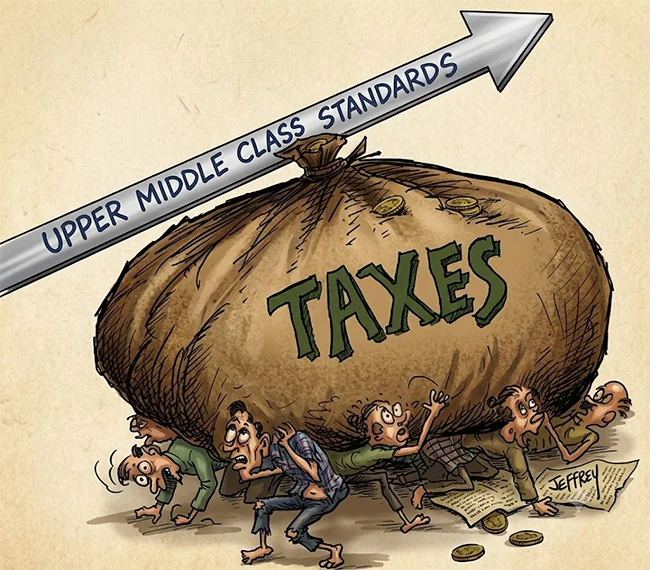
Sri Lanka’s recovery from the economic crisis has been accompanied by encouraging improvements in several macroeconomic indicators. Inflation has declined significantly from the unprecedented levels experienced during the crisis, shortages of essential goods have largely disappeared, foreign exchange conditions have improved and greater economic stability has gradually returned. These achievements deserve recognition because restoring macroeconomic stability is an essential foundation for sustainable economic recovery. Stable prices create confidence for investment, business planning and long-term development. Yet for many Sri Lankans who depend on fixed monthly salaries, one important question remains: if the economy is recovering, why does maintaining a reasonable standard of living still feel increasingly difficult?
The answer is not that inflation statistics are misleading. Inflation measures changes in the general price level and remains one of the country’s most important macroeconomic indicators. The challenge is that households experience the economy differently from national statistics. They experience it through the markets they enter every day. Buying food, paying utility bills, obtaining healthcare, educating children, maintaining homes and vehicles, accessing digital services required for work, and purchasing numerous everyday services determine whether improvements in the national economy are genuinely reflected in household welfare. In other words, macroeconomic recovery reaches households through markets.
Household Economic Friction
For many fixed-income households, these markets have become increasingly difficult to navigate. While prices of many retail goods are clearly displayed, a considerable share of household expenditure occurs in service markets where prices are neither standardised nor easily comparable. Vehicle servicing, household repairs, personal care services, private healthcare, tuition and numerous other essential services frequently operate without clear reference prices, making it difficult to judge whether the amount charged represents a reasonable price. The burden extends beyond the money eventually spent. Families increasingly devote time and mental effort to comparing prices, evaluating alternatives, judging quality, searching for reliable service providers, seeking recommendations from friends and relatives, travelling between businesses and postponing decisions until they feel sufficiently confident and deciding how best to allocate their limited household budgets. For working households balancing professional responsibilities with family commitments, these activities consume valuable time and mental effort. Together, these hidden costs create what may be described as household economic friction—the cumulative burden arising from market uncertainty, uneven price transmission, quality uncertainty and the limited ability of fixed-income households to adjust their incomes as rapidly as markets change. These hidden costs are rarely reflected in economic statistics, yet they have become an increasingly important part of everyday economic life.
This uncertainty becomes more visible whenever fuel or electricity prices change. Higher energy costs are naturally expected to increase the cost of producing goods and delivering services. However, the way these costs are passed on to consumers is often uneven. Similar businesses may respond quite differently to the same increase in energy costs, resulting in price adjustments that are difficult for consumers to anticipate or understand. Combined with regional differences in prices and varying service standards, this makes household budgeting increasingly uncertain even when family incomes remain unchanged.
Price, however, is only one part of the decision-making process. Households are ultimately searching for value rather than simply the lowest price. Yet in many markets it is difficult to assess quality before making a purchase. Fresh food may differ in quality despite similar prices, the durability of a vehicle repair becomes evident only after the work is completed, and many household services rely on professional expertise that consumers cannot easily evaluate beforehand. Paying more therefore does not always guarantee receiving better value.
Why Household Economic Friction Matters
The capacity to respond by increasing household income is also becoming increasingly constrained. Unlike businesses that can adjust prices or entrepreneurs who may diversify their income sources, most fixed-income professionals have limited flexibility to generate additional earnings. Many already work in occupations with demanding responsibilities, leaving little time or energy for supplementary economic activities. Even where additional employment or small business opportunities are possible, weaker consumer demand, rising operating costs and increased competition have reduced the viability of many income-generating ventures. Moreover, many professionals possess valuable knowledge, technical skills and experience, yet converting this human capital into supplementary income is often constrained by institutional responsibilities, professional commitments and prevailing economic conditions.
Pursuing additional income may also require sacrificing time that would otherwise be devoted to family responsibilities, rest or professional development. Consequently, for many fixed-income households, adjustment occurs primarily through changes in expenditure rather than increases in income. Teachers, university academics, nurses, engineers, government officers, bank employees and many other professionals generally adapt by purchasing smaller quantities of relatively expensive items while substituting cheaper alternatives where possible, scrutinising discretionary spending more carefully, and extending the life of household equipment rather than replacing.
The consequences of these adjustments are often gradual and therefore easy to overlook. Decisions to postpone building repairs or home expansions, defer vehicle maintenance, delay household investments, or reduce spending on recreation and leisure activities may appear to be household rational decisions. Collectively, however, these decisions reduce demand for a wide range of local industries and services. What begins as prudent household budgeting can gradually influence broader patterns of economic activity, illustrating that the effects of household economic friction extend well beyond individual family budgets and into the productive capacity of the economy.
Sri Lanka’s fixed-income professionals represent a substantial share of the country’s human capital. Teachers educate future generations, university academics generate knowledge, healthcare professionals provide essential services, engineers maintain infrastructure, and public servants support the institutions upon which economic and social development depend. Their contribution cannot be measured solely by salaries or employment statistics; it is reflected in the quality, efficiency and continuity of the services they provide.
When sustained professional effort is no longer accompanied by a corresponding improvement in household living standards, maintaining motivation, investing in professional development, accepting additional responsibilities and consistently delivering high-quality work become progressively more challenging. Although many professionals continue to serve with dedication and commitment, persistent financial pressure may gradually influence organisational performance, service quality and institutional effectiveness—effects that are rarely reflected in conventional macroeconomic indicators.
The discussion surrounding Sri Lanka’s skilled workforce has understandably focused on migration during recent years. While outward migration deserves attention, equal consideration should be given to those who have chosen to remain and continue contributing through their professions. Retaining experienced teachers, researchers, healthcare workers, engineers and public servants is not merely a labour market issue. These professionals represent a valuable stock of human capital whose knowledge, experience and continued commitment are essential to Sri Lanka’s long-term development. Creating conditions that enable these professionals to maintain reasonable living standards and confidence in their future strengthens not only individual wellbeing but also national resilience.
The Next Phase of Recovery
Recognising these challenges does not diminish the importance of macroeconomic stabilisation. On the contrary, restoring stability has created the opportunity to address the next generation of economic reforms. The focus can now expand beyond restoring stability to improving the quality and efficiency of the markets through which households experience the economy every day.
Several practical measures deserve consideration. Improving price transparency in service markets would enable consumers to make more informed decisions while encouraging fair competition among businesses. Strengthening consumer access to reliable market information and improving quality assurance mechanisms would reduce uncertainty and increase confidence in everyday transactions. These measures would not require extensive market intervention; rather, they would help markets function more efficiently by reducing information gaps between buyers and sellers.
Periodic reviews of work-related allowances and professional support mechanisms would also help ensure that institutional arrangements evolve alongside changing patterns of work and living costs. The changing nature of professional work also deserves attention. Such reviews would help ensure that evolving workplace requirements remain aligned with the resources needed to perform those responsibilities effectively.
Equally important is recognising that improvements in household welfare cannot rely solely on periodic salary revisions. Well-functioning markets, transparent pricing, informed consumers, fair competition and efficient institutions all contribute to determining how effectively fixed incomes are translated into everyday living standards. Strengthening these foundations benefits households, businesses and the wider economy alike.
Sri Lanka has made remarkable progress in restoring macroeconomic stability under exceptionally difficult circumstances, and that achievement deserves recognition. Macroeconomic stability provides the foundation for recovery, but households ultimately judge economic progress through the markets they encounter every day. The next phase of recovery should therefore focus on strengthening the transparency, efficiency and reliability of those markets so that economic progress is experienced not only in national statistics but also in the everyday lives of Sri Lankan families. At the same time, this progress should strengthen and support the people who continue to invest their skills and careers in Sri Lanka. Safeguarding this valuable stock of human capital is not simply a matter of improving household welfare; it is an investment in sustaining the knowledge, commitment and productivity upon which the country’s long-term development depends.
About the Author
Kapila Chinthaka Premarathne is the Head of the Department of Agricultural Systems and a Senior Lecturer in Agricultural Economics at the Faculty of Agriculture, Rajarata University of Sri Lanka.
by Kapila Chinthaka Premarathne

A university student at Ruhuna has died of dengue recently, yet another young life was lost while officials trot out the same tired clichés about “clean premises” and “public responsibility.” This ritualistic blameshifting has become the drunken gibberish of a health system that refuses to confront its own failure. Every death is treated as an unfortunate accident rather than the predictable outcome of chronic successive governmental paralysis.
I have lived through this nightmare personally. In Galle, two schoolchildren from the same family died some years ago, triggering public fury so intense that roads were blocked and tyres burned. I do not condone the chaos, but I understand it. When you raise children in a dengue-stricken district, fear becomes a daily companion. I mosquitoproofed my home decades before it became fashionable, drenched my children in citronella, shut windows at 4:30 p.m., and became a nuisance to my own family, but I refused to apologise for protecting them. Today my daughter, once the toddler I guarded obsessively, is a postgraduate trainee in Community Medicine after doing her bit as an MOH fighting dengue in the deep interior. I am proud beyond words.
The tragedies never stopped. I still remember the day a friend rushed his daughter to me, when I was surgeon Teaching Hospital, Karapitiya, misdiagnosed with appendicitis. She had classic dengue warning signs, headache, lymphocytic shift, early thrombocytopenia and absolutely no clinical signs on the part of the abdominal wall overlying the appendix. I referred her urgently, but inexperience elsewhere cost her life. She died in Colombo after three days in the ICU of a well-known private hospital. That was 1988. The story is unchanged.
Sri Lanka’s dengue burden has only worsened.
* 2023: over 80,000 cases and over 50 deaths.
* 2024: more than 90,000 cases, with spikes in Colombo, Gampaha, Kalutara, Kandy, and Batticaloa.
* 2026 (to date): already 53,000+ cases, with the Epidemiology Unit warning of another major surge after the monsoon.
These numbers fluctuate, but the pattern is constant: epidemics every year, preventable deaths every year, excuses every year.
The official narrative blames urbanisation, four viral serotypes, climate change, and “public negligence.” The truth is simpler and more damning: Sri Lanka has never implemented a rational, scientific, sustained dengue eradication programme. The attitude is defeatist, dispassionate, and bureaucratically comatose.
History shows what works. In the mid 20th century, Aedes aegypti was eliminated from 27 countries in the Americas through coordinated militarystyle operations. Cuba remains the modern example, dengue-free for years because of relentless, structured, repetitive vector control. Meanwhile, Sri Lanka continues to rely on punitive measures and sermonising PHIs. Punishment has never eradicated a mosquito anywhere on earth.
What we need is not rocket science it is willpower.
A National Commando-Style Operation
Sri Lanka’s 14,000+ Grama Niladhari Divisions can be systematically cleaned. Each GND is roughly 4.5 km² manageable in a single day with 200 volunteers. The plan is simple:
* Simultaneous nationwide cleanups to prevent mosquitoes escaping to neighbouring areas.(Aedes Egypti can fly up to a kilometre).
* Fumigation of heavily infested zones.
* Repetition every three weeks, initially, then quarterly.
* Central steering committees in each GND with MOHs, PHIs, local officials, and private sector partners.
* Government reimbursement for equipment.
* A declared public holiday for national mobilisation.
* Continuous public education.
* Mandatory mosquito net isolation of all suspected dengue patients to prevent mosquitoes from acquiring the virus.
If mosquito numbers fall below a critical threshold, epidemics will cease. But this requires discipline, repetition, and leadership, not sporadic “cleanup weeks” and press conferences.
Structural Failures That Must Be Confronted
A sustainable programme demands:
* Medical entomologists with proper remuneration and career pathways.
* Urban development reforms to prevent waterlogging, regulate construction sites, and eliminate breeding niches.
* Environmental management of solid waste and grey water.
* Legislation with teeth and the courage to enforce it without political interference.
* Education from Primary school on mosquito biology and environmental responsibility.
* Media involvement beyond sensational death reporting, to public education, serials, panel discussions.
* Private sector mobilisation, which successive governments have inexplicably ignored.
Sri Lankans have been conditioned to believe dengue is a natural disaster, an unavoidable curse of the tropics. It is not. It is a manmade failure of governance, planning, and political courage. No senior doctor, politician, or public figure has ever led a sustained public campaign demanding accountability. The public remains unaware even of their basic right to health.
My intention is not to incite rebellion but to arm the public with knowledge, because knowledge is power. Dengue can be eradicated. It requires a commando operation, as it were, not committee meetings.
by Dr. M. M. Janapriya

Death toll in violent clashes at Negombo Prison rise to 25

The Government is committed to equipping children with new technology and knowledge – PM

Bellingham inspires 10-man England to beat Mexico 3-2 in last-16 thriller

Haaland scores twice as Norway stun Brazil 2-1 in World Cup 2026 last 16

A few showers will occur in the Western and Sabaragamuwa provinces and in Galle, Matara, Kandy and Nuwara-Eliya districts

Appointment of SPO to probe AG on hold until establishment of Ind. Public Prosecutor’s Office

‘Dates have the highest sugar content to fight Coronavirus’

Sunday Island 27 December – Headlines

#SundayIsland 17th December – Headlines

Sunday Island – 28th March

Sunday Island Headlines – 21 March

Sunday Island – 21st February – Headlines
-
 Features7 days ago
Climate action to bring South Asia together
-
 News7 days ago
Chamuditha to seek removal of injunction on Youtube programme
-
 News2 days ago
Singapore-based Buddhist monk marks nearly four decades of humanitarian service
-

 News3 days ago
Freedom 250: US Embassy celebrates America’s 250th Independence Day through magic of American cinema
-
 News4 days ago
CIABOC to question Harak Kata on Rs. 200 mn bribery allegation
-
 News4 days ago
SLAF conducts successful rescue mission under UN command in Central African Republic
-
 Opinion7 days ago
Matara Maha Keralla– Uprising against the Dutch
-
 Midweek Review6 days ago
H’tota port’s strategic status remains focal point of geopolitical scrutiny