
Features
Can Dodgy Medical Research be Spotted


By LISA BERO
If you are suffering with chronic pain, diabetes, heart problems or any other condition, you want to be confident that your doctor will offer you an effective treatment. You certainly don’t want to waste time, or money, on something that won’t work, or take something that could do you harm. The best source of information, to guide treatment, is medical research. But how do you know when that information is reliable and evidence-based? And how can you tell the difference between shoddy research findings and those that have merit? There’s a long journey to the publication of research findings.
Scientists design experiments and studies to investigate questions about treatment, or prevention, and follow certain scientific principles and standards. Then the finding is submitted for publication in a research journal. Editors and other people in the researchers’ field, called peer-reviewers, make suggestions to improve the research. When the study is deemed acceptable, it is published as a research journal article. But a lot can go wrong on this long journey that could make a research journal article unreliable.
And peer review is not designed to catch fake or misleading data. Unreliable scientific studies can be hard to spot – whether by reviewers or the generaleightpublic – but by asking the right questions, it can be done. While most research has been conducted, according to rigorous standards, studies, with fake or fatally flawed findings, are sometimes published in the scientific literature. It is hard to get an exact estimate of the number of fraudulent studies because the scientific publication process catches some of them, before they are published.
One study of 526 patient trials, in anesthesiology, found that eight percent had fake data and 26 percent were critically flawed. As a professor in medicine and public health, I have been studying bias in the design, conduct and publication of scientific research for 30 years. I’ve been developing ways to prevent and detect research integrity problems so the best possible evidence can be synthesized and used for decisions about health.
Sleuthing out data that cannot be trusted, whether this is due to intentional fraud or just bad research practices, is key to using the most reliable evidence for decisions. The most reliable evidence of all comes when researchers pull the results of several studies together in what is known as a systematic review. Researchers who conduct systematic reviews identify, evaluate and summarize all studies on a particular topic.
They not only sift through and combine results on perhaps tens of thousands of patients, but can use an extra filter to catch potentially fraudulent studies and ensure they do not feed into recommendations. This means that the more rigorous studies have the most weight in a systematic review and bad studies are excluded based on strict inclusion and exclusion criteria that are applied by the reviewers. To better understand how systematic reviewers and other researchers can identify unreliable studies, my research team interviewed a group of 30 international experts from 12 countries.
They explained to us that a shoddy study can be hard to detect because, as one expert explained, it is “designed to pass muster on first glance.” As our recently published study reports, some studies look like their data has been massaged, some studies are not as well designed as they claim to be, and some may even be completely fabricated. Our study provides some important ideas about how to spot medical research that is deeply flawed or fake and should not be trusted.
The experts, we interviewed, suggested some key questions that reviewers should ask about a study: For instance, did it have ethics approval? Was the clinical trial registered? Do the results seem plausible? Was the study funded by an independent source and not the company whose product is being tested? If the answers to any of these questions is no, then further investigation of the study is needed. In particular, my colleagues and I found that it’s possible for researchers who review and synthesize evidence to create a checklist of warning signs.
These signs don’t categorically prove that research is fraudulent, but they do show researchers as well as the general public which studies need to be looked at more carefully. We used these warning signs to create a screening tool – a set of questions to ask about how a study is done and reported – that provide clues about whether a study is real or not. Signs include important information that’s missing, like details of ethical approval or where the study was carried out, and data that seems too good to be true.
One example might be if the number of patients in a study exceeds the number of people with the disease in the whole country. It’s important to note that our new study does not mean all research can’t be trusted. The Covid-19 pandemic offers examples of how systematic review ultimately filtered out fake research that had been published in the medical literature and disseminated by the media. Early in the pandemic, when the pace of medical research was accelerating, robust and well-run patient trials – and the systematic reviews that followed – helped the public learn which interventions work well and which were not supported by science.
For example, ivermectin, an antiparasitic drug that is typically used in veterinary medicine and that was promoted by some without evidence as a treatment for Covid-19, was widely embraced in some parts of the world. However, after ruling out fake or flawed studies, a systematic review of research on ivermectin found that it had “no beneficial effects for people with Covid- 19.” On the other hand, a systematic review of corticosteroid drugs like dexamethasone found that the drugs help prevent death when used as a treatment for Covid-19. There are efforts underway across the globe to ensure that the highest standards of medical research are upheld.
Research funders are asking scientists to publish all of their data so it can be fully scrutinized, and medical journals that publish new studies are beginning to screen for suspect data. But everyone involved in research funding, production and publication should be aware that fake data and studies are out there. The screening tool proposed in our new research is designed for systematic reviewers of scientific studies, so a certain level of expertise is needed to apply it. However, using some of the questions from the tool, both researchers and the general public can be better equipped to read about the latest research with an informed and critical eye.
(The Statesman/ANN)



 by Prof. C. A. Saliya
The first of a five-part series on the business of gambling: legal, illegal, and everything murky in between.
It is a Friday evening in Colombo. On the waterfront, a queue of well-dressed tourists files past a doorman and into the blinking lights of a casino floor, where a croupier is dealing baccarat to a table of high rollers. A few kilometres away, under an awning strung with festival lights, reading a racing paper from dawn to dusk, a group of neighbours sit cross-legged around a well-worn deck of cards, playing a fast, noisy game called Buruwa, small notes changing hands with every round. And in a bedroom somewhere between the two, a 19-year-old is staring at his phone, watching a candlestick chart jump up and down, one thumb hovering over a “Buy” button on a trading app he downloaded because a friend said it was “basically like the stock market, but faster.”
Four completely different scenes. Three completely different legal statuses, one fully licensed, one technically a legal offence, one not even classified as gambling at all. And yet, underneath the silk shirts, looking at the odds and potential winner of a sports event such as horse racing, the card mat/table, and the trading screen, all four people are doing exactly the same thing: putting money at risk on an outcome they don’t control, against a system built to take more from them than it gives back.
That is what this five-part series is about. Not whether gambling is right or wrong, readers can decide that for themselves, but what it actually is, as a business. How big is it? Who really profits from it? Why do some countries embrace it while others jail you for it? And why does something as old as dice and as new as a forex app keep reinventing itself, generation after generation, under different names?
A business bigger than most countries
Start with the numbers, because they are almost too large to take in.
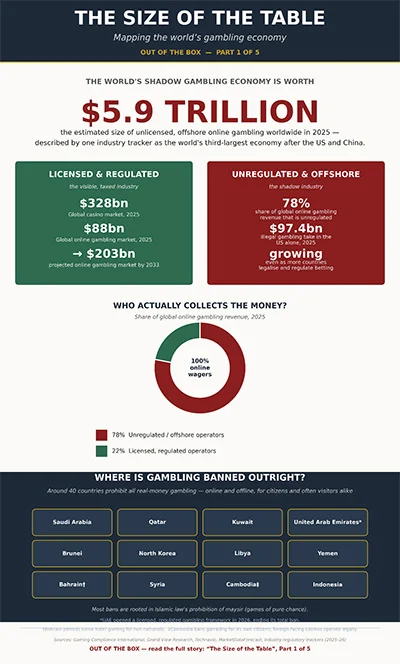
The part of the gambling industry that operates in the open, licensed casinos, regulated sportsbooks, state lotteries, officially approved betting apps, is itself enormous. The global casino industry alone was worth an estimated $328 billion last year, and is expected to grow to nearly $580 billion within the decade. Just one city, Macau, generates more casino revenue in a year than most countries collect in total tax. Online betting and gaming, taken together, is projected to be worth well over $200 billion by the early 2030s.
But that is only the legal half of the picture, and it may not even be the bigger half.
According to a recent industry study, the world’s unregulated online gambling market, offshore casinos, unlicensed sportsbooks, betting apps operating without a licence anywhere near their customers, was worth an estimated $5.9 trillion in 2025. Trillion, not billion. The same report described this shadow industry as effectively the third-largest economy on Earth, behind only the United States and China, with unlicensed operators now taking in roughly three-quarters of all the money wagered online worldwide. In the United States alone, a country with plenty of legal, regulated betting options, illegal gambling operators reportedly pulled in nearly $100 billion last year, and that figure has been growing even as more American states legalise betting, not shrinking.
That last point is worth sitting with for a moment, because it cuts against the assumption most people make: that legalising something automatically starves the black market that grew up around it. Sometimes it does. But sometimes, and gambling seems to be one of those times, legalising a small, taxed, tightly-regulated slice of the market just makes the whole pie bigger, and the illegal operators simply grow alongside the legal ones, competing for the customers the legal market doesn’t reach or doesn’t satisfy.
Why is gambling illegal here, but legal there?
Roughly 40 countries ban gambling outright, no casinos, no betting shops, no lottery tickets, nothing. Most of them are in the Middle East and North Africa, where the ban traces back to Islamic teaching that treats games of pure chance as a kind of theft dressed up as entertainment, taking someone’s money without giving them anything of real value in return. Saudi Arabia can jail you for years for running an illegal gambling operation. Places like Qatar and Kuwait actively block gambling websites at the national internet level.
Then there is a much larger, blurrier middle ground, countries where gambling is technically restricted but everybody does it anyway, more or less in plain sight, because enforcement is patchy or simply not a government priority. Sri Lanka, as we’ll see across this series, sits partly in this middle ground itself: horse racing and licensed casinos are legal, a village card game played at every second festival is technically not, and online betting occupies a grey zone the government is only now trying to define properly.
And then there are the countries, an increasingly long list, that have gone the other way entirely: from banning gambling to actively licensing and taxing it, because they decided a controlled, visible industry was easier to manage than an invisible one they couldn’t tax or police at all. The United Arab Emirates, historically one of the strictest prohibition states in the Gulf, is in the middle of exactly this pivot right now, setting up its first licensed casinos and a national regulator from scratch.
Older than money itself
 Gambling did not arrive with casinos, and it certainly did not arrive with smartphones. Archaeologists have found dice carved from animal bone in Mesopotamian ruins thousands of years old. One of the oldest stories in Indian literature, the Mahabharata, turns on a disastrous game of dice that costs a king his kingdom, his brothers’ freedom, and very nearly his wife’s dignity, a three-thousand-year-old cautionary tale about exactly the kind of “one more hand” thinking that still ruins people today. Renaissance Venice opened what many historians consider the first true public casino, the Ridotto, in 1638, a government-sanctioned gambling house, tellingly, set up specifically so the state could control and tax an activity it had already failed to stamp out through banning it.
Sri Lanka’s own relationship with gambling follows a similar, very human pattern: the activities favoured by the wealthy and the colonially connected, racecourses, private clubs, card games played for high stakes behind closed doors (in five-star hotel rooms), tended to be tolerated or quietly legalised, while the games played by ordinary people in villages and back streets were the ones written into law as crimes. That gap opened under British rule with horse racing on one side and an 1889 law criminalising “unlawful gaming” on the other, and in many ways it has never fully closed. Sri Lanka is now in the middle of its biggest gambling law shake-up in decades, with a new Bill working through Parliament that would scrap three separate old ordinances, on horse racing, general gambling, and casinos, and replace them with a single modern regulator responsible for everything, from a Colombo casino floor to an online betting app. Whether that new regulator actually closes the old gap between “gambling the wealthy do” and “gambling everyone else does” is a question we’ll come back to throughout this series, and especially in our final instalment.
What’s coming next
Over the next four weeks, this column will go deep into each corner of the gambling world:
Part 2
takes us inside the casino business itself, from the glittering, foreign-passport-only casinos of the Colombo waterfront, down to the humble village card game Buruwa (sometimes called “Baby Cutting”), which has been technically illegal since 1889 and is played completely openly at almost every festival (and in funeral houses) in the country anyway.
Part 3
looks at a form of gambling that doesn’t call itself gambling at all: online trading apps that let ordinary people bet on currencies, gold, and oil prices, often marketed as “investing,” even though the industry’s own disclosures show the overwhelming majority of users lose money. However, there are restrictions imposed by the Central Bank of Sri Lanka under the foreign exchange control.
Part 4
turns to sport, and specifically the oldest continuously legal form of betting almost everywhere in the world, horse racing, to explain, in plain terms, exactly how a bookmaker guarantees itself a profit no matter which horse wins.
Part 5
brings it all together, asking what fair, honest regulation of all these forms of gambling would actually look like, and whether Sri Lanka’s new law is close to getting there, or still years away.
Every one of these industries, the casino, the card circle, the trading app, the racecourse, shares the exact same mathematical backbone: a built-in edge that belongs to the house, dressed up in whatever costume makes it feel like something else, sport, investment, tradition, entertainment. The rest, as we’ll spend the next four weeks proving, is just packaging.
Next week: Part 2, From Bally’s to the Backstreet, inside the business of casinos and cards.
(Prof. C. A. Saliya, is a charted accountant, academic, researcher and former banker. He is the author of SAMAJA GAVESHAKAYA and Springer Publication DOING SOCIAL RESEARCH. He can be contacted at . The views expressed in this article are his own and do not necessarily represent those of the organisations with which he is affiliated.)
by Jehan Perera
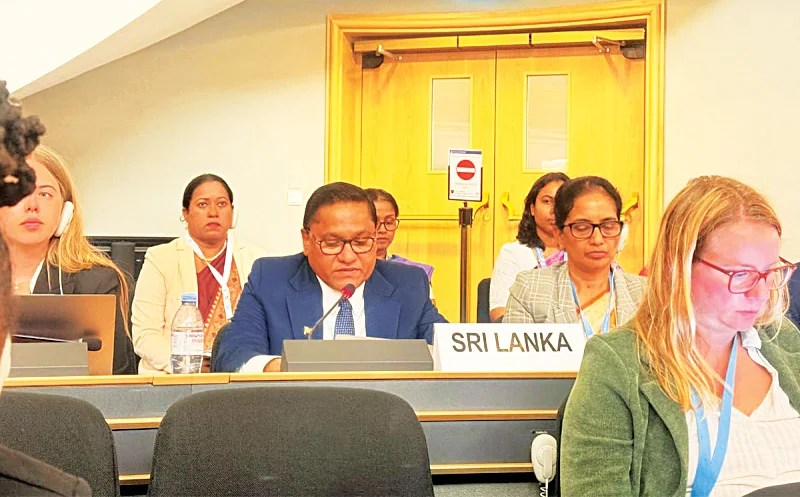
The government is preparing to meet the challenge of the UN Human Rights Council next month. A Sri Lankan delegation led by Foreign Minister Vijitha Herath is expected to attend the 63rd session of the UNHRC in Geneva, where the UN High Commissioner for Human Rights will present a written update on Sri Lanka. The government has already submitted its response to the advance version of the report prepared by the Office of the High Commissioner for Human Rights. The Foreign Minister, accompanied by officials from Colombo and Sri Lanka’s Permanent Mission in Geneva, is expected to explain the progress made on reconciliation, accountability and human rights. This is therefore an important moment for the government. It is an opportunity not merely to defend its record but to make new commitments.
The government has been criticised, as were its predecessors, for the manner in which it has dealt with past human rights violations, especially those connected with the thirty year war. The vexed issue of thousands of missing persons remains at the centre of this criticism. The government has sought to strengthen the Office on Missing Persons by providing it with additional staff and resources. It has also given support to the excavations at the Chemmani mass grave. Justice and National Integration Minister Harshana Nanayakkara has told Parliament that the government has allocated Rs. 57 million for the excavations and related legal work, though that figure has not been set against the cost of comparable forensic operations elsewhere.
The government also took the significant step of holding a national event in Jaffna to mark the International Day of the Victims of Enforced Disappearances. Minister Harshana Nanayakkara attended the event together with the Chairman of the Office on Missing Persons (OMP), Mahesh Katulanda, and other senior officials and political representatives. Their presence was meant to demonstrate the government’s commitment to addressing the issue. But on the victims’ side there is continuing dissatisfaction. The commemoration in Jaffna was met by a protest outside the District Secretariat, organised by families of the disappeared, who demanded to know what happened to relatives who, according to their accounts, surrendered to or were taken away by the military and were never heard from again.
Jaffna Protests
The protests in Jaffna are a reminder of the gap that remains between what the government is trying to do and what the victims expect. For these families, compensation and death certificates are not substitutes for knowing what actually happened to those they lost. The protests, and the police action taken against some of those who demonstrated, were reported by the international and Tamil media and by international human rights organisations, and overshadowed much of what the government had hoped to showcase at the Jaffna event. The OMP’s mandate is to establish the fate and whereabouts of missing persons, clarify the circumstances in which they went missing, and provide redress and assistance to their families. Accordingly, it has sought to verify complaints, remove duplicate entries, encourage people who have not yet made complaints to come forward, and facilitate compensation and other forms of assistance. The families of victims expect the OMP to do more to clarify the circumstances in which their loved ones went missing. An example would be the disappearance of 158 displaced Tamil persons from the Eastern University campus in Vantharumoolai, Batticaloa District, who were rounded up and forcibly removed in front of thousands of other similarly displaced persons, including the officer in charge Prof T Jayasingam.
The government has also increased the support available to families of the missing, and says it is accelerating the OMP’s investigations. But the scale of what remains undone is stark. There are around 11,000 complaints remaining to be investigated, according to the Justice Minister, while the OMP has reported that final information has been established in only 31 cases, communicated privately to the families concerned. On the government’s own figures, that puts the clearance rate for establishing fate and whereabouts at well under one percent of the outstanding caseload. There is a limit to what the OMP can do even with more resources and time. Its mandate is primarily to establish the fate and whereabouts of individual missing persons. It was not intended to produce the comprehensive, public account of the past that victims and the country as a whole require.
In 2015, the government headed by President Maithripala Sirisena and Prime Minister Ranil Wickremesinghe committed itself to establishing such a commission as part of a comprehensive approach to dealing with Sri Lanka’s past. Human Rights Council Resolution 30/1, which the government co-sponsored, specifically welcomed the proposed establishment of a “commission for truth, justice, reconciliation and non-recurrence”, together with an Office on Missing Persons and an Office for Reparations. However, the commitment to a truth-seeking mechanism was never fulfilled. The government should consider setting one up now. There is a growing feeling among Tamil people in the North and East that the government is failing to deliver on promises that are important to them. On issues important to them, they feel this is once again a Sinhala-dominated government like all the ones that came before.
Establish Truth
For the past two years the government has been concentrating on problems that it deems are important to the country as a whole such as the economy, development, poverty alleviation and corruption and criminality. However, the government needs to demonstrate that national unity means addressing the concerns of all communities, including those whose wounds from the war remain unhealed. Some of its own institutions have begun to act on this. The Office for National Unity and Reconciliation recently staged a drama entitled From Yakaweva to Nandikadal, depicting relationships between people that transcend the destruction caused by war. The drama portrayed the sufferings as well as the prejudices on both sides of the divide, from the Kebithigollewa bus bombing to the final days of the war around the Nandikadal lagoon. Its central message is that without forgiveness there cannot be reconciliation.
Particularly moving was the fact that the actors themselves came from families touched by the violence on both sides. The son of an LTTE Black Tiger leader and the daughter of an Army officer were among those who performed, alongside others who had experienced and survived some of the sites of carnage. The fact that a state institution is taking this message of reconciliation forward is itself a testament to the government’s openness to dealing with the past. A government institution can reach a population far larger than any civil society campaign could reach on its own, simply because the machinery of the state is so much more extensive. It is in this context that the government needs to give serious thought to setting up a Truth and Reconciliation Commission as the next step in the truth-seeking process. Special care will need to be taken to ensure that those who are appointed are not only politically non-partisan, but are acceptable to all the communities.
A Truth and Reconciliation Commission cannot by itself resolve all the wounds of the past. Nor can it replace criminal investigations or judicial proceedings where these are necessary. But it can provide something that existing institutions cannot provide on their own. This would be a comprehensive national process through which victims can be heard and the truth can be established. The general population needs to understand what happened, so that the country can begin to acknowledge its past without passing it on indefinitely to future generations. The government has already taken several steps. It is supporting the search for the truth at Chemmani. It has begun reaching out to families of the disappeared. Its own institutions are producing messages of reconciliation. But these are still not delivering the results that the victims and their families want. The next step should be to bring these efforts together to begin the journey from the missing to the missing truth, and from there to comprehensive justice.
A robe without recognition:
 by Anushka Kahandagamage
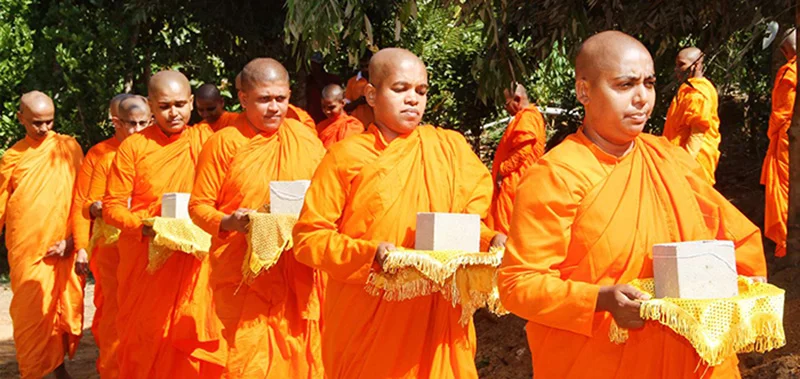
Education is the right of every child. Yet somewhere between childhood and the robe, that right becomes precarious for many Buddhist women in Sri Lanka, threatening not only their social standing, but their fundamental access to learning and the institutional discrimination they face. This piece is not about Buddhist disciplinary rules, which discriminates women, rather about how the state’s refusal to fully recognise bhikkhunis as bhikkhunis quietly determines what they are, and are not, permitted to learn.
Unlike dasasil mathas, who occupy a distinct and unofficial category within Buddhist renunciation, bhikkhunis belong to a formally ordained order recognised within Buddhist monastic tradition itself. Dasa sil mata means ‘ten-precept mother.’ They are women who observe the ten precepts (rather than the fuller Vinaya) and live a renunciant, celibate life, often in robes, but formal ordination has not translated into formal recognition by the state. Even after a Supreme Court ruling affirmed their right to be identified as bhikkhunis on their National Identity Cards, many still do not hold one. This stems from the hesitation of the male-dominated Buddhist hierarchy to recognise these women as part of the Theravada tradition, specifically refusing to validate their higher ordination. The identity card lists her title as Dasa Sil Mata. The ruling exists on paper, but they are still waiting for their identity cards. This is not a small bureaucratic oversight. It is the first link in a longer chain, one that reaches, eventually, into the classroom.
A Name Withheld
In Sri Lanka, there are 827 pirivenas, traditional monastic colleges that have, for centuries, served as the primary institutions of Buddhist education. Of these, only 12 are dedicated to female renunciants at all, and of those 12, just five serve fully ordained nuns specifically. The imbalance is stark on its face: 827 institutions for monks, five for fully ordained nuns. But the discrimination here is not only a matter of numbers, but it is also written into the very language used to name these institutions. Monks’ schools are called pirivena, a term carrying centuries of institutional weight, historical continuity, and state recognition under Sri Lanka’s education laws. Bhikkhunis’ schools, by contrast, are not called pirivenas at all. They are designated Buddha Sravika Meheni Adhyapana Ayathanaya (Institute for the Education of Buddha’s Female Disciples), a separate, parallel term that, however similar in function, withholds from bhikkhuni institutions the same legal and institutional status that the word ‘pirivena’ confers. Since there are ten-precept mothers, the institutes have not given the same name as the pirivena and lack the official as well as social recognition they deserve.
A Pattern a Century in the Making
Following the decline of the Buddhist nun (bhikkhuni) order after the Polonnaruwa period, the first woman to be robed again was ordained in 1905 as a dasasil matha. Although dasasil mathas have long served important religious and societal roles, they have historically lacked access to formal education. Unfortunately, today also, this pattern continuous to exist. Education, in this context, is never just about literacy or dhamma study. It is the currency of religious authority. A bhikkhuni denied equivalent education or educated in an institution the state refuses to name a pirivena, is denied that religious authority. She may know the Tipitaka as well as any monk yet will lack the institutional stamp that would make a lay community trust her reading of it. It was not indifference from the public; it was the accumulated effect of a system that has spent centuries teaching devotees, implicitly, that a woman’s robe does not carry the same weight as a man.
The female renunciants, both dasasil mathas and bhikkunis, although they wear robes, have not been regarded as individuals capable of comprehending or preaching dhamma, simply because they are women. This is most visible in education, the pirivena system, developed historically to train bhikkhus, offered dasasil mathas and bhikkunis no equivalent institutional pathway, no comparable curriculum, certification, or state recognition. This exclusion is notable because it runs counter to Sri Lanka’s broader educational trends, where women have historically outnumbered men in general university enrolment, the gap here is specific to monastic/religious education rather than a reflection of wider societal restrictions on women’s schooling. The country’s National Education Commission Policy has a section on Pirivena education. However, it does not address the education of Buddhist nuns, nor does it mention nuns within the policy. I recently learned that the policy was being reviewed, with a committee appointed by the Ministry of Education, scheduled to begin the review on the 1st of September. This presents an important opportunity to raise the issue of nuns’ education and advocate for its inclusion in the revised policy.
The monks and nuns’ education institutes are funded by the government, which allocates only 5,000–6,000 LKR per student for the entire year. This sum is grossly inadequate to cover even basic institutional needs, accommodation, food, learning materials, and the maintenance of the physical premises, let alone to support any meaningful expansion of the curriculum. With this level of funding, these education institutes are struggling to sustain themselves, and many are forced to rely almost entirely on external support simply to remain operational. This is where the disparity becomes most visible. As female renunciants have historically not been taken seriously, regarded neither as authoritative teachers of dhamma nor as figures worthy of the same reverence extended to their male counterparts, their education centres receive far fewer lay offerings than those for male renunciants. The result is a widening resource gap that mirrors and reinforces the very discrimination that caused it. Underfunded institutions produce fewer well-trained female scholars, which in turn reinforces the perception that female renunciants are less capable, a perception that then justifies continued underinvestment. Without deliberate intervention, either through equitable government allocation or targeted lay support, this cycle is likely to persist rather than resolve on its own.
Sitting Alone at the Bo Tree
I was at Jaya Sri Maha Bodhi in Anuradhapura, where a few monks sat preaching in the shade of the Bo Tree, each surrounded by small clusters of lay devotees. Nearby, I noticed a few female Buddhist renunciants, though I could not immediately tell whether they were bhikkhunîs or dasasil mathas, since visually, in their robes and demeanour, they appeared indistinguishable to an outside observer. Most of them sat alone, without the small crowds of devotees gathered around the monks nearby. This, too, is not incidental. Because women cannot enter the sâsana through the same pathway to ordination, available to men, many Buddhist female renunciants remain dasasil mathas, a status that carries the appearance of monastic life without its legitamised spiritual standing. They observe the 10 precepts, wear robes, and live in renunciation, yet occupy a lower, unofficial rung in the religious hierarchy, one that grants them neither the ordination lineage nor the institutional recognition given to monks. However, in June last year, the Supreme Court of Sri Lanka delivered a landmark majority ruling in SC/FR/218/2013, affirming that fully ordained Buddhist nuns have the fundamental right to use the title ‘Bhikkhuni’ on their National Identity Cards, legally recognising the de facto existence of the Bhikkhuni Sanga.
A Closed Loop
Social discrimination and educational discrimination feed each other in a closed loop. Because bhikkhunis have fewer, less recognised institutions, fewer are formally trained to a standard the public recognises. Because fewer are recognised as authoritative teachers, fewer devotees seek them out or support them. Because they attract fewer devotees, the education institutions of female renunciants remain under-resourced and easy to overlook in state budgets and in popular imagination alike. A dasasil matha or bhikkhuni without an active following also lacks the economic support that following brings, since in Sri Lanka’s monastic economy, devotees are patrons as much as students. The precarity is not only spiritual or bureaucratic; it is material, and it compounds across a lifetime spent in robes.
Until bhikkhunis’ education is named, funded, and recognised on the same terms as that of bhikkhus, this will remain a story not only about missing ID cards or under-resourced schools, but about an education system that continues to decide, quietly and continuously, which students are worth investing in. Education was supposed to be the one place where the women can speak for themselves, instead, for these women, it has become just another place where women have to ask permission to be heard.
(Anushka is a Sociologist who is working on contemporary Buddhist movements. She was formerly attached to the University of Colombo)
Kuppi is a politics and pedagogy happening on the margins of the lecture hall that parodies, subverts, and simultaneously reaffirms social hierarchies.

MoU signed for technology to prevent wild elephant-train collisions

Grade 5 scholarship exam results released

Prime Minister participates in Global Conscious Food Systems Summit in Bhutan

Bouchier century sets England up for record 282-run chase against Ireland

Muneeba, Pakistan’s spinners knock Thailand out of Asia Cup

Showers will occur in the Western and Sabaragamuwa provinces and in Galle, Matara, Kandy and Nuwara-Eliya districts

‘Dates have the highest sugar content to fight Coronavirus’

Sunday Island 27 December – Headlines

#SundayIsland 17th December – Headlines

Sunday Island – 28th March

Sunday Island Headlines – 21 March

Sunday Island – 21st February – Headlines
-

 News6 days ago
Eight politicians in drug kingpin probe
-

 Features4 days ago
“Wrap Me Up in My Blazer”— A Gentlemanly Bradby Reminiscence
-

 Business6 days ago
Sri Lanka opens up: A new season of direct connectivity
-

 Features6 days ago
Redefining ageing in Sri Lanka
-
 Latest News6 days ago
Nepal-Tibet floods: What happened, what caused them and who is missing?
-

 Features3 days ago
When Sri Lankan stories find their own voice
-

 Editorial7 days ago
Unfolding El Niño and burning issues
-

 Editorial6 days ago
The toxic legacy of two lakes