
News
Blue Print: Out of the debt trap and onto sustainable development


A 10-Point Common Minimum Program for Sri Lanka’s Economic Recovery by Harsha de Silva, MP
Introducing his program, Dr. Harsha de Silva said: Sri Lanka is currently facing its worst economic crisis since independence. Decades of shortsighted policies and halfhearted reforms weakened our foundation, and a global crises pushed us to a brink.
While the President RW and the current cabinet have stated there needs to be some deep economic reform, no roadmap has been put forward thus far. On Friday I tabled in @ParliamentLK economic recovery blueprint for #SriLanka which has been endorsed by the other two members of the SJB Economic Committee, Kabir Hashim and Eran Wickramaratne
In this blueprint, I put out a 10-step plan to help navigate Sri Lanka out of our economic crisis using policies which have been decades in the making. I invite the government, opposition parties, international partners, as well as all other relevant stakeholders to use this blueprint to start the conversation on how best to bring Sri Lanka out of this socio-economic crisis. As always feedback is more than welcome, I’m eager to hear your thoughts.
EXECUTIVE SUMMARY
Sri Lanka’s economic crisis is not unexpected. Decades of shortsighted policies and halfhearted reforms weakened our foundation. Sudden global crises pushed us to a brink. Appalling mismanagement took us over the edge. Today, our state is bankrupt, inflation is rampant, the economy is at a standstill, and our socio-political order is in crisis.Yet we can still recover: we can reach out for the few lifelines left, regain our ground, reform our economy, and rebuild our country. This Blueprint tells us how.
We must manage our immediate debt crisis by obtaining bridging financing until the International Monetary Fund (IMF) disburses funds, and productively engage the IMF while restructuring our debt. We must maintain financial system stability as we do so. The exchange rate should be carefully floated to market levels and interest rates should rise to control inflation.
Monetary policy reform will ensure that we do not backslide into crisis. Fiscal reform is critical. Tax revenues must be increased, and expenditure rationalized. Reforming unproductive or corrupt state-owned enterprises will be a key part of this process. This is especially true for energy and utilities, for which consumers will now need to pay cost reflective tariffs.
Targeted, means-tested cash transfers will help the needy meet these unsubsidized market prices. The public sector must be transformed into a productive, efficient, high-quality, digitally enabled workforce that serves the needs of Sri Lanka’s citizens.
As we stabilize, we must also grow. It is essential that we promote trade, industry, agriculture, and services by unshackling markets, increasing competitiveness and productivity, promoting exports and investment, and integrating with global production networks.
Land and labour market reform will enable and amplify this growth. A strong, transparent, effective social safety net that safeguards those who need it must underpin these changes. Moreover, it is essential to execute and uphold anti-corruption and transparency laws for these changes to last.This will not be an easy path, but it is our only route out of debt and towards sustainable inclusive development.
(Harsha de Silva is a member of the main opposition Samagi Jana Balawegaya (SJB). This document has been ratified by the SJB Economic Policy Unit consisting of the author, Kabir Hashim, MP and Eran Wickremeratna, MP, and endorsed by SJB Leader Sajith Premadasa, MP. Valuable advice and comments from Professor Premachandra Athukorala on several previous drafts are acknowledged with gratitude. This document incorporates, in tables, the short-medium term action plan detailed in the ‘Common Minimum Program’ compiled by the National Movement for Social Justice (NMSJ) using the proposals of eight groups (Advocata Institute, BASL, Elle Gunawansa Thero, independent economists, NMSJ, NPP, SJB, 43 Brigade) and discussed with the SLFP and business leaders.)


The Ministry of Industries and Entrepreneurship Development has recommended the establishment of Sri Lankan Standards, i.e. the import testing methodology for imported tires used for passenger cars and pneumatic tires for three-wheelers with the aim of ensuring a fair competitive environment for local
manufactures and ensuring consumer safety and security.
Taking into the said recommendations, “Import and Export (control regulations N0.08 of the 2026)” has been enacted to amend the existing regulations by means of the Extraordinary Gazette Notification No. 2508/27 dated 2026-10-01, prescribing Sri Lanka standard 1212 for the import of passenger types (HS Code 4011.10.90) and Sri Lanka standard 1347 for the import of
pneumatic tires for three – wheeled vehicles (HS Code 4011.90.10).
Accordingly, the Cabinet of Ministers has approved the resolution furnished by the President in his capacity as the Minister of Finance, Planning, and Economic Development to submit the aforementioned regulations to Parliament for approval.
Approval of the Cabinet of Ministers was granted at their meeting held on 02.06.2025 to introduce a new act to promote and providing legal provisions for facilitating the Public Private Joint Enterprises within Sri Lanka as well as the establishment of the National Agency for Public Private Partnership Joint Enterprises.
Accordingly, the Legal Draftsman has formulated the relevant draft bill and the Attorney General has given his clearance to the said draft bill.
The Cabinet of Ministers approved the resolution furnished by the President in his capacity as the Minister of Finance, Planning and Economic Development to publish the said
draft bill in the government gazette notification and thereby submit it to the Parliament for its concurrence.
Regulation, development and control of indigenous medical sector in Sri Lanka comprised of Ayurvedha, Sidhdha, Unani, Local Therapies are carried out under the provisions of Ayurvedha Act No. 31 of 1961.
Although amendments were made to the act from time to time as per the requirements, the necessity of further amending the Ayurvedha Act has been identified to enable efficiently maintaining all activities of local medical field productively, further formalizing the regulation of the sector, taking actions to providing licenses applicable to export of local medicines, and achieving the progress and sustainable development goals in the local medical sector.
Based on the said factors, the Cabinet of Ministers granted approval to the resolution furnished by the Minister of Health and Mass Media to direct the Legal Draftsman to formulate a draft bill to amend the Ayurvedha Act No. 31 of 1961.

Import and Export (Control) Regulations No. 08 of 2026
Draft Bill of the Public Private Partnership Enterprises Act to be gazzetted
Amendment of the Ayurvedha Act No. 31 of 1961

Cabinet nod to amend the Sri Lanka Development Administration Institute Act No. 9 of 1982
Establishment of the National Higher Performance Centre
State patronage for the cremation ceremony of the late deputy prelate (Anu Nayaka Thero) of the Sri Laka Ramangya Maha Nikaya, Gatambe Rajopawanramadhipatha, Siri Chandawimala Wanshalankara, Chandrakeerthi Sri Amarawansha, Sadhdharmawageeshwara, Shasanashobhanna Most Venerable Keppetiyagoda Siriwimalabhidhana Thero

‘Dates have the highest sugar content to fight Coronavirus’

Sunday Island 27 December – Headlines

#SundayIsland 17th December – Headlines

Sunday Island – 28th March

Sunday Island Headlines – 21 March

Sunday Island – 21st February – Headlines
-

 Features3 days ago
Kotahena:A Small Enclave, An Extraordinary Legacy
-

 News7 days ago
Sri Lanka, India caught in US-Iran ship crisis
-
 News4 days ago
Asgiri Mahanayake calls for immediate release of Gnanasara Thera
-

 Latest News7 days ago
Missiles intercepted near Riyadh after Saudi coalition hits Yemen fuel depot
-
 Latest News7 days ago
Kusal Mendis’ unbeaten 87 hands Sri Lanka consolation win
-

 News3 days ago
Record 1,600 students take Russian Classical Ballet examination in Sri Lanka
-
 News6 days ago
AC President recuses himself from hearing prison attire case pertaining to Gnanasara Thera
-
 News5 days ago
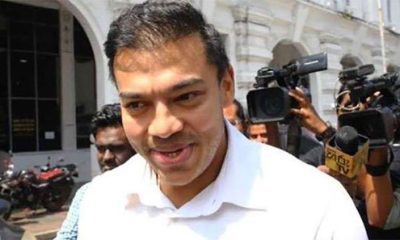
Naval officer testifies Yoshitha received Rs. 5.15 mn in salaries during SLN service