
Business
Sampath Bank remains vibrant, backed by strong capital and liquidity positions


Sampath Bank continued to maintain a solid capital base and stable liquidity profile in the first half of 2022 notwithstanding multiple economic challenges. The Bank remains vigilant in identifying the current economic issues and has continued to implement in a proactive manner the required countermeasures, clearly demonstrating its strength and stability.
In line with that objective and in order to improve the foreign currency liquidity position, the Bank continues to focus and promote inward remittances as well as to encourage the inflow of export proceeds. The Bank further reinforced its commitment to all its stakeholders by continuing to support all affected segments to sustain their respective businesses in order to ride out the current economic crisis.
Despite the prevailing economic turmoil, the Bank posted a commendable PAT of Rs 7.1 Bn and PBT of Rs 9 Bn for the period ended 30th June 2022, reflecting a minor increase of 0.3% and slight decrease of 5.5% respectively compared to the figures declared in 1H 2021. In the meantime, the Group declared a PAT of Rs 7.4 Bn and PBT of Rs 9.6 Bn, denoting a decline of 2% and 5.5% respectively over the first half of 2021.
Key financial highlights declared by Sampath Bank for 1H 2022:
Strong NIM of 4.85% on the back of rising AWPLR.
323% growth in exchange income stemming from the sharp depreciation of LKR against USD by 80% or by Rs 160.25.
Sizable 69.9% increase in net fee and commission income during the period, driven by cards and trade-related operations.
Higher impairment provisions on loans and investments to capture possible economic uncertainties.
A surcharge tax of Rs 2.67 Bn recognized against the opening retained earnings of the Bank.
Fund Based Income
Total interest income increased by 41.1 % year on year to Rs 59.2 Bn in the first half of 2022, compared to Rs 41.9 Bn in the same period of the previous year. This significant increase in interest income is due to the upward trend in interest rates in the first half of 2022. The AWPLR at the end of the reporting period reached 22.62%, which is 1,711 bps higher than the rate reported on 30th June 2021. Furthermore, the current AWPLR surpassed the end 2021 figure by 1,401 bps. At the same time, the interest rate on a one-year treasury bill climbed by 1,861 bps from the treasury bill rate reported at end of 30th June 2021 and stood at 23.84% at the end of 30th June 2022.
Interest expenses increased by 22.6% compared to the corresponding period of last year due to rising interest trend. The Bank’s total interest expense was Rs 27.8 Bn at the end of the current reporting period compared to Rs 22.7 Bn reported in 1H 2021. Prudent asset and liability management however ensured that net interest income grew by 63% in 1H 2022. This trend is reflected in the NIM growth of 124 bps reported for the period.
Non-Fund based income
The Bank recorded a significant increase of 69.9% in its net fee and commission income (NFCI) in 1H 2022 compared to the same period of the previous year. NFCI is made up of income from a variety of sources, including loans and advances, credit cards, trade, and electronic channels. In the period under review, significant growth was noted in card-related business volumes and as well as fee and commission income from trade-related activities.
During the first half of 2022, net other operating income increased to Rs 16 Bn, an unprecedented 378% increase compared to Rs 3.4 Bn recorded in the corresponding period of the previous year. This was mainly due to the 80% depreciation of LKR against US Dollar. Meanwhile, the Bank posted a net trading loss of Rs 2.5 Bn, compared to the gain of Rs 46 Mn reported during the corresponding period of the previous financial year. Total exchange income for the first six months of 2022 was Rs 13 Bn compared Rs 3 Bn registered in 1H 2021.


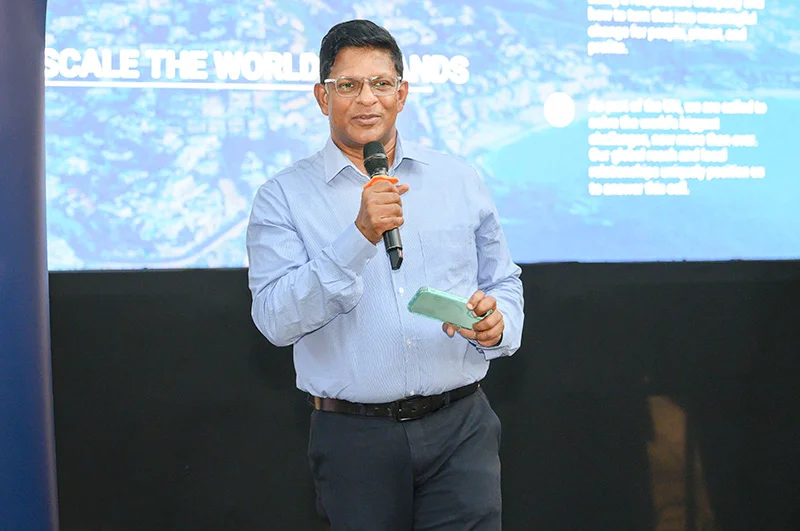
At its 2026 Social Sustainability Programme Kick-Off, the UN Global Compact Network Sri Lanka convened business leaders to advance the translation of global ambition into practical corporate action on inclusion, integrity and human rights.
On 24 February 2026, the UN Global Compact Network Sri Lanka (Network Sri Lanka) convened business leaders at Barefoot Garden Café for its 2026 Social Sustainability Programme Kick-Off, delivered in collaboration with Good Life X.
The gathering did more than introduce a calendar of events. It positioned Sri Lanka’s corporate community within the broader direction of the UN Global Compact’s 2026–2030 global strategy — a strategy anchored in three imperatives: equipping companies to act, catalyzing collective action, and advancing the business case for responsible leadership.
At its core, the 2026 Social Sustainability agenda is designed to move companies from commitment to capability.
Within the Diversity & Inclusion Working Group, this means building practical pathways toward equal pay for equal work and strengthening male allyship as a governance issue rather than a cultural afterthought. It means examining sexual and reproductive health, disability inclusion, and mental health not as employee benefits, but as structural determinants of productivity and retention. It means sharpening strategic communications so inclusion is embedded in brand integrity. It also means applying science-based behavioural change approaches to shift organizational culture in measurable ways.
Across the Business & Human Rights Working Group, equipping companies takes the form of deepened engagement on decent work and living wage implementation, strengthening human rights due diligence processes, and addressing emerging risk areas such as AI and digital rights. It extends to reinforcing business integrity and anti-corruption frameworks, understanding the social dimensions of a just transition, and recognizing the link between child rights, nutrition, and workforce productivity.
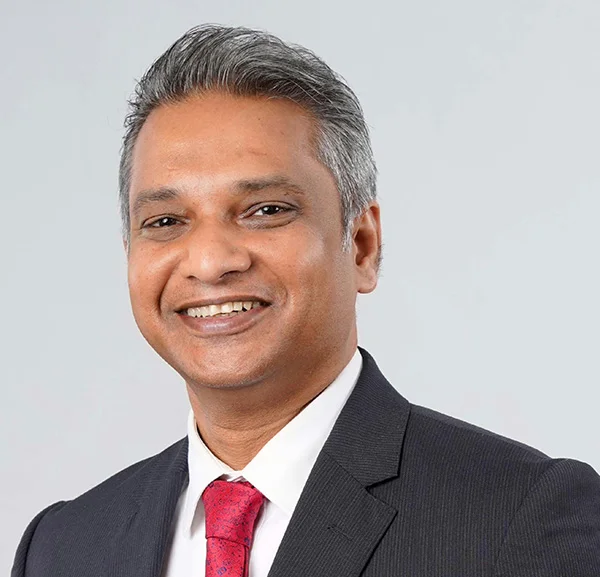
Union Bank of Colombo PLC announced its proposed Debenture Issue 2026, a strategic move aimed at raising up to LKR 3 billion. This issue is designed to bolster the Bank’s Tier II capital base and provide a robust financial foundation for its upcoming growth initiatives.
The offering consists of Basel III compliant, listed, rated, unsecured, subordinated, redeemable high-yield debentures with Non-Viability Conversion. The instrument has been assigned a rating of BB (lka) by Fitch Ratings (Lanka) Ltd, reflecting the bank’s creditworthiness and the structured nature of the subordinated debt.
Investors can choose from three distinct interest structures starting from a high-yield 13% fixed rate per annum (Type A). This option is paid annually, while Type B offers a 12.5% fixed rate paid semi-annually (12.89% AER). For those seeking market-linked returns, Type C provides a floating rate of the 182-days Treasury Bill rate plus a 400-basis point margin, also paid semi-annually.
The debentures are priced at LKR 100 per unit with a 5-year tenure (2026–2031). The initial issue size is set at 20,000,000 debentures with an option to raise 10,000,000 at the discretion of the Bank and is scheduled to open on 10 March 2026.
Shanka Abeywardene, Chief Financial Officer of Union Bank stated “This debenture issue marks a significant step in the Bank’s journey towards enhanced financial stability. By strengthening its capital adequacy, Union Bank is well-positioned to navigate evolving market conditions while fuelling its long-term strategic objectives for sustainable growth”
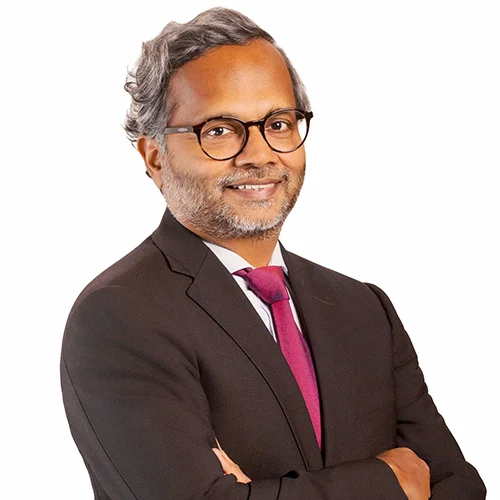
WindForce PLC announced the appointment of Sanjay Kulatunga as an Independent, Non-Executive Director to its Board with effect from 03rd March 2026, following the resignation of Dilshan Hettiaratchi. The appointment further strengthens the Company’s governance framework, strategic oversight, and long-term decision-making capabilities.
Kulatunga brings an established track record as a founder, entrepreneur, and senior executive across financial services and export-oriented industries. He is the Chief Executive Officer and Co-Founder of LYNEAR Wealth Management, a boutique investment firm established in 2013, which has since grown to become one of Sri Lanka’s largest private wealth management institutions, serving high-net-worth individuals as well as local and international institutional clients.
Prior to founding LYNEAR, Kulatunga played a pivotal role in the establishment of Amba Research, an investment research offshoring firm rooted in Sri Lanka and now operating as part of Acuity Analytics.
Over the years, he has contributed extensively to several key national institutions. His previous appointments include serving on the Financial Sector Stability Consultative Committee of the Central Bank of Sri Lanka, as well as the Board of Investment of Sri Lanka and the Securities and Exchange Commission of Sri Lanka.

England elect to field first at Wankhede

Iran denies its drones hit airport in Azerbaijan’s exclave as war widens

Daren Sammy issues plea as West Indies remain stuck in Kolkata hotel

Nepal election 2026: When will we get the results?

‘It’s so good to be home’ – passengers on Dubai-Dublin flight

India’s momentum meets Wankhede’s memory in big semifinal bout

‘Dates have the highest sugar content to fight Coronavirus’

Sunday Island 27 December – Headlines

#SundayIsland 17th December – Headlines

Sunday Island – 28th March

Sunday Island Headlines – 21 March

Sunday Island – 21st February – Headlines
-

 Features4 days ago
Brilliant Navy officer no more
-

 Opinion7 days ago
Jamming and re-setting the world: What is the role of Donald Trump?
-

 Features7 days ago
An innocent bystander or a passive onlooker?
-

 Opinion4 days ago
Sri Lanka – world’s worst facilities for cricket fans
-

 Business7 days ago
An efficacious strategy to boost exports of Sri Lanka in medium term
-

 Business1 day ago
Cabinet nod for the removal of Cess tax imposed on imported good
-

 Features5 days ago
Overseas visits to drum up foreign assistance for Sri Lanka
-

 Features4 days ago
A life in colour and song: Rajika Gamage’s new bird guide captures Sri Lanka’s avian soul