
News
Taj Mahal reopens to public after six months


BY S VENKAT NARAYAN
Our Special Correspondent
NEW DELHI:
Taj Mahal, the world’s most famous monument to love located in Agra in India’s Uttar Pradesh state 221km from here, reopened to the public last Monday after six months. It remained shut since March 17 due to Covid-19 pandemic. About 160 tickets were booked online on the first day. The first to enter was a tourist from Taiwan staying in India, officials said.
A maximum of 5,000 visitors will be allowed in two shifts per day into the monument, the 17th-century architectural marvel built by fifth Mughal Emperor Shah Jahan (1592-1666) in memory of his favourite wife Mumtaz Mahal, who died while giving birth to their 14th child.
On normal days, the Taj attracts 25,000 to 30,000 visitors a day.
Tight Covid-19 protocol will be followed for checking tourists. There will be no window ticket sale, visitors can scan the code to purchase tickets or book online through the Archaeological Survey of India (ASI) website, or through the ASI mobile app.
Not many paid Rs 200 to visit the main mausoleum but appeared content taking photos of the monument and clicking themselves on the ‘Diana seat’.
ASI officials said they had not neglected the monument despite its gates having remained closed for so long.
“Lawns were maintained all through these six months. The Taj will stay open from sunrise to sunset. All will go through thermal check and they will be provided with sanitizer,” said AN Gupta, conservation assistant, ASI at the white marble monument.
Gupta said not more than five visitors will be allowed at a time within the main mausoleum, which houses the graves of Emperor Shah Jahan and Mumtaz Mahal, the third of his six wives. The mausoleum will remain closed on Fridays, said Agra district magistrate Prabhu N Singh.
Vasant Swarnkar, superintending archaeologist for ASI’s Agra circle, said: “The Taj Mahal will have visitors in two slots — pre-lunch and post-lunch. In each slot, there will be a maximum of 2,500 visitors. Once tickets for the first slot are sold, tickets will be issued for the second slot. In a day, a maximum of 5,000 visitors can visit the Taj.”
Central Industrial Security Force (CISF) jawans will remain at a distance and check visitors with hand-held metal detectors.
No goods are to be carried inside the Taj. An an ambulance will be ready at the gates, Gupta said.
The Taj’s reopening has excited all those who make a living in and around the monument. For instance, Munawwar Ali, 50, began cleaning items at his marble goods shop on Sunday for the first time since March 16.
“We have called the staff on Monday after six months. We expect business to be slow but at least we will see tourists going to the Taj,” said Ali. He has a shop adjoining the western gate of the monument.
‘Yes, we are excited about the reopening of the Taj after such a long duration. A day will come when international flights will resume. In the beginning, domestic tourists from nearby regions will come,” said Rajiv Tiwari, president of the Federation of Travel Association of Agra.
“ASI needs to follow the Covid-19 protocol so that all goes smoothly. The government should begin thinking about restarting international flights as European nations have resumed tourism. We have to live with the coronavirus,” Tiwari added.
Indians will have to pay INR 50 per ticket for visiting the Taj Mahal and cough up another INR200 for entering the main mausoleum. During routine days, it was mostly foreign tourists who used to pay extra to enter the main mausoleum.
Tourism trade experts recollect that the Taj Mahal had never remained closed for such a long period before. The decision to close monuments all over the country due to the Covid-19 pandemic was taken on March 17, before the lockdown.
“It is perhaps for the first time that the seventh New Wonder of the World, which attracts a large number of foreign tourists to India, had been closed for such a long time,” said Arun Dang, former president of Tourism Guild.
“This is unprecedented. Though the monument was closed during the Second World War and also during two wars with Pakistan in 1965 and 1971, the closure had not been so long,” said Dang.
While the Taj Mahal will remain closed on Fridays and Sundays, Agra Fort will remain shut on Sundays.
According to ASI estimates, the Taj Mahal receives around seven to eight million visitors each year, including a large number of foreign tourists who are not likely to come till regular international traffic resume. The Agra Fort gets three million visitors a year.
Emperor Shah Jahan reigned over much of what are now India, Pakistan, Bangladesh and Afghanistan for 30 years (1628-58), and built the Red Fort and Jama Masjid in Delhi and the Lahore Fort in Lahore (now in Pakistan).
It took 21 years (1532-53) for over 20,000 labourers to build the Taj on a 17-hectare (42-acre) plot on the banks of River Yamuna at a cost of INR 32 million then, and INR 70 billion or nearly one billion US dollars now.
When he took ill, and handed over his reign to his elder son Dara Shiko, younger son Aurangzeb killed Dara Shiko, seized power, declared Shah Jahan an incompetent ruler who wasted too much money on building massive monuments, and jailed him in the Agra Fort.
Shah Jahan could see the Taj only from a tiny window in his cell in the Fort, and died a sad man in 1666.

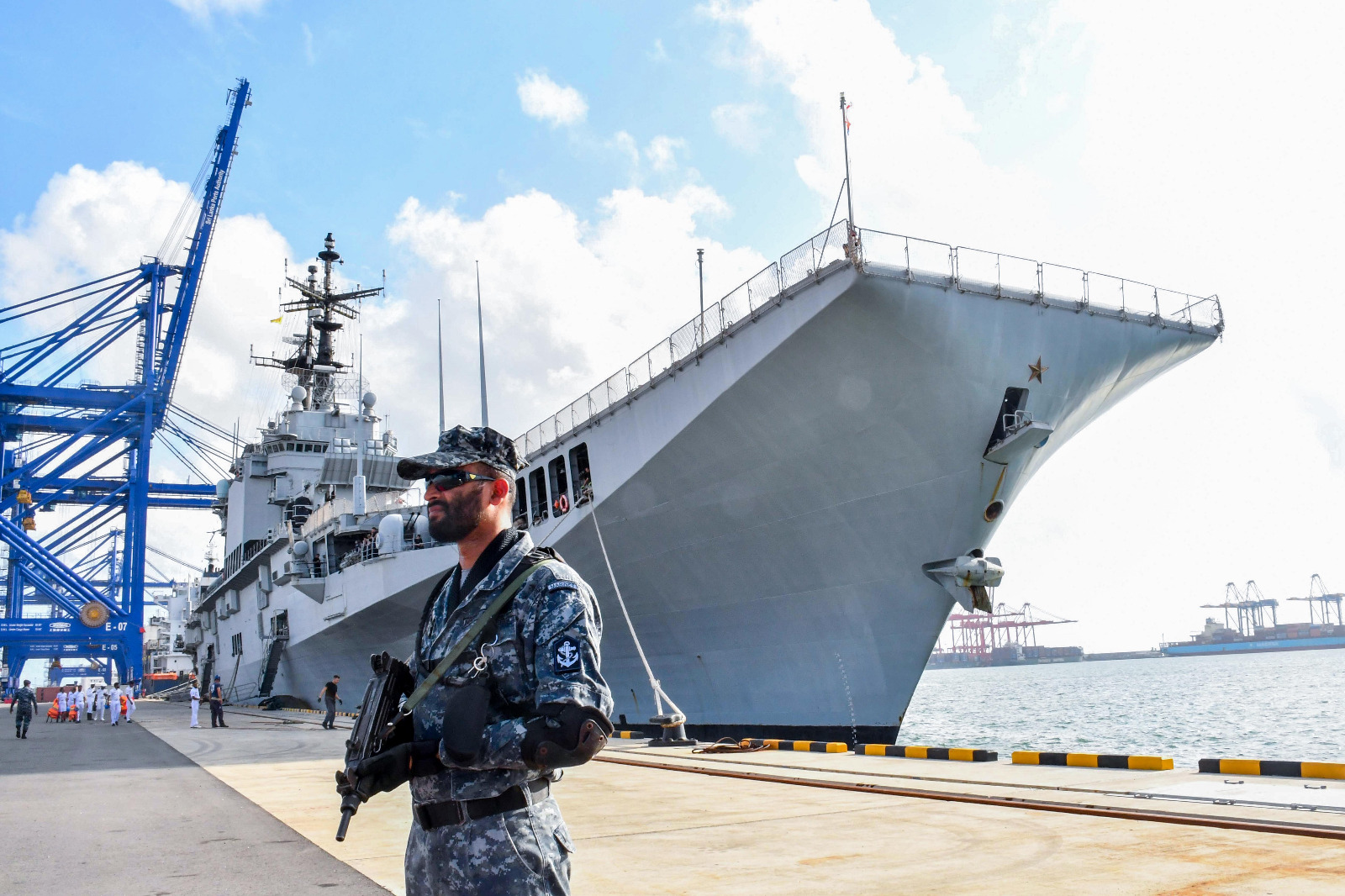
The Italian Naval Vessel ‘ITS Giuseppe Garibaldi’ arrived in Sri Lanka today, 9 September 2026, on a replenishment visit.
The Sri Lanka Navy welcomed the visiting ship in accordance with naval traditions at the port of Colombo.
‘ITS Giuseppe Garibaldi’ is a 180m long Landing Helicopter Aircraft Vessel commanded by Captain Marco GUERRIERO.
During the ship’s stay in Sri Lanka, the Commanding Officer of ‘ITS Giuseppe Garibaldi’ is scheduled to call on the Commander Western Naval Area.
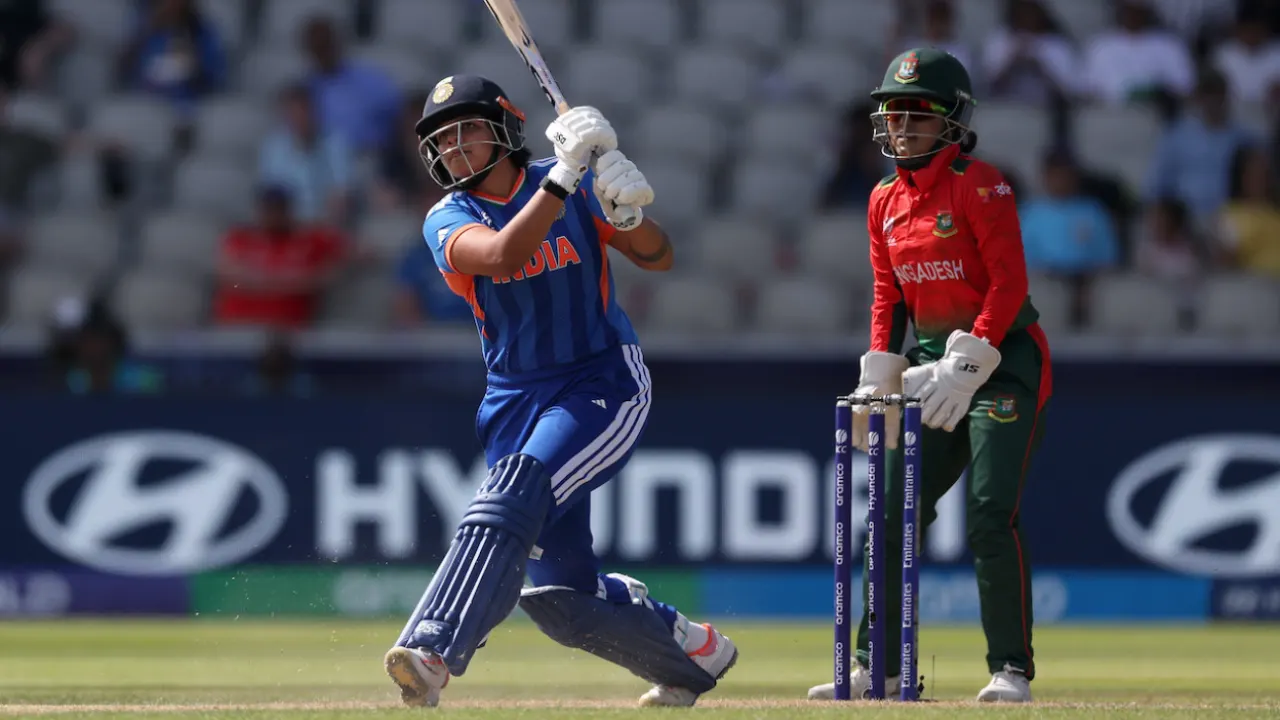
If Bangladesh take the route of seeking inspiration from the past to bring down heavyweights India on Thursday, they will have to squint their eyes and go back to pre-Covid times for their last victory against them in the Women’s Asia Cup. India have had the better of their neighbours over their last eight meetings, and last lost to Bangladesh in a T20I three years ago, when a very similar-looking Indian batting line-up was kept to 102 for 9.
Before that, Bangladesh had shocked India with back-to-back wins that culminated in their maiden Asia Cup title, by again stifling India to an underwhelming 112 for 9.
The Bangladesh team of today – as their recent fights have shown over the last two World Cups – is a version far improved from the ones of 2018 and 2023. They have scared teams like Australia and England (ODI World Cup) and India (T20 World Cup) in the last 12 months and they recently beat the higher ranked Pakistan in the UK by keeping them to 100 for 8.
It is this bowling strength that Bangladesh must bank on to try and bring down India, whose batting has stuttered every now and then, including a collapse of 8 for 46 against Thailand earlier in the tournament. India have had middle-order issues for a while now – it’s one of the things that kept them from a knockout berth in the last T20 World Cup – and Bangladesh will be itching to strike while the iron is hot.
They have laid the foundations in the last 10 days by routing Indonesia for 58, making Sri Lanka sweat in a chase of 115, and suffocating UAE’s batters to 69 for 9 with semi-finals qualification on the line.
Pratika Rawal, India’s No. 3 for this tournament in place of the injured Jemimah Rodrigues, hasn’t quite shown the promise in this format that she has in ODIs. Her 36 runs in three innings have come at a strike rate of just 109.09, against some of the lower-ranked teams in the world. Now into the knockouts, the time is ripe for Rawal to step up against one of the stronger bowling attacks of the tournament, especially if one of the openers doesn’t get going.
Swing bowler Marufa Akter is doing Marufa Akter things at this Asia Cup. She has struck in her opening spell in each of her three games so far – including the big scalp of Chamari Athapathuthu for 1. She has made the ball talk with her prodigious swing, and is the top wicket-taker in this Asia Cup among pace bowlers, with an economy rate of 3.27. She will hold the key for Bangladesh as they come up against a top order comprising Smriti Mandhana, Shafali Verma and Rawal.
Team news
After constant chopping and changing during the T20 World Cup in the UK, India have gone unchanged in the three games of this tournament. They will be expected to field the same XI again.
India (probable): Smriti Mandhana, Shafali Verma, Pratika Rawal, Harmanpreet Kaur (capt), Richa Ghosh (wk), Bharti Fulmali, Deepti Sharma, Prema Rawat, Kranti Gaud, N Shree Charani, Nandani Sharma.
Bangladesh have used 14 players, in comparison, including a debut for 17-year-old allrounder Farjana Easmin. They may not make too many changes this time as the two players who came into the XI on Tuesday – Rabeya Khan and Sharmin Akter – played starring roles in beating UAE.
Bangladesh (probable): Juairiya Ferdous, Nigar Sultana (capt & wk), Sobhana Mostary, Dilara Akter, Shorna Akter, Rabeya Khan, Sharmin Akter, Nahida Akter, Sultana Khatun, Marufa Akter, Fahima Khatun.
[Cricinfo]
News
Establishment of National Trade Negotiation Committee (NTFC) and Trade Policy Consultation Committee.

Approval has been granted at the cabinet meeting held on 24-08-2026 to implement the recommendations submitted by the committee appointed to review Sri Lanka’s current Free Trade Agreements and future course of Free Trade Agreements in Sri Lanka.
Taking into account these recommendations, it has been
recognized the necessity of establishing a National Trade Negotiation Committee and Trade Policy Consultation Committee enabling Sri Lanka to follow a more targeted, sequential, and evidence-based approach in conducting negotiations for Sri Lanka’s future Free Trade Agreements and to ensure a sustainable and meaningful stakeholder consultation process.
The Cabinet of Ministers has approved the resolution furnished by the Minister of Trade, Commercial, Food Security, and Cooperative Development to act as follows.
• Establishment of a National Trade Negotiation Committee to guide trade discussions conducted with potential bilateral or regional trade partners
• Appointment of the Secretary to the Ministry of Trade, Commerce, Food Security, and Cooperative Development as the Chairman of the National Trade Negotiation Committee and
the Chief National Trade Negotiator.
• Establishment of 12 subject specific sub- committees with the required technical working groups under the National Trade Negotiation Committee
• Appointment of Trade Policy Consultative Committee comprising of trade experts, researchers engaged in research relevant to trade field, business community, unions, civil societies and relevant public officers to instruct the National Trade Negotiation Committee on active and technical sectors, to submit the policy recommendations to the Cabinet of Ministers regarding the matters relevant to the trade agreements, to inquire sustainable ideas regarding the Free Trade Agreements, and to ensure the communication mechanism.
• The Minister in charge of the Subject international trade and the Minister in charge of the subject of Industry to serve as Co-Chairpersons of the Trade Policy Advisory Committee.

Italian Naval Vessel ‘ITS Giuseppe Garibaldi’ arrives in Colombo

England Women appoint Leah Poulton as managing director

Bangladesh bank on bowlers in bid to bring India down

Avindu makes history with first World University gold for Sri Lanka

Establishment of National Trade Negotiation Committee (NTFC) and Trade Policy Consultation Committee.

Showers will occur in the Western and Sabaragamuwa provinces and in Galle and Matara districts

‘Dates have the highest sugar content to fight Coronavirus’

Sunday Island 27 December – Headlines

#SundayIsland 17th December – Headlines

Sunday Island – 28th March

Sunday Island Headlines – 21 March

Sunday Island – 21st February – Headlines
-

 News7 days ago
Denied of promotion to SC despite vacancies, justice Gurusinghe retires
-

 News7 days ago
22A: SC urged to suspend hearing, appoint full bench
-

 News5 days ago
Namal remanded until Sept. 18 over Airbus deal investigation
-

 Latest News4 days ago
Tharanga creates history with Diamond League crown in Brussels
-

 News7 days ago
Govt. seeks NATO assistance
-

 News4 days ago
Dispute which triggered listed company director being detained at BIA resolved
-

 Editorial7 days ago
Strange arithmetic goes unchallenged
-

 Features3 days ago
After the parade: What a traffic OIC’s walk-out tells us