
Sports
The mighty All Blacks are falling

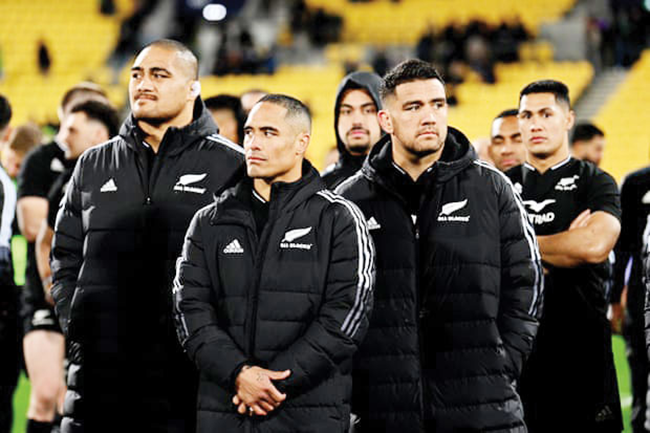
New Zealand rugby’s tipping point appears nigh. Alarmist? Maybe. Yet as the fissures deepen while the All Blacks embark on a defining South African tour, New Zealand grows increasingly impatient for signs of resuscitation of its revered rugby tradition.Two weeks ago the All Blacks ignited mass venting after losing against Ireland in Wellington – a result that consigned Ian Foster’s widely derided All Blacks to their first home series defeat in 27 years, their first ever against the Irish, and their fourth defeat in five Tests.
Cue outrage. Such a sharp plateau cuts through New Zealand’s societal and political divides to form unified condemnation.Six days of silence followed as the All Blacks and New Zealand Rugby held high-powered meetings behind closed doors. The information vacuum sparked wild speculation, with calls for everyone from the coach to the captain to be sacked.Ian Foster, the coach has survived, for now at least, despite a 66.7% win record which ranks him the worst All Blacks coach in the professional era.
In a defiant, emotional address last week Foster attempted to counterpunch the mounting red mist. Yet only by delivering an immediate transformation in two brutal Tests on the South African highveld can he secure his future.Casualties have emerged in the form of All Blacks forwards coach John Plumtree and attack mentor Brad Mooar – both shown the door a matter of months after re-signing through to the 2023 World Cup.Sacking coaches mid-tenure is a cut-throat notion far more aligned to European football than uber-conservative New Zealand rugby, reflecting the relentless public pressure and sustained demand for change.
While rugby’s rankings require Pythagoras’s theorem to fathom, the All Blacks dropping to fourth for the first time aptly depicts their struggles.For the vocal disaffected, the circumstances surrounding Foster’s accession to the All Blacks throne – on the continuity ticket after eight years as Steve Hansen’s assistant – and the team’s subsequent malaise, create one clear cause for the demise.A challenging Covid landscape has been unkind to Foster’s troubled tenure, but the now-evident erosion of the All Blacks, and that of their fear factor, can be traced back to the drawn 2017 British and Irish Lions series and the crushing World Cup semi-final defeat to England two years later.
Like climate change deniers, many New Zealand rugby fans refuse to accept a changing of the guard is possible or that deeper issues than the coach are at play.While New Zealand rugby boasts a legacy of success, the unrealistic expectations that the All Blacks win every Test were ingrained by the dominance of the near untouchable 2012-2016 team that lost twice in five years.
The All Blacks of that time mount a compelling argument for New Zealand’s best-ever team. Only now, in times of extreme frustration and calls for coaching cleanouts, are their feats truly appreciated. Their like will probably never be seen again.Further coaching changes may help improve the All Blacks’ fortunes, but that theory is too dismissive of the northern nations’ significant improvement since 2015, with France and Ireland now leading the charge.The gap at the top has closed – and there is every reason to believe it will stay that way.
From a New Zealand perspective, a total reset could be required. Projected quick fix solutions such as ushering in six-time Super Rugby-winning Crusaders coach Scott Robertson may not provide an instant cure.Written off and under siege as they confront rugby’s toughest assignment, the All Blacks could silence their doubters by pulling off upset victories against the world champion Springboks in the coming weeks.But even in that utopian scenario, New Zealand rugby’s deeper issues will not be addressed. Scratch the surface and a litany of challenges emerge.
This week Hansen launched a scathing attack that placed responsibility for a series of failures squarely at the New Zealand Rugby board’s feet, saying the relationship between the board and players was “probably the worst it’s ever been”.
Other issues include the number of teenage boys playing rugby falling at alarming rates for the past eight years – down 17% to 2018, at a time when basketball’s popularity grew 41%. This can partly be attributed to the professionalisation of schoolboy rugby, and the lack of focus on those below the elite first XVs. In Auckland alone the number of secondary school rugby teams fell from 225 to 181 between 2013 and 2018.
The decimated grassroots scene, where many clubs have folded and amalgamated, continues to have a profound effect on participation and engagement, too, while crowds and ratings for the elite game are declining.New Zealand’s talent development, particularly that of the once dominant under-20s team, has declined since 2017, before a sudden revival this season.
In the professional realm this year’s remodelled 12-team Super Rugby competition exposed a dearth of contrasting, confrontational styles. The absence of South Africa and, to a lesser extent, Argentina, leave largely homogenised contests that do not best prepare New Zealand’s players for the combative, suffocating Test arena. And while the recently signed $200m deal with US private investment firm Silver Lake offers financial security, the potential long-term pressure points of that arrangement remain unclear.As Blues coach Leon MacDonald noted earlier this year dwindling depth is another pressing concern. From America’s Major League Rugby to Japan and Europe, New Zealand’s stocks remain among the most popular to pillage.
“It is an issue,” MacDonald said. “The depth of our players is getting less and less and less. That’s something we’ve noticed it’s becoming harder and harder for us to find the players we need.”
A golden All Blacks era masked creaks that have evolved into cracks. But as the treasured pyramid head now threatens to topple, the Shaky Isles rumbles on the precipice of a reckoning with their national game.


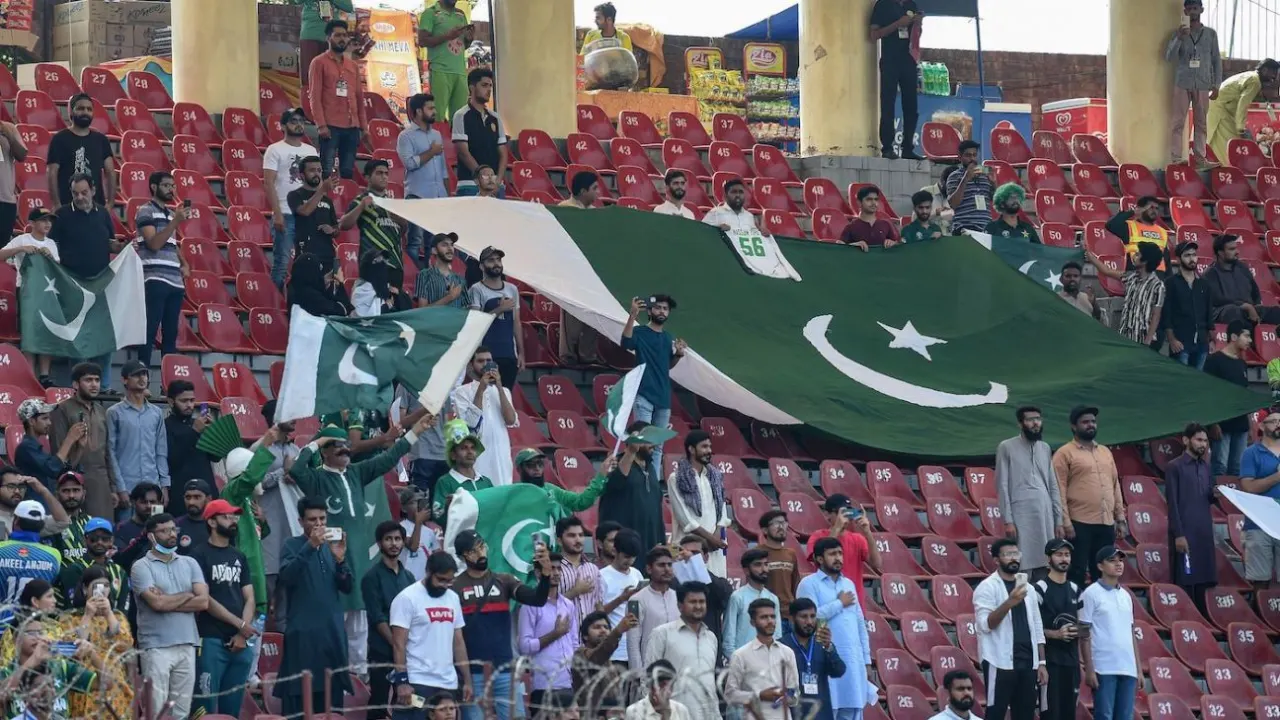
A Pakistan Under-19 cricket team suddenly became the centre of focus when it was mistaken for a group of asylum seekers in Portsmouth. A group of protesters gathered outside the Marriott Hotel in Portsmouth after reports that asylum seekers were staying there. The situation had to be later diffused when it was ascertained that the hotel was hosting the Pakistan Under-19 team.
According to the Guardian, the situation became tense when a crowd gathered outside the Marriott hotel after reports that about 40 men who did not seem to be English arrived at the hotel. George Madgwick, a Reform councillor, called the hotel to mediate between the Pakistan Under-19 staff and the assembled crowd, following which the crowd dispersed.
“I spoke to the coach of the team, who was very understanding,” Madgwick told the Guardian. “I went out to the protesters and told them, ‘You’ve got it wrong guys, it’s a cricket club.’ They left within a couple of minutes. It was a massively unfortunate incident.
“From the perspective of the people of Portsmouth who are already on high alert, this was a coach from the same company which was turning up with about 40 foreign men.”
The ECB has been in touch with the Pakistan management following the incident and is reviewing security arrangements.
The Pakistan Under-19 team played a four-day game against England Under-19 in Arundel from September 2 to 5, which they lost by ten runs. The two teams faced off in a Youth ODI on September 9, with Pakistan winning by 177 runs. Pakistan’s senior men’s team are also playing the third and final Test against England at Edgbaston.
[Cricinfo]

by Rex Clementine
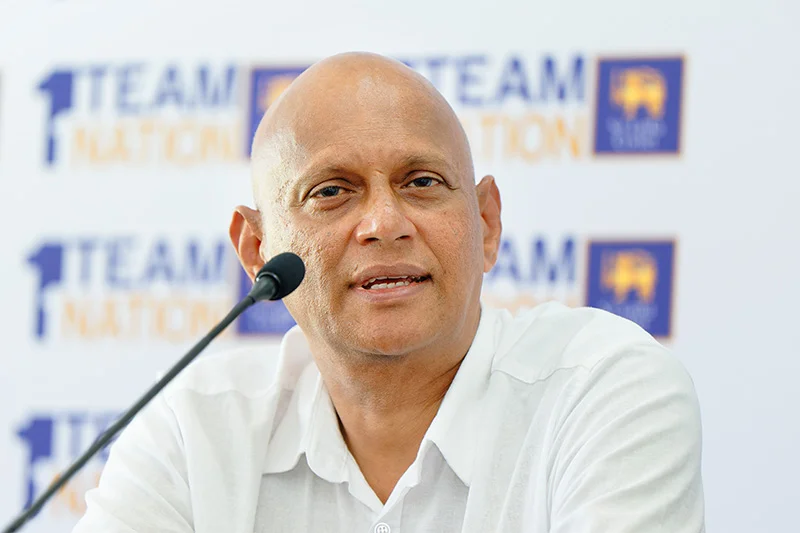
Sri Lanka’s Chairman of Selectors Kapila Wijegunawardene held his first media briefing yesterday since assuming office four months ago, a period in which several decisions have left the cricketing fraternity scratching their heads.
To his credit, the Chief Selector admitted that picking Lahiru Kumara for the tour of the Caribbean without first proving his fitness had been a mistake. It proved a costly one too, with the fast bowler breaking down after sending down just one over.
The former medium pacer was considerably more guarded when confronted with other contentious issues, including Dhananjaya de Silva’s defensive captaincy and the decision to recall Niroshan Dickwella after more than three years in the wilderness.
“We learned a tough lesson after what happened in the Caribbean with Lahiru Kumara and now we have made it mandatory for players to prove their fitness in domestic cricket when they come back from injuries,” Wijegunawardene told reporters.
That perhaps summed up the philosophy of this selection panel. Having burned their fingers once, caution appears to be the watchword. There seems little appetite for bold calls – the sort Duleep Mendis made when he gave Sanath Jayasuriya and Romesh Kaluwitharana licence to tear into attacks during the field restrictions, or Sidath Wettimuny when he entrusted the vice-captaincy to a 22-year-old Mahela Jayawardene.
Ironically, as Wijegunawardene addressed the media, NCC were taking on Moors in a domestic T20 quarter-final right in front of his eyes at the SSC. One of those making an impression was seam bowling all-rounder Milan Rathnayake, who dismissed Dickwella for a second ball duck.
Wijegunawardene was duly asked why Milan had not been considered for the forthcoming tour of England.
Until now, the impression had been that the selectors were investing in Milan, giving the all-rounder sufficient international exposure with an eye on next year’s World Cup in South Africa. Suddenly, however, it appears to be back to square one, with Wijegunawardene indicating that the selectors have turned again to Dasun Shanaka for the all-rounder’s slot.
Shanaka has not played an ODI for more than two and a half years and has earned his recall largely on the strength of his T20 form. Yet he has repeatedly struggled to convince in the 50 over format, particularly if the selectors view him primarily as a batting all rounder.
This is where the selectors appear to have failed to do their homework. A proper analysis of Shanaka’s record would tell them that his batting has seldom been reliable enough in ODI cricket. The numbers tell that story quite clearly.
What the numbers will not tell you is that Dasun has instigated more bloodless coups than General Zia-ul-Haq and General Pervez Musharraf put together.
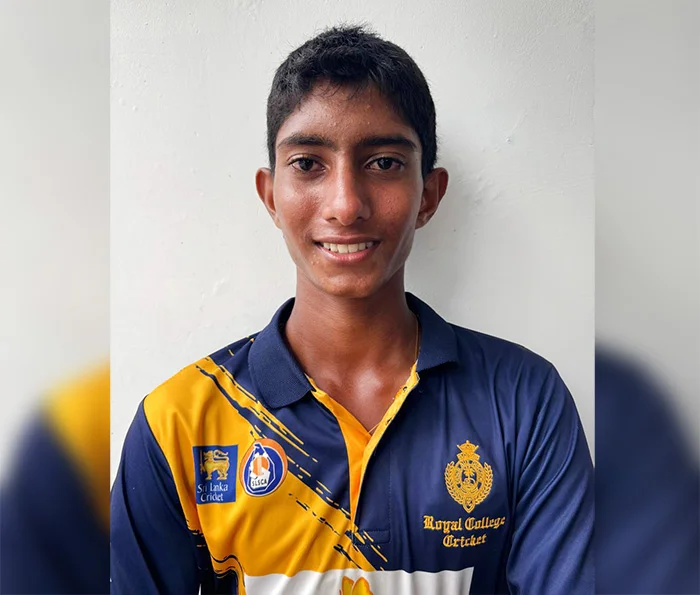
Royal College Colombo ‘B’ team reached the Under-17 Division II Inter-Schools Limited Overs Cricket Tournament final with a convincing 125-run win over Sir John Kothalawala College, Kurunegala as Manish Wijesundera excelled with a century at Ananda Mawatha.
Wijesundera produced a match-defining innings, hitting an unbeaten 114 off 129 balls, with 15 fours and four sixes for Royal to post 235 for seven in 50 overs.
Chasing 236 for victory, Sir John Kothalawala never threatened the target and were bowled out for 110 in 33 overs as Dinuja Wellahewage led the way with a superb four for 25 in nine overs.
While Dulna Nimnal took two wickets, Sithuka Alwis, Binara Kulasekara and Senuth Perera took a wicket each.
Vihaga Chamalsha offered the main resistance with an attacking 43 off 37 balls, including six fours and two sixes, while Pulina Methmal scored 25.
Earlier, Manish Wijesundera’s decisive knock provided the backbone of Royal’s total after the side had slipped to 31 for two.
Sithuka Alwis added 25, while Thumindu Somasiri made 21 as Royal steadily built their total before finishing strongly.
Sir John Kothalawala’s bowlers found it difficult to contain Wijesundera, although Indeepa Udesh impressed with two for 26 from 10 overs. Pulina Methmal also claimed two wickets.
Royal will now meet Wadduwa Central in the final.
Scores
Royal 235 for 7 in 50 overs (Manish Wijesundera 114n.o., Sithuka Alwis 25, Thumindu Somasiri 21; Indeepa Udesh 2/26, Pulina Methmal 2/64)
Sir John Kothalawala
110 all out in 33 overs (Vihaga Chamalsha 43, Pulina Methmal 25; Dinuja Wellahewage 4/25, Dulna Nimnal 2/36)

Trump says every adult American will get $5,000 if Republicans win midterms

Protesters mistake Pakistan’s U-19 team for asylum seekers in Portsmouth

Steps are being taken to provide accommodation facilities for 16,000 university students – Prime Minister

Showers will occur in the Western and Sabaragamuwa provinces and in Kandy, Nuwara-Eliya, Galle and Matara districts.


Sri Lanka reiterates its territory won’t be used against India

‘Dates have the highest sugar content to fight Coronavirus’

Sunday Island 27 December – Headlines

#SundayIsland 17th December – Headlines

Sunday Island – 28th March

Sunday Island Headlines – 21 March

Sunday Island – 21st February – Headlines
-

 News6 days ago
Namal remanded until Sept. 18 over Airbus deal investigation
-

 Latest News5 days ago
Tharanga creates history with Diamond League crown in Brussels
-

 News5 days ago
Dispute which triggered listed company director being detained at BIA resolved
-

 Features4 days ago
After the parade: What a traffic OIC’s walk-out tells us
-
 Opinion7 days ago
In Memory of Dr Upatissa Pethiyagoda
-

 Editorial6 days ago
Power vs Equality
-
Editorial4 days ago
Arrests as theatre
-

 Latest News6 days ago
SLPP MP Namal Rajapaksa arrested by CIABOC