
News
Lanka can’t afford fossil fuels but can’t afford to get off them either

(climatechangenews)
Sri Lanka is in turmoil, with fuel and food shortages provoking citizens to storm the presidential palace and send Gotobaya Rajapaksa packing.Reliance on fossil fuel imports is a big factor in the economic crisis. Fuel prices spiking while tourism stayed in the doldrums led to the country running out of foreign currency, not helped by chronic fiscal mismanagement.
That same economic crisis is now making it harder than ever for Sri Lanka to develop a renewable industry, energy experts and business owners say.On 31 March, protesters marched on president Gotabaya Rajapaksa’s private residence. Things escalated until on 9 July, they stormed the presidential palace, prompting Rajapaksa to resign and flee to Singapore. He appointed an ally, Ranil Wickremesinghe, as his successor and this week a Sri Lankan official said Rajapaksa himself would return to the country, dampening hopes of substantive political change.
Sri Lanka’s economic crisis stems from consistently importing more than it exports. As the country pays in foreign currency (largely US dollars) for imports and sells in foreign currency for exports, its central bank’s foreign currency reserves have been depleting.The government didn’t have enough Sri Lankan rupees to pay for imports so prices of products, including essentials like food and fuel, shot up.
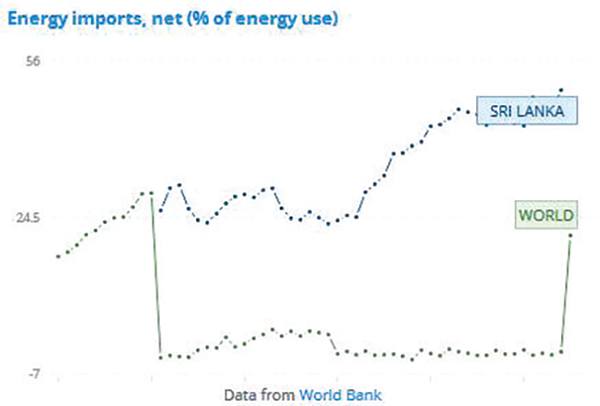
Between 1990 and 2000, Sri Lanka’s net energy imports as a percentage of total energy use doubled from 20% to 40% and has stayed around the same ever since. In 2021, the country spent $3.7bn on imports of oil and coal. Sri Lanka has no significant fossil fuel reserves. It does, according to the World Bank, have good potential for solar and wind power. Yet it has failed to develop either technology. It gets around a third of its electricity from imported oil, a third from imported coal and a third from domestic hydropower.
Lankan journalist Rathindra Kuruwita said this failure to develop renewables was largely the fault of the island’s state-owned monopoly utility provider, the Ceylon Electricity Board.
“Most of the engineers are in cahoots with the power plant mafia,” he said. This “mafia” is not an organised crime mob, but a network of people with a vested interest in fossil fuels: power plant operators, diesel distributors and coal importers.
The Sri Lanka Sustainable Energy Authority has also been slow in approving licenses for renewable projects, he said. If those projects had been approved, Kuruwita added, “we wouldn’t be in this mess”.
When an electrical engineer named Champika Ranawaka became energy minister in 2015, he tried to reform the CEB, Kuruwita said. He lasted eight months in the role.Now the country has run out of foreign currency to import the amount of fossil fuels its infrastructure needs. There are shortages of electricity, of cooking gas and of fuel for vehicles and for the diesel generators used as back-up power.
Before terrorist attacks in 2019 and the coronavirus pandemic, tourism provided 6% of Sri Lanka’s GDP. There were hopes it would rebound this year and bring in much needed foreign currency.But Nimesh, who works in the Atha resort in central Sri Lanka, told Climate Home that tourists are finding it hard to find vehicles to transport them as drivers are having to queue for days to get fuel.On top of that, small hotels and restaurants are suffering from power cuts. Larger hotels have generators but are finding it difficult to find fuel for them.
“These power cuts and fuel shortages are really affecting the tourism industry,” he said.
Lien Wysmans runs a backpackers’ hostel on Arugam Bay beach in the island’s east. She told Climate Home: “There are power cuts as well of about four or five hours a day… I’m freaking out”.
Although Wysmans says her guests don’t mind the power cuts, others are less tolerant. A March 2022 review for a beachfront Airbnb gives one star, citing “power cut- not their fault but created problem for us” among the reasons.A Financial Times reporter who visited the country recently said: “Anyone considering a trip to Sri Lanka this year or next also faces a difficult choice. Avoid the country entirely and the risk of a severely impacted and unexpectedly expensive trip, or support a vulnerable economy unduly impacted by the pandemic and poor management.”
Electric vehicles (with enough electricity) and rooftop solar panels would solve many of the tourist industry’s problems. But rolling them out requires money which most Sri Lankan citizens and their government don’t have.
Wysmans said solar panels “would be definitely a very good solution”. She can’t install them as she is renting the property but, even if she owned it, she said that the return on investment is 25 years. “It’s economically not beneficial for anybody because it’s just too expensive,” she said. “Also, the government is not really supporting.”
Nimesh said: “Solar panels are a great solution but the problem is government can’t afford to give financial support to invest in these projects due to the critical financial crisis that our country is facing”.
There are international schemes to help, like a Asian Development Bank funded scheme to provide low-interest loans for rooftop solar power. But these are on a small scale.
Speaking from her native Belgium, Wysmans said: “Sri Lanka has a really great opportunity for being a self-sustainable renewable energy island but the corruption is stopping all of it.”
“They’ve got the sun, they’ve got the water, they’ve got the wind, they just need to do it,” she added, “but if you have a corrupt government who wants to bring oil in where they can put half the money in their own pocket, it’s never going to happen.”
The Sustainable Energy Authority did not reply to a request for comment.


Advisory for strong winds and rough seas for Multi-day boats in the Bay of Bengal deep sea areas
Issued by the Natural Hazards Early Warning Centre
Issued at 05.00 p.m. 18 September 2026, valid for the next 24 hours.
PLEASE BE AWARE!
The atmospheric disturbance to the North of the Andaman Islands in the Bay of Bengal, is likely to develop into a low pressure area within the next 24 hours.
Due to its influence, wind speed over the Bay of Bengal sea areas will increase during the next few days starting from
tomorrow (19th).
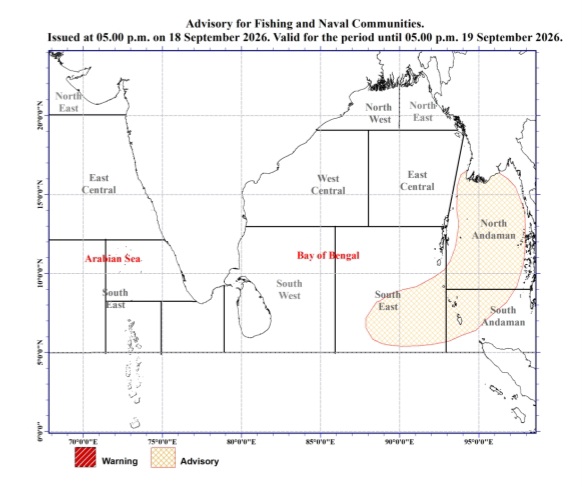
The wind speed in the sea areas marked under the “Advisory” category on the map below will increase to 55-65 kmph at times and those sea areas will be rough or very rough at times.
Navel and fishing communities engaging the activities over this sea area are advised to be vigilant and be attentive to the future forecasts and bulletins issued by the department of Meteorology in this regards.

Text and Pic by Priyan de Silva
Director General of the Commission to Investigate Allegations of Bribery and Corruption (CIABOC) Ranga Dissanayake has questioned whether some promises contained in the National People’s Power (NPP) manifesto, A Thriving Nation – A Beautiful Life, could be fulfilled even if the government wanted to implement them.
Dissanayake raised the issue during a discussion following the release of the third biannual report on manifesto monitoring by the March 12 Movement, at the BMICH, on Wednesday.
He questioned whether the report had taken into account legal and institutional constraints affecting the implementation of certain pledges.
Citing the proposal to establish Anti-Corruption Investigation Offices in each district, Dissanayake said such offices could be established only with the agreement of CIABOC and that amendments to the Anti-Corruption Act would be necessary.
He also referred to the pledge to abolish the Executive Presidency, noting that successive governments had made similar commitments since 1994. He questioned whether there had been adequate consideration of where the powers vested in the Executive President would be transferred if the system were abolished.
On the proposal to establish a Public Prosecutor, Dissanayake questioned whether the Government intended to maintain the office alongside the Attorney General, who currently performs prosecution-related functions.
Executive Director of the Institute for Democratic Reforms and Electoral Studies (IRES) Manjula Gajanayake said Dissanayake’s remarks should be regarded as his personal views and not as Government policy.
Monitoring and Evaluation Consultants M. Thilakarajah and D.D. Mataharaarachchi presented the third-phase findings, covering January to June 2026.
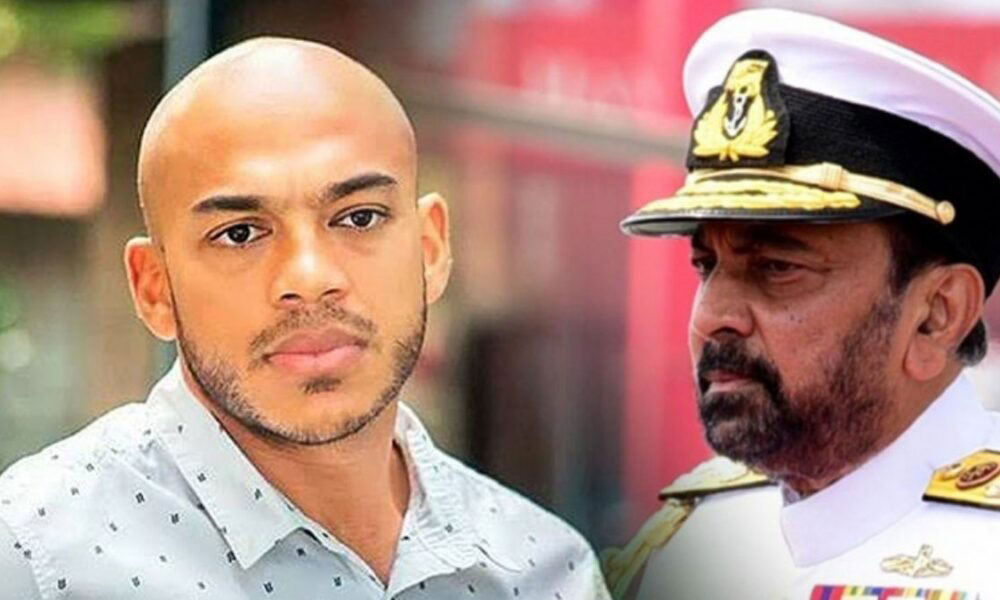
The corruption case filed by the Commission to Investigate Allegations of Bribery or Corruption (CIABOC) against former Navy Commander, Admiral of the Fleet Wasantha Karannagoda, and Yoshitha Rajapaksa was set for a pre-trial conference by the Colombo High Court.
The case was taken up before the Colombo High Court on Thursday (17), when the accused, who are currently out on bail, appeared before the court. After considering the submissions made, the court ordered that the case be called for a pre-trial conference.
The CIABOC had filed the case against the accused, alleging that a corruption offence was committed by sending Yoshitha Rajapaksa, son of former President Mahinda Rajapaksa, for training at the Royal Naval College in the United Kingdom despite him not having the required qualifications.

Advisory for strong winds and rough seas for Multi-day boats in the Bay of Bengal

Showers in the Western, Sabaragamuwa and North-western provinces and in Galle, Matara, Kandy and Nuwara-Eliya Districts

Some NPP manifesto promises may be difficult to fulfil – CIABOC DG

Yoshitha and ex-Navy chief Karannagoda’s case fixed for PTC

Court orders probe into Wimal’s rally speech

Court to rule on Dilith’s writ petition on September 30

‘Dates have the highest sugar content to fight Coronavirus’

Sunday Island 27 December – Headlines

#SundayIsland 17th December – Headlines

Sunday Island – 28th March

Sunday Island Headlines – 21 March

Sunday Island – 21st February – Headlines
-

 News6 days ago
Gnanasara Thero absconding after SC ruling
-

 Opinion5 days ago
From Galkissa (Mount Lavinia) to Tambuttegama
-

 Business6 days ago
HNB Finance strengthens Board with four independent directors
-

 News2 days ago
US embassy won’t comment on IGP’s probe into joint drug raid
-

 Sports6 days ago
Culture within cricket team worrying authorities
-

 Features5 days ago
Sri Lanka’s university crisis: Brain drain and union action demand urgent reform
-

 Features4 days ago
The emptying university: why are academics leaving?
-

 News6 days ago
House to debate 22A, Judicature Bill next week