
Editorial
Dreams and dreamers


Friday 29th July, 2022
Humans are born dreamers, and dreams keep them going. But for their propensity for dreaming, they would never have invented the wheel, much less flown. It may be said that life is a process of chasing dreams, with or without success. Grave crises like the one Sri Lanka is experiencing are no doubt the flip side of dreams; they are nightmares, but they do avail some people who are clever or cunning enough to see opportunities therein and make use of them to achieve their dreams. During Wednesday’s Emergency debate in Parliament, Opposition Leader Sajith Premadasa named some of those who, he said, were contented, having realised their dreams, while the people were undergoing unbearable hardships and crying out for relief.
Insisting that the government had never so much as made a dent in the magnitude of the current economic meltdown, Premadasa said that the prevailing crisis had enabled some persons such as Ranil Wickremesinghe, Dinesh Gunawardena and Susil Premajayantha to realise their dreams. It was thanks to the crisis and its political concomitants that Wickremesinghe, Gunawardena and Premajayantha had secured the presidency, the premiership and the post of the Leader of the House, respectively, but the dreams of all other Sri Lankans had been shattered, Premadasa said.
The Opposition Leader’s line of reasoning, which is tenable, and some home truths he told the House about dreams and dreamers, the abuse of Emergency regulations for political expediency and attacks on democracy must have struck a responsive chord with the resentful public struggling to keep the wolf from the door and fearing for their future. But still one may argue that the government has also enabled the people to realise their dreams—not by making good on its promise to usher in prosperity but by downsizing their dreams, as it were.
Prior to the advent of the current dispensation, people had dreams, big ones at that; they dreamt of acquiring assets such as imposing houses, flashy vehicles and luxuries of life. But today they are dreaming of small amounts of fuel, a few bags of cement, etc., and they succeed in realising their dreams, albeit after days, if not weeks, of waiting! Before the present-day leaders bankrupted the country, cyclists, huffing and puffing, along congested roads, in the scorching sun, dreamt of cars. Today, car owners languishing in fuel queues which the Grim Reaper frequently visits are dreaming of bicycles, which now cost the public an arm and a leg. Most people are using Shanks’ pony, leaving their automobiles at home for want of fuel.
All Sri Lankans who are fed up with the failed government have one big dream. It is an early election; the public is dying to boot out the wily, incompetent politicians who, having achieved their own dreams, are urging others to stop protesting, and make more sacrifices. The government grandees who are rejoicing at the fulfilment of their own dreams, and have adopted a cavalier attitude towards the suffering of the public, had better take notice of what has happened in Iraq.
Thousands of protesters stormed the Iraqi Parliament yesterday despite attempts by the armed forces to stop them. They were seen singing, dancing and lying on the desks of their MPs. Did they emulate their Sri Lankan counterparts who forcibly occupied the President’s House, the Presidential Secretariat, Temple Trees and the Prime Minister’s Office, and made an unsuccessful bid to march on Parliament?
It has been proved once again that the military is no match for the people, who take to the streets, out of desperation, and make a determined effort to protect their rights and freedoms and get rid of parasitic politicians, who are a curse; their patience must not be tested if trouble is to be averted. Mandates past shelf life and jackboots provide no protection to a government that takes people’s expectations for granted and is concerned only about the dreams of its leaders and their kith and kin.


Tuesday 15th September, 2026
Printing is becoming increasingly challenging in Sri Lanka. This is more so about printing newspapers and books owing to the ever-rising cost of paper, ink and high taxes, which even threaten the very survival of the printing and publishing industries. Printers and publishers are struggling to keep their heads above water. Today’s comment however is not a tale of woe about the predicament of printers and publishers. Instead, it is about the fact that under Sri Lankan law, printing has been historically among the forms of labour assigned to prisoners sentenced to rigorous imprisonment, and allied issues, such as preferential treatment given to politicians serving jail terms.
It has been reported that former Aviation Minister Priyankara Jayaratne, sentenced to seven years of rigorous imprisonment for corruption, has been attached to the prison printing section. The Commission to Investigate Allegations of Bribery or Corruption filed a case against Jayaratne, alleging that he caused a loss to the state by unlawfully making SriLankan Catering release Rs. 320,000 for providing lunch to his supporters participating in the May Day parade of 2014, when he was the Minister of Aviation. Questions have been raised in some quarters about the proportionality of punishment, and they no doubt deserve serious discussion.
The general view among jurists is that proportionality is fundamental to justice: punishment should be commensurate with the gravity of the offence, neither unduly lenient nor excessively severe; when proportionality is disregarded, punishment can cease to be justice and become retribution, undermining public confidence in the law while imposing unnecessary human and financial costs on society. However, it defies comprehension why influential politicians sentenced to rigorous imprisonment for corruption, etc., are attached to prison printing sections. Former ministers Mahindananda Aluthgamage and Nalin Fernando, both serving lengthy terms of rigorous imprisonment, for causing losses to the state through corrupt deals while in power, have also been assigned work in the prison printing section, according to media reports.
Has the prison printing section become a convenient refuge for influential inmates?
We are not arguing that the former ministers in prison should be made to perform backbreaking tasks involving heavy manual labour, such as road-making and maintenance, carrying or moving heavy materials. Although rigorous imprisonment is still legally defined as imprisonment with hard labour, today, the labour imposed on prisoners sentenced to RI can take various forms of prison employment, including skilled and semi-skilled work, such as printing, rather than the arduous manual labour traditionally associated with the term.
Given the categorisation of agricultural and plantation work, coir-making, and printing as hard labour in prison, a wag asks whether the arduous nature of these tasks should not also be taken into consideration in determining the remuneration of ordinary workers toiling in these sectors.
Farmers are arguably in a far worse predicament than prisoners, especially the politicians behind bars; instances are not rare where they suffer heavy losses due to crop failures, soaring production costs and disastrous agricultural experiments by politicians, such as the organic farming initiative during the last government, and many of them worry about the next meal. Prisoners have no such problems to contend with. They at least get free meals although there may be occasions when a dead cat is found in a cauldron of parippu curry, as former Deputy Minister Ranjan Ramanayake has revealed. The plight of plantation workers is even worse. They have been reduced to semi-slavery, with cunning politicians shedding copious tears for them and granting them some relief to garner their votes.
Meanwhile, if “rigorous imprisonment” has become an archaic expression for a sentence that legally entails hard labour, as argued in some quarters, while the work assigned to prisoners today technically ranges from manual labour to skilled prison employment, then serious thought should be given to changing the nomenclature to reflect the true nature of the punishment. Above all, tasks categorised as hard labour should be fairly allocated to prisoners serving terms of RI in the interests of equality of treatment.


Monday 14th September, 2026
Hurly-burly was done over the weekend, with the SLPP and the government holding two rallies in Anuradhapura and Polonnaruwa, respectively, but the propaganda brigades of the JVP/NPP and the Opposition are still clashing over crowd sizes. The SLPP and its allies are over the moon about their rally’s impressive turnout. The JVP-NPP social media activists claim that President Anura Kumara Dissanayake’s meeting had a higher crowd density.
The government declared ahead of its Polonnaruwa event that it would be a gathering of farmers and their representatives, but the SLPP made no bones about the fact that its rally would be a show of strength. The arrest and remand of NPP National Organiser Namal Rajapaksa provided the Opposition with a fresh rallying point, and former President Mahinda Rajapaksa’s participation at its rally helped the SLPP attract large crowds. The SLPP’s success in Anuradhapura will prompt the NPP to hold a bigger rally either there or elsewhere. It will also encourage the Opposition to hold more such rallies.
However, the question is whether crowd sizes are a reliable indicator of the real strength of political parties. One may recall that in 1977, the then Prime Minister Sirimavo Bandaranaike’s election rallies attracted large crowds. But the SLFP suffered a humiliating defeat at the general election that followed. It was reduced to a mere eight seats, and the UNP secured a five-thirds majority. It took the SLFP and its allies 17 years to make a comeback.
Ahead of the 2010 presidential election, common Opposition candidate and former war-winning Army Commander Gen. Sarath Fonseka held a series of huge rallies across the country, so much so that at one of them he threatened to have all members of the Rajapaksa family incarcerated immediately after securing the presidency. He lost the election, and the Rajapaksas had him thrown behind bars. Sixteen years on, the members of the Rajapaksa family and their associates are accusing the incumbent government of having launched a political witch-hunt against them.
After securing a second term in 2010, President Mahinda Rajapaksa also held a series of successful rallies across the country, and his election meetings attracted large crowds. But he lost to Maithripala Sirisena, who was widely considered a dark horse, in the 2015 presidential race.
In this day and age, crowd sizes could be deceptive. Astroturfing or creating an impression of widespread grassroots support for a party or an individual, where little such support exists, is the name of the game in politics. Some manpower agencies can be hired to bus crowds to political rallies, as Dr. Wijeyadasa Rajapaksha, who contested the last presidential election, revealed during a campaign rally, claiming that some of his rivals used paid participants to create the illusion of widespread public enthusiasm and support. The rent-a-crowd industry is said to thrive during elections.
There is no better test of a political party’s strength than an election. Therefore, if the JVP-NPP government is confident that it is more popular than its political opponents, it ought to hold the much-delayed Provincial Council (PC) elections instead of using various ruses to postpone them indefinitely. Last week, it unashamedly extended the term of the Parliamentary Committee tasked with electoral reforms until December 2026, prompting the Opposition to withdraw from it. The PC polls have not been held since 2017, when the UNP-led Yahapalana government postponed them because it was wary of facing any electoral contest. The JVP, the SLFP, the SLMC, the ITAK and the Joint Opposition, which later became the SLPP, helped that administration amend the Provincial Council Elections Act and postpone the PC polls. What is needed to hold the PC elections soon is a simple amendment to the PC Elections Act to enable the Election Commission to conduct them under the Proportional Representation system. Perhaps, a string of defeats the JVP/NPP has suffered at cooperative elections may have prompted the government not to hold the PC polls.
All signs are that the government will continue postponing the PC elections until the next presidential election, with only political dog-and-pony shows in the meantime.

Oil prices are surging again. The global benchmark, Brent crude, has surpassed USD 108 per barrel, and West Texas Intermediate has risen to USD 102 per barrel for the first time since May. They are expected to rise higher, making the global economy scream. At this rate, most countries, including Sri Lanka, will have to tighten restrictions on fuel consumption and increase prices.
US President Donald Trump and Israeli Prime Minister Benjamin Netanyahu obviously did not bargain for the unfolding situation, when they plunged head first into attacking Iran. They claimed to have decapitated Iran after killing its spiritual leader and destroying some key military installations. They overestimated their military prowess and hoped to bomb Iran into submission in a matter of days, but now all signs are that the US is heading for another military imbroglio. If only Trump and Netanyahu had heeded Sun Tzu’s advice, in The Art of War, that in a conflict one must know one’s enemy as well as oneself.
It was obvious from the very beginning that defeating Iran would not be a walk in the park for the US and Israel, and unforeseen circumstances would upend the dynamics of the conflict, but they were impervious to reason.
Iran has apparently shifted from merely threatening US naval forces to targeting American warships, including an aircraft carrier. Recent reporting describes this as a significant escalation, with the US claiming that it has either intercepted or evaded Iranian missiles. But the US vessels are far from invulnerable.
In what could be considered another dramatic turn of events, Iran-aligned Houthis have captured Mocha, a port city in Yemen. They have since been sighted advancing along the Red Sea coast to strategic islands. They are on a mission to seize control of the Bab el-Mandeb Strait. The Houthis have declared that the strategic strait is safe for all shipping companies except for Saudi vessels. Saudi Arabia, the world’s largest oil exporter, has become heavily dependent on this strategically vital sea passage, due to the closure of Hormuz Strait, which has affected about 20% of global oil exports.
The Houthis have said their military action is defensive and in response to Saudi attacks on their interests, but it will lead to a further escalation of the conflict as they have demonstrated their ability to disrupt shipping through the Bab el-Mandeb Strait. The US now has another big problem to contend with, and the unfolding Red Sea development may cost American taxpayers billions of dollars if Trump decides to intensify attacks on Houthi targets.
Iran has already shifted the West Asia conflict to the global economic front effectively by closing the Hormuz choke point, and the Houthis’ control over Bab el-Mandeb will stand it in good stead, but the closure of such chokepoints has the potential to deal a crippling blow to the world economy. The developing world will be the worst affected.
Trump’s over-optimism knows no bounds. He has stated that the Iran war will end after the US midterms due in November, but the deadlines he set in the past were not met. The Republican Party led by him is expected to suffer a huge electoral setback in November owing to his handling of the Iran conflict and domestic issues.
The Iran war is reported to have exacerbated a shortage of US missile defence weaponry, and the Department of Defence has reportedly made several deals to increase missile production urgently, but sophisticated missiles cannot be churned out overnight; it takes several years to produce some types in sufficient quantities to meet military requirements. It is believed that this kind of depletion of munition inventories could ‘constrain US military options for years and leave American troops, bases and allies more exposed in case of attacks’.
Meanwhile, the West Asia conflict has drastically changed global power dynamics. It may be too early to predict how long Iran will be able to hold out against US aggression, whether the US can continue offensive action amidst munition and economic constraints, and what the outcome of the current conflict will be, but one thing is clear; the American allies in West Asia as well as elsewhere must be demoralised perhaps to the extent of questioning their own wisdom of relying on Washington for their protection, when the best that Washington can hope for in the ongoing war with a non-nuclear power appears to be a Pyrrhic victory.

Draft of the Appropriation Bill for the Financial Year 2027 su mitted to the Parliament
Cabinet approves aditional Rs. 2,500 million to the Paddy Marketing Board to purchase 2026 Yala harvest
Cabinet nod to host the 8th Asian Regional Conference of the Commonwealth Parliamentary Association and the 3rd Joint Asian and South-East Asian Regional Conference of the Commonwealth Parliamentary Association

SAARC Training Workshop on Financial Modeling for Renewable Energy Projects from 5th to 7th October in Colombo
National Children’s Week from 25th September to 01st October

Nairobi and Munich to host 2029 and 2031 World Athletics Championships

‘Dates have the highest sugar content to fight Coronavirus’

Sunday Island 27 December – Headlines

#SundayIsland 17th December – Headlines

Sunday Island – 28th March

Sunday Island Headlines – 21 March

Sunday Island – 21st February – Headlines
-

 Sports5 days ago
DDS set to lose Test captaincy
-

 News5 days ago
Sri Lanka faces new grid challenge as rooftop solar surges: former CEB GM
-

 Latest News5 days ago
Shafali, Deepti power India into sixth T20 Asia Cup final
-

 Opinion7 days ago
Navigating Sri Lanka’s Israeli Dilemma
-

 Latest News4 days ago
Sri Lanka thwart Fatima Sana challenge to secure Asia Cup final spot
-
 Features6 days ago
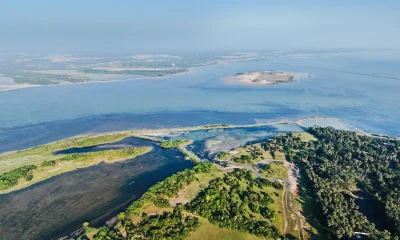
Lost for 90 years: Rare Goby resurfaces in Jaffna
-

 News3 days ago
Gnanasara Thero absconding after SC ruling
-

 News4 days ago
Ammunition cache found in old Kandy bungalow