
Sports
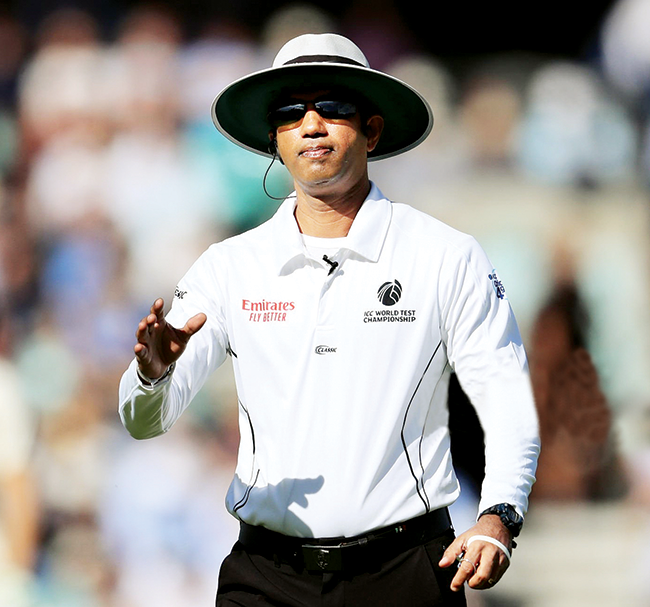
Umpiring is a tough job and Dharmasena struggling to keep pace

Rex Clementine in Galle
Cricket’s finest writer Christopher Martin-Jenkins went onto become the President of MCC. It was he who invited Kumar Sangakkara to deliver the Cowdrey Lecture at Lord’s and it remains the best annual Home of Cricket speech ever. CMJ had a superb sense of humour to drive home some harsh truths about the sport. His take on umpires was interesting. He once wrote, ‘I never questioned the integrity of an umpire. Their eyesight, yes.’
There’s nothing wrong with Kumar Dharmasena’s eye-sight but he must be the first person to admit that he’s going through his leanest patch as an official. Several of his decisions have come under the spotlight particularly two of those that determined the outcome of two series.
Dinesh Chandimal was on 30 when he nicked Mitchell Starc to the keeper. The only guy who didn’t hear the nick was Dharmasena and of course Chandimal, who tricked the umpire by shaking his head. Australia could have reviewed but they had burned all their reviews just before that and had to bite the bullet.
Chandimal just didn’t stop after scoring a hundred but he went onto get a double ton and while doing so rubbed salt into Aussie wounds. His onslaught of Starc, whom he hit for three sixes out of the ground to reach the milestone was the last straw. You could see the pain in the Aussie faces. They were graceful to shake hands with the batsman for this was Chandimal at his best. Nothing from Starc though. He certainly has an axe to grind with both Chandimal and Dharmasena, the former for not walking and the latter for being incompetent.
Take nothing away from Chandimal though. After the let off he batted superbly and was a treat to watch, particularly that last wicket stand of 49 runs in which Kasun Rajitha contributed zero.
If Sri Lanka were laughing ear to ear in the Australia Test, they were reminded that this game is a great leveler in the next Test match against Pakistan. They were feeling the pinch on this occasion as Dharmasena turned down a leg before wicket shout of Abdullah Shafique. He was on four and went onto score a match winning 160 not out as Pakistan chased down a 342, a new record in Galle.
Shafique’s was an umpire’s call though and Sri Lanka had not much reason to grumble. Anyway Shafique was dropped thrice during his innings. So, Sri Lanka had themselves more than Dharmasena to blame. However, with Dimuth Karunaratne copping an almost similar dismissal in the second innings, you felt that the umpire was lacking consistency.
There were many other decisions that Dharmasena had got wrong. During the four Tests in Galle, four different umpires officiated along with Dharmasena who being the local umpire stood in all four games. Nitin Menon, Rod Tucker, Michael Gough and Marias Erasmus had decent games and Dharmasena’s errors were being exposed badly especially when the other umpire wasn’t getting many decisions wrong. Wonder whether fatigue had taken to Dharmasena?
It’s been a great run for Kumar Dharmasena as an elite panel umpire. He was a banker at HNB when his former skipper Arjuna Ranatunga as Board Chairman fast-tracked him as an international umpire. There was a howl of protest by the umpiring fraternity and the matter went up to Sports Minister Gamini Lokuge. Arjuna stood his ground backing his former team mate. His argument was that in a bid to encourage former Test cricketers into umpiring you had to give them incentives. Fair point.
But when the same Ranatunga, who was in Galle to witness the first Test between Australia and Sri Lanka, fears that his man is losing the plot then Mr. Dharmasena will have to do some soul searching.
We all remember West Indies winning the T-20 World Cup in 2016 after Carlos Brathwaite smashed Ben Stokes out of the park in that maniac last over. Not many remember that Dharmasena had saved the Windies thanks to his attention to minute details. That was his highest point in umpiring. The lowest point came three years later at Lord’s when he messed up the final.
All umpires make mistakes but Dharmasena is making them regularly. It’s been a great ride to see him making tremendous progress as one of world’s top umpires. But his recent blunders are too glaring. Umpires like Ruchira Palliyaguru and Ravindra Wimalasiri are waiting on the wings for an opportunity.



A three wicket haul from Dilip Sandaruwan and notable contributions from Mohamed Shilmi [47] and Chathurabga Dewapriya [30] helped Maliban Biscuits defeat HNB Assurance by seven wickets while power hitting by Chathra Anuradha [50] and Isuru Gunasekera [39] eclipsed an unbeaten 70 off 20 balls from Isuru Jasinghe to help Peoples Leasing PLC defeat Hayleys Group B by seven wickets to qualify for the Tier B final of the CDB sponsored MCA T10 Cricket Tournament to be played under lights at the CCC ground on Sunday [28].
In the quarter-finals played at the MCA ground, HNB Assurance edged out HNB by 25 runs while an unbeaten 47 from Mohamed Shilmi helped Maliban Biscuits defeat English Tea Shop by five wickets.
At the D S Senannayaka College ground Peoples Leasing defeated Camera LK by eight wickets while Hayleys defeated Power Hand Plantations by five wickets to qualify for the semis.
At the MCA Grounds:
Quarterfinals:
HNB Assurance edge out HNB by 25 runs
HNB Assurance 112/7 in 10 overs [Dulanjana Wijesinghe 46, Linal Subasinghe 38*; Mahen Silva 4-19, Ikram Razik 2-17, Thushan Udayanga 1-19]
HNB 87/5 in 10 overs [Dinesh Panditharathne 29, Ashen Fernando 17, Jeyakumar Kishanthujan 20, Ikram Razick 12; Chamod Piyumal 18, Linal Subasinghe 1-17, Taaariq Naziar 1-15, Dulanjana Wijesinghe 2-25]
Shilmi propels Maliban Biscuits to 5 wicket win
English Tea Shop 66/8 in10 overs [Lahiru Gamage 10, Semila Liyanage 26; Chathuranga Dewapriya 1-13, Chamara Rathnayake 2-06]
Maliban Biscuits 72/5 in 9.2 overs [Mohomad Shilmi 47*, Tharindu Siriwardena 10; Gaveen Gunarathna 1-13, Semila Liyanage 1-15, Ramesh Fernando 2-14]
Semifinal
Sandaruwan, Shilmi and Chathuranga propel Maliban Biscuits to 7 wicket win and the final
HNB Assurance 93/5 in 10 overs [Lahiru Sithpriya 26, DasunAbeywardena 27, Pasindu Pathum 24*, Tharindu Guruge 12; Dilan chathuranga 1-15, Dilip Sandaruwan 3-17, Chamara Rathnayaka 1-33]
Maliban Biscuits 94/3 in 7.overs [Mohammed Shilmi 47, Chathuranga Dewapriya 30; Chamod Piyumal 2-19]
At the D S Senanayake College grounds:
Quarterfinals:
Esitha and Arjuna power Peoples Leasing to semis
Camera LK 128/4 in 10 overs [Anjana Orton 23, Anushka Gunasinghe 45, Kasun Madushanka 18, Sineth Malwattage 31*; Ruwan Fernando 1-29, Arjuna Perera 2-22]
Peoples Leasing PLC 129/2 in 8.0 overs [Esitha Gimhana 67*, Isuru Gunasekera 12, Arjuna Perera 34*; Anushka Gunasinghe 1-37, Anjana Orton 1-30]
Hayleys defeat Power Hand Plantations by 5 wickets
Power Hand Plantations 87/10 in 10 overs [Kasun Vidura 20*, Hirusha Dulanja 15, Sanjeewa Dalpathadu 24; Sanuja Niduwara 2-07, Senal de Silva 2-15, Vanith de Silva 1-17, Daham Nirmal 1-12]
Hayleys Group ‘B’ 88/5 in 9.1 overs [Kashyapa Dissanayake 22, Jithesh Wasala 12, SanujaNiduwqra 21, Yasiru Jasinghe 20*; Tharindu Silva 1-34, Waruna Mayantha 2-03, Pasindu Munasinghe 2-07]
Semifinal
Peoples Leasing overcome Hayleys Group ‘B’ by seven wickets
Hayleys Group ‘B’ 125/5 in 10 overs[Lahiru Dawatage 31, Ryan Fernando 11, Yasiru Jasinghe 70*; Sanath Dasanayake 1-20, Ruwan Fernando 1-18,Arrokkiyanathar Vinoshan 1-10]
Peoples Leasing PLC 126/3 in 9.2 overs [Chathura Anuradha 50, Isuru Gunasekera 39, Arrokiyanathar Vinoshan 22*; Kashyapa Dissanayake 1-08, Ryan Fernando 1-25, Yasiru Jasinghe 1-12]
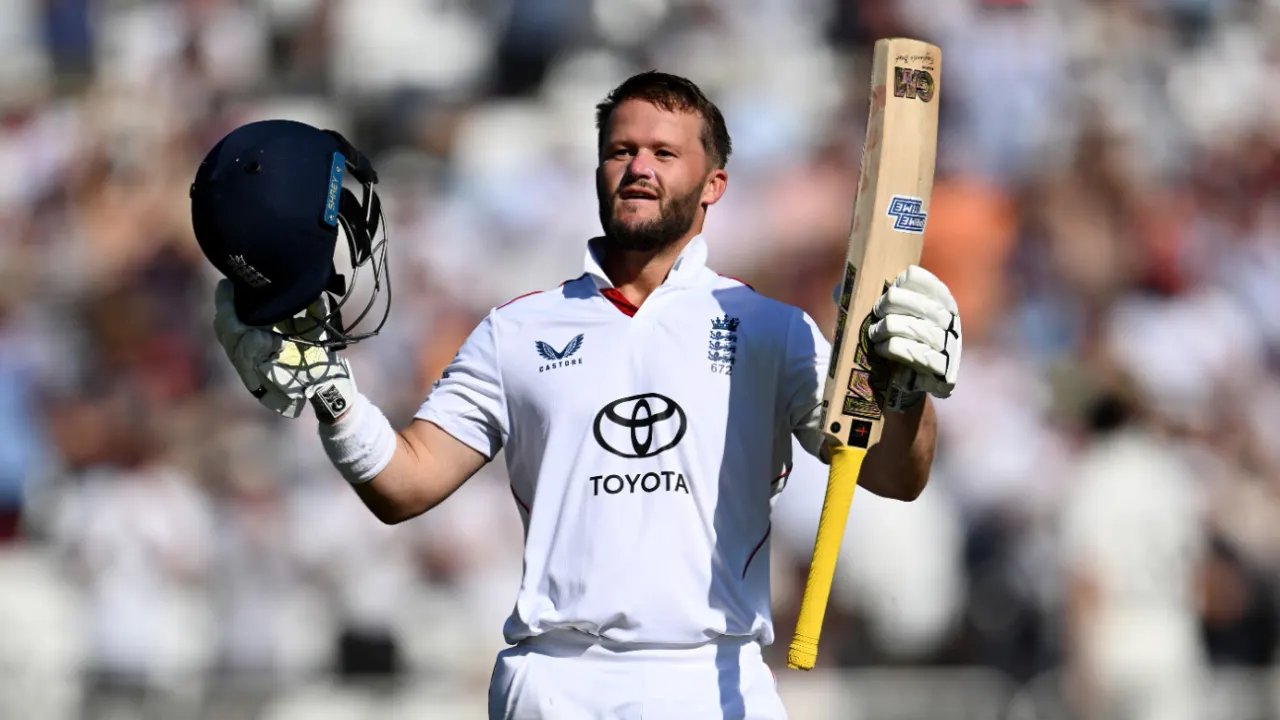
As well as things had gone for New Zealand on day one at Trent Bridge, they went badly on day two. England, led by a four-wicket haul from Ben Stokes, completed their turnaround with the ball to cap the visitors at 438 – having been 317 for 0 – and Ben Duckett then rattled off his first international hundred in more than a year to launch the reply.
Duckett was given a life on 8, dropped in the slips by Henry Nicholls, but went on to form a second-wicket partnership worth 179 at exactly a run a ball with Jacob Bethell, who was eyeing a hundred of his own by the close of another scorching day in Nottingham.
New Zealand’s problems were compounded by a concussion suffered by Blair Tickner, who was struck on the side of the helmet by Jofra Archer while batting and, despite initially being cleared to continue and delivering a three-over spell before tea, did not emerge for the evening session. He was eventually replaced by Zak Foulkes.
With Tickner, Mitchell Santner and Ben Sears – the three changes from New Zealand’s victorious XI at The Oval – all leaking runs at upwards of five an over, things began to unravel for the tourists. When Duckett brought up an 88-ball hundred midway through the evening session, the game had almost completely flipped in trajectory from 24 hours earlier, when Tom Latham and Devon Conway were amassing 150s during their triple-century opening stand.
Having taken two wickets with the last two balls on day one, England continued their fightback on the second morning. Stokes claimed three in the session during an eight-over spell, as New Zealand’s middle order struggled to build on the foundation laid for them, before two in an over from Shoaib Bashir helped wrap the innings up.
It meant New Zealand had suffered a collapse of 10 for 121 and their total of 438, while respectable, was nevertheless the third-lowest in Test history for any innings featuring a 300-run partnership – behind England’s 407 against India at Edgbaston last summer, and the 431 made by West Indies at Sabina Park in 1999 – and the lowest when those runs had been scored by the openers.
England’s momentum was briefly checked when Will O’Rourke had Emilio Gay caught down the leg side for a five-ball duck in the second over. They should have been 8 for 2 when Nathan Smith found Duckett’s outside edge, only for Nicholls to make a hash of the catch at third slip.
Duckett, who had twice drilled Smith for fours in his opening over, was in the mood to make New Zealand pay for such generosity. His next ball also disappeared through the covers, and he used the knowledge of his home ground to good effect, cutting, pulling and clipping his way to ten boundaries in a 40-ball fifty.
With Bethell recovering from a scratchy start against O’Rourke and the probing Smith, England went on to make New Zealand sweat in the field in much the same way they had through two-and-a-half sessions on day one.
Runs flowed in the passage after tea. Santner wasn’t allowed to settle, picked off for five boundaries in his first four overs by Duckett – although one of those, a thick outside edge, might have been held by Daryl Mitchell at slip had he not been stood so wide. From the other end, Sears was pulled and driven by Bethell, leaking 23 runs from three overs as England raced into three figures.
Latham was forced to go back to O’Rourke and, while Santner began to find some rhythm in his first Test appearance in ten months, Bethell worked him leg side for a single to bring up his first half-century in a home Test – and first such score in the first innings, having made all of his previous four in the second dig.
Duckett was by now in the 90s and quickly homed in on the milestone, his seventh hundred in Tests and first since the India series last year – ending a barren run of 22 innings in which he had only passed 50 three times. It was also his fourth 50-plus score in four innings at his home ground and although he was bowled shortly after, dragging on against Smith, Joe Root joined Bethell to steer England to the close two down.
New Zealand had added 77 to their overnight 361 for 4, Blundell’s 30 the only score of note as they fell well short of 500 – a total that looked all but inevitable when Latham and Conway were cashing in after opting to bat in baking conditions. Their frustration at being pegged back perhaps added to a sense of grievance around the dismissals of Mitchell and Santner, with both given out by the third umpire, Adrian Holdstock, after reviews.
The mercury was still rising on the second morning, with temperatures in the mid-30s C again forecast. New Zealand made a largely circumspect start in the knowledge that another long day in the field for England would only strengthen their hand in this deciding Test – only for Stokes to once again wrest the game his way during a tenacious spell with the ball.
O’Rourke, the nightwatcher, provided the main impetus for New Zealand inside the first hour as he advanced to his highest score in first-class cricket – beating the 17 not out he had made for Canterbury against Otago in March 2023. He managed boundaries off Archer, Josh Tongue and Stokes, comfortably eclipsing his previous Test best of 5 not out – and England then fluffed their first chance of a breakthrough as Jamie Smith dived across first slip in pursuit of a thick outside edge, but only managed to fingertip the ball out of Root’s grasp.
Stokes, already a shade of beetroot, threw his arms up in anger but bent himself to the task and extracted Mitchell an over later. Umpire Nitin Menon did not initially grant the appeal as Stokes nipped one past the bat, but UltraEdge detected a feather of an outside edge; Mitchell, however, seemed to think the sound was his bat hitting his front pad as he pushed forward.
O’Rourke was dismissed after the drinks break without having added to his score, and Stokes then chipped out his third of the session, and 250th in Tests, when Santner ducked into a bouncer and ballooned a catch to Bethell in the gully. Santner reviewed, gesturing that the ball had struck him on the arm guard. But Holdstock, in the TV umpire seat, took barely 30 seconds to examine one front-on replay before concluding that there was also contact with the strap of his glove, and upholding the on-field call.
After lunch, Bashir bounced back from dropping Blundell at deep backward square leg – a tough chance off Archer, but one he should have held having made up the ground. Archer’s chagrin appeared to extend to not joining the huddle to celebrate Bashir’s breakthrough a few balls later, when Smith drilled a return catch back – at least until Stokes made a point of calling the fast bowler up from fine leg.
Bashir made it two in four balls when Blundell missed a reverse-hoick at a delivery from round the wicket, which ball-tracking showed had pitched in line on review. With Nos. 10 and 11 at the crease, Archer had Tickner ducking and diving before delivering a full, straight one to pin Sears in front of leg stump first ball.
Scores:
England 223 for 2 in 45 overs (Ben Duckett 113, Jacob Bethell 74*) trail New Zealand 438 in 114.5 overs (Tom Latham 151, Devon Conway 157; Ben Stokes 4-70) by 215 runs
[Cricinfo]
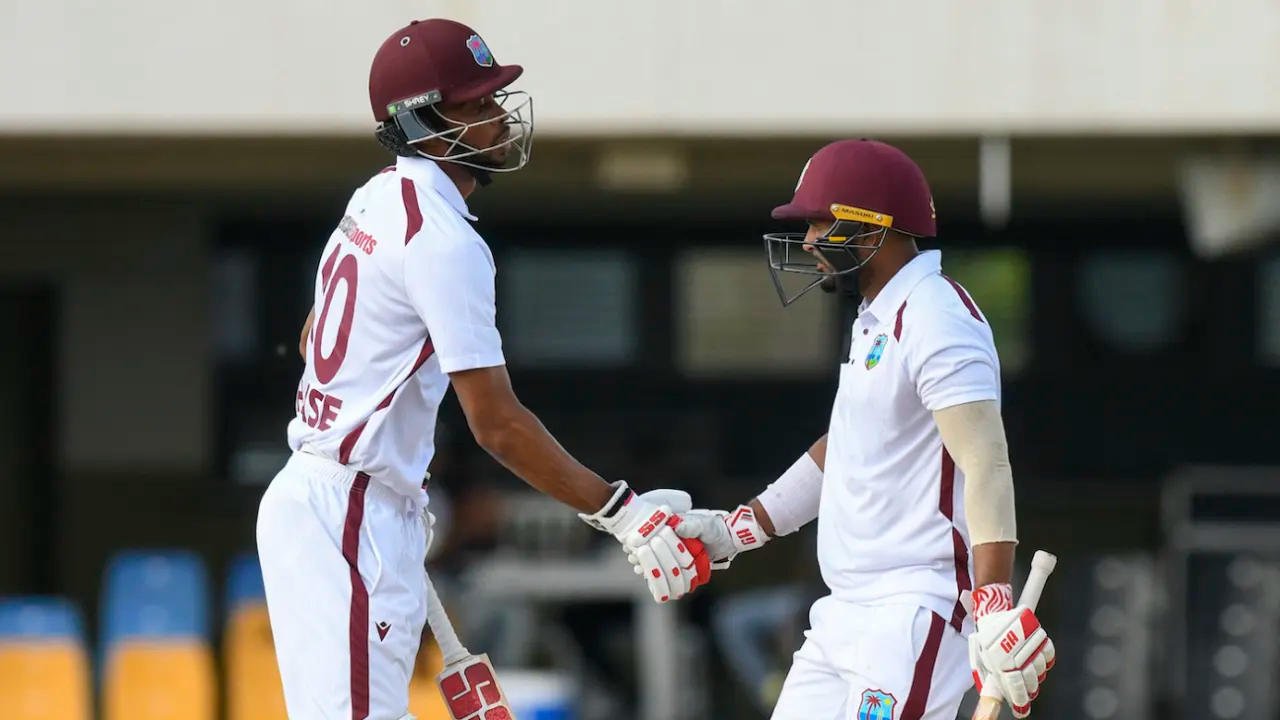
Amir Jangoo may not have even featured in the opening Test for West Indies had Shai Hope not suffered an injury during training. But with a chance handed out, he made full use of it to rescue the hosts from a precarious position to leave them only 37 behind Sri Lanka’s first-innings 308.
Jangoo, playing his second Test, walked in at 97 for 2 in the afternoon, and showed off an obdurate batting style, taking 174 balls for his unbeaten 78. His maiden Test half-century took West Indies to 271 for 5 at stumps.
At the other end, a man with something else to prove batted on from No. 7 – Roston Chase, the West Indies captain who has averaged 15.50 in the 15 innings he has batted since July 2025. Watchful in dead-batting and playing the long game, he joined Jangoo in the middle at 168 for 5, took 105 balls to score 42, and contributed to an unbeaten sixth-wicket partnership of 103 to leave the hosts the happier side after day two.
Their stand was crucial because it came after a middle-session where West Indies lost 4 for 79, losing the gains they had achieved in the morning session, with the openers helping them reach 89 for 1 at lunch.
John Campbell (39) and Brandon King (31) saw off the new ball and enjoyed a half-century stand in the morning. The runs came West Indies’ way right from the start of the day when Lahiru Kumara sprayed the ball wide in his only over of the session, conceding two four-byes, before leaving the field for the rest of the day with a hamstring niggle. Asitha Fernando and Kasun Rajitha operated close to the corridor of uncertainty but the openers saw them out successfully against the new ball.
Boundaries from Campbell and King came the classical way – on-drives past the non-striker or crisp shots square on either side – but the occasional mistimed slash also found the fence. The Sri Lanka seamers occasionally got sideways movement off the pitch and in the air, and regularly beat the batters’ edge.
The opening stand ended in the 14th over, shortly after the day’s first drinks break. King miscued a drive off Milan Rathnayaka to short cover.
But in the second session, Sri Lanka’s bowlers were right on top with their consistency, and chipped away at West Indies’ batting line-up. Campbell was out right after lunch when left-arm spinner Sonal Dinusha tempted him with a full ball outside off. Thinking of lofting Dinusha over his head, all he did was hole out to Nishan Madushka.
Next over, Rathnayaka added a second wicket to his name – after King’s dismissal in the morning – by being rewarded for some tidy bowling in the corridor of uncertainty. After zeroing in on a steady line and length through the 26th over, he got a good-length ball to generate some extra bounce, leaving Hodge (16) inside-edging a defensive shot onto his stumps.
Joshua Da Silva (20) and Jangoo began a repair job with West Indies at 102 for 3, and were comfortable absorbing the pressure with run-scoring drying up. Jangoo shuffled around his crease, moving to the leg-side often to access punches and drives through the off side while Da Silva was more watchful.
But after 18 overs of rebuilding with a 52-run partnership for the fourth wicket, Da Silva struck Asitha to cover, reminiscent of the King dismissal earlier in the day. Asitha once again delivered by getting a nagging delivery to nip away. Greaves was in two minds whether to play or leave, and the eventual edge was pounced by a diving Kusal Mendis with a one-handed special.
It was under these circumstances that Chase and Jangoo got together, and batted 33.5 overs till stumps without any further damage. Sri Lanka’s lack of incision late in the back-third of the day was not for lack of trying, but they were a bowler short with Lahiru’s absence. The batting pair were unhurried against the setting sun in the background, and ground out Sri Lanka till stumps. It was the kind of stand that can be the difference between yet another WTC defeat or a first win of the new cycle for West Indies.
Scores:
West Indies 271 for 5 in 84 overs (Amir Jangoo 78*, Roston Chase 42*; Asitha Fernando 2-25, Milan Rathnayaka 2-45) trail Sri Lanka 308 in 71.5 overs [Dinesh Chandimal 54, Dhananjaya de Silva 120; Justin Greaves 3-39] by 37 runs
[Cricinfo]

Maliban Biscuits and Peoples Leasing PLC qualify for CDB-MCA T10 Tier B final

Focus on developing the Coconut and Food & Beverage export industries into a USD 3 billion economy within the next two years

Another 1,132 Sri Lankan Personnel to be deployed for United Nations Peacekeeping Missions

Ben Stokes four-for, Ben Duckett hundred as England roar back

Venezuela shaken by magnitude 4.9 tremor days after major earthquakes

US strikes Iran in response to drone strike on commercial ship

‘Dates have the highest sugar content to fight Coronavirus’

Sunday Island 27 December – Headlines

#SundayIsland 17th December – Headlines

Sunday Island – 28th March

Sunday Island Headlines – 21 March

Sunday Island – 21st February – Headlines
-

 Features6 days ago
Nanda Pethiyagoda Wanasundara as three generations of family saw her
-

 Features5 days ago
Sri Lanka developing independent hydrographic capabilities
-
 Opinion4 days ago
Ranasinghe Premadasa: The man who would not take ‘No’ for an answer
-

 Editorial6 days ago
Fuel crisis: Beyond price debate
-

 Latest News6 days ago
Sooryavanshi thumps fastest List A fifty as India A win tri-series
-

 News4 days ago
US Assistant Secretary of State for South and Central Asian Affairs meets President
-

 Features6 days ago
The Sirisena – Ranil conflict and events leading to MR’s return as PM
-

 Business5 days ago
University of West London opens Sri Lanka’s first full UK university branch campus