
Editorial
Unite!


Wednesday 20th July, 2022
Parliament will elect a new President today. The contest is actually between two candidates, Acting President Ranil Wickremesinghe and SLPP MP Dullas Alahapperuma. NPP MP Anura Kumara Dissanayake will be an also-ran. Opposition Leader Sajith Premadasa pulled out of the race at the eleventh hour following an understanding with Alahapperuma; if the latter wins today, the former will be appointed the PM. One may argue that Sajith has only made a virtue of necessity, but the fact remains that he has acted wisely and demonstrated that he is willing to make compromises.
The government is backing Wickremesinghe to the hilt in a bid to have the status quo maintained and safeguard its leaders’ interests; it is seeking the perpetuation of the Rajapaksa rule in all but name, which protesters and trade unions have threatened to bring down at any cost. The Opposition and the SLPP dissidents backing Alahapperuma have promised a new beginning.
The SLPP has suffered another split; its General Secretary Sagara Kariyawasam and other Rajapaksa loyalists are supporting Wickremesinghe, but its President Prof. G. L. Peiris and others are backing Alahapperuma. The realignment of political forces that today’s vote has brought about is of interest.
Ironically, the Rajapaksas who sought to oust Wickremesinghe as the Prime Minister in October 2018, when he had 106 seats in the House, are now all out to make him the President although the UNP has only one National List seat! At the 2005 presidential election, the then President Chandrika Bandaranaike Kumaratunga tried to queer the pitch for Mahinda Rajapaksa, who was her party’s candidate and backed UNP candidate Ranil Wickremesinghe. Today, the Rajapaksas are emulating Kumaratunga; they are supporting UNP leader Wickremesinghe at the expense of the SLPP MP Alahapperuma in the fray. Maithripala Sirisena, who became the President in 2015 with the help of Wickremesinghe has turned against the latter.
A lot of money is said to have changed hands in the run-up to today’s contest in the House, we are told. Former President Sirisena himself has said so. He must be privy to what is going on in Parliament. Popular elections are the times when politicians use public funds to bribe the people, and today’s vote in Parliament has led to funds stolen from the public being used to bribe people’s representatives. This is the name of the game in Sri Lankan politics, where politicians are even ready to sell their souls to the devil.
Nobody can outspend the Rajapaksas in this country; they are wealthy and have got buying off MPs down to a fine art. So, given our MPs’ greed for dosh, those who do not have the Rajapaksa’s blessings, will have their work cut out in today’s election.
The MPs have a right to vote for the candidates of their choice, but they will have to be mindful of the opinion of the people, whose verdict matters more than the outcome of a vote in Parliament. A parliamentary majority does not necessarily mean popular support. The UNP managed to muster a working majority in Parliament in 2018 and keep the Rajapaksas and their allies at bay, but it was trounced at the general election that followed. Whether the SLPP will be able to avoid a similar fate at the next election remains to be seen.
Whoever emerges the winner in today’s contest will have to ensure that the people get cooking gas and not teargas, and there will be a continuous supply of fuel and other essentials. In short, he will have to find dollars for essential imports and debt servicing. Protesters are girding up their loins for the next showdown, which may happen sooner than expected. They do not want to be losers! So, the winner, the losers and others in the House today will have to sink their political differences and make a concerted effort to live up to the people’s expectations if political stability is to be restored and the economy stabilised. Otherwise, nothing will prevent the country’s slide into anarchy.



What’s this world coming to when the United Nations itself is not united? This rhetorical lament about the current state of the world crosses discerning minds when world leaders gather in New York for the UN General Assembly’s annual sessions, where threats, rhetoric and protest apparently take precedence over diplomacy expected of the civilised world.
Critics argue that US President Donald Trump regards the UN headquarters as his country’s backyard. The Trump administration has again denied visas to Palestinian Authority President Mahmoud Abbas and other senior Palestinian officials for the UN General Assembly, making this the second consecutive year of such restrictions, which have drawn criticism as a violation of the 1945 UN-US Headquarters Agreement. Trump’s boastful claims of economic growth, immigration, and other domestic issues at the UN summit were widely seen as being pitched to the American voters rather than the international community, with the US midterm elections looming.
What Trump intended for the consumption of the world, in his UN address, was basically a chilling message. He gave Iran a stark choice between a deal and annihilation. True, his threat was followed by some diplomacy. He disclosed that US and Iranian representatives had met on the sidelines of the summit, describing the meeting as “very good”. His threat however cannot be dismissed as mere rhetoric; he has already given free rein to his ‘epic fury’ and wreaked havoc on Iran. How does he intend to annihilate Iran? All the weapons used by the US so far have failed to frighten Iran into submission. Is he planning something far worse to achieve his goal?
The western world made a hue and cry in 2005, when the then Iranian President Mahmoud Ahmadinejad made a remark that was widely translated as a call to “wipe Israel off the map”. He said so in Tehran and not at a UN summit. But the western governments ignored Trump’s threat to Iran for all intents and purposes.
Aggression of the world powers runs counter to the raison d’etre of the UN, established in 1945, to replace the League of Nations, following the devastation of the Second World War, which exposed the limitations of the existing international system, principally to prevent another global conflict. UN founders sought a permanent international organisation through which countries could collectively maintain peace and security, settle disputes peacefully and prevent aggression. Trump, his allies, and their enemies have reduced the UN to a mere spectator. Their unbridled aggression makes one wonder if the world is sliding back into the League of Nations era.
The Global North’s pontification to the rest of the world about the virtues of peace, human rights, and good governance goes on ad nauseam. The US and its allies, particularly the UK, advocate for negotiations to resolve conflicts, and call for stringent action against the violators of human rights in the developing world, but when they deal with threats, perceived or real, to their security and economic and geopolitical interests, they let ballistic missiles, stealth bombers and warships do the talking with no heed for the human cost of their military onslaughts.
Perhaps, the biggest threat to global peace and the future of humankind emanates from the nuclear-armed world powers, whose ruthless competition for resources and aggression seem to reflect an ancient human propensity for violence. In Sapiens: A Brief History of Humankind, Yuval Noah Harari argues that Homo sapiens’ rise was accompanied by the disappearance of several other human species, including Neanderthals and Denisovans. He presents two possible explanations: competition for resources, which gradually displaced other populations, and direct violence when competition intensified. The fear that a fate similar to that of those unfortunate human species might befall the people in developing countries may not be totally unfounded, given the superpowers’ proclivity for violence and abililty to annihilate nations.

Saturday 26th September, 2026
The outcome of yesterday’s parliamentary vote on the 22nd Amendment (22A) to the Constitution came as no surprise. The ayes had it with a two-thirds majority. Now, the Speaker will sign the 22A bill into law posthaste, increasing the mandatory retirement ages of the judges of the Supreme Court and the Court of Appeal. However, even a special majority cannot make a bad law good.
It was speculated in some quarters that some NPP MPs would break ranks and vote against 22A. There was no such rift in the ruling party yesterday. Not that every NPP MP is well-disposed towards the controversial amendment, but it is seldom that a government MP votes against a crucial bill. There have been crossovers in previous Parliaments but they were mostly due to internal clashes and competing ambitions rather than policy issues.
Only the naïve expected 22A to be placed before the people at a referendum. The government is wary of facing elections and doing everything in its power to delay the Provincial Council elections further. It would not have proceeded with 22A if it had had the slightest doubt that there would be a referendum. President Anura Kumara Dissanayake has demonstrated a remarkable ability to make predictions about judicial decisions, much to the resentment of the Opposition. After all, he comes from the same district as Gnanakka, the go-to seeress for the leaders of the SLPP government––Anuradhapura.
Having failed to pressure the JVP-NPP government into deep-sixing 22A, the Bar Association of Sri Lanka, Opposition political parties and some civil society outfits resorted to what may be described as moral suasion. They urged the MPs to vote according to their conscience. Politicians are known to act out of expediency, which takes precedence over everything else in politics. A wag says exhorting politicians to act according to their conscience in Parliament is like expecting chastity to be practised in a house of ill-fame.
The government is crowing about the passage of 22A, but trouble is far from over for it. 22A has become a rallying point for the Opposition. The SLPP put on a good show of strength a few weeks ago in Anuradhapura, and the SJB held a successful protest on Thursday near Parliament.
The Opposition is bound to expand its protests to cover other issues as well and tap public resentment to fuel its anti-government campaign. The government will find itself in a dilemma. Adopting coercive methods to suppress dissent are counterproductive, and leniency encourages the Opposition to intensify its protests.
The government has antagonised the legal fraternity that played a pivotal role in engineering the 2024 regime change. Doctors, university teachers and other professionals who threw their weight behind the JVP/NPP, facilitating its rise to power, are also on the warpath. Farmers are in a paddy, unable to sell their produce at reasonable prices, so much so that both the Minister of Agriculture and his deputy had to skip President Dissanayake’s inaugural farmers’ rally in Polonnaruwa a few weeks ago. It is unlikely that what the government has sought to achieve through 22A politically will help it consolidate its power if it fails to deliver and grant some tangible economic relief to the public.
Meanwhile, 22A has brought about a situation where both the government and the judiciary will be under intense international scrutiny. Zimbabwe has been down that road before. The JVP/NPP did not ask for a mandate to emulate Zimbabwe, did it?

Friday 25th September, 2026
The unfolding politico-legal scenario can be described as a bill parade. The government is apparently preoccupied with unveiling one questionable bill after another, the latest being the Protection of the State from Terrorism (PST) bill, which has just been gazetted. It is in a mighty rush to secure the passage of this bill. If only it acted with the same urgency to introduce a bill to amend the Provincial Council Elections Act and clear the way for the Election Commission to hold much-delayed Provincial Council polls.
Clausewitz famously described war as the continuation of politics by other means. Going by the JVP-led government’s determined efforts to enact a slew of new laws, amidst serious concerns expressed by critics over the Executive’s growing influence over the judiciary, one wonders whether the ongoing bill parade represents an attempt to pursue the JVP’s political strategy of perpetuating its rule by judicial means.
The government’s delivery on the economic front has been nothing out of the ordinary, while the tally of its unfulfilled promises is on the rise. The performance of the JVP/NPP on the political front has been par for the course, with President Anura Kumara Dissanayake himself having to travel across the country, addressing rallies and mostly repeating his election-time rhetoric, in a bid to drum up support for the government. It is therefore possible that the government has shifted its focus to the legal and institutional front as part of its strategy to consolidate its hold on power.
A close look at the PST bill reveals a clear legislative lineage. The PST has evolved through successive attempts to replace the Prevention of Terrorism Act (PTA), beginning with the 2018 Counter Terrorism Bill, followed by the 2023/24 Anti-Terrorism Bill. Most laws in this country are not totally devoid of some progressive features, but the devil, as always, is in the subtext. Nothing can be done about bad bills that pass muster with the judiciary. The 22nd Amendment (22A) is a case in point.
The definition of terrorism remains an unresolved issue. A counter-terrorism law should define terrorism narrowly and precisely. The definition of terrorism in the PST bill has left much to be desired, although the Government insists that safeguards will prevent legitimate political dissent, protests, industrial action, journalism and advocacy from being misconstrued as terrorist activities. It may be better structured than that in the PTA. But the devil, as always, is in the subtext.
Some other issues related to the PST bill are detention without charge, police powers for the military, and doubts about the practical enforceability of the promised safeguards. The proposed judicial oversight is not the same as the courts having sufficiently substantive powers to review and terminate unjustifiable detention rather than supervising the conditions and procedural continuation of detention. The Human Rights Commission of Sri Lanka has previously called for detention orders to be subject to judicial oversight and for judges to have meaningful authority to grant bail. Such safeguards are necessary to prevent the abuse of anti-terror laws to deprive citizens of their fundamental and democratic rights.
It is hoped that the potential ill-effects of 22A, which critics see as part of a multi-pronged strategy to bring the judiciary under the Executive’s control, will not stand in the way of a proper judicial review of the PST bill. Anti-terror laws become a potent weapon in the hands of governments that fear losing their grip on power. Successive governments have abused the PTA to safeguard their interests through arbitrary arrests and prolonged detentions. There is no guarantee that the PST law will not meet the same fate under the incumbent government or its successors. Hence the need to ensure that the PST legislation will not go the way of the PTA.

Buttler out of Oval decider as Lawrence earns ODI call-up

Showers will occur in the Western, Eastern, Uva and Sabaragamuwa provinces and in Galle, Matara, Kandy and Nuwara-Eliya districts.

Nor’easter brings flooding as New York and New Jersey declare emergency 2 hours ago

Trump rejects Iran deal to reopen Strait of Hormuz in seven days

Govt plans to hire 121,000 state workers, redistribute tax revenue

Parliament clears 22A amid protests

‘Dates have the highest sugar content to fight Coronavirus’

Sunday Island 27 December – Headlines

#SundayIsland 17th December – Headlines

Sunday Island – 28th March

Sunday Island Headlines – 21 March

Sunday Island – 21st February – Headlines
-

 News5 days ago
Mastermind Naufer Moulavi among 15 found guilty
-
 News7 days ago
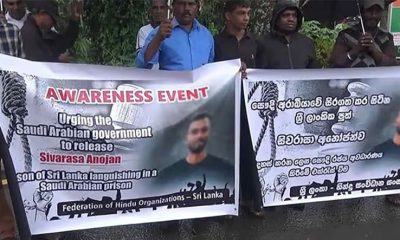
Hatton youth protest against reported death sentence for Lankan in Saudi Arabia
-
 News7 days ago
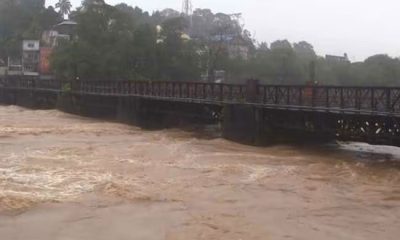
Mahaweli rises as heavy rain triggers flood, landslide fears
-
 News6 days ago
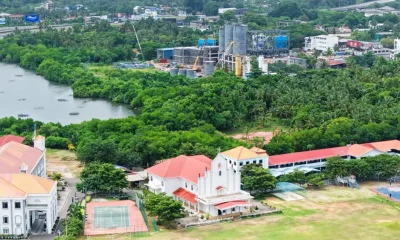
Protest against setting up of cement factory in highly populated area near BIA
-

 Midweek Review5 days ago
Thileepan’s fast unto death: An authentic narrative that many missed
-
 Latest News4 days ago
Showers above 100 mm are likely at some places in the Western, Sabaragamuwa, Central and North-western provinces and in Galle and Matara Districts
-

 Editorial6 days ago
Trouble beginning in earnest
-
Editorial5 days ago
Big Bad Bills