
News
I can turn around Sri Lanka’s economy, PM tells Al Jazeera

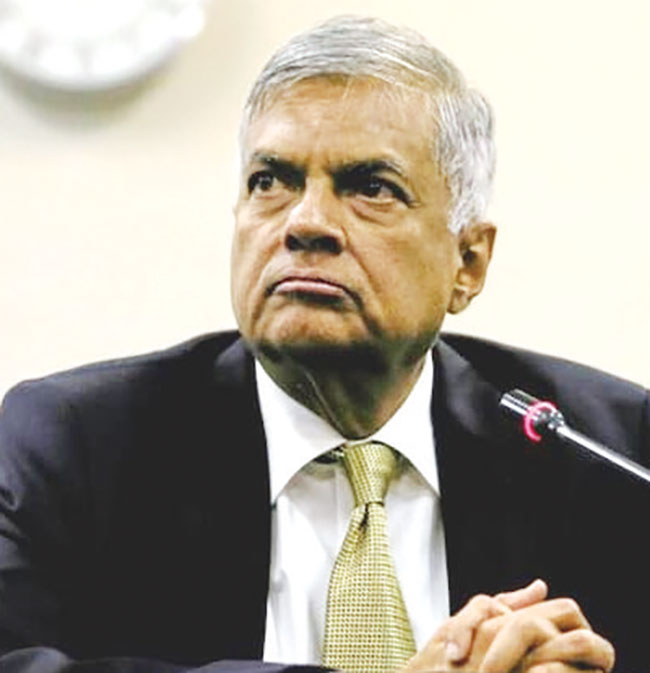
Prime Minister Ranil Wickremesinghe has told Al Jazeera that he is confident of turning around the economy – but cautioned it will be 18 months before stability returns.
“The year 2023 is going to be difficult, but by 2024 things should pick up,” Wickremesinghe told Al Jazeera recently in a wide-ranging interview at his official residence in the capital, Colombo.
The 73-year-old leader, who in May became prime minister for the sixth time, said that he took up the job under extraordinary circumstances.
“We had nearly two days without a government; things were getting out of hand,” he said, recalling the mass protests over shortages of fuel and electricity that forced Mahinda Rajapaksa, his predecessor and the brother of President Gotabaya Rajapaksa, to resign.
“I thought ‘the situation is bad, it’s your country, so you can’t be wondering whether you are going to succeed or not. You take it over and work to succeed,’” said Wickremesinghe, who met the president at the request of some MPs from the ruling Sri Lanka Podujana Peramuna party.
“I have confidence I can turn the economy around,” he said.
The island nation of 22 million has been brought to a virtual standstill due to acute shortages of fuel and essential items such as food and medicines, as the government ran out of foreign reserves to import commodities earlier this year.
Sri Lanka defaulted on its external debt in April and the usable foreign reserves are so low that it has struggled to cover its needs from the international market.
Wickremesinghe, who has been tasked with lifting the country out of its worst crisis since independence in 1948, said there will be petrol shortages until at least July 22, when the next shipment is expected.
“We are buying fuel either using Indian credit lines or the foreign exchanges that we get from remittances. It’s [remittances] a small amount, but nevertheless, sometimes we get a billion dollar[s] or a billion and a half. The rest of the reserves from what we got from the creditors have already been busted,” he said.
“It’s a big setback to the economy and caused lot of hardship to the people … We have been taking steps … especially to get gas, which will be available in the next few days,” he told Al Jazeera, adding supplies of diesel and furnace oil have also been made.
“The issue has been petrol … and that will take a bit of time.”
Furthermore, the prime minister added that a gas deal has been secured, with most of the funding coming from the World Bank, which will ensure supplies for the next four months.
“We seem to have come to an agreement with IMF at the staff level. And this is needed to stablise the economy,” Wickremesinghe said, adding he would reveal further details in parliament this week.
The prime minister also said his government was planning to bring in an interim budget, most probably in August.
Meanwhile, protesters have been camping at the Galle Face in Colombo since April and demanding the removal of President Gotabaya Rajapaksa, blaming him and his elder brother, Mahinda Rajapaksa, for bringing the economy to the ground.
They also call for the removal of the executive presidency as part of the push for political reforms.
Wickremesinghe said that he backed the protesters’ demand for a change in the political system.
“I do not think protesters have very many demands; they just want a change,” he said. “It’s not just about abolishing the executive presidency. How do you make the parliament strong?”
“Young people … feel that they have been left out by the present system and that’s a valid point that they have made and parties have to open up,” Wickremesinghe added. He said that young people need to be given a platform to get into politics so that they will be able to shape the future of the country.
“I have made some proposals regarding the change in parliamentary structure, and referred it to the former Speaker Karu Jayasuriya; his report is available, both will be tabled in parliament, most probably on Wednesday,” Wickremesinghe said.
The veteran leader, who is seen as having good ties with the West, said he had been trying to get the support of a diverse group of countries, including India, China, Japan, the United States and the United Kingdom, as well as from European Union member states.
“The main players are Japan, India and China. Japan has expressed interest in having Tokyo as a meeting place for a donor conference,” the prime minister said.
“This will be a unique conference,” he said on the participation of two members of the QUAD – India and Japan – and China, which runs the global infrastructure project the Belt and Road Initiative.
“So it will be a geopolitical conference of interest,” he said, adding that he has been talking to both India and China – regional rivals who have jostled to get a foothold in Sri Lanka.
“India has always been a major player. They can’t have instability at their doorstep. Instability in Sri Lanka is not in India’s interest,” Wickremesinghe said.
Some foreign policy analysts, however, have pointed out that China, Sri Lanka’s third-biggest lender, has been slow to respond to the crisis in the island nation. They say Beijing is upset because the Rajapaksa government cancelled infrastructure projects last year by Chinese companies.
But Wickremesinghe denied any tension in the ties with China.
“I have been talking to China ever since I took over. Contracts with Chinese companies were cancelled, but the previous government cancelled contracts with Japanese companies, MCC [Millennium Challenge Corporation] and contracts with India. So in a way, the former government has been even-handed,” he said, with a wry smile. MCC is a programme run by the US government through which it grants funds to countries for infrastructure projects.
The prime minister also commented on the recent controversy over the awarding of a wind energy project to the Indian conglomerate Adani Group.
“Adani has been here for a while. They actually came here first on this East Terminal issue where Japan and India got together, and Indians nominated Adani. But the then-government cancelled it. Unlike the Japanese who went home, Adani stayed. He [Adani] got hold of John Keells and got the West Terminal. So, he knows how to invest in Sri Lanka.
“He [Adani] doesn’t need to ask [Indian] Prime Minister [Narendra] Modi,” he said over allegations that Modi pressured Gotabaya Rajapaksa to award the wind energy project in favour of Adani, who is seen as close to the Indian prime minister.
“I have seen the proposal [by Adani] and it is a good proposal, I must say. They will invest $500m. It will be a part of exporting energy to India. That’s good because we have so much power,” Wickremesinghe said.
United Nations agencies, including the World Food Programme, say 5.7 million Sri Lankans need humanitarian assistance, with 4.9 million facing food insecurity.
Wickremesinghe admitted there has been a drop in nutrition standards and said his government has set up a food security programme.
“We plan to allocate about rupees 200 billion [$560m] from the interim budget for welfare. We have already set aside money. I hope that will be enough with the food programme we are planning.
“I don’t want anyone to starve. People have already started some community kitchens in Colombo city, and this can spread. But we are taking steps so that no one goes hungry.”
Wickremesinghe said he planned to make Sri Lanka self-sufficient in terms of food from 2023 onward, amid fears of a global food crisis next year as the war in Ukraine grinds on.
He said the cultivation seasons from November [2021] to January-February 2022 were a failure because Sri Lanka had no fertiliser – a shortage that also marred the June-to-September season.
“We are going all out to get sufficient funds so we can start the next season that starts from October-November to about January-February 2023. We need about $500-600m. Once we get the fertiliser, seeds and other chemicals, and if there is no drought, then we will be self-sufficient in food from 2023,” he said.



Former first lady Shiranthi Rajapaksa, wife of former President Mahinda Rajapaksa was produced before the Hulftsdorp court, after being arrested by officers of the Commission to Investigate Allegations of Bribery or Corruption (CIABOC) and produce
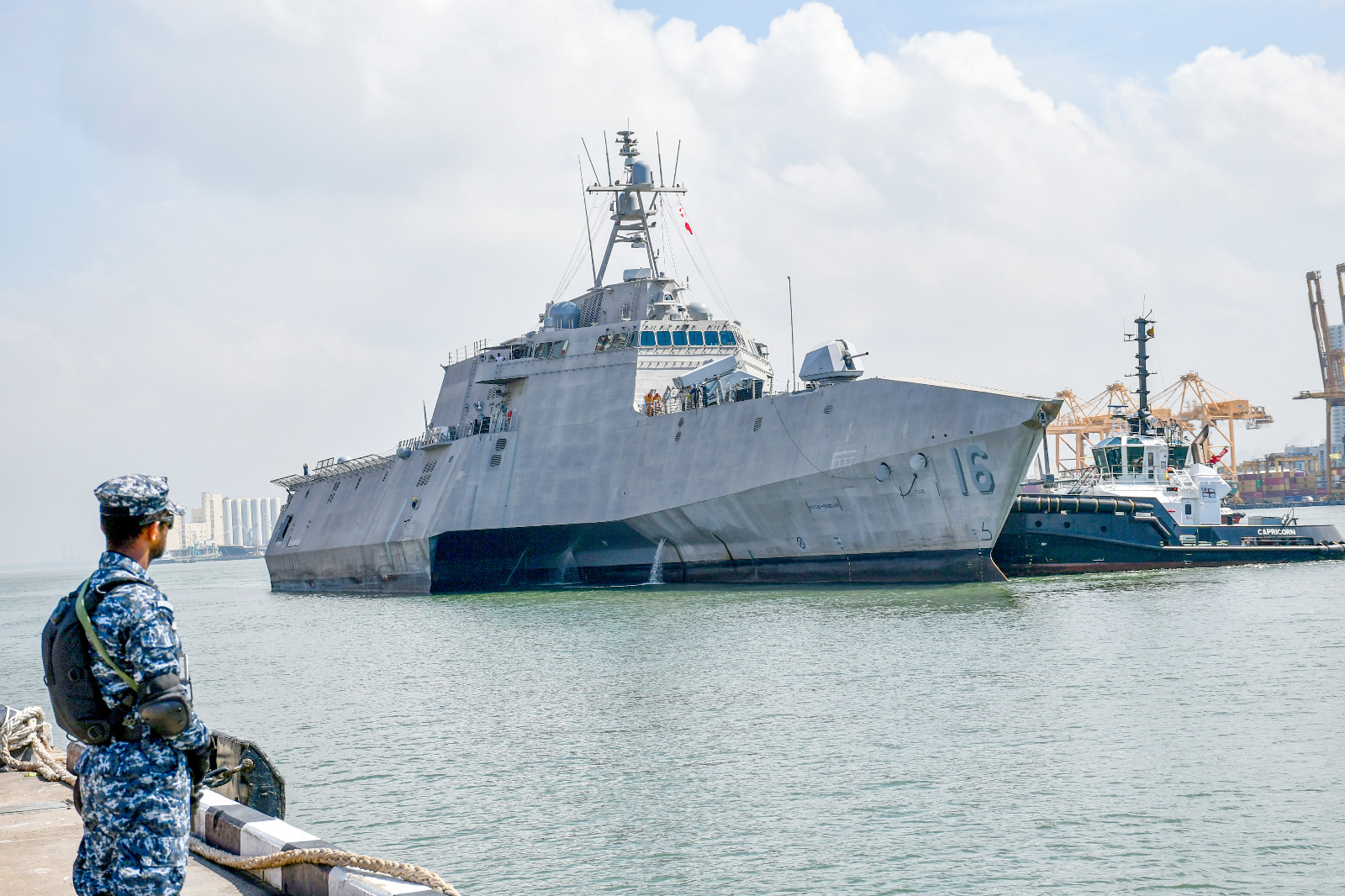
The U.S. Navy ship USS Tulsa (LCS 16) arrived at the Port of Colombo this morning, 7 October 2026 for replenishment purposes.
The visiting ship was welcomed by the Sri Lanka Navy in accordance with naval traditions.
The 127.7-metre-long platform is a Littoral Combat Ship commanded by Commander BM Wanier. Commissioned on 16 February 2019, USS Tulsa has since been in service with the US Navy.
The ship previously made a port call in Sri Lanka on 27 August 2025.

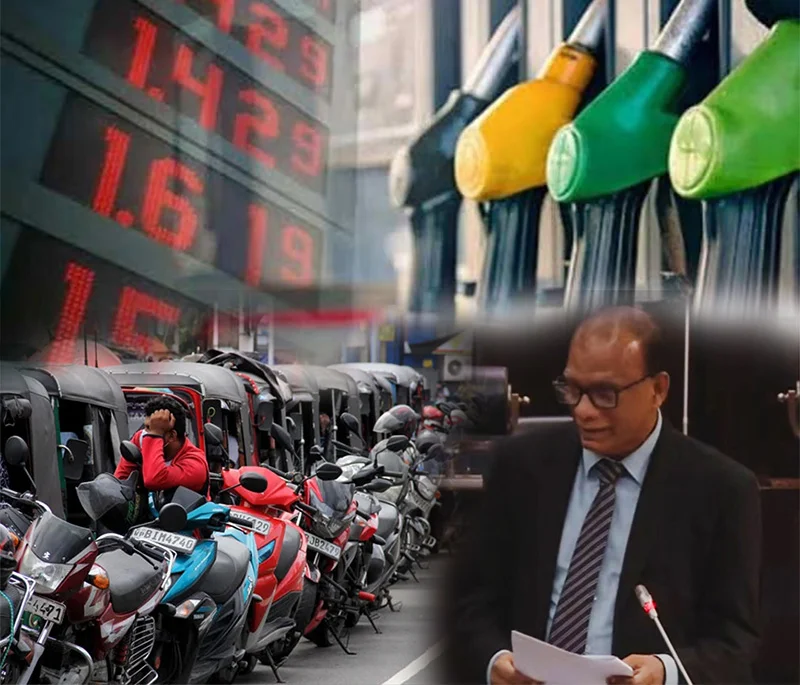
Govt. tells fuel distributors to maintain stocks to ensure uninterrupted supplies
by Saman Indrajith and Norman Palihawadane
The government had instructed private fuel distributors to maintain minimum stocks and ensure uninterrupted supplies to the market, Energy Minister Anura Karunathilaka told Parliament yesterday (06).
Karunathilaka said the Ministry of Energy Secretary had notified the relevant companies of the requirement, following a reduction in supplies by some private distributors, amid higher international fuel prices.
The Minister said private companies had informed the government that they were facing losses because international prices had risen while fuel was being sold, locally, at prevailing prices. As a result, some companies had reduced the volumes released to the market.
The reduced supplies had increased the burden on the Ceylon Petroleum Corporation (CPC), whose share of the diesel market had risen from about 54% to 82%, the Minister said.
“The CPC currently holds an 82% share of the market,” he said, adding that it had increased its supplies, compared with February, to compensate for the reduction by private distributors.
Karunathilaka said the government could not, under the existing agreements with private companies, specify the quantities they should supply to individual filling stations. However, it could require them to maintain minimum stocks in the country.
The Minister said the Energy Ministry had already instructed companies that had failed to maintain the required stocks to take steps to prevent supply disruptions.
The Minister attributed the queues reported at some filling stations to reduced supplies from private distributors, as well as normal variations in fuel distribution. He also said demand for CPC fuel had increased because private companies generally did not provide fuel to dealers on credit, while the CPC offered a three-day credit facility.
“We expect that, as the Ceylon Petroleum Corporation takes on this additional burden, the problem will ease to some extent by Wednesday or Thursday,” Karunathilaka said.
He said instructions had also been issued to increase supplies to CPC filling stations. A special discussion on the issue is scheduled for today (07), with officials of the Energy Ministry and CPC expected to participate,
along with President Anura Kumara Dissanayake.
Meanwhile, Petroleum Dealers’ Association officials have called for an early solution to the supply issue. Association Chairman D.V. Shantha Silva said queues had been reported at many filling stations, mainly those operated by private distributors.
He said the situation was not due to an overall shortage of fuel, but was linked to reduced orders by Lanka IOC, Sinopec and R.M. Parks amid concerns over losses incurred on fuel sales.
The Ceylon Petroleum Private Tanker Owners Association has urged motorists to refrain from panic buying, saying there was no nationwide disruption to fuel supplies.
The government earlier increased fuel prices and introduced a per-litre diesel subsidy following concerns raised by distributors over rising international prices.

Former first lady Shiranthi Rajapaksa arrested by CIABOC

U.S. Navy ship USS Tulsa arrives in Colombo for replenishment visit

Smriti Mandhana appointed India captain across formats

Ronaldo apologizes for Portugal walkout; says Jesus broke promise

Showers in the Western, Sabaragamuwa, Central, Uva, North-western and Southern provinces and in Anuradhapura and Mannar districts

Fuel crunch looms

‘Dates have the highest sugar content to fight Coronavirus’

Sunday Island 27 December – Headlines

#SundayIsland 17th December – Headlines

Sunday Island – 28th March

Sunday Island Headlines – 21 March

Sunday Island – 21st February – Headlines
-

 News7 days ago
US-assisted ‘Ice’ detection: NPC to examine IGP’s move to transfer drug-busting team
-

 Editorial6 days ago
Colombo Port drug bust: The plot thickens
-

 Editorial7 days ago
Drug busting, transfers and trust deficit
-

 Features4 days ago
The first woman in the foreign service or Ceylon Overseas Service it was then called
-
 News7 days ago
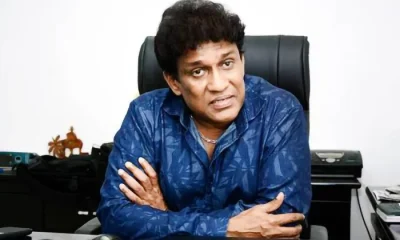
Sri Lankan facing death penalty in Saudi Arabia: Mano G appeals to Crown Prince
-

 Editorial5 days ago
Fuelling discontent and protest
-

 News3 days ago
Geneva takes up Sallay’s case and govt. ignores opportunity to answer accusations
-

 Latest News5 days ago
Tharindu Rathnayake, bowlers secure Asian Games Bronze for Sri Lanka