
News
Local clothing firm appeals to expat Lankans to help grow international sales to earn forex for Lanka


A 100% Lankan clothing brand competing with several global companies on e-commerce platforms appeals to the Sri Lankan expatriate community to help grow the company’s international sales volume and bring in much needed foreign currency to Sri Lanka at this crucial hour for the country.
Ranil Willaddarage, CEO and founder of GFlock says, “This is not a charity appeal. This is a win-win transaction for Sri Lankan expatriates across the world that offers value for their hard-earned foreign currency, and the money in turn being used to import essential commodities for their fellow countrymen. As a nation, we have hit rock bottom. The only way to go if we keep on fighting with each other is six feet under. We cannot start attacking each other again, destroy public property, set fire to private assets and fall even further. Everyone has to come together as a nation and overcome this terrible situation.”
When asked to elaborate on his solution to the foreign exchange crisis, he says, “Our company offers a sustainable solution that can help save this country. Most of our Sri Lankan expatriate community purchases their clothing from brands such as Zara, Mango, Myer, Uniqlo, H&M, and Shein. Most of these brands are based in Europe and other developed countries in the Asia-Pacific region. Sri Lankans living in the United States, Canada, Australia and Europe tend to spend an average amount of $300-$500 as their annual clothing budget on aforementioned foreign brands. My kind request to our Sri Lankan communities abroad is to spend their clothing budget at Gflock, and place orders through our global online store, which is brought to them through the efforts of the creative workforce in Sri Lanka.”
“We know that a fashion company is a business that can earn a lot of revenue. If we take Zara, another brand with a fast fashion business model like ours, their annual revenue is between $ 20-25 billion. H&M also has similar revenue. The Shein brand founded 14 years ago in Nanjing, China, now ships to over 220 countries. With highly competitive prices and their online-only B2C model, Shein’s annual revenue is now at a staggering USD 15 billion. With the arrival of the pandemic, their annual revenue increased exponentially within the course of three years and the $3.5 billion revenue in 2019 grew to a massive $15.7 billion by 2021.”
“Taking inspiration from this and with the help of Sri Lankan expats, within 5-7 years it should be possible for us to reach an annual income of USD 5 billion. The Gflock business model is established in a way that can be scaled up as needed. My team and I have the specialized knowledge, experience and integrity required for that. So I request our Sri Lankans living abroad to think about their home country that is on the verge of collapse when spending their monthly clothing budget and buy from GFlock, a brand founded and run by the creative younger generation in their home country. Apart from that, I appeal to them to be a brand ambassador for this business by promoting the goal of saving our country with at least five more expats and get them to buy clothes from us. If that can be achieved, we will be able to get rid of the oil and gas queues, the shortage of medicines, and the shortage of food and bring the country back to normalcy sooner than we think.”
“1/3 of the profit from our business is spent on providing a monthly essential goods package worth Rs. 8000 to our indirect employees who function as garment workers. Every week we practice gratitude by publishing photos of such acts on our Facebook page and thanking all our customers who contributed toward these worthy causes. Also, we initiated the project of giving away a free plant with every purchase on World Environment Day -2018. Within the course of four years, since its inception, we have managed to create over 30,000 such meaningful bonds that link our brand and customers together with Mother Nature.”
“When the customers realize their purchase contributes to a greater good that goes beyond just a piece of clothing, it gives them a high sense of self-satisfaction, and the next time they make a purchase they do it intending to support a greater good. As owner of GFlock, I am prepared to offer 51% of the business’s shares to the Sri Lankan public in 2025. By implementing this model combined with the expected income, we shall be able to create a strong public movement that can help achieve inclusive prosperity for Sri Lankans.”
Willaddarage said GFlock releases 40-50 new designs every week, categorized under casual wear, work wear, evening wear, menswear, linen and denim for local and international customers through their three retail stores in Sri Lanka and GFlock.com online store, where they ship their products globally.

Latest News
Physical development must be matched by the enrichment of people’s inner lives through aesthetics and culture – PM

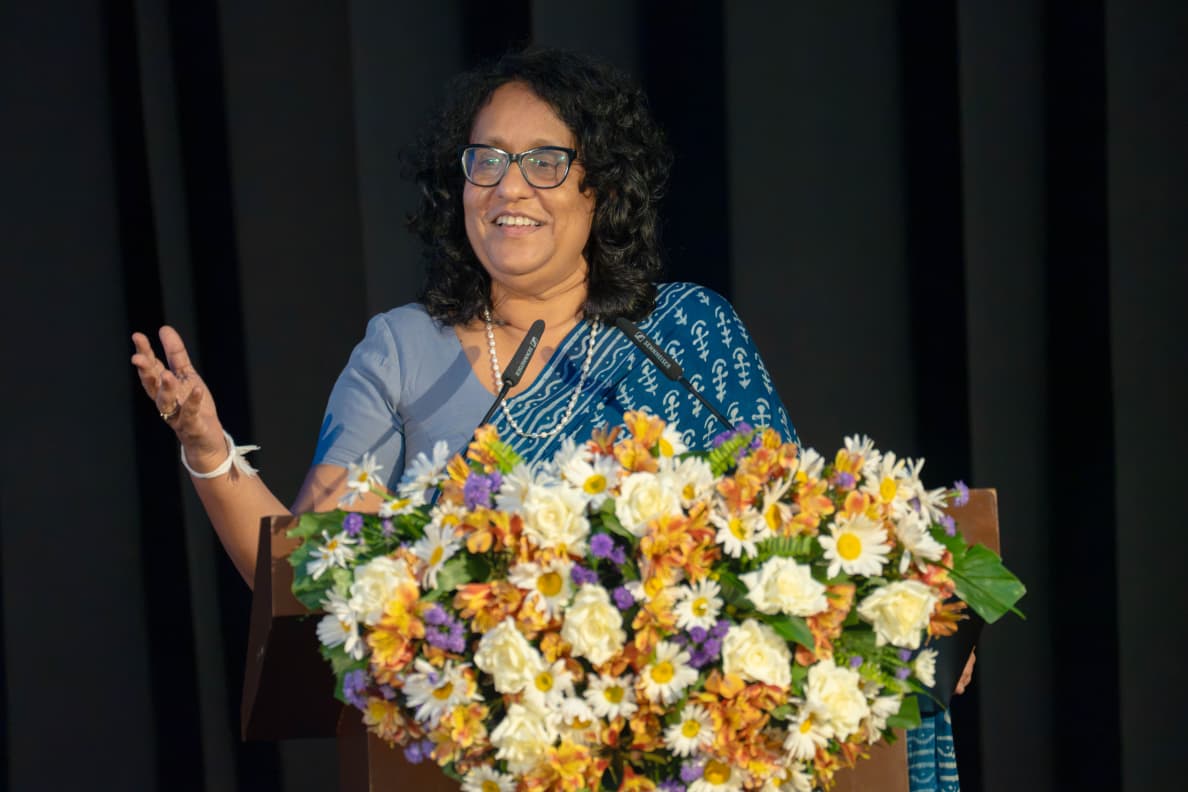
Prime Minister Dr. Harini Amarasuriya stated that while a country develops its roads, buildings and economy, the inner lives of its people must also be enriched through aesthetics, culture and creativity. Development cannot be measured solely by improvements in physical resources, and the empathy and the appreciation of the arts is a key aspiration of the new era of renaissance.
The Prime Minister made these remarks while inaugurating the ’Aluth Wessa’ Cultural Festival and Exhibition, organised jointly by the Kandy District Secretariat, the Department of Cultural Affairs and the Kandyan Cultural Center on 15 October at the Kandy District Secretariat.
During the event, the Prime Minister also presented awards to artists from the Kandy District in recognition of their outstanding contributions to the arts.
Addressing the gathering, the Prime Minister further stated: “Kandy is a place where we can best experience the value of our country’s historical, artistic and cultural heritage. The Temple of the Sacred Tooth Relic, the wood carvings of Embekka, the murals of Degaldoruwa, the Kandyan dance tradition, and the contributions of renowned artists such as Pani Bharath, Dr. Ananda Coomaraswamy and Minnette de Silva have helped shape a distinctive cultural identity unique to Kandy.
During the recent disaster, when the people of Kandy faced immense difficulties, people from districts such as Galle, Matara and Kalutara voluntarily came forward to extend tremendous support. Their empathy and commitment deserve our sincere appreciation. Following the disaster, several initiatives are already progressing rapidly to help Kandy recover and rebuild. These include restoring the Upcountry railway line, repairing damaged houses and rehabilitating historic temples that were destroyed through the Central Cultural Fund. Through our education reforms, we aspire to nurture a generation that goes beyond professional knowledge and skills, developing artistic sensitivity alongside human values and compassion.”
The event was attended by the Most Venerable Naramapanawe Ananda Thero, Anunayake of the Asgiri Chapter of the Siyamopali Maha Nikaya and Chancellor of the University of Kelaniya, along with members of the Maha Sangha and other religious leaders. Also present were Central Province Governor Dr. Suranga Fernando, Members of Parliament Jagath Manuwarana, Thanura Dissanayake, Thushari Jayasinghe and E. M. Basnayake; the Mayor and local councillors, Kandy District Secretary Indika Udawatta, Divisional Secretaries, public officials, artists, parents, and children.
(Prime Minister’s Media Division)
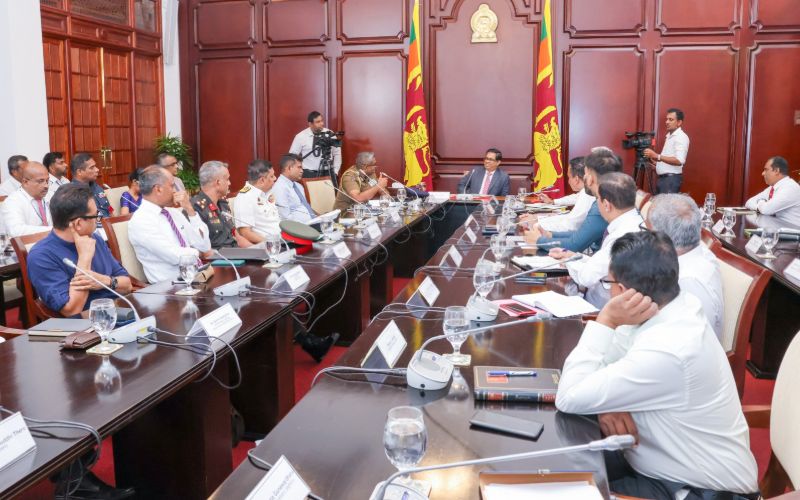
A discussion to review the operations of the 1818 hotline and progress made in its implementation was held on Thursday morning (15) at the Presidential Secretariat, under the chairmanship of Secretary to the President Dr Nandika Sanath Kumanayake. The hotline was introduced as part of the ‘A Nation United’ national operation to eradicate the illicit drug menace.
The hotline was established to enable the public to provide security authorities with accurate information on drug trafficking, distribution and any related suspicious activities taking place across the country. Members of the public anywhere in Sri Lanka can submit information through this service, with the confidentiality of informants fully protected. The information received is acted upon promptly. Operating from the ‘A Nation United’ Media Centre, the service is coordinated under the direct supervision of the Presidential Secretariat and the ‘A Nation United’ National Steering Committee. It enables members of the public to provide information to security authorities securely at any time.
The discussion also focused on the first anniversary of the ‘A Nation United’ national operation, which falls on 05 November and measures to strengthen its effectiveness in protecting future generations from the drug menace and building a safe, drug-free society.
Venerable Madovita Vajira Buddhi Thera, Director (Piriven) of the Ministry of Education, Higher Education and Vocational Education, Ravi Seneviratne, Secretary to the Ministry of Public Security and Parliamentary Affairs, Prince Senadheera, Secretary to the Ministry of Buddhasasana, Religious and Cultural Affairs, Roshan Gamage, Senior Additional Secretary to the President, Attorney-at-Law Priyantha Weerasooriya, Inspector General of Police, H. S. K. J. Bandara, Director General of the Department of Government Information, Gamini Senaratne, Commissioner-General of Buddhist Affairs, Chathuri Pintu, Director of the Department of Christian Religious Affairs, Y. Aniruthanan, Director of the Department of Hindu Religious Affairs and M. S. M. Nawaz, Director of the Department of Muslim Religious Affairs, also attended the meeting. A group of officials representing the tri-forces and other relevant government institutions were also present.
(President’s Media Division)


Marikkar claims coal losses more than twice Treasury bond scam
By Shamindra Ferdinando
The SJB has accused the NPP government of trying to create an environment conducive for the re-appointment of Kumara Jayakody who resigned on 17 April 2026 over a coal scam perpetrated in 2025.
Colombo District MP S.M. Marikkar Tuesday (13) alleged that Jayakody’s successor Anura Karunathilaka was spearheading the efforts at the behest of President Anura Kumara Dissanayake.
Addressing the media at the Opposition leader’s Office at No. 30, Sir Marcus Fernando Mawatha, Colombo 07, Marikkar said that the NPP was busy propagating a lie that the losses amounting to Rs 15.68 bn could be entirely recovered by way of penalties and funds held as deposits in line with the supplier. The Opposition MP placed the amount held by the government at Rs 16.48 bn.
Marrikar claimed that the NPP’s propaganda project to whitewash Jayakody was meant to bring Jayakody back into the Cabinet of ministers in January next year. The top SJB spokesman said that the findings of the Sectoral Oversight Committee (SOC) on Infrastructure and Strategic Development report on the losses suffered by the use of substandard coal had been used to back the government move.
The inquiry was held into procurement for 2025/2026 seasons made from Trident Chemphar, an Indian company whose selection was questioned by the National Audit Office in a special report submitted to parliament before the vote on no faith motion against Jayakody.
Marikkar said that the NPP in its haste to build a case for Jayakody’s return to the cabinet had conveniently forgotten that six of the 25 shiploads of coal ordered from Trident Chemphar were never delivered. In a desperate bid to cover the shortfall, the government paid Rs. 2,284 million above the market price in emergency procurement. As the SOC had rejected the tests conducted by an Indian company and ordered fresh tests on substandard coal, an additional Rs 26.6 mn had been paid to an Australian lab, MP Marikkar said, explaining other losses caused by the corrupt deal.
Marrikar explained how the procurement of substandard coal altogether cost the taxpayer nearly Rs 20 bn while the government engaged in a project to clear Jayakody. The former minister is also indicted in the Colombo High Court in an earlier corruption case.
Marrikar emphasized that the government should accept responsibility. Comparing the action taken in respect of 2015 and 2016 Treasury bond scams and the coal scam, MP Marikkar said that the losses caused by Trident Chemphar fraud was double the Treasury bond scam. A future government would investigate the coal scam and punish all those responsible. The NPP under any circumstances couldn’t bring back Jayakody to the cabinet as he was directly responsible for the fraud, the Colombo District lawmaker said.
At the time the UNP perpetrated Treasury bond scams, Marikkar represented the UNP parliamentary group which made desperate bids to protect the bond thieves.
The SJBer refused to answer questions regarding any other issue. Marikkar reacted angrily when a journalist sought to raise a group of SJB MPs meeting the Most Ven Thibbatuwawe Sri Sumangala Mahanayake Thera of the Malwathu Chapter in Kandy. Then the MP accused a section of the media of trying to suppress the coal scam by raising other issues. Marrikar vowed that they wouldn’t allow Jayakody’s return to the cabinet. The NPP government’s reputation had been devastated by the coal scam and current efforts to cover up the direct involvement of Minister Jayakody would not succeed, he said, warning the NPP should be prepared to face the consequences.

Iyer to lead in last two New Zealand ODIs, Kushagra earns maiden call-up

Pope pictured for first time since surgery and cancer diagnosis

Qatar announces ‘massive’ solar plant project in Lebanon

Samagi Spice Exports to launch Ceylon Cinnamon based beverage range

Asian Cup in Saudi Arabia could be postponed by a year amid Houthi attacks

Houthi missile attack on Yemeni presidential palace kills five, minister says

‘Dates have the highest sugar content to fight Coronavirus’

Sunday Island 27 December – Headlines

#SundayIsland 17th December – Headlines

Sunday Island – 28th March

Sunday Island Headlines – 21 March

Sunday Island – 21st February – Headlines
-

 News6 days ago
Sri Lanka escalates anti-graft drive with Shiranthi’s jailing
-
 News7 days ago
NPP govt. reminded of its responsibilities as US warship leaves Colombo
-

 Latest News7 days ago
Farhan, Sadaqat help Pakistan ace 183 chase to go 1-0 up
-

 Latest News5 days ago
Farhan and Sadaqat help Pakistan seal series in style
-
 News6 days ago
Iranian ships stranded, Lanka fears US sanctions
-
 Latest News3 days ago
Nissanka’s return headlines Sri Lanka’s Test squad against Pakistan
-
 News7 days ago
Interdicted top House official Kularatne receives special recognition in Mexican Parliament
-
 Features5 days ago
Intake 16: 45 years of duty and honour