
News
Election win should trigger Scottish independence, says Sturgeon

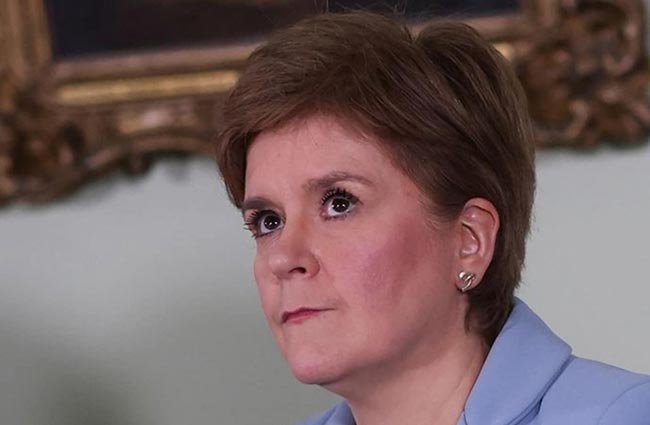
Scotland could become independent if the SNP won a majority of votes in a UK election, Nicola Sturgeon has said, according to a BBC dispatch.
It said: The first minister wants a referendum in 2023, and is pushing for the Supreme Court to rule on a bill to set this up.
If this does not happen, she has said the SNP would treat the next general election as a “de facto referendum”.
Prime Minister Boris Johnson said it was the government’s “longstanding position” that it was not the right time for another independence vote.
He said: “We will look carefully at what [Nicola Sturgeon] says. Don’t forget that the longstanding position is that we don’t think this is the right time to be doing a constitutional change.”
“I think our economy is all the stronger for being together,” he added.
Johnson continued: “This is a time really now to focus on things which the union can deliver for the economic benefit of everybody.”
In an interview with BBC Scotland, the first minister said: “Scotland can’t become independent without a majority of people voting for it”.
She said: “I hope we can resolve these things in a referendum, that is the proper way of doing it. But if all routes to that are blocked then the general election will become the vehicle for people to express their view.”
Ms Sturgeon said she wanted to be clear about the principle and the practical reality “that Scotland cannot become independent unless and until a majority of people in Scotland vote for independence”.
She added: “The issue of practical reality is that when a majority vote for independence, I hope in a referendum, that will have to be followed by a negotiation with a UK government to implement that decision.”
If there were to be a vote in favour of Scottish independence – whether that be via the referendum Ms Sturgeon wants, or a de facto referendum based on a general election result – it would be followed by negotiations between the Scottish and UK governments.
Then, legislation would have to be passed at Westminster and perhaps Holyrood before Scotland became independent.
Ms Sturgeon said on Tuesday that the UK Supreme Court had been asked to rule on whether the Scottish government has the power to hold an independence referendum without agreement from Westminster.
Ahead of the 2014 referendum, the UK government agreed to a temporary transfer of powers to Holyrood to allow the referendum to go ahead.
he idea of a “de facto referendum” is a radical one, given Nicola Sturgeon’s reputation for caution and the fact her team had previously dismissed it as a strategy.
It raises many questions about how such a scheme would work, which ministers now find themselves talking about rather than their main plan – to hold an actual referendum.
After all, the first minister’s hope is that the last resort will never be needed. Her wish is still to do a deal with the UK government which would see both sides sign up to an agreed process in the style of 2014.
Bold talk of using a general election instead is chiefly a tool to force the pro-UK side to take their fingers out of their ears and engage with the issue, rather than a finalised strategy to deliver independence.
Earlier on Wednesday, Ms Sturgeon’s deputy John Swinney suggested that he considered a win to be the SNP winning the majority of seats contested in Scotland.
He was asked on BBC Radio’s Good Morning Scotland: “If you have a majority of Scottish MPs at the next UK general election, that would be a mandate to start negotiations for an independent Scotland?”
He replied: “That’s correct, yes.”
But he went on to Tweet that he had “misheard” the question, and added that his view would be that the SNP would need to win a majority of votes in a general election, not a majority of seats.
He said when he was asked about a “majority of seats”, he had only picked up on “majority”.
Mr Swinney added: “Referenda, including de facto referenda at a UK general election, are won with a majority of votes. Nothing else.”
Douglas Ross, the leader of the Scottish Conservatives, said on Tuesday that another referendum was the “wrong priority for Scotland” and would hinder Scotland’s recovery from the pandemic.
Scottish Labour’s constitution spokeswoman Sarah Boyack said the SNP were “hell-bent on gaming the electorate to suit their ends”.
She said it was “deeply embarrassing for Nicola Sturgeon to be so publicly contradicted… by her own deputy”.
The party has also asked for the Lord Advocate to make a statement to MSPs on Thursday to ascertain her views on whether the Scottish government had the power to hold a referendum without the UK government’s approval.
It was the Lord Advocate – as the Scottish government’s chief legal adviser – who was responsible for referring the matter to the Supreme Court.
A statement from Scottish Labour said it wanted the Lord Advocate to appear in the chamber to “shed some light on her views, decisions and role”.
Alex Cole-Hamilton, of the Scottish Liberal Democrats, said less than a day after Ms Sturgeon’s plan was unveiled that “the wheels are falling off the clown car”.
He went on: “They seem to have conceded that they are heading for a defeat in court and so they are brainstorming barmy schemes for what comes next.”

Latest News
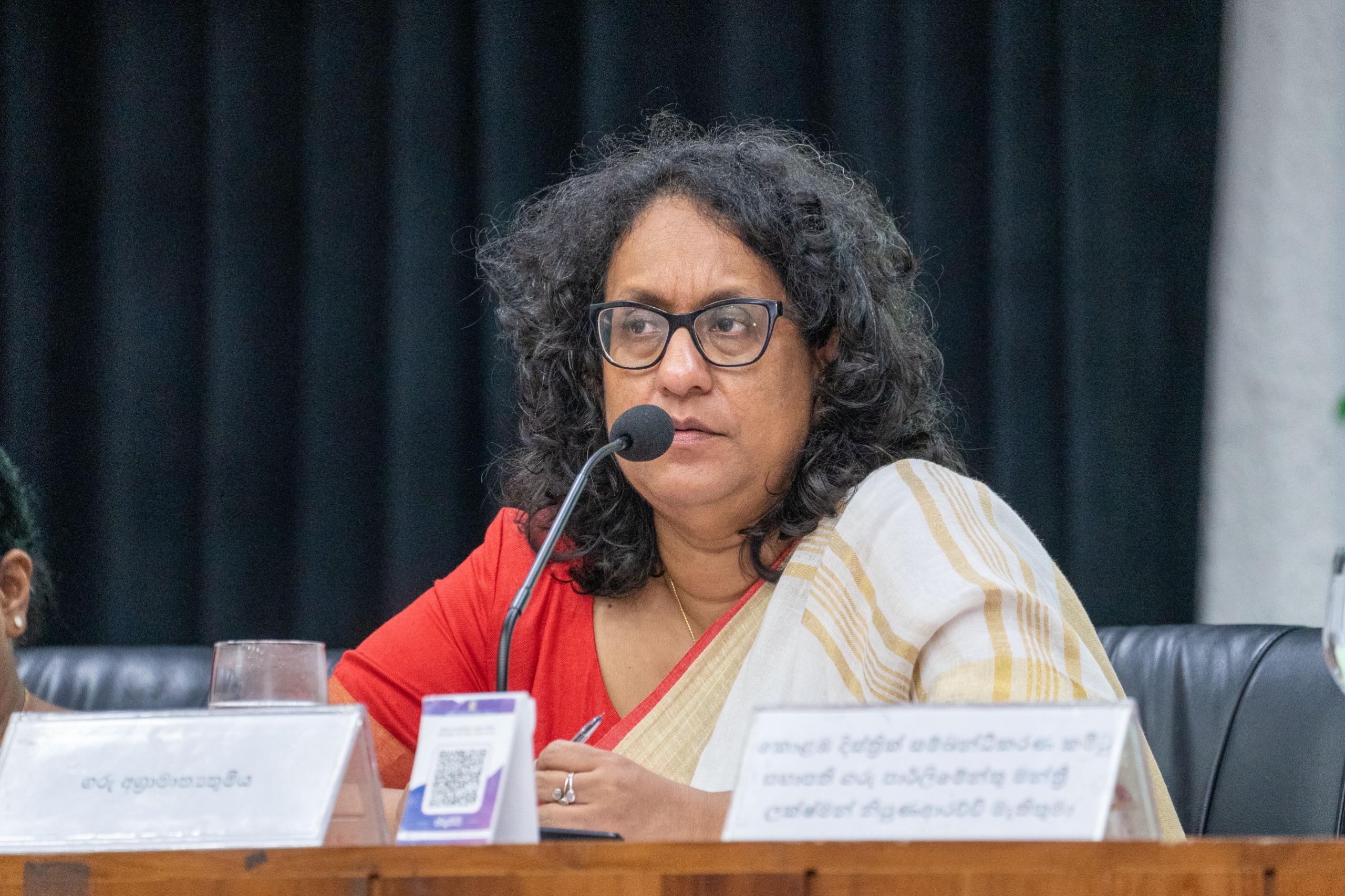
Expedite the cleaning of Colombo’s canals and drainage systems within the next two weeks – PM instructs officials

[Prime Minister’s Media Division]
Approval has been granted at the Cabinet meeting held on 22.07.2024 to publish the draft bill of State Assets Management Act in the government gazette notification and thereby present it to the Parliament for its concurrence.
However, the draft bill couldn’t be passed in Parliament as a result of the Parliament being dissolved in the month of October 2024.
Thereafter, the draft bill was subject to further inspection by a
committee appointed which comprised of officials and authorities on the subject.
The said Committee has recognized the amendments to be made and a fundamental draft has been prepared including the proposed amendments.
Accordingly, the Cabinet of Ministers approved the resolution furnished by the President in his capacity as the Minister of Finance, Planning and Economic Development to suspend further activities regarding the draft bill of State Assets Management Act published in the extraordinary gazette of 02.08.2024, and to direct the Legal Draftsman to prepare a draft bill based on the fundamental draft prepared by the subject specialists’ committee.
Considering the compliance of the Cooperative Societies’ operations with the concurrent socio – economic circumstances as well as the changes in the common law, the requirement of amending the Cooperative Employees Commission Act No. 12 of 1972 has been recognized.
A fundamental draft including proposed amendments based on the experience gained by that Commission as well as the opinions and proposals of Cooperative societies, their director board members, cooperative employees and other interested parties has been prepared.
Accordingly, the Cabinet of Ministers granted approval to the resolution furnished by the Minister of Trade, Commerce, Food Security and Cooperative development to provide instructions to the Legal draftsman to prepare a draft bill to amend the Cooperative Employees Commission Act No. 12 0f 1972, based on the said fundamental draft.

Missiles intercepted near Riyadh after Saudi coalition hits Yemen fuel depot

MI5 chief warns of threats to UK from Russia, Iran and AI

Pope diagnosed with lung cancer but had successful surgery, Vatican says

Expedite the cleaning of Colombo’s canals and drainage systems within the next two weeks – PM instructs officials

Kusal Mendis’ unbeaten 87 hands Sri Lanka consolation win

Cabinet approves redrafting of State Assets Management Act

‘Dates have the highest sugar content to fight Coronavirus’

Sunday Island 27 December – Headlines

#SundayIsland 17th December – Headlines

Sunday Island – 28th March

Sunday Island Headlines – 21 March

Sunday Island – 21st February – Headlines
-

 Features6 days ago
The Sri Lankan who made Scottish history
-

 Sports6 days ago
Nissanka absence opens door for Sri Lanka’s young guns
-

 News5 days ago
NDB fraud Rs 60mn more than reported
-

 News7 days ago
Gnansara Thera to be assigned to prison printing section: Officials
-

 News5 days ago
Removing monk’s robes matter for Sangha to decide: Mahanayake Theras
-

 News7 days ago
OIC of FCID summoned before Maligakanda Magistrate
-

 News6 days ago
Shiranthi R remanded until 13 Oct.
-

 Features6 days ago
Future of Sri Lanka’s state university system: Should it be shut down and reopened?