
News
Lanka needs to do more on debt restructuring before a bailout package is finalised, says IMF

The International Monetary Fund (IMF) on June 30 said it has concluded “constructive and productive” discussions with Sri Lankan authorities, but warned that the crisis-ridden island nation needs to do more on debt restructuring and step up structural reforms to address corruption vulnerabilities before a bailout package is finalised.
Sri Lanka is going through the worst economic crisis since its independence from Britain in 1948 and needs to obtain at least $4 billion to tide over the acute shortage in foreign exchange reserves.
“The IMF team had constructive and productive discussions with the authorities on economic policies and reforms to be supported by an Extended Fund Facility arrangement,” the IMF said in a statement.
“The discussions will continue virtually with a view to reaching a staff-level agreement on the Extended Fund Facility arrangement in the near term,” it added.
However, due to the unsustainability of public debt, there is the requirement for “adequate financing assurances from Sri Lanka’s creditors that debt sustainability will be restored,” it warned.
The IMF team visited Colombo on June 20 to continue discussions on an economic programme that could be supported by an IMF lending arrangement, building on the progress made during the May 9-24 virtual mission.
The objectives of the new IMF-supported programme would be to restore macroeconomic stability and debt sustainability, while protecting the poor and vulnerable, safeguarding financial stability, and stepping up structural reforms to address corruption vulnerabilities and unlocking Sri Lanka’s growth potential, it said. The IMF also warned that high fiscal deficit had to be reduced, as well as taming rising inflation.
Since revenue was weak, far-reaching tax reforms were urgently needed to achieve these objectives, it added. On Monday, the Sri Lankan government announced that only essential services will operate from midnight till July 10 and all other operations will be temporarily suspended as the island nation of 22 million faces an acute fuel shortage.
The nearly-bankrupt country, with an acute foreign currency crisis that resulted in foreign debt default, had announced in April that it is suspending nearly $7 billion foreign debt repayment due for this year out of about $25 billion due through 2026. Sri Lanka’s total foreign debt stands at $51 billion.
Since June 24, no fuel tankers with supplies have arrived in the island nation while the state-run fuel retailer Ceylon Petroleum Corporation says no new orders have been placed.
Meanwhile, the government’s statistics office said on Tuesday that the economic growth in the first quarter of this year is projected to see a minus 1.6% growth due to the economic crisis. A release said that fuel shortages had impacted all sectors with reduced production contributing to the negative growth.
The Sri Lankan economy has virtually come to a grinding halt after it has run out of foreign exchange reserves to import fuel. Sri Lankans continue to languish in long fuel and cooking gas queues as the government is unable to find dollars to fund imports.
So far, there have been an estimated thirteen deaths in fuel queues due to exhaustion, physical ailments or accidents. Irate citizens want President Gotabaya Rajapaksa and his government to resign immediately for their inability to tackle the fuel shortages.



The Ministry of Industries and Entrepreneurship Development has recommended the establishment of Sri Lankan Standards, i.e. the import testing methodology for imported tires used for passenger cars and pneumatic tires for three-wheelers with the aim of ensuring a fair competitive environment for local
manufactures and ensuring consumer safety and security.
Taking into the said recommendations, “Import and Export (control regulations N0.08 of the 2026)” has been enacted to amend the existing regulations by means of the Extraordinary Gazette Notification No. 2508/27 dated 2026-10-01, prescribing Sri Lanka standard 1212 for the import of passenger types (HS Code 4011.10.90) and Sri Lanka standard 1347 for the import of
pneumatic tires for three – wheeled vehicles (HS Code 4011.90.10).
Accordingly, the Cabinet of Ministers has approved the resolution furnished by the President in his capacity as the Minister of Finance, Planning, and Economic Development to submit the aforementioned regulations to Parliament for approval.
Approval of the Cabinet of Ministers was granted at their meeting held on 02.06.2025 to introduce a new act to promote and providing legal provisions for facilitating the Public Private Joint Enterprises within Sri Lanka as well as the establishment of the National Agency for Public Private Partnership Joint Enterprises.
Accordingly, the Legal Draftsman has formulated the relevant draft bill and the Attorney General has given his clearance to the said draft bill.
The Cabinet of Ministers approved the resolution furnished by the President in his capacity as the Minister of Finance, Planning and Economic Development to publish the said
draft bill in the government gazette notification and thereby submit it to the Parliament for its concurrence.
Regulation, development and control of indigenous medical sector in Sri Lanka comprised of Ayurvedha, Sidhdha, Unani, Local Therapies are carried out under the provisions of Ayurvedha Act No. 31 of 1961.
Although amendments were made to the act from time to time as per the requirements, the necessity of further amending the Ayurvedha Act has been identified to enable efficiently maintaining all activities of local medical field productively, further formalizing the regulation of the sector, taking actions to providing licenses applicable to export of local medicines, and achieving the progress and sustainable development goals in the local medical sector.
Based on the said factors, the Cabinet of Ministers granted approval to the resolution furnished by the Minister of Health and Mass Media to direct the Legal Draftsman to formulate a draft bill to amend the Ayurvedha Act No. 31 of 1961.

Import and Export (Control) Regulations No. 08 of 2026
Draft Bill of the Public Private Partnership Enterprises Act to be gazzetted
Amendment of the Ayurvedha Act No. 31 of 1961

Cabinet nod to amend the Sri Lanka Development Administration Institute Act No. 9 of 1982
Establishment of the National Higher Performance Centre
State patronage for the cremation ceremony of the late deputy prelate (Anu Nayaka Thero) of the Sri Laka Ramangya Maha Nikaya, Gatambe Rajopawanramadhipatha, Siri Chandawimala Wanshalankara, Chandrakeerthi Sri Amarawansha, Sadhdharmawageeshwara, Shasanashobhanna Most Venerable Keppetiyagoda Siriwimalabhidhana Thero

‘Dates have the highest sugar content to fight Coronavirus’

Sunday Island 27 December – Headlines

#SundayIsland 17th December – Headlines

Sunday Island – 28th March

Sunday Island Headlines – 21 March

Sunday Island – 21st February – Headlines
-

 Features3 days ago
Kotahena:A Small Enclave, An Extraordinary Legacy
-

 News7 days ago
Sri Lanka, India caught in US-Iran ship crisis
-
 News4 days ago
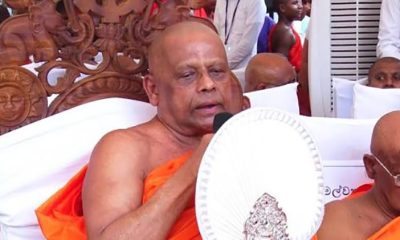
Asgiri Mahanayake calls for immediate release of Gnanasara Thera
-

 Latest News7 days ago
Missiles intercepted near Riyadh after Saudi coalition hits Yemen fuel depot
-

 Latest News7 days ago
Kusal Mendis’ unbeaten 87 hands Sri Lanka consolation win
-

 News2 days ago
Record 1,600 students take Russian Classical Ballet examination in Sri Lanka
-
 News6 days ago
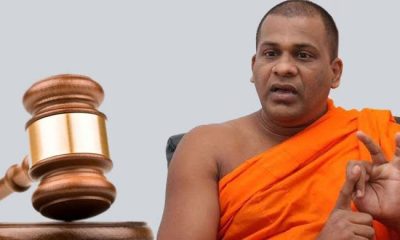
AC President recuses himself from hearing prison attire case pertaining to Gnanasara Thera
-

 Latest News7 days ago
Heavy showers above 100 mm are likely at some places in the Western, Sabaragamuwa, Southern, Central, and North-western provinces and in Anuradhapura district.