
News
Resignation of Prez, PM prerequisite for resolution of current crisis – Direction Sri Lanka

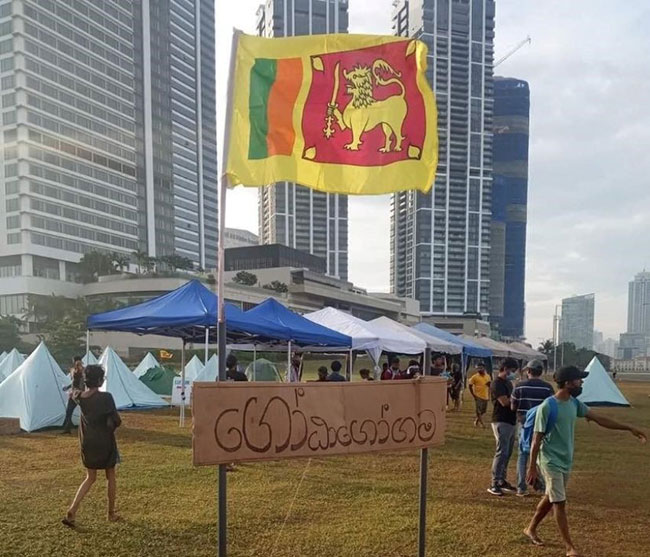
Direction Sri Lanka, consisting of Sri Lankan professionals, has declared that the resignation of President Gotabaya Rajapaksa and Prime Minister Ranil Wickremesinghe is a prerequisite for the resolution of the current political-economic-social crisis
The grouping has made the following proposals:
a) The President should resign forthwith in response to the demands of the People;
b) A successor President should be elected;
c) The Prime Minister should resign forthwith after the election of the successor President;
d) A Caretaker/Interim National Government should be immediately formed comprising a new Prime Minister and a Cabinet, limited to 18 essential portfolios along with an equal number of Deputy Ministers, representing all political parties;
– The Caretaker / Interim National Government to function for a maximum period of one year;
– The persons holding portfolios in the Caretaker / Interim Cabinet to have adequate and appropriate educational qualifications and specialised skills required to hold the respective portfolios and to be persons of the highest integrity;
– Members of Parliament on the National List to be encouraged to resign as necessary to pave the way for professionals / experts of the highest integrity to be represented in the Caretaker / Interim National Government;
e) As a priority during the period of the Caretaker / Interim National Government, action to be taken to rescind the 20th Amendment to the Constitution and to reintroduce the provisions of the 19th Amendment to the Constitution with necessary amendments addressing the democratic way of governance;
f) Immediately upon the reintroduction of the 19th Amendment, steps to be taken to appoint persons with the highest integrity and ability to the Independent Commissions.
Direction Sri Lanka, in addition, called for the holding of early elections subsequent to the envisaged Constitutional amendment reverting to a Parliamentary democracy with independent institutions and processes to ensure the Rule of Law and good governance and to avoid the arbitrary exercise of powers of governance and the excessive reposing of powers in any single individual.
Whilst the proposals of Direction Sri Lanka were publicly disseminated, Direction Sri Lanka also directly engaged with leading political parties / party leaders to advocate and ensure the need for a systemic change.
Direction Sri Lanka also notes that pursuant to the increasing protests and escalating crisis culminating with the attack on peaceful protestors on 9th May 2022 by Government agents and the irresponsible inaction of law enforcement authorities leading to island-wide anarchy no less a person than the President of Sri Lanka made a pledge to the people of Sri Lanka that the long criticised 20th Amendment of the Constitution would be repealed and the 19th Amendment with positive features will be restored.
Direction Sri Lanka also notes that such a pledge came from an Executive President having almost untrammelled powers under the existing 20th Amendment to the Constitution.Yet, events that unfolded since and the actions on the part of the President and those in governance have run contrary to this undertaking and have further eroded democracy and good governance, taking Sri Lanka to the edge and resulting in further erosion of any trust or confidence being placed on those in governance locally and internationally.
Beginning with the cobbling together of ‘a Cabinet’ comprising a Prime Minister and many members of proven failure and some with criminal convictions and credible allegations of corruption, it is now, after what seems deliberate filibustering, an attempt being made to cheat and deceive the people by a purported amendment to the Constitution.
The Twenty Second Amendment Bill published in the Gazette neither reflects the pledges made nor addresses the genuine concerns of the people but is aimed at entrenching and continuing in power by a President and a government that has deplorably failed the nation.The proposed amendment fails to address or in any manner accommodate the following proposals of Direction Sri Lanka, which have been communicated to the Minister of Justice and Constitutional Affairs and the public, which include:
1. Article 41A – Constitutional Council
The original 19th Amendment Bill sought to provide greater representation by appointees from outside Parliament. The present draft provides only for three (3) such persons in a total of seven (10).
The original 19th Amendment Bill proposed a 3:7 ratio between Members of Parliament and appointees from outside Parliament but this was reversed to 7:3 due to the insistence of the then Opposition. The present Bill seeks to continue with the same 7:3 ratio.
An increase of appointees from outside Parliament results in greater citizen participation sand recognises a greater role for the sovereign people and reflects a fair balance between appointees from Parliament and those from outside with a casting vote if necessary in the Speaker.
2. Persons / institutions coming under the purview of the Constitutional Council
The following institutions also to be brought under the purview of the Constitutional Council so that their members would be appointed on the recommendation of the Council:
a) The Right to Information Commission.
b) The Colombo Port City Commission.
c) The University Grants Commission.
d) The Members of the Monetary Board of the Central Bank of Sri Lanka, other than the chairperson and the Secretary to the Ministry of the Minister in charge of the subject of Finance.
3. Article 44 of the Constitution – Minister and their subjects and Secretaries
The President should not hold any portfolio, and hence Article 44(2) of the Constitution to be deleted.
Articles 51 and 52 of the Constitution relate to the appointment of the Secretary to the
Prime Minister and Secretaries of Ministries. These appointments should be on the advice of the Prime Minister for purposes of practicality.
Direction Sri Lanka also proposed that in view of the new structure of governance to be introduced, the appointment and removal of Ministers must necessarily be on the advice of the Prime Minister. Even though provisions to this effect have been included, most unfortunately they come into effect only for the next Parliament which simply does not stand to reason in the present context.
4. Non-applicability of important constitutional provisions to the current Parliament
As stated above, the 22nd Amendment to the Constitution Bill provides that Ministers, Non-Cabinet Ministers and Deputy Ministers be appointed and removed by the President on the advice of the Prime Minister. An important reversion to the 19th Amendment is that the President would not have the power to dismiss the Prime Minister, that power being reposed on Parliament alone.
However, most significantly, in terms of the proposed 22nd Amendment, these changes would not apply to the current Parliament.
It is clear that a pre-condition to international assistance to overcome the present crisis would be a consensus government. However, if the President would retain such powers, other political parties and Members of Parliament who have declared themselves to be independent of the governing party would not be interested in joining the Government.
5. Other matters to be considered
We also submit that in appointing Governors and Heads of Missions Abroad, the President shall act on the advice of the Prime Minister.
The President’s Power to prorogue and dissolve Parliament unless by effluxion of its term as provided by the Constitution “Shall be on the advice of the Prime Minister”
The President’s present powers to prorogue and dissolve Parliament also remain untouched.
In summation, the overall effect of the 22nd Amendment Bill is to perpetuate the continuance of a President and Government that has lost the mandate of the people. The Bill, in many aspects, reflects the 20th Amendment to the Constitution, which has been rejected by the President himself.
The inevitable conclusion is that the present government that has led the country to the present debacle is determined to cling to power purely in its own interests and contrary to the wishes of the people or the good of the nation.
Direction Sri Lanka also notes various ad hoc measures resorted to under the guise of alleviating the immediate economic problems which further confirms incompetence with potentially dangerous and lasting effects for Sri Lanka, such as non-transparent dealing with its assets and reckless undertakings.
Direction Sri Lanka is now of the considered view that unless all aspects of its original proposals set out at (a) to (f) above are implemented, those in governance, including the President, will have visited irreparable and irreversible damage to our country leading to anarchy. Direction Sri Lanka, therefore, demands that even at this late stage, proper course correction by resorting to the above is embarked upon as a matter of urgency.



Former first lady Shiranthi Rajapaksa, wife of former President Mahinda Rajapaksa was produced before the Hulftsdorp court, after being arrested by officers of the Commission to Investigate Allegations of Bribery or Corruption (CIABOC) and produce
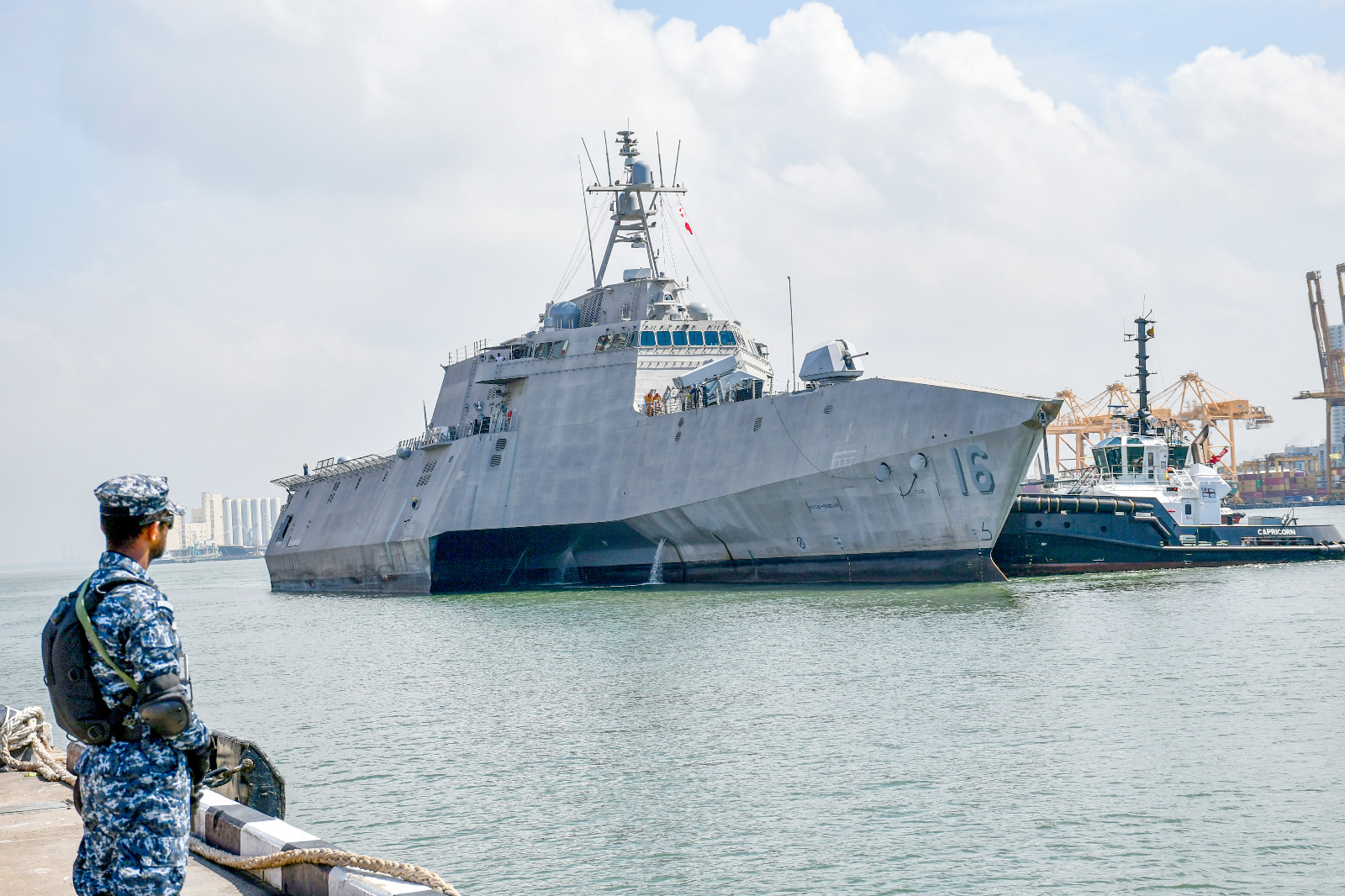
The U.S. Navy ship USS Tulsa (LCS 16) arrived at the Port of Colombo this morning, 7 October 2026 for replenishment purposes.
The visiting ship was welcomed by the Sri Lanka Navy in accordance with naval traditions.
The 127.7-metre-long platform is a Littoral Combat Ship commanded by Commander BM Wanier. Commissioned on 16 February 2019, USS Tulsa has since been in service with the US Navy.
The ship previously made a port call in Sri Lanka on 27 August 2025.

Govt. tells fuel distributors to maintain stocks to ensure uninterrupted supplies
by Saman Indrajith and Norman Palihawadane
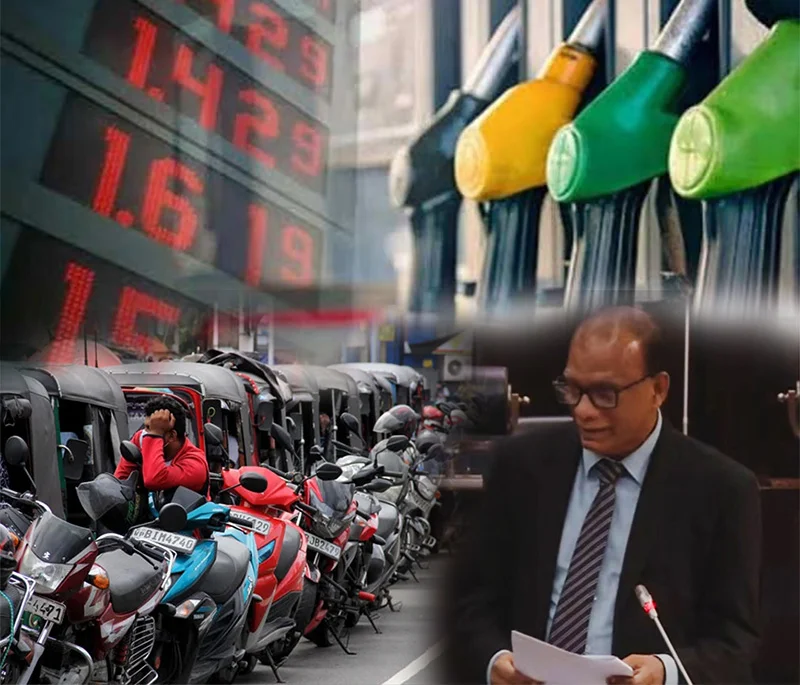
The government had instructed private fuel distributors to maintain minimum stocks and ensure uninterrupted supplies to the market, Energy Minister Anura Karunathilaka told Parliament yesterday (06).
Karunathilaka said the Ministry of Energy Secretary had notified the relevant companies of the requirement, following a reduction in supplies by some private distributors, amid higher international fuel prices.
The Minister said private companies had informed the government that they were facing losses because international prices had risen while fuel was being sold, locally, at prevailing prices. As a result, some companies had reduced the volumes released to the market.
The reduced supplies had increased the burden on the Ceylon Petroleum Corporation (CPC), whose share of the diesel market had risen from about 54% to 82%, the Minister said.
“The CPC currently holds an 82% share of the market,” he said, adding that it had increased its supplies, compared with February, to compensate for the reduction by private distributors.
Karunathilaka said the government could not, under the existing agreements with private companies, specify the quantities they should supply to individual filling stations. However, it could require them to maintain minimum stocks in the country.
The Minister said the Energy Ministry had already instructed companies that had failed to maintain the required stocks to take steps to prevent supply disruptions.
The Minister attributed the queues reported at some filling stations to reduced supplies from private distributors, as well as normal variations in fuel distribution. He also said demand for CPC fuel had increased because private companies generally did not provide fuel to dealers on credit, while the CPC offered a three-day credit facility.
“We expect that, as the Ceylon Petroleum Corporation takes on this additional burden, the problem will ease to some extent by Wednesday or Thursday,” Karunathilaka said.
He said instructions had also been issued to increase supplies to CPC filling stations. A special discussion on the issue is scheduled for today (07), with officials of the Energy Ministry and CPC expected to participate,
along with President Anura Kumara Dissanayake.
Meanwhile, Petroleum Dealers’ Association officials have called for an early solution to the supply issue. Association Chairman D.V. Shantha Silva said queues had been reported at many filling stations, mainly those operated by private distributors.
He said the situation was not due to an overall shortage of fuel, but was linked to reduced orders by Lanka IOC, Sinopec and R.M. Parks amid concerns over losses incurred on fuel sales.
The Ceylon Petroleum Private Tanker Owners Association has urged motorists to refrain from panic buying, saying there was no nationwide disruption to fuel supplies.
The government earlier increased fuel prices and introduced a per-litre diesel subsidy following concerns raised by distributors over rising international prices.

Former first lady Shiranthi Rajapaksa arrested by CIABOC

U.S. Navy ship USS Tulsa arrives in Colombo for replenishment visit

Smriti Mandhana appointed India captain across formats

Ronaldo apologizes for Portugal walkout; says Jesus broke promise

Showers in the Western, Sabaragamuwa, Central, Uva, North-western and Southern provinces and in Anuradhapura and Mannar districts

Fuel crunch looms

‘Dates have the highest sugar content to fight Coronavirus’

Sunday Island 27 December – Headlines

#SundayIsland 17th December – Headlines

Sunday Island – 28th March

Sunday Island Headlines – 21 March

Sunday Island – 21st February – Headlines
-

 News7 days ago
US-assisted ‘Ice’ detection: NPC to examine IGP’s move to transfer drug-busting team
-

 Editorial6 days ago
Colombo Port drug bust: The plot thickens
-

 Editorial7 days ago
Drug busting, transfers and trust deficit
-

 Features4 days ago
The first woman in the foreign service or Ceylon Overseas Service it was then called
-
 News7 days ago
Sri Lankan facing death penalty in Saudi Arabia: Mano G appeals to Crown Prince
-

 Editorial5 days ago
Fuelling discontent and protest
-

 News3 days ago
Geneva takes up Sallay’s case and govt. ignores opportunity to answer accusations
-

 Latest News5 days ago
Tharindu Rathnayake, bowlers secure Asian Games Bronze for Sri Lanka