
Opinion
Buddha’s ambivalence?


By Dr Upul Wijayawardhana
We, Buddhists, are very fortunate in that we are able question even the actions of the Buddha. After all, the Buddha encouraged questioning as exemplified in Kalama Sutta, dubbed ‘The Buddha’s charter for free inquiry’. Buddha was not an intermediary conveying the messages of a Supreme Being, His teachings being based entirely on what was discovered by the exploration of His mind and hence becomes unique among religious leaders. One can say that the Buddha did just the opposite of what scientists do; they turn the searchlight outwards whereas the Buddha turned the searchlight inwards. He completely changed our way of thinking by placing conviction over blind belief or faith and could therefore be credited for having laid the foundation for scientific thinking.
In the Satmag article titled “More than a doctrinal problem: The Buddha and his stepmother” (The Island, 25 June), Uditha Devapriya questions whether the Buddha was ambivalent on some issues like ordination of women, consent for ordination and caste system. What he explores extensively is ordination of women and concludes his piece with the following:
“For the first and probably only time in his life, the Buddha is admitting to a theoretical lapse without really admitting to it. Perhaps to make up for his shortfall, the Buddha justifies his earlier position by attributing the decline of Buddhism – from a millennium to half a millennium – to the very gender he admits to the order. Even if that is not, according Narada Thera, a “wholesale condemnation of women”, we must admit that between the Buddha’s rejection of Gotami’s request, his acceptance after Ananda’s intervention, and his sober prognosis following his acceptance, there was an intellectual leap. I believe this issue needs to be investigated, more deeply”.
I am in total agreement that a deep investigation is fully warranted but wish to point out that in investigating this issue, as well as other instances of probable ambivalence, we need to take into consideration three main factors. The first, of course, is the accuracy of the descriptions. Though some consider the written word to be superior to the ‘oral-tradition’, we are well aware of the problem of writers’ bias. It is not that writers distort purposely but human nature dictates that it is nigh impossible for a writer to be non-judgemental. We convey ‘facts’ according to our perceptions. In fact, the best example is the analysis of this issue by the much-respected Buddhist scholar, Venerable Narada whose comment, which follows, would be considered very sexist indeed from today’s perspective:
“In making these comments, which may not generally be very palatable to womankind, the Buddha was not in any way making a wholesale condemnation of women but was only reckoning with the weaknesses of their sex.” (Venerable Narada Thera, “The Buddha and His Teachings”, Fourth Edition, 1988, Chapter 9, Page 156).
The second factor is that instead of putting into perspective the prevailing conditions when the problems arose, we make judgements based on our present standards. The powerful tool ‘Retrospectscope’ is useless without context. Perhaps, had he been alive today, Ven. Narada would have rephrased his comments, as he would have realised that ‘weakness of women’ is an outmoded concept in our world of equality!
The third, and the most important, consideration is our concept of who the Buddha was, which seems to vary a lot depending on one’s faith and beliefs. Unfortunately, based on many stories built around the Buddha we have ‘falsely elevated’ an extraordinary human being to that of a superhuman. The birth of Prince Siddhartha itself is an unbelievable story. There is no recorded human being who walked at birth even though many animals do so. Most biographies of the Buddha repeat the hardly believable, traditional embellishments which make most of us imagine a Buddha far removed from reality.
My concept of the Buddha is an exceptionally intelligent and compassionate human being who, noticing the all-pervasive sense of dissatisfaction around (Dukkha), pondered over to find the root causes as well as a solution to this problem. After a prolonged journey of experimentation and thought, the Buddha found the way for ultimate detachment (Nibbana). As He worked this out all this by himself, the Buddha was deemed to be Sarvajna; all-knowing or omniscient. Rather than considering this to mean that the Buddha knew all that needed to be known, we tend to go on the literal meaning, which implies that the Buddha should have the final word in everything. He lived a relatively simple life and walked, very likely barefoot, around large parts of India passing on his message.
Rather than acting as an all-knowing dictator, the Buddha was a problem solver who made decisions and found solutions as problems arose, often taking other’s views too into consideration. Among the many examples, one that stands out is what happened after the ordination of Rahula, His son who came behind seeking inheritance at the behest of the mother. When King Suddhodana pointed out that the ordination took place without informing the mother, the Buddha did not say “Oh! King, you may be my father but I am the Sarvajna Buddha and know what is right”. Instead, He agreed and laid down the rules for parental consent for ordination. The entire Vinaya Pitaka is based on rules formulated following incidents of inappropriate behaviour by Bhikkhus; they were applied henceforth, the Buddha demonstrating that rules should not be applied retrospectively, long before lawyers adopted the concept of retro-active legislation.
The Buddha’s world was a male-dominated one where discrimination on the basis of caste was the norm. I cannot find any ambivalence in Buddha’s attitude to caste as he categorically stated that it is not birth but actions that determine whether one is a Brahmin or an untouchable. His Sasana was open to all though, regrettably and paradoxically, Sri Lanka which claims to be the protector of Theravada Buddhism still has a caste-based Nikaya system! Therefore, I find the following statement by Uditha Devapriya puzzling:
“Even on the thorny issue of caste, he didn’t adopt a straightforward position: while he did condemn Brahmin caste structures, he also added that “by deed is one born a Brahmin”, thereby distancing himself from the kind of political critique of caste pioneered by, inter alia, Ambedkar.” He seems to have misinterpreted ‘Kammana hoti Brahmano’ which means “by deed one becomes a Brahmin”.
I have grave doubts regarding the accuracy of what is written about the ordination of women. Considering that a monk of this era like Venerable Narada was sexist in his comments, it is no surprise if male chroniclers of yesteryear wrote their own interpretations of the story with their ‘women are inferior’ attitude! However, it is very likely that the Buddha may have initially had some reluctance considering the social milieu of the day. In any case, ordination of women by the Buddha has to be considered a revolutionary act, considering that the Catholic Church still does not ordinate women as priests and the Anglican Church allowed only two millennia later! It was a great surprise that some prominent women too objected to the Church of England ordaining women and when this happened in 1994, a prominent lady politician and a duchess, married to a cousin of Queen Elizabeth, left the Church of England to become Catholic!
However, to state that Venerable Ananda had to remind the Buddha that Mahaprajapati Gothami suckled Him is a great insult to the Buddha. What happened to the Buddha being Sarvajna? It is said that the Buddha stipulated eight conditions, the first being that a Bhikkhuni with even hundred years of higher ordination should worship and serve a Bhikkhu who had just got higher ordination. Does this not reflect male chauvinism? It is very likely the Buddha stipulated conditions, as protection needed to be afforded to women, but it is more likely that the conditions mentioned are what the Bhikkhus chroniclers wished than what the Buddha stipulated.
The most absurd is the supposed to be declaration by the Buddha that by this action the duration of His Sasana would be halved; from a thousand to five hundred years. As the Sasana has lasted over two thousand five hundred years already, in spite of distortions by many well-meaning followers, one has to ask the question ‘Why did the Buddha get it so wrong?’
Poor Venerable Ananda! After having served his cousin, neglecting his own spiritual advancement, all he was got was blame during the first Sangayana. He was blamed for not requesting the Buddha to live much longer when the opportunity arose which, again, seems to be an attempt to make the Buddha superhuman. Though Venerable Ananda was accused of shortening the lifespan of the Sasana by facilitating the ordination of women, perhaps, it worked the other way as the Sasana has lasted far beyond the Buddha’s expectations! That is, if these stories are believed to be rue. Anyway, looking at the attendances in Viharas, meditation sessions and other religious activities, it is pretty obvious that Upsikas contribute far more to the continuation of Buddha Sasana.
It is very likely that the apparent ambivalence of the Buddha on some issues is more apparent, than real, due to the many factors outlined.

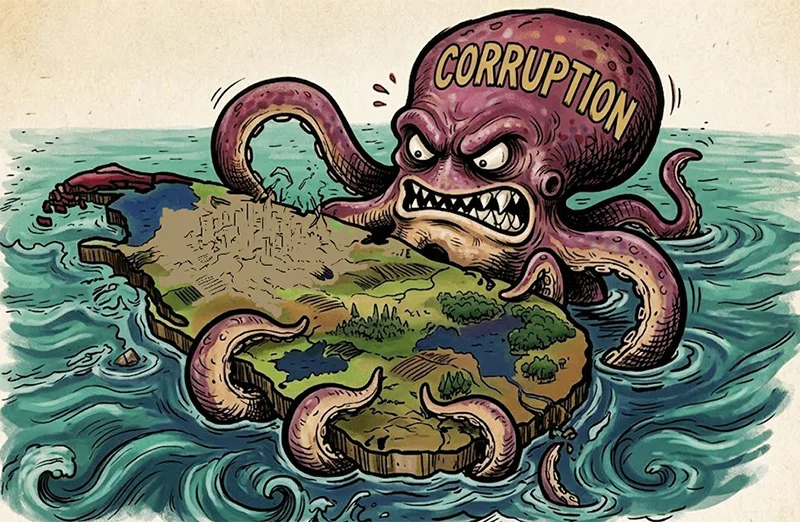
Many of us know that post-independence Sri Lanka is nearly eight decades old, yet the country has not achieved the level of growth and development necessary to ensure a high quality of life for its citizens. Most people point fingers at the politicians who governed the country and criticize their economic policies. One of the most recent accusations against political leaders is corruption. This concern becomes evident when analysing measures such as the Corruption Perceptions Index and examining recent incidents such as the Central Bank bond scam. Ultimately, the country had to face severe economic downturns and a declining standard of living. Consequently, Sri Lanka was compelled to reform its legal framework by introducing new laws for the implementation of monetary policy and the control of corruption, while also seeking assistance from international organisations. It is true that the effective enforcement of the law can reduce corruption. However, achieving meaningful results requires a broader understanding of corruption, along with improvements in legal mechanisms and more effective methods of enforcement. This short write-up aims to familiarise citizens with a broader definition of corruption, its various forms, and several measures that can be adopted to combat corruption effectively and efficiently.
Corruption undermines democracy
As stated by the United Nations, corruption undermines democracy and the rule of law, leads to violations of human rights, distorts markets, erodes the quality of life, and allows organised crime, terrorism, and other threats to human security to flourish. It is also a key factor contributing to economic underperformance and a major obstacle to poverty alleviation and sustainable development. Furthermore, corruption represents a failure of governance, as it distorts the allocation of resources and weakens government performance. The World Bank defines corruption as “the misuse of public office for private gain.” In this context, public power is abused by elected politicians or appointed public officials for personal benefit. In the modern global economy, no country can be considered completely free from corruption; therefore, corruption remains a global issue.
Academic literature provides numerous definitions of corruption, and many researchers have proposed various theories to explain it. The relationships between corruption and other socio-economic variables have been widely analysed, while both its causes and effects have been extensively discussed. The United Nations Convention Against Corruption, introduced in 2004, proposed several measures to combat corruption. Nevertheless, corruption continues to remain high in many developing countries and is also evident, to some extent, in developed economies. Sri Lanka is no exception. Authorities responsible for controlling corruption in Sri Lanka have acknowledged that investigations and prosecutions alone are insufficient to effectively combat corruption. Therefore, expanding the frontiers of knowledge on corruption, particularly in the Sri Lankan context, is of timely and national importance.
Although the literature provides and explains many definitions of corruption, there is no single universally accepted definition. In efforts to combat corruption effectively, definitions must encompass a broader range of ideas, and people should properly understand the various forms and dimensions of corruption.
Certain improper activities carried out by public sector officials are difficult to categorise strictly as the “abuse of public property for private gain.” For example, in the public sector, failure to properly perform assigned duties, leaving official work unfinished despite being entrusted with responsibilities, taking unnecessarily long periods to complete official tasks, using excessive public resources, and deliberately delaying public services can all be considered forms of corruption or administrative misconduct. Furthermore, in some instances, officials and institutional heads intentionally remain silent about the corrupt activities of others, assist corrupt individuals in concealing evidence, or show reluctance, lethargy, or unwillingness to take legal action against corrupt public officers. Although Sri Lanka’s Anti-Corruption Act No. 9 of 2023 defines corruption, it does not explicitly incorporate all of these dimensions.
Moreover, legalised corruption is another issue that deserves attention. This relates to weaknesses or manipulations in the process of framing laws and regulations. Certain actions may not directly fall under the definition of the “use of public property for private gain,” yet they may still represent indirect or extended forms of corruption. Therefore, for the successful control and prevention of corruption, broader and more comprehensive definitions are required.
Forms of Corruption
Corruption may appear in various forms. If the economy is broadly divided into the public and private sectors, corruption can be analysed under two major categories: public sector–specific corruption and public–private sector corruption. The first category refers to corruption that occurs solely within the public sector, while the second involves the abuse of public resources in transactions or interactions between the public and private sectors.
Within the first category, corruption may occur not only at the individual level but also collectively. Individual corruption takes place when a single public officer abuses public resources or authority for personal gain. However, collective corruption involves coordinated behavior among groups of public officials. This collective behavior may occur within a particular institutional hierarchy or among several related institutions and hierarchies. For example, within a single hierarchy, when a citizen visits a public office to obtain a service, a particular officer may be responsible for handling the relevant task. If the officer is corrupt, he or she may deliberately avoid performing the required duty by raising irrelevant objections or refusing to provide the service efficiently. In some cases, the officer may intentionally insert doubtful or questionable remarks into official documents and forward them to a superior officer in order to obstruct the successful completion of the request.
At times, superior officers themselves may instruct subordinate officers on the type of comments or procedural objections that can be used to justify rejecting a request when no personal benefit or reward is received. Conversely, when a material reward or bribe is offered, all officials involved may cooperate and share the benefit among themselves. This represents a collective form of corruption confined within a particular hierarchy in the public sector, without any direct involvement from the private sector.
Collective corruption may also occur across two or more institutions or hierarchies that are required to work together. Such situations are often observed in the process of taking legal action against criminal offences. If the relevant institutions fail to perform their duties honestly and effectively, the legal process may collapse. Where officials within these institutions act corruptly or engage in favoritism, they may collectively benefit from rewards or unlawful advantages received in exchange for their cooperation or inaction. This is another form of collective corruption that exists entirely within the public sector.
In such circumstances, the rule of law becomes ineffective. Therefore, there is a strong need to recognise and incorporate these collective patterns of corrupt behavior into broader definitions and theories of corruption. This may also provide a foundation for the development of new theoretical approaches to understanding corruption in the public sector.
For the second category, namely public–private sector corruption, many examples can be identified. Tender procedures and procurement activities conducted by state institutions are common practices in every country. When private sector actors attempt to influence public officials through rewards, bribes, or other benefits in order to secure favorable decisions, such actions fall within this category of corruption.
In some instances, private individuals who work in association with public institutions may collaborate to generate undue benefits for themselves. For example, within the court system, lawyers are paid by plaintiffs and defendants for legal representation. Certain lawyers may intentionally delay court proceedings for personal financial gain. In some cases, lawyers representing opposing parties — such as plaintiffs and defendants or co-owners in partition cases — may unofficially cooperate to prolong legal procedures, including the delayed submission of documents or repeated postponements of hearings. By extending the duration of cases, they may maximize the payments received for their court appearances and related services. Such practices can also be regarded as a form of corruption linked to the interaction between public institutions and private actors.
Moreover, within public institutions, when one official engages in corrupt activities, superior officers or fellow officials may intentionally remain silent without reporting the misconduct or taking disciplinary action against the corrupt individual. In Sri Lanka, different political parties have governed the country from time to time; however, corruption has remained widespread under many administrations. Prior to elections, political leaders frequently promise to eliminate corruption and publicly declare that legal action will be taken against corrupt individuals once they are elected. Nevertheless, after assuming power, many fail to fulfill these promises and often avoid taking legal action against corrupt individuals connected either to previous governments or to their own administrations.
Even when certain public officials initiate legal action against corrupt individuals, procedural loopholes or omissions may intentionally be allowed to weaken the effectiveness of such actions. If a superior officer or relevant authority deliberately ignores corruption or fails to take proper legal measures, such behavior may itself be regarded as a secondary form of corruption, which can be described as “corruption on corruption.” Therefore, officials who knowingly tolerate, conceal, or fail to act against corruption should also be considered corrupt.
Preventive Measures
Law serves as the strongest safeguard and a key preventive measure against corruption. However, when the legal framework governing corruption is expanded, the size of government may also increase, and as a result, tax burdens may rise. On the other hand, an excessively enlarged government may itself create additional opportunities for corruption. Therefore, policymakers must exercise caution when designing preventive measures.
It is true that law enforcement institutions take action and punish corrupt individuals with the aim of combating corruption. However, even when legal provisions are adequately established, enforcement is often weak or inconsistent in some countries. In certain cases, legal actions are not taken at all, or they are not implemented effectively against corrupt individuals. At times, officials may deliberately allow omissions or procedural weaknesses within legal processes. In other situations, the legal framework itself may be inadequate, containing loopholes that hinder effective enforcement. In such circumstances, the law must be reformed and made more efficient. Policymakers therefore need to explore new approaches to strengthening anti-corruption legislation. For instance, if legislation clearly states that every employee within a public institution is accountable for corrupt activities occurring within that institution, it may enhance collective responsibility and help prevent collective forms of corruption. Furthermore, when corruption occurs within an institution, heads of institutions or relevant legal authorities may sometimes remain silent. Such silence can enable the continuation and spread of corruption, a situation that may be described as “corruption on corruption.” To address this, legal provisions could be extended to define the deliberate silence or inaction of institutional leaders in the face of known corruption as a punishable offence. Thus, continuous efforts are needed to explore and strengthen legal mechanisms in order to make anti-corruption laws more effective and comprehensive.
Conclusion
Corruption may appear in various forms, and everyone needs to remain vigilant about it. Those who engage in corruption, as well as those who remain silent and fail to take adequate measures to control it, are equally responsible for the persistence of corruption. If the law can be effectively enforced without unnecessarily expanding the size of government, it would be more beneficial for social welfare. Therefore, a broader and more inclusive definition of corruption is required for its successful control. Certain activities may not strictly fall within the internationally recognized definition of corruption as the “use of public property for private gain.” Although Sri Lanka’s Anti-Corruption Act No. 9 of 2023 provides a relatively broader definition, it still does not fully capture all such practices. Moreover, legalised corruption is another important issue that requires further discussion, particularly in relation to the processes of law-making and law enforcement. This includes situations where legal frameworks themselves may be designed or applied in ways that indirectly enable corrupt practices.
by Dr. Tikiri Nimal Herath
Emeritus Professor
tikiriherath@gmail.com
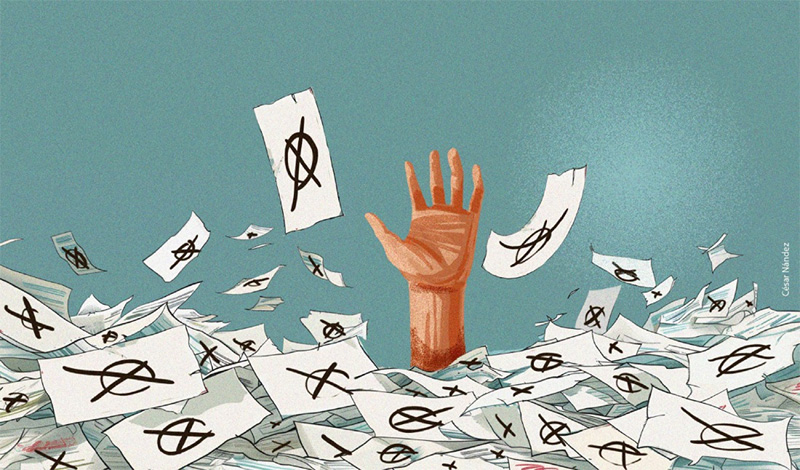
It was encouraging to note the ongoing consultations of the Parliamentary Select Committee (PSC) on the review of election laws, chaired by the Minister of Public Administration, Prof. A. H. M. H. Abayarathna. The PSC deserves the fullest support and cooperation of the public in this important initiative. Getting this right is essential if Sri Lanka is to strengthen its democratic foundations.
It is time to address this matter at its roots. Democracy is not only about conducting fair elections; it is also about ensuring a fair and democratic electoral process. This process has two distinct components: the election itself and the nomination of candidates.
In Sri Lanka, candidate selection is largely determined by party leadership rather than by the people of the respective regions. As a result, the nomination process is often insufficiently democratic. Consequently, those elected cannot always be said to be fully representative of the electorate’s choice. We have witnessed how this system has enabled political dynasties to enter Parliament and, at times, exercise disproportionate influence over public expenditure for personal or political advantage.
The Election Commission has done an admirable job in ensuring that elections are conducted fairly, with far less room for the corrupt practices that were common one or two decades ago. What is now required is reform of the electoral system itself. Several areas deserve careful consideration.
First, the National List and bonus seat provisions should be reviewed. National List Members constitute a significant proportion of Parliament—approximately 13 per cent—and can influence political outcomes despite not being directly elected by the public. Similarly, bonus seats alter the proportional value of votes through a formula that benefits the winning party. In effect, the electoral value of votes cast for the winning party is enhanced, while the representation of opposition votes is reduced.
This can weaken the role of the opposition at a time when a strong and effective opposition is widely recognised as essential to a healthy democracy. Whether this arrangement is fully consistent with the constitutional principle of equality of the vote deserves careful consideration.
Second, the nomination of party candidates should be decentralised and conducted at the regional or electoral district level. Local party members should have a meaningful role in selecting candidates through a democratic ballot process. Such decisions should not rest solely with party leaders based in Colombo. A similar principle could be applied to the nomination of presidential candidates, requiring broad regional support within a party before a candidate is selected.
Third, consideration should be given to introducing a mechanism for recalling elected representatives under clearly defined conditions. In the United Kingdom, a recall petition can be initiated only after specific legal or parliamentary sanctions have been imposed on an MP. If at least 10 per cent of eligible voters in the constituency sign the petition, a by-election is triggered. While Sri Lanka may choose a different model, the principle of recall could strengthen accountability and help ensure that elected representatives remain responsive to their constituents throughout their term of office.
Fourth, all candidates seeking public office should meet minimum eligibility standards, including literacy and competency requirements as determined by Parliament. In addition, clear and consistent rules relating to financial misconduct, corruption, and criminal convictions should apply both before candidature and while serving in office.
Finally, Sri Lanka has a large number of registered political parties, some of which appear to exist primarily for electoral convenience and business rather than genuine political representation. This issue warrants attention. At the same time, the process of forming new political parties should remain accessible to politically active groups. Consideration should also be given to measures that discourage political movements whose primary purpose is to promote division based on race, religion, gender, or region.
If Sri Lanka can establish stronger systems of balance, accountability, transparency, and democratic participation, it can significantly strengthen its democratic institutions and improve public confidence in governance. The challenge now lies with the Parliamentary Select Committee to consider these issues carefully and chart a path towards meaningful electoral reform.
Democracy does not end at the ballot box. It begins with fair representation, continues through accountability, and flourishes when citizens have confidence that those elected truly serve the public interest.
by Chula Goonasekera
(admin@srilankaleads.com)

This article examines whether Sri Lanka faces the risk of once again moving towards a situation similar to the 2022 economic crisis. The 2022 crisis was not the result of a single cause, but a multidimensional crisis created by the combined effects of fiscal weaknesses, foreign exchange shortages, debt burdens, policy mistakes, and the weakening of the productive economy. Although foreign exchange reserves, the exchange rate, and the fiscal position have now stabilized to some extent, that stability remains fragile.
The continuity of the IMF programme, debt sustainability, investor confidence, and policy discipline are decisive factors in this regard. At the same time, poverty, the quality of employment, pressures on the SME sector, price levels, and income inequalities remain serious socio-economic challenges. Therefore, while it may not be accurate to say that the 2022 crisis will immediately recur, abandoning the reform path and failing to correct structural weaknesses could once again push Sri Lanka towards a crisis-prone path.
Recently, the Chief Executive Officer of the Advocata Institute issued an important warning regarding Sri Lanka’s economic future. That statement also received wide attention across various media platforms. His central argument was that if Sri Lanka moves away from the current path of economic reforms, there is a risk that a situation similar to the severe economic crisis experienced in 2022 could re-emerge.
This statement cannot be dismissed merely as a political or ideological remark. It is an important warning that deserves deeper consideration in relation to the country’s economic stability, policy continuity, and the future of the reform process. Therefore, the purpose of this note is to examine the strength and validity of that statement through selected macroeconomic indicators and structural economic factors.
A particularly important point to remember is that the 2022 economic crisis was not caused by a single factor or a single policy mistake. It was a complex economic crisis created by the accumulation of fiscal imbalances, excessive debt, foreign exchange shortages, weak export and investment growth, the decline of the productive economy, policy uncertainty, and weak institutional governance over many years.
Therefore, in assessing whether Sri Lanka could once again move towards such a situation, it is not sufficient to rely on a single indicator or a short-term trend. Instead, it is essential to consider a broad macroeconomic range, including the fiscal position, foreign exchange reserves, debt sustainability, investment and export performance, unemployment, poverty levels, the condition of small and medium-sized enterprises, price levels, interest rates, and the overall path of economic growth.
Our main question should not be whether the 2022 crisis will return tomorrow. The more important question is whether the fundamental structural weaknesses that caused that crisis have truly been corrected, or whether they have only been temporarily managed. Sri Lanka’s economic future will be determined by the answer to this question.
1. Foreign Exchange Reserves
By early 2022, Sri Lanka’s usable foreign exchange reserves had fallen to extremely low levels, making even payments for fuel, medicine, and other essential imports a serious challenge.
At present, foreign exchange reserves have recovered significantly, providing a stronger protective buffer compared with the situation in 2022. However, this stability could once again be weakened by a breakdown in the continuity of the IMF programme, a slowdown in foreign direct investment flows, a decline in tourism earnings or remittances, or disruptions to the debt restructuring process.
2. Exchange Rate Stability
In 2022, the rapid depreciation of the rupee was a major factor that increased import prices, production costs, and the cost of living.
Today, the exchange rate shows relative stability, but that stability depends on foreign exchange inflows, market confidence, and policy credibility. Therefore, if the IMF programme is disrupted, foreign exchange earnings decline, or investor confidence weakens, the rupee could once again come under severe pressure.
3. Fiscal Position
Among the root causes of the 2022 crisis were the collapse of government revenue, dependence on excessive borrowing, and the long-term weakening of fiscal discipline.
Under the IMF programme, the fiscal position has been strengthened to some extent through increased tax revenue and expenditure control. However, reversing tax reforms for political popularity, failing to reform loss-making state-owned enterprises, or losing control over public expenditure could once again widen fiscal imbalances.
4. Debt Sustainability
In 2022, Sri Lanka was forced to suspend external debt servicing for the first time in its history.
Although the debt restructuring process has now made considerable progress, debt sustainability depends on continuous economic growth, maintaining a primary budget surplus, and policy discipline. If these conditions weaken, concerns over debt stability could re-emerge.
5. Employment Conditions
Although the official unemployment rate appears to be under some control, problems relating to the quality of the labour market remain unresolved.
Many people have moved into low-income informal employment, while the shortage of employment opportunities among educated youth remains significant. In addition, the migration of skilled and educated workers has placed pressure on the country’s human capital and long-term productive capacity.
6. Poverty and Living Standards
With the 2022 crisis, poverty increased significantly. Although inflation has declined, the cost of living still remains a heavy burden for many families.
A large number of households continue to struggle to meet expenses related to food, transport, education, and health. Therefore, it is still difficult to say that the benefits of macroeconomic stability have adequately reached lower- and middle-income groups.
7. Small and Medium-Sized Enterprises
SMEs, which are a central source of employment and income generation in Sri Lanka, were severely affected by the crisis.
High interest rates, energy costs, raw material prices, and weak consumer demand forced many enterprises to close down, downsize, or become burdened with debt. The pace of economic recovery will depend heavily on the revival of this sector.
8. Weakness of the Productive Economy
A deeper structural cause of the 2022 crisis was the limited base of Sri Lanka’s productive economy.
Even today, the country remains heavily dependent on tourism earnings, remittances, and the services sector. High value-added industries, technology exports, knowledge-based services, and innovation-driven sectors have not grown at the expected pace. Without a structural transformation of the economy, long-term stability cannot be guaranteed.
9. Income and Distributional Inequalities
Although some economic groups recovered quickly after the crisis, a large section of the population has still not escaped economic pressure.
The gap between urban and rural areas, as well as between high- and low-income groups, appears to have widened. If the benefits of economic growth are not distributed more broadly, macroeconomic stability will not translate into social and political stability.
10. Price Levels and Inflation
Inflation has declined, but people are still facing price levels that have already risen and become entrenched.
A decline in inflation does not mean a decline in prices. If income growth does not keep pace with price levels, the real purchasing power and living standards of households will remain weak.
11. Interest Rates and Investment
Although interest rates have declined, private investment and new business activity have not yet grown at the expected pace.
Investment decisions are influenced not only by interest rates, but also by policy stability, legal clarity, the protection of property rights, market expectations, and investor confidence. Therefore, sustained investment growth requires broader institutional and policy stability.
12. What Could Happen If IMF Conditions Are Not Implemented?
The IMF programme is not merely a loan facility. It is a key foundation of the confidence that the international financial community places in Sri Lanka’s economic policies.
programme breaks down:
* IMF disbursements could be suspended.
* Support from development partners, including the World Bank and the Asian Development Bank, could weaken.
* Confidence among creditors and international markets could deteriorate.
* Foreign direct investment could slow down.
* Pressure on the rupee could increase.
* Interest rates could rise.
* Inflation could accelerate again.
* Fiscal crises could re-emerge.
* Economic growth could slow down.
* Jobs, incomes, and living standards could be adversely affected.
This does not mean that Sri Lanka would return to the 2022 situation overnight. However, it could gradually weaken the protective buffers required for economic stability and significantly increase the risk of the country being drawn back into a crisis-prone path.
by Prof. Ranjith Bandara, PhD (Qld.,)

Rana and Mosaddek star as Bangladesh end 21-year wait with crushing win

Formulation of a Draft Economic Development Bill to expedite the process of Digital Transformation and Digital Economic Development
Cabinet approval for Sri Lanka Community and Health Survey – 2026/2027
A National Water Tariff Policy for all Water Supply and Sanitation Services
National Policy on Green Hydrogen in Sri Lanka
Cabinet nod to amend the Customs Ordinance

‘Dates have the highest sugar content to fight Coronavirus’

Sunday Island 27 December – Headlines

#SundayIsland 17th December – Headlines

Sunday Island – 28th March

Sunday Island Headlines – 21 March

Sunday Island – 21st February – Headlines
-

 Latest News6 days ago
Kusal Mendis, Pathum Nissanka, bowlers put Sri Lanka 1-0 up
-
 News6 days ago
New US tariffs proposed on 60 countries, including Sri Lanka
-
 Features5 days ago
Power crept into the Sangha and is now tearing it apart
-

 Features5 days ago
Kondachchi wind farm and battery storage project to boost energy security, says Power Ministry Secretary
-
 Features5 days ago
Saudi Arabia sets new benchmark in Hajj management as 1.7 million pilgrims complete sacred journey
-

 News3 days ago
Women’s T20 World Cup 2026 warm-up: Chamari Athapaththu’s 94 helps Sri Lanka beat Pakistan
-

 News4 days ago
Asst. Manager, security officer arrested over Rs 30 mn snatch at Horana PB branch
-

 Editorial2 days ago
Probe Sallay’s complaint