
News
Fairness of token system launched yesterday to provide fuel in dispute

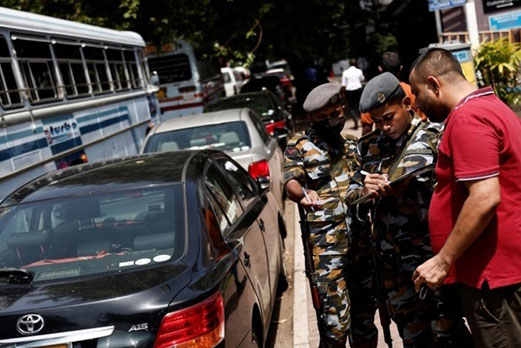
By Ifham Nizam
The issuance of tokens to consumers who queued up at filling stations took place yesterday in most parts of the country, caused inconvenience to commuters.
The Island
witnessed a mixed reaction from vehicle owners in Wattala and Enderamulla.
However, the Joint Secretary of the Petroleum Distributors’ Association Kapila Nabatuna yesterday told the media that he strongly opposed the issuance of ‘tokens by the security forces.
He said that those ‘tokens’ were not available to people who really needed fuel, and it was only available to those who had made it a habit to spend time in queues.
“After obtaining a ‘token’ without any formality, they can go to another filling station and get a ‘token’ and the thugs who are in control of the petrol stations will get those ‘tokens’, he said.
Power and Energy Minister Kanchana Wijesekera prior to his departure to Qatar with his Cabinet colleague Environment Minister Nazir Ahamed on Sunday said the tokens would be issued to dedicated filling stations, and it could not be tampered with.
He also urged the public to refrain from lining up at filling stations due to limited stocks of fuel.

News
Montana National Guard and Lanka advance a targeted, partnership-driven approach to recovery and resilience

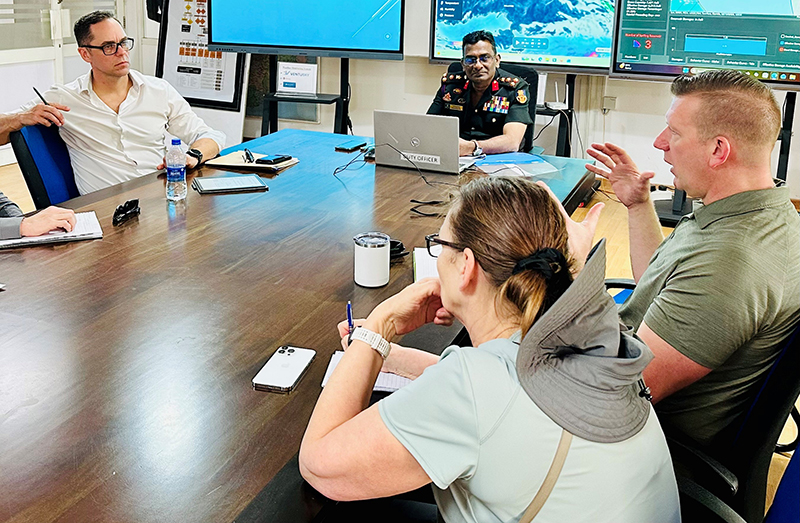
The US Embassy in Sri Lanka last week welcomed a team of engineers and medical professionals from the Montana National Guard as they engaged with counterparts from Sri Lanka’s Disaster Management Centre (DMC) and other government agencies to assess damage to health facilities and critical infrastructure following Cyclone Ditwah.
The visit reflects the United States’ partnership-based approach to humanitarian assistance—linking post-disaster recovery with long-term resilience and institutional capacity. Drawing on extensive experience responding to natural disasters in the United States, the Montana National Guard team conducted site visits in Colombo, Badulla, Nuwara Eliya, Kandy, Matale, and Puttalam to support recovery planning and inform future US humanitarian assistance decisions.
“This visit shows what the US–Sri Lanka partnership looks like on the ground, where it matters most,” said Lt. Col. Matthew House, U.S. Defence Attaché and Senior Defence Official at the US Embassy in Sri Lanka. “By working side by side with Sri Lankan counterparts and drawing on Montana National Guard engineers and medical professionals with experience from real disaster response at home, we’re supporting recovery now and helping build stronger systems for the future.”
The engagement builds on a Memorandum of Understanding signed in November 2025 between Sri Lanka’s Ministry of Defence and the Montana National Guard, formalising cooperation under the US Department of War’s State Partnership Programme. In Montana, the National Guard serves as the state’s primary responder during natural disasters—ranging from wildfires and floods to severe winter storms—making this partnership a strong and practical match with Sri Lanka’s disaster management institutions.
“The Montana National Guard plays a central role in responding to natural disasters across our state, working closely with civilian partners when communities need help the most,” said Brig. Gen. Trent Gibson, Adjutant General of the Montana National Guard. “That experience shapes how we approach this partnership with Sri Lanka. We’re not just sharing technical expertise
— we’re building relationships grounded in trust, cooperation, and mutual respect. We are proud to stand with Sri Lanka, not only as partners, but as friends. That is the Montana way.”
This mission builds on years of cooperation through the State Partnership Programme (SPP), which pairs the Montana National Guard with Sri Lanka to strengthen security, enhance disaster response capabilities, and foster enduring relationships. Recent engagements such as ATLAS ANGEL 2024 and PACIFIC ANGEL 2025 saw US and Sri Lankan personnel working side by side to improve humanitarian assistance and disaster response readiness—relationships that proved vital in the rapid response following Cyclone Ditwah.
Sri Lankan officials from the Disaster Management Centre welcomed the collaboration.
“This partnership brings valuable experience drawn from real-world disaster response,” said Maj Gen Sampath Kotuwegoda (Retd),
Director General ofthe Disaster
Management Centre. “The insights and technical expertise
provided by the Montana National Guard have been valuable to our recovery efforts and it also strengthened our national capacity to manage future emergencies. This collaboration is more than just a formal assessment; it is a testament to the enduring partnership between our nations.”
The Montana National Guard’s visit follows broader US support after Cyclone Ditwah, including $4 million in US humanitarian assistance, the transfer of 10 American-made Bell 206 (TH-57) helicopters to the Sri Lanka Air Force through the US Excess Defence Articles programme to strengthen disaster response and emergency aviation capacity, and US.Air Force C-130 relief flights delivering critical aid. Together, these efforts reflect America’s continued commitment to supporting Sri Lanka’s recovery and long-term resilience through partnership and shared capability.
Headquartered in Helena, Montana, the Montana National Guard is composed of highly trained Soldiers and Airmen who serve both their state and the nation. As the primary responder to natural disasters within Montana, the Guard plays a critical role in protecting communities while maintaining readiness for federal missions. Through the State Partnership Programme, the Montana National Guard has partnered with Sri Lanka since 2021 to strengthen disaster preparedness, resilience, and institutional capacity through sustained, mutually beneficial cooperation.
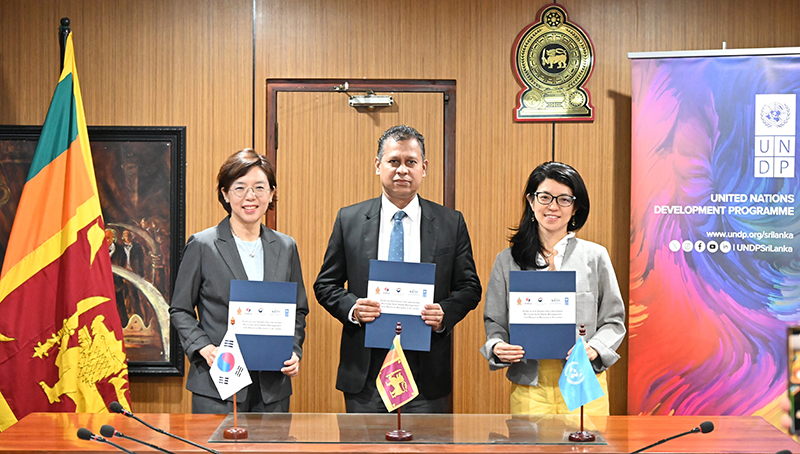
With support from Ministry of Climate, Energy and Environment of the Republic of Korea, UNDP Sri Lanka advances low-carbon and inclusive waste management solutions
The Ministry of Climate, Energy and Environment, Republic of Korea, through the Korea Environmental Industry and Technology Institute (KEITI), will provide USD 4.7 million for a new initiative, entitled ‘Scale-up and Sustain the Low-Carbon Municipal Solid Waste Management and Resource Recovery in Sri Lanka’ which will be implemented by the United Nations Development Programme (UNDP) in Sri Lanka together with the Ministry of Public Administration, Provincial Councils and Local Government. The three-year project will promote sustainable, low-carbon and locally appropriate solutions to transform municipal solid waste management in two selected Local Authorities within the Central and Sabaragamuwa provinces.
A symbolic signing ceremony took place yesterday with the participation of S. Aloka Bandara, Secretary to the Ministry of Public Administration, Provincial Councils & Local Government; Miyon LEE, Ambassador of the Republic of Korea to Sri Lanka; and Azusa Kubota, Resident Representative, UNDP in Sri Lanka, along with representatives from the partner organisations.
Sri Lanka generates more than 10,000 tons of municipal solid waste daily, of which only half is collected, and a small fraction is properly treated. The remainder is commonly dumped or burned in open sites, creating significant environmental, health and social risks. Previous interventions faced persistent challenges, including mismatched technologies, financial and institutional constraints and limited community participation. In addition, the waste sector is often among the sectors most severely impacted by climate change and natural disasters, as witnessed during the recent Ditwah cyclone and floods, which severely overwhelmed the existing capacities of local authorities and exposed vulnerable communities engaged in waste management activities.
Highlighting the importance of advancing sustainable waste management, S. Alokabandara, Secretary, Ministry of Public Administration, Provincial Councils and Local Government, said, “Strengthening municipal solid waste management is a national priority, and this project marks a significant step forward. By working closely with UNDP and our partners, we are translating policy into action, building systems that are locally grounded, environmentally responsible, and capable of delivering long-term benefits to our communities. This initiative is a vital investment in public health, environmental protection and the resilience of future generations”.
This new project seeks to address these barriers by strengthening decentralised waste management systems within the jurisdiction of local authorities, thus avoiding the logistical and social difficulties, as well as the higher costs, associated with cross-boundary waste transport. UNDP Sri Lanka will lead implementation in close collaboration with the Government of Sri Lanka at provincial and local levels, together with the Ministry of Public Administration, Provincial Councils and Local Government, local authorities, private sector partners and Korean technical agencies.
Addressing Korea’s keen interest in assisting Sri Lanka for sustainable development and climate change initiatives, Miyon Lee, the Ambassador of the Republic of Korea, welcomed the launch of this project and wished its successful implementation. She reaffirmed Korea’s commitment to sharing its advanced technology, experience and resources with Sri Lanka in building an effective solid waste management system that will accommodate sustainable solutions across four provinces in the country.
Emphasising the need for integrated and inclusive solutions to Sri Lanka’s waste challenges, Azusa Kubota, Resident Representative, UNDP in Sri Lanka, noted, “This project comes at a critical time for Sri Lanka. With KEITI’s support, we are investing in solutions that are not only environmentally sound, climate-proofed and disaster-resilient but also economically viable and socially inclusive. Our objective is to support communities to manage waste more effectively, reduce greenhouse gas emissions and create green jobs, while strengthening the resilience of local systems and institutions.”
Adding to this, Rhyunmin Park, (Environment Adviser), UNDP Bangkok Regional Hub, also expressed his commitment to collaborating through this project to lay the foundations for sustainable waste management across the Asia-Pacific region.
Strategic waste management plans will be developed in four provinces, namely, the Northwestern, Central, Sabaragamuwa and Southern provinces, while comprehensive demonstration projects will be implemented in the Gampola and Balangoda Urban Councils. In Gampola, an anaerobic digestion plant and pyrolysis technology will be introduced, targeting a reduction of 168,630 metric tons of carbon dioxide equivalent emissions over 10 years, while vermicomposting and pyrolysis will be applied in Balangoda, with an expected reduction of 100,740 metric tons.
Further highlighting the priority of the Government of Korea’s support in this area, Ms. Eunhae Jung, Director General for International Cooperation Bureau, Ministry of Climate, Energy and Environment, Republic of Korea, stated, “This project with UNDP Sri Lanka demonstrates our commitment to advancing global climate action through practical and scalable solutions. Beyond emission reductions, it is meaningful as it empowers local governments and communities to take the lead in sustainable waste management. By sharing our expertise and innovative technologies, we hope the progress made here will serve as a model for other countries.”
Beyond infrastructure, the initiative will foster behavioural change and innovation. It will promote waste minimisation through ‘refuse, reduce and reuse’ practices, improve segregation at source, and pilot smart waste collection systems using digital applications. Knowledge-sharing and capacity development will be central to ensuring that the interventions are replicable and scalable.
The project is structured around four key components: strengthening policy and institutional frameworks; demonstrating best-fit waste management technologies; developing green financing models and public-private partnerships; and establishing robust monitoring and evaluation systems. Gender-responsive approaches will be integrated throughout, ensuring women’s meaningful participation in decision-making and addressing the disproportionate burdens they face in waste-related labour.
This initiative represents a significant step towards achieving Sri Lanka’s climate commitments under the Paris Agreement, including its five waste sector Nationally Determined Contributions (NDCs). By reducing emissions, enhancing resource recovery and fostering inclusive green growth, the project will contribute directly to the country’s progress towards multiple Sustainable Development Goals, including good health and well-being, sustainable cities and communities, climate action and decent work and economic growth.
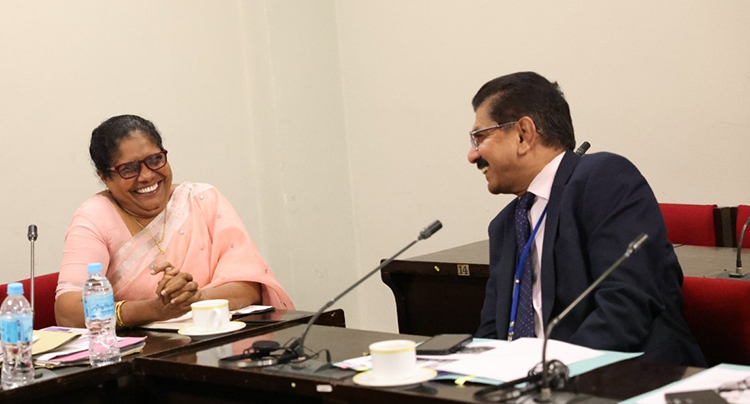
NATA to be given more powers
The Parliamentary Sectoral Oversight Committee on Health, Mass Media and Women’s Empowerment has agreed in principle to ban single-stick sales of cigarettes and increase taxes on tobacco products, according to parliamentary sources.
The decision was reached during an institutional review of the National Authority on Tobacco and Alcohol (NATA) held recently in Parliament. The meeting was chaired by MP Dr. Nihal Abeysinghe.
During the review, NATA officials informed the committee that approximately 22,000 deaths occurred annually in Sri Lanka due to tobacco and alcohol consumption. They said the country suffered an economic loss of between Rs. 225 billion and Rs. 240 billion each year due to the consumption of tobacco products and alcohol.
Officials told the committee that steps were underway to amend the National Authority on Tobacco and Alcohol Act to grant it more powers.
Noting that 104 countries had already banned the sale of loose cigarettes, the underscored the need for Sri Lanka to adopt a similar policy. When loose cigarettes were sold, mandatory health warnings on cigarette packets were not visible to consumers, the NATA officials said.
The committee was also briefed on the importance of imposing taxes on cigarettes after determining their retail prices, as part of broader measures aimed at reducing tobacco consumption.
Commenting on the matter, Dr. Abeysinghe said the committee was prepared to extend its full support for the proposed amendments to the Act, as well as for other programmes and initiatives undertaken by the National Authority on Tobacco and Alcohol.
Deputy Chair of the Committees Hemali Weerasekara, committee members MPs Dayasiri Jayasekara, Muneer Mulaffer, Samanmali Gunasinghe, Prof Sena Nanayakkara, Dr S. Sri Bhavanandarajah, Dr Ramanathan Archchuna and with the permission of the Chair, MPs Dr. Janaka Senarathna and Dr Pathmanathan Sathiyalingam were present at the committee meeting.

India’s rise in manufacturing sector seen as holding out possibilities for SL

Govt. provoking TUs

Montana National Guard and Lanka advance a targeted, partnership-driven approach to recovery and resilience

Korea, UNDP launch $4.7 M Waste Management & Climate Resilience project

Arpico NextGen Mattress gains recognition for innovation

Advice Lab unveils new 13,000+ sqft office, marking major expansion in financial services BPO to Australia

‘Dates have the highest sugar content to fight Coronavirus’

Sunday Island 27 December – Headlines

#SundayIsland 17th December – Headlines

Sunday Island – 28th March

Sunday Island Headlines – 21 March

Sunday Island – 21st February – Headlines
-
 Business5 days ago
ComBank, UnionPay launch SplendorPlus Card for travelers to China
-
 Business6 days ago
ComBank advances ForwardTogether agenda with event on sustainable business transformation
-
 Opinion6 days ago
Conference “Microfinance and Credit Regulatory Authority Bill: Neither Here, Nor There”
-
 Business2 days ago
Climate risks, poverty, and recovery financing in focus at CEPA policy panel
-
 Opinion1 day ago
Sri Lanka, the Stars,and statesmen
-

 Opinion5 days ago
Luck knocks at your door every day
-
 News6 days ago
Rising climate risks and poverty in focus at CEPA policy panel tomorrow at Open University
-

 Business2 days ago
Bourse positively impacted by CBSL policy rate stance