
Business
Lessons for Colombo from Manila, Bangkok and Hong Kong

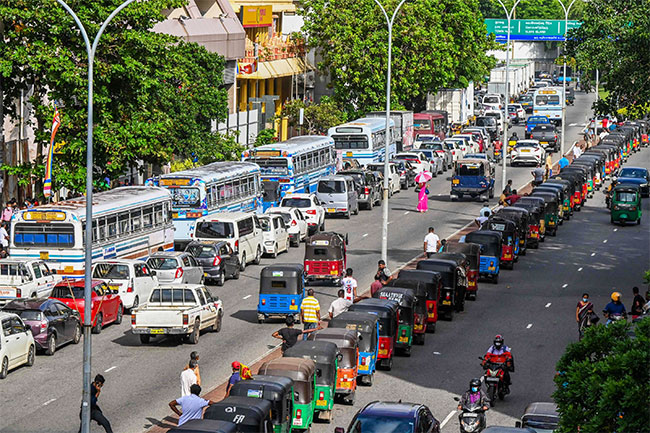
Troubled Transportation:
IPS Policy Insights
One of the most critical implications of Sri Lanka’s current economic crisis is the hard hit on the transport sector. The foreign exchange shortage has made importing fuel a major challenge, severely affecting road transportation and further impeding the performance of an already crippled economy. This Policy Insight gives context to the ongoing transportation issues in Sri Lanka and offers medium- and long-term solutions to address the issues, based on lessons learnt from the experiences of Manila, Bangkok and Hong Kong.
Poor Public Transportation
The transportation sector in Sri Lanka absorbs a fair share of petroleum imports to the country and has a very low price elasticity. Despite the many price hikes in 2021, the Ceylon Petroleum Corporation (CPC) sold a total of 3.6 billion litres of petroleum products to the transport sector, which was higher than the average of 3.4 billion litres sold from 2015 onwards. This trend of high demand continues even during the historically high petroleum product price in 2022.
A key reason for this consistently high demand for fuel, particularly in commercial capital of Colombo, is the combination of the overreliance on private transportation and the weak public transportation system. The decline in the public transport sector amidst the above-mentioned consistent high demand for petroleum products in 2021 reflects the inadequate contribution of public transportation towards the transport sector in Sri Lanka. When the demand for petroleum products in 2021 was above the previous period’s average, the operated kilometrage and passenger kilometrage of the public operator Sri Lanka Transport Board (SLTB) declined by 19.7 per cent and 28.4 per cent, respectively, while the corresponding contractions in the private transport sector were 4.4 per cent and 2.2 per cent, respectively. Some part of the decline in public transportation in 2021 can be attributed to COVID-19 related social distancing requirements in travelling. As such, amidst the severe financial crisis with the lack of capacity to import fuel in a timely manner and rising fuel prices due to global and exchange rate pressures, the key solutions to the transportation problem lie in improving the public transportation sector and exploring alternative means of transportation.
Grand Policies and Plans
Sri Lanka has undergone various planning and policy contexts in relation to public transportation. During the 2010-2015 period and its The Emerging Wonder of Asia development framework, the transport sector buzzwords included Bus Rapid Transit (BRT), Light Rail Transit (LRT) and Mass Rapid Transit (MRT). During the 2015-2019 period and its Western Region Megapolis Master Plan, the hype included the Rapid Transit System (RTS), the bus system, the rail system, the road system and the already heard LRT. In the most recent Vistas of Prosperity and Splendour framework, the lingo was peppered with a ‘park and ride’ system, metro rail system, radial and circular road system and the now familiar LRT. Despite varied packaging to cater to the administration’s approach, most of these public transportation-related efforts during the last decade were broadly connected to the National Physical Plan (NPP).
LRT Drama
All previous policy frameworks have recognised the importance of developing an LRT system to ease congestion in transport and commuting but several reasons delayed its implementation. The approval from the Central Environment Authority (CEA) for the LRT was received at the latter part of 2018. There were delays in drafting a framework to regulate the LRT system. Subsequent to fulfilling these, in 2019, the Japan International Cooperation Agency (JICA) expressed willingness to provide a soft loan of USD 1.85 billion out of the total estimated investment of USD 2.2 billion for a LRT connecting Malabe and Fort. This included a 12-year grace period, 40-year payback period, and yen interest rate of 0.1 per cent. By June 2020, Sri Lanka has already signed the agreement with JICA for a loan tranche of USD 270 million, preliminary work had begun, and a contract was signed with a project consultancy firm for USD 130 million. However, in 2020, the project was abruptly halted, the agreement with JICA was reversed and steps were made to seek new proposals from private investors under a Public-Private Partnership (PPP) arrangement.
The ever familiar – yet illusive LRT came to the forefront once again in 2022 when Sri Lanka attempted to woo Japan to extend support during the ongoing economic crisis. Sri Lanka has written to the Japanese Prime Minister requesting financial support while extending “deep regret in scrapping the LRT” project in 2020. Still, it is unclear why the soft loan from Japan was rejected in favour of a PPP and to date, public transportation in Sri Lanka is at an incipient level. When Sri Lanka returns to a position to consider such investments, there should be no room for further policy or planning mistakes or back paddling.
Lessons for Colombo
There are several lessons to be learnt based on the experiences of Metro Manila, Bangkok and Hong Kong which are case studies that Sri Lanka’s transport sector can refer to in its efforts to develop public transportation.
Metro Manila’s experience demonstrates the importance of creating a master plan and sticking to it. One such approach is legalising the transportation plan. This would make it more difficult for a project to be postponed or disbanded when governments change. Another option is to garner support from the government, opposition and the public. If the public supports the initiative, the prospective government or the opposition, has a greater incentive to complete it.
Bangkok’s experience shows how successfully managed PPPs have assisted the development of infrastructure projects without burdening the government. In the case of the Bangkok Mass Transit System (BTS) Sky Train, the government did not provide any funding and as a result, does not face any risk associated with the operation of the light rail. A private company providing 100% of the funding and taking the aggregate risk for a project may be extreme in the Sri Lankan context. But it demonstrates that Sri Lanka can be on the lookout for a private company to finance and potentially fund part of a public transportation project.
Similarly, Hong Kong demonstrates how a private company can successfully run a mass transit system and profit by investing in its train stations and developing rental space. This success was mainly hinged upon Mass Transit Railway (MTR)’s capacity to develop the land and receive the rental income and the conducive environment in Hong Kong to do so. As such, incorporating rental space into transportation investments in Sri Lanka could pave the path for future investments in public transportation to become profitable.
However, a PPP should not be considered a “silver bullet” for Sri Lanka’s public transportation issues. Bangkok’s experience showed that projects developed on a piecemeal basis lack integration and become less efficient. As a result, Bangkok’s Purple Line stops 1 kilometre away from the blue line at a different station. If Sri Lanka is to pursue PPPs for public transportation, an integrated approach where a transportation system is considered as a whole instead of a collection of independent projects in critical.
This Policy Insight is based on the new IPS publication ‘Towards a Developed Urban Transportation System: Lessons for Sri Lanka’ by Bilesha Weeraratne and Chathurga Karunanayake. The complete report can be purchased from the Publications Unit of the IPS located at 100/20, Independence Avenue, Colombo 07 and leading bookshops island wide. For more information, contact 011-2143107 / 077-3737717 or email: publications@ips.lk.
To download more POLICY INSIGHTS from IPS, visit: https://www.ips.lk/publications/policy-insights.

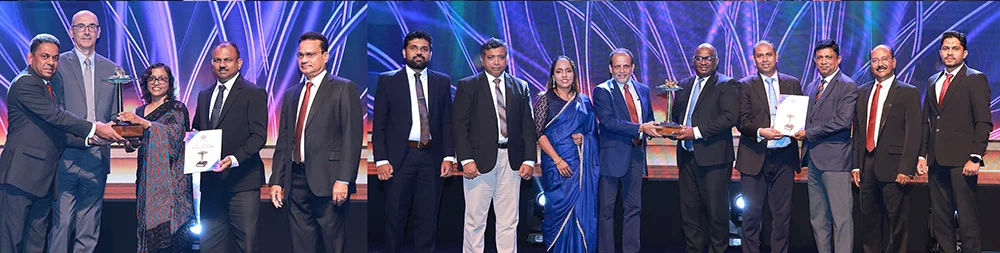
Corporate accolades underscore the alignment between its operational excellence and national development
In an era where national competitiveness is intrinsically tied to digital connectivity, strengthening the country’s digital backbone has become an urgent priority. Within this context, the evolving role of Sri Lanka’s leading telecommunications provider, SLT-MOBITEL, offers valuable insight into how technological infrastructure can underpin broader economic resilience.
Telecommunications and digital networks are foundational to economic transformation. By expanding high-speed broadband access, upgrading enterprise cloud capabilities, and bridging the urban-rural connectivity divide, SLT-MOBITEL helps reduce business transaction costs, streamline supply chains, and enable micro, small, and medium enterprises to reach global markets.
Recent corporate accolades further underscore this alignment between operational excellence and national development. SLT-MOBITEL’s triple triumph at the National Business Excellence Awards 2026 – winning in the Infrastructure and Utilities sector, Performance Management, and ICT Services categories – highlights its growing impact. Notably, the recognition of eChannelling’s contributions to digital healthcare reflects a broader strategic pivot toward integrated technology solutions.
“Institutional efficiency of this nature is critical for attracting foreign direct investment, as global partners increasingly assess a country’s digital maturity and systemic stability before committing capital,” noted industry observers.
Moreover, the company’s transition from a conventional telecom utility to a comprehensive digital solutions provider aligns seamlessly with Sri Lanka’s national digitalisation agenda. As the country pursues public sector modernisation, enhanced e-governance, and a competitive knowledge economy, the private sector must step up to deliver secure, scalable, and future-ready networks. Investments in data centres, cybersecurity frameworks, and advanced ICT infrastructure act as strategic buffers, ensuring that Sri Lanka’s economic apparatus remains agile and resilient amid future global uncertainties.
However, industry experts caution that while these achievements are commendable, SLT-MOBITEL still has a considerable distance to cover in fully enabling a truly digital economy.
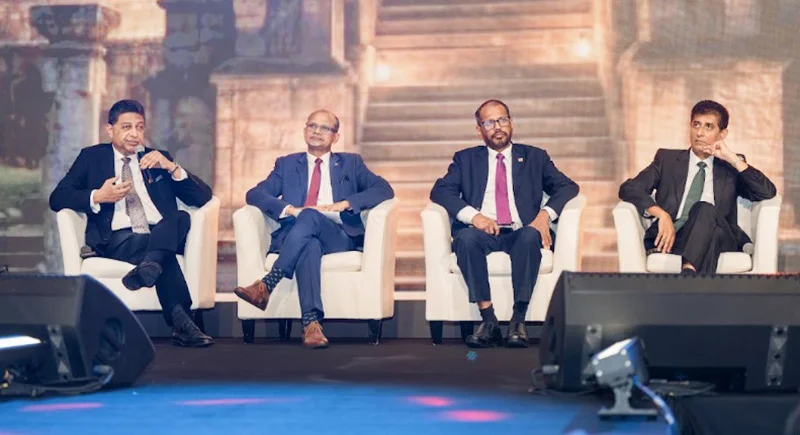
Port City Colombo (PCC) took a prominent role as Platinum Sponsor at the second edition of Sri Lanka Beyond Your Dreams, a high-level diplomatic and investment engagement hosted by the Consulate General of Sri Lanka in Dubai and the Northern Emirates. The event, held on 2nd September 2026 at the Hilton Dubai Al Habtoor City, brought together over 400 senior UAE-based business leaders, investors, diplomats, and institutional stakeholders, alongside Sri Lanka’s most senior government representatives.
The gathering was graced by Dr. Thani bin Ahmed Al Zeyoudi, UAE Minister of Foreign Trade, as Guest of Honour, and Vijitha Herath, Sri Lanka’s Minister of Foreign Affairs, Foreign Employment and Tourism. A high-level Sri Lankan delegation – including the Secretary to the Prime Minister, the Chairman of the Board of Investment, the Chairman of the Export Development Board, and the Director General of Commerce – underscored the government’s strong commitment to deepening economic diplomacy with the UAE.
In his keynote address, Minister Herath reaffirmed the centuries-old ties between Sri Lanka and the Arab region, emphasising the UAE’s vital role as a key economic partner. He stressed the urgency of finalising a Comprehensive Economic Partnership Agreement (CEPA) with the UAE, which would establish a robust framework to elevate trade, investment, and bilateral cooperation. Declaring Sri Lanka “open and ready for business,” he positioned Port City Colombo as the physical embodiment of this economic mission – a modern Special Economic Zone (SEZ) with a dedicated legal framework and competitive incentives, offering UAE investors a natural gateway to South Asia while maintaining strong Gulf connectivity.
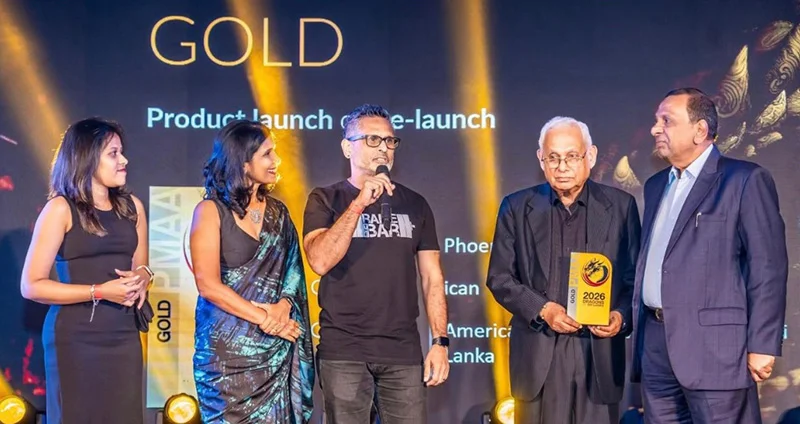
American Premium Water has secured four wins at Dragons of Sri Lanka Awards 2026, including three Gold Dragons and one Black Dragon, marking a significant milestone for the brand following its relaunch last year.
Part of the prestigious Dragons of Asia awards, Dragons of Sri Lanka brings the program’s regional platform to the local market, celebrating creative and effective marketing communications, with entries evaluated on strategic thinking, creativity, execution and impact. Established in 2000, Dragons of Asia is one of Asia’s premier results-driven marketing awards programs.
For American Premium Water, the achievements are particularly significant given that the company’s debut at the Dragons awards has resulted in four Dragons across four categories. In the distinction of Gold Dragons, American Premium Water was recognized across three categories including Product Launch or Re Launch, Cause, Environment or Sustainability and Creative Excellence while the Black Dragon was awarded in recognition of Small Budget.
Competing alongside leading brands and agencies in Sri Lanka, American Premium Water’s four wins demonstrate the strength and effectiveness of its recent work. Winning three Gold Dragons across three distinct categories highlights the breadth of the brand’s achievements, while the Black Dragon for Small Budget further emphasizes its ability to create meaningful impact through focused and efficient investment.

Trump says every adult American will get $5,000 if Republicans win midterms

Protesters mistake Pakistan’s U-19 team for asylum seekers in Portsmouth

Steps are being taken to provide accommodation facilities for 16,000 university students – Prime Minister

Showers will occur in the Western and Sabaragamuwa provinces and in Kandy, Nuwara-Eliya, Galle and Matara districts.


Sri Lanka reiterates its territory won’t be used against India

‘Dates have the highest sugar content to fight Coronavirus’

Sunday Island 27 December – Headlines

#SundayIsland 17th December – Headlines

Sunday Island – 28th March

Sunday Island Headlines – 21 March

Sunday Island – 21st February – Headlines
-

 News6 days ago
Namal remanded until Sept. 18 over Airbus deal investigation
-

 Latest News5 days ago
Tharanga creates history with Diamond League crown in Brussels
-

 News5 days ago
Dispute which triggered listed company director being detained at BIA resolved
-

 Features4 days ago
After the parade: What a traffic OIC’s walk-out tells us
-
 Opinion7 days ago
In Memory of Dr Upatissa Pethiyagoda
-

 Editorial6 days ago
Power vs Equality
-
Editorial4 days ago
Arrests as theatre
-

 Latest News6 days ago
SLPP MP Namal Rajapaksa arrested by CIABOC