
Sports
Sri Lankan fans to turn up in yellow to thank Aussies


by Rex Clementine
Gold has always been an expensive commodity. These days with a hand to mouth existence many Sri Lankans can’t afford it whatsoever. So they seem to settle for yellow, the closest thing to gold. Australia’s team colours are gold and green. As an appreciation for the Australian cricket team for touring Sri Lanka, spectators are going to turn up at RPS in numbers today wearing yellow shirts. An appeal was launched to all cricket fans through social media yesterday and Sri Lankans agreed in unison. For a change they will be keeping their navy blues at home.
Australia’s tour of Sri Lanka was hanging in balance after political uncertainty and the economic crisis. To make matters worse, the May 9 attack on peaceful protesters at the Gotagogama happened a mere three weeks before the tourists landed in Colombo. The team hotel was just a stone’s throw away from where people were attacked. Many suspected that Australia will at least ask Sri Lanka Cricket to shift games from Colombo. But to their credit, the Aussies decided to stick to the original schedule. The Australian High Commission in Colombo too has played a major role in ensuring that their team toured the island and the five time World Champions have been welcomed warmly. Today RPS is expected to put up a grand show knowing too well that Australia’s refusal to tour would have sent the country into cricketing isolation.
The Sri Lankan camp will leave out Dushmantha Chameera, who has a swollen ankle. The quick didn’t play the fourth game as well, but MRI scans showed no fracture. The team will not take any chances with their fastest bowler with the World Cup around the corner. With the series already won, there’s no point in risking Wanindu Hasaranga as well. The leg-spinner missed a few games with a groin strain but played the series clinching fourth ODI and could be left out from today’s game too.
The tourists have been hampered by several injuries and the latest casualty is middle order batsman Travis Head, who has a hamstring problem. Australia will be looking for a consolation win today having suffered their first ever five match series defeat to Sri Lanka.
Sri Lanka’s Head Coach Chris Silverwood is a happy man indeed. Five months ago, he was going through the Ashes campaign down under and lost his job after England surrendered the Ashes. That was in January this year. In June, his new international team Sri Lanka have completely outplayed the Aussies.
“I had a rough winter in Australia. They are a very tough team to beat in their backyard. Winning here was satisfying. But more important is the progress we have made. The run chase that day was great. The way we have handled the pressure is superb and we have forced results in our favour. The good thing is that we are no where near the potential that we have and we can do much better,” the former Yorkshire fast bowler told journalists yesterday.
Silverwood felt that the series win will give his side confidence lead up to the two match Test series that gets underway next week in Galle.
“It will give the guys confidence moving forward for the Test series. The guys who play all formats will have an idea as to what kind of challenge they can accept from the opposition. We know the Aussies would come hard at us. Its going to be an exciting series,” said Silverwood.

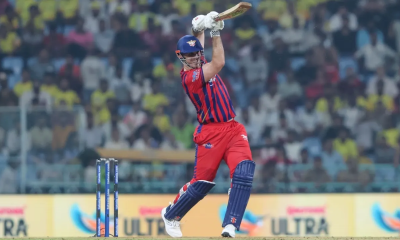




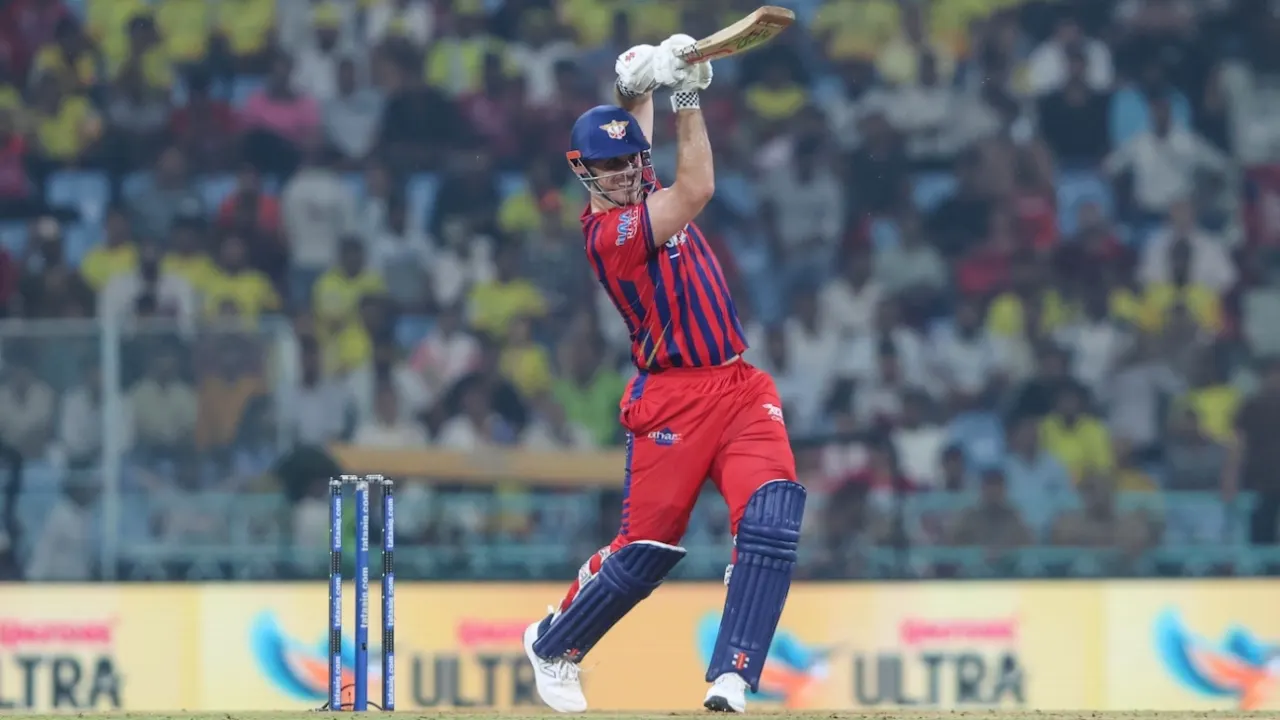
Mitchell Marsh’s boundary-laden 90 off 38 balls dented Chennai Super Kings’ playoffs chances and gave the Lucknow crowd something to cheer about. Chennai Super Kings (CSK) dropped from fifth to sixth after the result, with Rajasthan Royals (RR) leapfrogging them on net run-rate.
In pursuit of 188 on a tricky surface, Marsh flew out of the blocks, smashing 56 of the 86 runs Lucknow Super Giants (LSG) had hit in the powerplay. At the halfway mark of the game, ESPNcricinfo’s forecaster had pegged LSG’s win probability at 39.49%. It zoomed up to 91.24% after Marsh’s unfettered powerplay assault. Marsh fell ten short of a century, but Nicholas Pooran increased the count to 100% and sealed LSG’s fourth win this season.
They won by seven wickets with 20 balls to spare, but it still wasn’t enough to drag them up from the foot of the points table.
Akash Singh emerged from the sidelines for his first game of the season and produced career-best IPL figures of 4-0-26-3, against his former team. While Mohammed Shami explored the full length and conceded three fours to Sanju Samson in the first over, Akash banged it away on a hard length on a bouncy, red-soil Ekana pitch. He cramped all of Ruturaj Gaikwad, Samson and Urvil Patel and celebrated every wicket by pulling out a note from his pocket, which read: “#Akki on fire – Akash knows how to take wickets in a T20 game”
Only four of Akash’s 18 balls in the powerplay were fuller than a good length, according to ESPNcricinfo’s logs. His impeccable lengths were central to LSG restricting CSK to 37 for 2 in six overs. Akash bowled four overs on the trot and proved his point.
CSK’s 36 for 2 became 52 for 3 when Urvil holed out, but rookie Kartik Sharma repaired the innings along with Dewald Brevis, who contributed 25 off 16 balls. When left-arm fingerspinner Shahbaz Ahmed dragged one marginally short, Kartik picked up the length in a flash and swatted a six over midwicket in the ninth over. While Kartik’s back-foot play was Ambati Rayudu-esque, some of his front-foot shots and off-side range were reminiscent of Samson.
All told, Kartik took Shahbaz for 30 off 15 balls before the spinner had him caught at long-on in the 16th over. Kartik showed that he could also cut it against extreme pace as well when he backed away against Mayank Yadav and scythed a 144kph delivery to the right of point for four.
Kartik reached his half-century off 35 balls and hushed Ekana with his finger-on-the-lip celebration. When he was looking good for more, he fell for 71 off 42 balls.
Shivam Dube managed just one boundary off his first 11 balls, but went 6,4,4,6 off his last four balls to finish with an unbeaten 32 off 16 balls. Prashant Veer made a more sedate 13 not out off ten balls. With LSG incurring a penalty for slow over rate in the last over of the innings – they had just four men outside the circle – Prince Yadav cracked under pressure and leaked 23 runs.
Marsh set the tempo for the chase when he walked down the track to Mukesh Choudhary and picked him for four. Mukesh ended up conceding 15 runs in his first over and was taken out of the attack.
At the start of the third over, Marsh charged at Anshul Kamboj, manufactured swinging room and cracked him through the covers. It threw Kamboj off his signature hard length and he kept digging it shorter without having enough pace to trouble Marsh. In the penultimate over of the powerplay, Marsh lined Kamboj up for four sixes and a four. Marsh didn’t spare his Australia compatriot Spencer Johnson, who was on CSK debut, either, bashing him for three fours and a six in the sixth over.
In the absence of Jamie Overton, whose IPL has been cut short by injury, CSK lacked a middle-overs enforcer. They tried Gurjapneet Singh, but Marsh advanced at him too and launched him over the covers. Josh Inglis was just content to ride in Marsh’s slipstream.
Soon after Johnson knocked Abdul Samad over for seven off three balls, but Pooran rushed LSG home with four successive sixes off Kamboj, leaving CSK’s best bowler this season nursing figures of 2.4-0-63-0.
Brief scores:
Lucknow Super Giants 188 for 3 in 16.4 overs (Mitchell Marsh 90, Josh Inglis 36, Nicholas Pooran 32*, Mukul Choudhary 13*; Mukesh Choudhary 1-24, Spencer Johnson 1-39) beat Chennai Super Kings 187 for 5 in 20 overs (Sanju Samson 20, Rutraj Gaikwad 13, Kartik Sharma 71, Dewald Brevis 25, Shivam Dube 32*, Prashant Veer 13*; Mohammed Shami 1-41, Akash Singh 3-26, Shahbaz Ahmed 1-45) by seven wickets
[Cricinfo]

The ICC has suspended funding to Cricket Canada over governance-related issues. Cricket Canada was informed earlier this week by the global governing body and faces a freeze in the funding it receives for the next six months.
ESPNcricinfo understands the funding suspension will not impact any cricket activities, including high performance programmes. But it will be a significant blow to Cricket Canada, who, as an Associate Member, rely heavily on ICC distributions. Its financial statement for the year-ending 2024 showed that income from the ICC made up 63% of the board’s total income (CAD$3.6 million out of a total revenue of CAD$5.7 million).
The details around the governance failures are not yet known, though the fifth estate in Canada, an investigative documentary programme, has reported “breaches of ICC policies, including concerns over Cricket Canada’s governance and lack of financial oversight.”
Cricket Canada has gone through a period of turmoil on and off the field recently. Canada’s match against New Zealand at the recent T20 World Cup is the subject of a probe by the ICC’s anti-corruption and integrity unit.
Another ACU investigation is underway, stemming from a recording of a telephone call involving then Canada coach Khuram Chohan, in which he claimed that senior (now former) Cricket Canada board members put pressure on him to select certain players to the national side. The audio was leaked last year and also contains claims of attempts to corrupt matches.
Last month, in a statement to ESPNcricinfo on the corruption investigation, Andrew Ephgrave, the ICC’s interim anti-integrity unit head had said: “Governance matters in relation to ICC Members are considered by the ICC, where they fall under its jurisdiction, in accordance with the ICC’s standard constitutional processes.”
Cricket Canada has also faced administrative challenges over the last year, most notably in the appointment and subsequent removal of former CEO Salman Khan. His appointment had attracted ICC attention, for failing to disclose prior criminal charges and he has been charged with theft and fraud by Calgary Police. Salman has denied the claims. In April, Arvinder Khosa was made the interim board president, replacing Amjad Bajwa.
The ICC’s funding decision came immediately after Cricket Canada’s annual general meeting last weekend (May 9-10), in which the board announced reforms it said were part of its “ongoing governance transformation initiative”. It also elected a new nine-person board of directors, with Khosa elected president, after his interim stint.
The ICC did not comment on the development and ESPNcricinfo has approached Cricket Canada for comment. In a statement to the fifth estate, the board’s media manager Jimmy Sharma said: “The current Board has inherited these issues and is fully committed to resolving all governance, compliance, and financial control deficiencies.”
[Cricinfo]

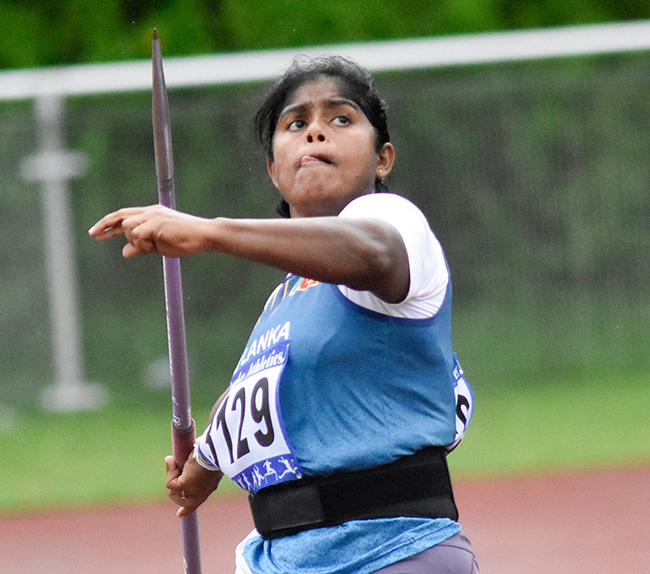
National thrower Dilhani Lekamge produced her season’s best performance to emerge victorious in the women’s javelin event on day two of the Selection Trial held at Diyagama on Friday.
Fresh from winning the silver medal at the recently concluded Asian Throwing Championships in Mokpo, Lekamge delivered an impressive throw of 58.57 metres to comfortably secure first place. Her nearest challenger, D.H. Maduwanthi, could only manage a distance of 51.32 metres.
Meanwhile, reigning national champion Madushani Herath continued to stamp her authority in the horizontal jumps with another notable performance, clearing 6.18 metres. Competing in the Under-23 age category, Herath further strengthened her position as the country’s leading long jumper.
In the open women’s long jump event, which featured several junior athletes, G.S. Ranaweera emerged victorious with a leap of 5.83 metres.
The women’s 400 metres final saw experienced sprinter Nadeesha Ramanayake being pipped to second place by G.A. Sathsarani, who clocked an impressive winning time of 53.71 seconds.
In the men’s events, Y.W. Kumara claimed the triple jump title with a leap of 16.28 metres, while Janindu Lakvijaya won the 110 metres hurdles in a time of 14.25 seconds, adding further excitement to an eventful second day of competition at Diyagama. (RF)

Marsh onslaught, Akash three-for dent Chennai Super King’s playoffs chances

ICC suspends funding to Cricket Canada over governance-related issues

Showers will occur at times in the Western, Sabaragamuwa, Central, North-western and Northern provinces and in Anuradhapura, Galle and Matara districts

Lanka’s eligibility to draw next IMF tranche of USD 700 mn hinges on ‘restoration of cost-recovery pricing for electricity and fuel’

Sanath Nishantha’s brother sentenced to jail over assault case

SJB sees govt. hand in allowing unlawful take over of Malwana property by student activists

‘Dates have the highest sugar content to fight Coronavirus’

Sunday Island 27 December – Headlines

#SundayIsland 17th December – Headlines

Sunday Island – 28th March

Sunday Island Headlines – 21 March

Sunday Island – 21st February – Headlines
-

 News6 days ago
Lanka Port City officials to meet investors in Dubai
-
 News3 days ago
Ex-SriLankan CEO’s death: Controversy surrounds execution of bail bond
-
 Features4 days ago
When University systems fail:Supreme Court’s landmark intervention in sexual harassment case
-
Features4 days ago
High Stakes in Pursuing corruption cases
-

 Midweek Review3 days ago
A victory that can never be forgotten
-
 Features6 days ago
Serving as MR’s Deputy Finance Minister and the travel the job entailed
-
 Features6 days ago
Bengal Turns BJP, Didi Falls
-
 News5 days ago
150th anniversary celebrations of Ave Maria Convent, Negombo