
Midweek Review
Economic meltdown

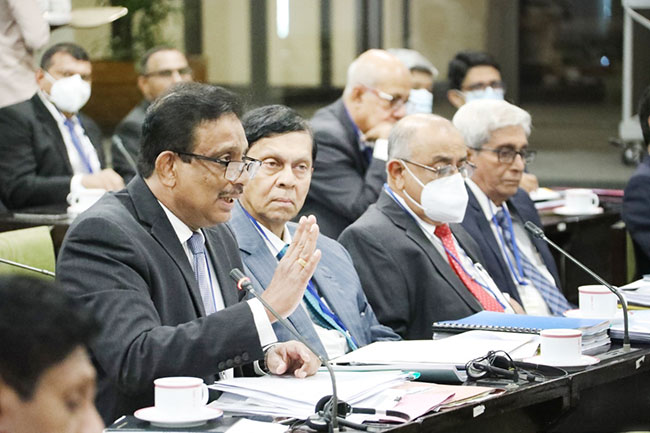
House watchdog committees ascertain culpability of FM, Monetary Board
By Shamindra Ferdinando
The Committee on Public Finance (COPF), inquiring into financial meltdown recently, called several former and serving officials to ascertain their culpability as well as that of the institutions they served for the developing crisis.
Among them were former Governors of the Central Bank Prof. W.D. Lakshman (Dec 2019- Sept 2021), and Ajith Nivard Cabraal (Sept 2021-March 2022), Secretary to the President Dr. P.B. Jayasundera (Nov 2019-Dec 2021) and Treasury Secretary S.R. Attygalle (Nov 2019-April 2022), Sanjeeva Jayawardena P.C. (received appointment as a member of the Monetary Board in Feb 2020) and Dr. Ranee Jayamaha (the retired CB Deputy Governor received appointment to the Monetary Board in June 2020). It would be pertinent to mention that Attygalle earlier served a short stint as the Treasury Secretary (Ministry of Finance) between Oct. 31, 2018 and Dec. 18, 2018 during the constitutional coup staged by ex-President Maithripala Sirisena.
 The term of office of an appointed member of the Monetary Board is six years and in the event of vacation of office by the appointed member, another person shall be appointed in his or her place to hold the office during the unexpired part of the term of office.
The COPF meeting took place on June 08. Dissident SLPP lawmaker Anura Priyadarshana Yapa chaired the meeting. CBSL Governor Dr. Nandalal Weerasinghe and Finance Secretary Mahinda Siriwardana, too, were present.
Attygalle didn’t mince his words when he squarely blamed the then Prime Minister Mahinda Rajapaksa, who also served as the Finance Minister (Nov 2019 to July 2021) for the controversial fiscal policy that had ruined the country. Attygalle declared that the government implemented the first Cabinet paper, dated Dec 04, 2019 presented by Premier Mahinda Rajapaksa.
The former Treasury Secretary, who also served in the Monetary Board till April this year, challenged the widely held view that abolition of a range of taxes, in line with Mahinda Rajapaksa’s fiscal policies, triggered the crisis. Attygalle asserted that the import restrictions, especially the ban on the importation of vehicles imposed at the onset of the Covid-19 eruption, and the economic contraction, resulted in the meltdown.
The COPF should seek an explanation from Attygalle, himself a former top Central Banker, having last served there as Deputy Governor, regarding the failure on the part of the Finance Ministry and the Monetary Board to review the decision to abolish taxes soon after the Covid-19 eruption. The Finance Ministry banned vehicle imports in March 2020 as part of the overall measures to manage the weak foreign currency reserves. Therefore, the Finance Ministry and the Monetary Board cannot absolve themselves of the blame for failing to take remedial measures.
The COPF specifically asked whether the Finance Ministry and the Monetary Board officials sought to advise the political leadership of the ground realities against taking such decisions. It emerged that they did nothing. The COPF proceedings revealed that in spite of a rapidly deteriorating financial situation, the Finance Ministry and Monetary Board mandarins failed to take remedial measures. The SLPP members in the COPF, too, should not forget that the change of tax policies had been in line with their 2019 presidential election manifesto ‘Vistas of Prosperity and Splendour’.
A disastrous manifesto
The SLPP made the following proposals:
a- Income tax on productive enterprises will be reduced from 28 to 18 percent.
b- The Economic Service Charge (ESC) and Withholding Tax (WHT) will be scrapped;
c- A simple value added tax of eight percent will be introduced, replacing both the current VAT of 15 percent and the Nation Building Tax (NBT) of two percent;
d- PAYE tax will be scrapped and personal income tax will be subject to a ceiling of 15 percent;
e- A five-year moratorium will be granted on taxes payable by agriculturists and small and medium enterprises;
f- Various taxes that contribute to the inefficiency, irregularities, corruption and lack of transparency of the tax system will be abandoned. Instead a special tax will be introduced for different categories of goods and services;
g- Import tariff on goods competing with domestically produced substitutes will be raised;
h- A simple taxation system will be introduced to cover annual vehicle registrations and charges for relevant annual services, replacing the cumbersome systems that prevail now;
i- Various taxes imposed on religious institutions will be scrapped;
j- A zero VAT scheme will be adopted in the case of businesses providing services to Tourist hotels and tourists, if they purchase over 60% of the food, raw materials, cloths and other consumer items locally;
k- Service charges levied on telephones and Internet will be reduced by 50%;
l- Special promotional schemes will be implemented to encourage foreign investments;
m- A tax-free package will be introduced to promote investment in identified subject areas;
n- A clear and uncomplicated system of taxing will be in place with the use of internet facilities, special software and other technological services;
O- Information Technology (IT) services will be totally free from taxes (Zero Tax), considering said industry as a major force in the national manufacturing process;
p- All the Sri Lankans and Foreigners, who bring Foreign exchange to Sri Lanka through consultancy services, are exempt from income tax.”
Dr. Athulasiri Kumara Samarakoon, Soosaiappu Neavis Morais and Dr. Mahim Mendis in a FR petition filed in terms of Articles 17 and 126 of the Constitution listed the above-mentioned points, in that order, as one of the primary reasons for the current crisis. Among the respondents are Prof. W.D. Lakshman, Ajith Nivard Cabraal, Dr. P.B. Jaysundera and S.R. Atygalle.
All of them earlier appeared before the COPF where the incumbent Governor of the Central Bank Dr. Nandalal Weerasinghe emphasized that officials should never engage in politics and should recognize the difference between them and politicians. Dr. Weerasinghe asserted that officials were duty bound to inform politicians if the decisions taken by the latter were wrong. The outspoken CBSL Chief declared that politicians alone shouldn’t be held accountable for the consequences of such wrong decisions. What Dr. Weerasinghe obviously meant was those who served in key positions at that time, too, were responsible for the current crisis. Dr. Weerasinghe, who had been asked to succeed Ajith Nivard Cabraal, in March, after the former suddenly announced his retirement, told the COPF, the officials’ claim that they had been unaware of the economy was on a wrong path for two years leading to the meltdown was not acceptable. Dr. Weerasinghe also strongly questioned the claim that economic policies had been implemented only on decisions taken by the political leadership.
Lawmakers present participating in the proceedings declared that the political leadership and the officials ignored their concerns as regards the economy raised at different occasions.
Culprits identified
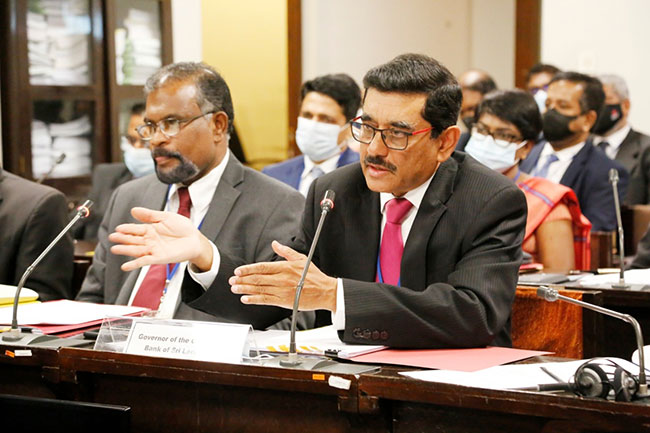 CBSL Governor Dr. Nandalal Weerasinghe before COPE on May 25, 2022. Finance Secretary Mahinda Siriwardana is on Dr. Weerasinghe’s right.
The COPF proceedings should be studied along with revelations made by Dr. Weerasinghe before the COPF and the COPE (Committee on Public Enterprises) on May 24 and May 25, respectively as well as lawmaker Ali Sabry’s shocking declaration on May 02 as regards the origins of the crisis. President’s Counsel Sabry discussed the issue in his capacity as the Finance Minister after having led the government delegation for talks with the IMF.
Appearing before the COPF, Dr. Weerasinghe disclosed that those who had been responsible for preparing budget estimates over the years deliberately deceived even the Parliament by providing unrealistic and inaccurate revenue estimates. The CB Governor explained how such practices further weakened the economy as decisions and allocations were made on the basis of fraudulent estimates.
The whole process had been nothing but a farce. Lawmaker Sabry on May 02 in a live interview with Swarnawahini, and Dr. Weerasinghe on May 25, named those responsible for the current crisis that has ruined the economy with unemployment at an unprecedented high. Sabry alleged that the Secretary to the Treasury, Governor of the Central Bank, and senior economic advisors to the President, misled the Cabinet as regards the economic situation. The National List member revealed how they repeatedly assured that the situation was well under control, in spite of difficulties while expressing confidence that issues could be successfully dealt with.
By the time the Central Bank floated the rupee in March this year even without bothering to inform the Cabinet-of-Ministers of its decision, irreparable damage had already been caused, Sabry said.
The COPF and COPE proceedings and MP Sabry’s interview in which he questioned the role of the Finance Minister have revealed the pathetic situation as regards public finance.
The MP has alleged that those who managed the national economy had prevented the country seeking IMF’s intervention well over a year back. Had President Gotabaya Rajapaksa and the Cabinet-of-Ministers received proper advice, Sri Lanka would not have been in the current predicament, Minister Sabry said.
Dr. Weerasinghe named those who refused to heed IMF warnings when he appeared before COPE on May 25. The role played by Mahinda Rajapaksa, Dr. P.B. Jayasundera and the Cabinet-of-Ministers were discussed during the proceedings with Finance Secretary Mahinda Siriwardana, too, helping to ascertain the environment in which the SLPP leadership operated.
Dr. Weerasinghe went to the extent of naming Dr. PBJ as the one who prevented the government seeking IMF’s intervention.
The Customs, Inland Revenue and the Excise Department responsible for revenue collection are run in a shoddy manner. In spite of the watchdog committees exposing glaring omissions and commissions by them that had caused revenue losses in billions of Rupees over the years, the political leadership hasn’t taken remedial measures. Committee reports paint an extremely bleak picture.
But what could be the most unforgivable sin is then Finance Minister Basil Rajapaksa joking about having himself used the illegal Havala/Undiyal system that completely shut down several billion dollars that should have legitimately come to Sri Lanka as in past years as remittances from our migratory workers, especially serving in West Asia. Even at the height of the COVID pandemic the country received about six to seven billion dollars from mainly those unappreciated poor Lankan workers slaving in those countries as mainly labourers and housemaids. Such money may not be enough to pay back the country’s USD 50 billion foreign debt. That money, however, would have ensured that the country had the few million dollars to clear a shipment of gas or other necessities, instead of having to beg all over the world.
Unfortunately, the Parliament seems incapable of taking corrective measures. The Parliament should explore the possibility of appointing, a smaller team, comprising members of COPE, COPF and the COPA (Committee on Public Accounts) to recommend remedial measures, including possible criminal prosecution of dual citizen Basil Rajapaksa for his many omissions and commissions, but especially for not applying the full weight of the law against those running the underground money transfer system, that has even robbed the education of our children.
Keeping the currency steady is the wish of any Finance Minister as otherwise in a country like Sri Lanka dependent on imports for many of its essentials, like milk food, wheat, etc., it would result in basics skyrocketing in price as experienced now and as former Finance Minister Ronnie de Mel also learnt it the hard way after allowing the rupee to devalue almost overnight by over 40 percent in the aftermath of opening up the economy to market forces after the victory of the UNP in 1977 with a staggering 4/5th majority in Parliament. It led to government workers staging a general strike demanding a Rs 10 wage increase, but was ruthlessly crushed by that regime.
A corrupt ministry
The Parliament needs to take tangible measures to restore public faith in the system. The Finance Ministry should be overhauled. Perhaps, the IMF, currently engaged in negotiations with the government, should look into the current system in place. The government can formulate an action plan on the basis of findings and recommendations made by the parliamentary watchdog committees. Perusal of proceedings of these committees reveals that the government hadn’t acted on their findings. The inordinate delay in taking action regarding the mysterious decision to reduce the duty on a kilo of white sugar from Rs 50 to 25 cents on Oct 13, 2020 without passing on its benefit to the people is a case in point as pointed out by the COPF Chairman Anura Priyadarshana Yapa, MP. It, however, cost the cash starved Treasury dearly in billions in lost revenue.
Mahinda Rajapaksa served as the Finance Minister at the time of the issuance of the relevant gazette notification. S.R. Attygalle had been the Finance Secretary. It would be pertinent to ask both MP Mahinda Rajapaksa and Attygalle who recommended the duty reduction.
Actually, the COPF should ask Attygalle to explain the circumstances leading to the issuance of that controversial gazette. As Dr. Weerasinghe pointed out recently the officials cannot absolve themselves of the responsibility for the highly questionable decisions taken by politicians.
Who benefited from the reduction of duty imposed on sugar? In fact, the parliamentary watchdog committees should undertake a comprehensive study. Perhaps, the Finance Ministry role in the Yugadanavi deal can be investigated. Sri Lanka finalized the Yugadanavi transaction with US based New Fortress Energy at midnight on Sept 17, 2021 against the backdrop of Basil Rajapaksa receiving the finance portfolio. The government also brought in retired controversial figure M.M.C. Ferdinando from Australia to assume the leadership at the CEB before making the final move. S.R. Attygalle played a critical role as the Secretary to the Finance Ministry. The SLPP had no qualms in going ahead with the agreement in spite of Vasudeva Nanayakkara, Wimal Weerawansa and Udaya Gammanpila challenging the transfer of 40 percent shares of the power station held by the Treasury among other concessions not fully revealed to the public.
The President’s Media Division (PMD) defended the agreement with the US energy firm. On the invitation of the then Presidential Spokesperson Kingsley Ratnayake, M.M.C. Ferdinando briefed the media of the usefulness of the US investment. It would be pertinent to mention that Ferdinando, who fled the country in the wake of Maithripala Sirisena’s triumph in 2015 returned from Australia after the change of government in Nov 2019. Ferdinando’s 2015, move should be examined against the backdrop of corruption accusations directed at him by civil society activists Rajith Keerthi Tennakoon and Attorney-at-Law Namal Rajapaksa. The lawyer lodged a complaint with the then anti-Corruption Committee Secretariat. There had also been a case in the Fort Magistrate Court regarding the import of coal for Lakvijaya coal-fired power plants at Norochcholai.
In spite of initial public interest, such major cases are often not pursued properly even by those initiating them possibly with ulterior motives. When The Island inquired, lawyer Namal Rajapaksa acknowledged not being aware of the developments of his own case. At the time of the Norochcholai project, Ferdinando had served as the Secretary to the Power Ministry. The unholy alliance between the Finance Ministry and monstrous institutions, such as the CEB, should be investigated and mechanism put in place to protect the public interest.
The controversy over President Gotabaya Rajapaksa’s alleged intervention on behalf of India’s Adani Group at PM Narendra Modi’s persistent request led to Ferdinando’s resignation recently. The disclosure made by Ferdinando at the COPE, his subsequent denial and a letter dated Nov 25, 2021 Ferdinando wrote to the then Treasury Secretary Attygalle exposing the horrific way business of the State is being conducted. Accountability and transparency seem to be the last thing in the minds of political leaders here.



In September 1939, as Europe descended once more into catastrophe, E. H. Carr published The Twenty Years’ Crisis. Twenty years had separated the two great wars—twenty years to reflect, to reconstruct, to restrain. Yet reflection proved fragile. Carr wrote with unsentimental clarity: once the enemy is crushed, the “thereafter” rarely arrives. The illusion that power can come first and morality will follow is as dangerous as the belief that morality alone can command power. Between those illusions, nations lose themselves.
His warning hovers over the present war in Iran.
The “thereafter” has long haunted American interventions—after Afghanistan, after Iraq, after Libya. The enemy can be dismantled with precision; the aftermath resists precision. Iran is not a small theater. It is a civilization-state with a geography three times larger than Iraq. At its southern edge lies the Strait of Hormuz, narrow in width yet immense in consequence. Geography does not argue; it compels.
Long before Carr, in the quiet anxiety of the eighteenth century, James Madison, principal architect of the Constitution, warned that war was the “true nurse of executive aggrandizement.” War concentrates authority in the name of urgency. Madison insisted that the power to declare war must rest with Congress, not the president—so that deliberation might restrain impulse. Republics persuade themselves that emergency powers are temporary. History rarely agrees.
Then, at 2:30 a.m., the abstraction becomes decision.
Donald Trump declares war on Iran. The announcement crosses continents before markets open in Asia. Within twenty-four hours, Ali Khamenei, who ruled for thirty-seven years, is killed. The President calls him one of history’s most evil figures and presents his death as an opening for the Iranian people.
In exile, Reza Pahlavi hails the moment as liberation. In less than forty-eight hours, the Islamic Revolutionary Guard Corps collapses under overwhelming air power. A regime that endured decades falls swiftly. Military efficiency appears absolute. Yet efficiency does not resolve legitimacy.
The joint strike with Israel is framed as necessary and pre-emptive. Retaliation follows across the Gulf. The architecture of energy trade becomes fragile. Shipping routes are recalculated. Markets respond before diplomacy finds its language.
It is measured in the price of petrol in Colombo. In the bus fare in Karachi. In the rising cost of cooking gas in Dhaka. It is heard in the anxious voice of a migrant worker in Doha calling home to Kandy, asking whether contracts will be renewed, whether flights will continue, whether wages will be delayed. It is calculated in foreign reserves already strained, in currencies that tremble at rumor, in budgets forced to choose between subsidy and solvency.
Zaara was the breadwinner of her house in Sri Lanka. Her husband had been unemployed for years. At last, he secured an opportunity to travel to Israel as a foreign worker—like many Sri Lankans who depend on employment in the Middle East. It was to be their turning point: a small house repaired, debts reduced, dignity restored.
Now she lowers her eyes when she speaks. For Zaara, geopolitics is not theory. It is fear measured in distance—between a construction site abroad and a village waiting at home.
The war in Iran has shattered calculations that once felt practical. Nations like Sri Lanka now require strategic foresight to navigate unfolding realities. Reactive responses—whether to natural disasters or external shocks like this conflict—can cripple economies far faster than gradual pressures. Disruptions to energy imports, migrant remittances, and foreign reserves show how distant wars ripple into daily lives.
War among great powers is debated in think tanks. Its consequences are lived in markets—and in quiet kitchens where uncertainty sits heavier than hunger.
The conflict does not unfold in isolation. It enters the strategic calculus of China and Russia, both attentive to precedent. Power projected beyond the Western hemisphere reshapes perceptions in the Eastern theater. Iran’s transformation intersects directly with broader alignments. In 2021, Beijing and Tehran signed a twenty-five-year strategic agreement. By 2025, China was purchasing the majority of Iran’s exported oil at discounted rates. Energy underwrote strategy. That continuity has been disrupted. Yet strategic relationships do not vanish; they adjust.
In Winds of Change, my new book, I reproduce Nicholas Spykman’s 1944 two-theater confrontation map—Europe and the Pacific during the Second World War. Spykman distinguished maritime power from amphibian projection. Control of the Rimland determined balance. Then, the United States fought across two vast theaters. Today, Europe remains unsettled through Ukraine, the Pacific simmers over Taiwan and the South China Sea, Latin America remains sensitive, and the Middle East has been abruptly transformed. The architecture of multi-theater tension reappears.
At this juncture, the reflections of Marwan Bishara acquire weight. America’s ultimate power, he argues, resides in deterrence, not in the habitual use of force. Power, especially when shared, stabilizes. Force, when used with disregard for international law, breeds instability and humiliation. Arrogance creates enemies and narrows judgment. It is no surprise that many Americans themselves believe the United States should not act alone.
America’s strength does not rest solely in its military reach. Its economy constitutes roughly one-third of global output and generates close to 40 percent of the world’s research and development. Structural power—economic, technological, institutional—has historically underwritten deterrence. When force becomes the primary instrument, influence risks becoming coercion.
The United States now confronts simultaneous pressures across continents. The Second World War demonstrated the capacity to sustain multi-theater engagement; the post-9/11 wars revealed the exhaustion that follows prolonged intervention. Iran, larger and geopolitically deeper, presents a scale that cannot be resolved by air power alone.
Carr’s “thereafter” waits patiently. Military victory may be swift; political reconstruction is slow. Bishara reminds us that deterrence sustains stability, while force risks unraveling it.
At the edge of a potential world war, the decisive question is not who strikes first, but who restrains longest.
History watches. And in places far from the battlefield, mothers wait for phone calls that may not come.
Asanga Abeyagoonasekera is a Senior Research Fellow at the Millennium Project, Washington, D.C., and the author of Winds of Change: Geopolitics at the Crossroads of South and Southeast Asia, published by World Scientific

Live coals of decades-long hate,
Are bursting into all-consuming flames,
In lands where ‘Black Gold’ is abundant,
And it’s a matter to be thought about,
If humans anywhere would be safe now,
Unless these enmities dying hard,
With roots in imperialist exploits,
And identity-based, tribal violence,
Are set aside and laid finally to rest,
By an enthronement of the principle,
Of the Equal Dignity of Humans.
By Lynn Ockersz
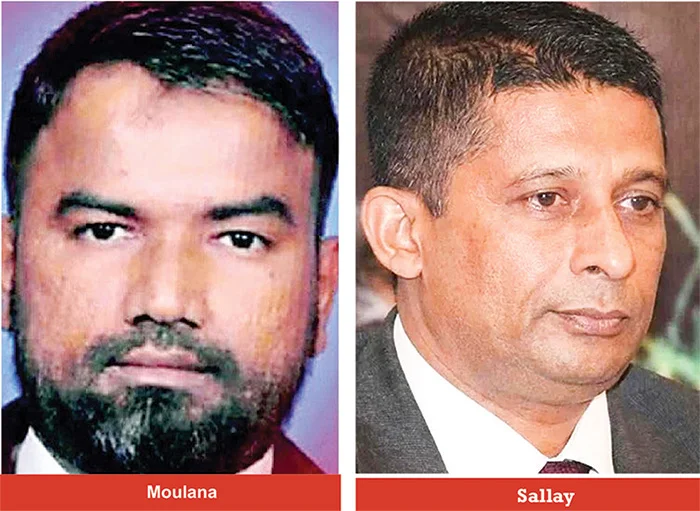
Retired Maj. Gen. Suresh Sallay’s recent arrest attracted internatiattention. His long-expected arrest took place ahead of the seventh anniversary of the bombings. Multiple blasts claimed the lives of nearly 280 people, including 45 foreigners. State-owned international news television network, based in Paris, France 24, declared that arrest was made on the basis of information provided by a whistleblower. The French channel was referring to Hanzeer Azad Moulana, who earlier sought political asylum in the West and one-time close associate of State Minister Sivanesathurai Chandrakanthan aka Pilleyan. May be the fiction he wove against Pilleyan and others may have been to strengthen his asylum claim there. Moulana is on record as having told the British Channel 4 that Sallay allowed the attack to proceed with the intention of influencing the 2019 presidential election. The French news agency quoted an investigating officer as having said: “He was arrested for conspiracy and aiding and abetting the Easter Sunday attacks. He has been in touch with people involved in the attacks, even recently.”
****
Suresh Sallay of the Directorate of Military Intelligence (DMI) received the wrath of Yahapalana Prime Minister Ranil Wickremesinghe, in 2016, over the reportage of what the media called the Chavakachcheri explosives detection made on March 30, 2016. Premier Wickremesinghe found fault with Sallay for the coverage, particularly in The Island. Police arrested ex-LTTE child combatant Edward Julian, alias Ramesh, after the detection of one suicide jacket, four claymore mines, three parcels containing about 12 kilos of explosives, to battery packs and several rounds of 9mm ammunition, from his house, situated at Vallakulam Pillaiyar Kovil Street. Chavakachcheri police made the detection, thanks to information provided by the second wife of Ramesh. Investigations revealed that the deadly cache had been brought by Ramesh from Mannar (Detection of LTTE suicide jacket, mines jolts government: Fleeing Tiger apprehended at checkpoint, The Island, March 31, 2016).
The then Jaffna Security Forces Commander, Maj. Gen. Mahesh Senanayake, told the writer that a thorough inquiry was required to ascertain the apprehended LTTE cadre’s intention. The Chavakachcheri detection received the DMI’s attention. The country’s premier intelligence organisation meticulously dealt with the issue against the backdrop of an alleged aborted bid to revive the LTTE in April 2014. Of those who had been involved in the fresh terror project, three were killed in the Nedunkerny jungles. There hadn’t been any other incidents since the Nedunkerny skirmish, until the Chavakachcheri detection.
Piqued by the media coverage of the Chavakachcheri detection, the Sirisena-Wickremesinghe administration tried to silence the genuine Opposition. As the SLFP had, contrary to the expectations of those who voted for the party at the August 2015 parliamentary elections, formed a treacherous coalition with the UNP, the Joint Opposition (JO) spearheaded the parliamentary opposition.
The Criminal Investigation Department (CID) questioned former External Affairs Minister and top JO spokesman, Prof. G.L. Peiris, over a statement made by him regarding the Chavakachcheri detection. The former law professor questioned the legality of the CID’s move against the backdrop of police declining to furnish him a certified copy of the then acting IGP S.M. Wickremesinghe’s directive that he be summoned to record a statement as regards the Chavakachcheri lethal detection.
One-time LTTE propagandist Velayutham Dayanidhi, a.k.a. Daya Master, raised with President Maithripala Sirisena the spate of arrests made by law enforcement authorities, in the wake of the Chavakachcheri detection. Daya Master took advantage of a meeting called by Sirisena, on 28 April, 2016, at the President’s House, with the proprietors of media organisations and journalists, to raise the issue. The writer having been among the journalists present on that occasion, inquired from the ex-LETTer whom he represented there. Daya Master had been there on behalf of DAN TV, Tamil language satellite TV, based in Jaffna. Among those who had been detained was Subramaniam Sivakaran, at that time Youth Wing leader of the Illankai Thamil Arasu Kadchi (ITAK), the main constituent of the now defunct Tamil National Alliance. In addition to Sivakaran, the police apprehended several hardcore ex-LTTE cadres (LTTE revival bid confirmed: TNA youth leader arrested, The Island April 20, 2016).
Ranil hits out at media
Subsequent inquiries revealed the role played by Sivakaran in some of those wanted in connection with the Chavakachcheri detection taking refuge in India. When the writer sought an explanation from the then TNA lawmaker, M.A. Sumanthiran, regarding Sivakaran’s arrest, the lawyer disowned the Youth Wing leader. Sumanthiran emphasised that the party suspended Sivakumaran and Northern Provincial Council member Ananthi Sasitharan for publicly condemning the TNA’s decision to endorse Maithripala Sirisena’s candidature at the 2015 presidential election (Chava explosives: Key suspects flee to India, The Island, May 2, 2016).
Premier Wickremesinghe went ballistic on May 30, 2016. Addressing the 20th anniversary event of the Sri Lanka Muslim Media Forum, at the Sports Ministry auditorium, the UNP leader castigated the DMI. Alleging that the DMI had been pursuing an agenda meant to undermine the Yahapalana administration, Wickremesinghe, in order to make his bogus claim look genuine, repeatedly named the writer as part of that plot. Only Wickremesinghe knows the identity of the idiot who influenced him to make such unsubstantiated allegations. The top UNPer went on to allege that The Island, and its sister paper Divaina, were working overtime to bring back Dutugemunu, a reference to war-winning President Mahinda Rajapaksa. A few days later, sleuths from the Colombo Crime Detection Bureau (CCD) visited The Island editorial to question the writer where lengthy statements were recorded. The police were acting on the instructions of the then Premier, who earlier publicly threatened to send police to question the writer.
In response to police queries about Sallay passing information to the media regarding the Chavakachcheri detection and subsequent related articles, the writer pointed out that the reportage was based on response of the then ASP Ruwan Gunasekera, AAL and Sumanthiran, as had been reported.
Wickremesinghe alleged, at the Muslim media event, that a section of the media manipulated coverage of certain incidents, ahead of the May Day celebrations.
In early May 2016 Wickremesinghe disclosed that he received assurances from the police, and the DMI, that as the LTTE had been wiped out the group couldn’t stage a comeback. The declaration was made at the Lakshman Kadirgamar Institute for International Relations and Strategic Studies (LKIIRIS) on 3 May 2016. Wickremesinghe said that he sought clarifications from the police and the DMI in the wake of the reportage of the Chavakachcheri detection and related developments (PM: LTTE threat no longer exists, The Island, May 5, 2016).
The LTTE couldn’t stage a comeback as a result of measures taken by the then government. It would be a grave mistake, on our part, to believe that the eradication of the LTTE’s conventional military capacity automatically influenced them to give up arms. The successful rehabilitation project, that had been undertaken by the Rajapaksa government and continued by successive governments, ensured that those who once took up arms weren’t interested in returning to the same deadly path.
In spite of the TNA and others shedding crocodile tears for the defeated Tigers, while making a desperate effort to mobilise public opinion against the government, the public never wanted the violence to return. Some interested parties propagated the lie that regardless of the crushing defeat suffered in the hands of the military, the LTTE could resume guerilla-type operations, paving the way for a new conflict. But by the end of 2014, and in the run-up to the presidential election in January following year, the situation seemed under control, especially with Western countries not wanting to upset things here with a pliant administration in the immediate horizon. Soon after the presidential election, the government targeted the armed forces. Remember Sumanthiran’s declaration that the ITAK Youth Wing leader Sivakaran had been opposed to the TNA backing Sirisena at the presidential poll.
The US-led accountability resolution had been co-sponsored by the Sirisena-Wickremesinghe duo to appease the TNA and Tamil Diaspora. The Oct. 01, 2016, resolution delivered a knockout blow to the war-winning armed forces. The UNP pursued an agenda severely inimical to national interests. It would be pertinent to mention that those who now represent the main Opposition, Samagi Jana Balawegaya (SJB), were part of the treacherous UNP.
Suresh moved to Malaysia
 The Yahapalana leadership resented Sallay’s work. They wanted him out of the country at a time a new threat was emerging. The government attacked the then Justice Minister Dr. Wijeyadasa Rajapakshe, PC, who warned of the emerging threat from foreign-manipulated local Islamic fanatics on 11 Nov. 2016, in Parliament. Rajapakshe didn’t mince his words when he underscored the threat posed by some Sri Lanka Muslim families taking refuge in Syria where ISIS was running the show. The then government, of which he was part o,f ridiculed their own Justice Minister. Both Sirisena and Wickremesinghe feared action against extremism may cause erosion of Muslim support. By then Sallay, who had been investigating the deadly plot, was out of the country. The Yahapalana government believed that the best way to deal with Sallay was to grant him a diplomatic posting. Sally ended up in Malaysia, a country where the DMI played a significant role in the repatriation of Kumaran Pathmanathan, alias KP, after his arrest there.
Having served the military for over three cadres, Sallay retired in 2024 in the rank of Major General. Against the backdrop of his recent arrest, in connection with the ongoing investigation into the 2019 Easter Sunday carnage, The Island felt the need to examine the circumstances Sallay ended up in Malaysia at the time. Now, remanded in terms of the Prevention of terrorism Act (PTA), he is being accused of directing the Easter Sunday operation from Malaysia.
Pivithuru Hela Urumaya leader and former Minister Udaya Gammanpila has alleged that Sallay was apprehended in a bid to divert attention away from the deepening coal scam. Having campaigned on an anti-corruption platformm in the run up to the previous presidential election, in September 2024, the Parliament election, in November of the same year, and local government polls last year, the incumbent dispensation is struggling to cope up with massive corruption issues, particularly the coal scam, which has not only implicated the Energy Minister but the entire Cabinet of Ministers as well.
The crux of the matter is whether Sallay actually met would-be suicide bombers, in February 2018, in an estate, in the Puttalam district, as alleged by the UK’s Channel 4 television, like the BBC is, quite famous for doing hatchet jobs for the West. This is the primary issue at hand. Did Sallay clandestinely leave Malaysia to meet suicide bombers in the presence of Hanzeer Azad Moulana, one-time close associate of State Minister Sivanesathurai Chandrakanthan, aka Pilleyan, former LTTE member?
The British channel raised this issue with Sallay, in 2023, at the time he served as Director, State Intelligence (SIS). Sallay is on record as having told Channel 4 Television that he was not in Sri Lanka the whole of 2018 as he was in Malaysia serving in the Sri Lankan Embassy there as Minister Counsellor.
Therefore, the accusation that he met several members of the National Thowheeth Jamaath (NTJ), including Mohamed Hashim Mohamed Zahran, in Karadipuval, Puttalam, in Feb. 2018, was baseless, he has said.
The intelligence officer has asked the British television station to verify his claim with the Malaysian authorities.
Responding to another query, Sallay had told Channel 4 that on April 21, 2019, the day of the Easter Sunday blasts, he was in India, where he was accommodated at the National Defence College (NDC). That could be verified with the Indian authorities, Sallay has said, strongly denying Channel 4’s claim that he contacted one of Pilleyan’s cadres, over, the phone and directed him to pick a person outside Hotel Taj Samudra.
According to Sallay, during his entire assignment in Malaysia, from Dec. 2016 to Dec. 2018, he had been to Colombo only once, for one week, in Dec. 2017, to assist in an official inquiry.
Having returned to Colombo, Sallay had left for NDC, in late Dec. 2018, and returned only after the conclusion of the course, in November 2019.
Sallay has said so in response to questions posed by Ben de Pear, founder, Basement Films, tasked with producing a film for Channel 4 on the Easter Sunday bombings.
The producer has offered Sallay an opportunity to address the issues in terms of Broadcasting Code while inquiring into fresh evidence regarding the officer’s alleged involvement in the Easter Sunday conspiracy.
The producer sought Sallay’s response, in August 2023, in the wake of political upheaval following the ouster of Gotabaya Rajapaksa, elected at the November 2019 presidential election.
At the time, the Yahapalana government granted a diplomatic appointment to Sallay, he had been head of the Directorate of Military Intelligence (DMI). After the 2019 presidential election, President Gotabaya Rajapaksa named him the Head of SIS.
The Basement Films has posed several questions to Sallay on the basis of accusations made by Hanzeer Azad Moulana.
In response to the film producer’s query regarding Sallay’s alleged secret meeting with six NTJ cadres who blasted themselves a year later, Sallay has questioned the very basis of the so called new evidence as he was not even in the country during the period the clandestine meeting is alleged to have taken place.
Contradictory stands
Following Sajith Premadasa’s anticipated defeat at the 2019 presidential election, Harin Fernando accused the Catholic Church of facilitating Gotabaya Rajapaksa’s victory. Fernando, who is also on record as having disclosed that his father knew of the impending Easter Sunday attacks, pointed finger at the Archbishop of Colombo, Rt. Rev Malcolm Cardinal Ranjith, for ensuring Gotabaya Rajapaksa’s victory.
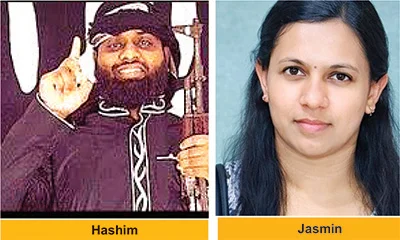
Former President Maithripala Sirisena, as well as JVP frontliner Dr. Nalinda Jayathissa, accused India of masterminding the Easter Sunday bombings. Then there were claims of Sara Jasmin, wife of Katuwapitiya suicide bomber Mohammed Hastun, being an Indian agent who was secretly removed after the Army assaulted extremists’ hideout at Sainthamaruthu in the East. What really had happened to Sara Jasmin who, some believe, is key to the Easter Sunday puzzle.
Then there was huge controversy over the arrest of Attorney-at-Law Hejaaz Hizbullah over his alleged links with the Easter Sunday bombers. Hizbullah, who had been arrested in April 2020, served as lawyer to the extremely wealthy spice trader Mohamed Yusuf Ibrahim’s family that had been deeply involved in the Easter Sunday plot. Mohamed Yusuf Ibrahim had been on the JVP’s National List at the 2015 parliamentary elections. The lawyer received bail after two years. Two of the spice trader’s sons launched suicide attacks, whereas his daughter-in-law triggered a suicide blast when police raided their Dematagoda mansion, several hours after the Easter Sunday blasts.
Investigations also revealed that the suicide vests had been assembled at a factory owned by the family and the project was funded by them. It would be pertinent to mention that President Gotabaya Rajapaksa’s government never really bothered to conduct a comprehensive investigation to identify the Easter Sunday terror project. Perhaps, their biggest failure had been to act on the Presidential Commission of Inquiry (PCoI) recommendations. Instead, President Rajapaksa appointed a six-member committee, headed by his elder brother, Chamal Rajapaksa, to examine the recommendations, probably in a foolish attempt to improve estranged relations with the influential Muslim community. That move caused irreparable damage and influenced the Church to initiate a campaign against the government. The Catholic Church played quite a significant role in the India- and US-backed 2022 Aragalaya that forced President Rajapaksa to flee the country.
Interested parties exploited the deterioration of the national economy, leading to unprecedented declaration of the bankruptcy of the country in April 2022, to mobilie public anger that was used to achieve political change.

England elect to field first at Wankhede

Iran denies its drones hit airport in Azerbaijan’s exclave as war widens

Daren Sammy issues plea as West Indies remain stuck in Kolkata hotel

Nepal election 2026: When will we get the results?

‘It’s so good to be home’ – passengers on Dubai-Dublin flight

India’s momentum meets Wankhede’s memory in big semifinal bout

‘Dates have the highest sugar content to fight Coronavirus’

Sunday Island 27 December – Headlines

#SundayIsland 17th December – Headlines

Sunday Island – 28th March

Sunday Island Headlines – 21 March

Sunday Island – 21st February – Headlines
-

 Features4 days ago
Brilliant Navy officer no more
-
 Opinion7 days ago
Jamming and re-setting the world: What is the role of Donald Trump?
-
 Features7 days ago
An innocent bystander or a passive onlooker?
-

 Opinion4 days ago
Sri Lanka – world’s worst facilities for cricket fans
-

 Business7 days ago
An efficacious strategy to boost exports of Sri Lanka in medium term
-

 Business1 day ago
Cabinet nod for the removal of Cess tax imposed on imported good
-

 Features4 days ago
A life in colour and song: Rajika Gamage’s new bird guide captures Sri Lanka’s avian soul
-
 Features5 days ago
Overseas visits to drum up foreign assistance for Sri Lanka