
News
CPC monopoly to end with govt. inviting multinational companies

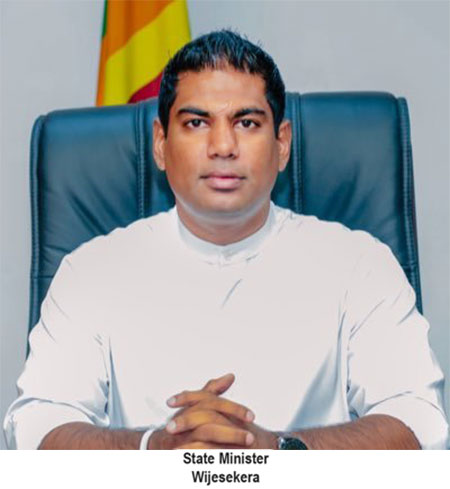
By Rathindra Kuruwita
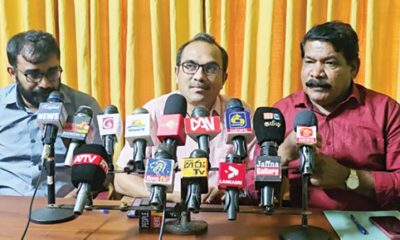
Minister of Power and Energy, Kanchana Wijesekera, on Sunday, told the media that giving the Ceylon Petroleum Corporation (CPC) the monopoly over the oil industry was a mistake and the government was taking steps to allow multinational oil companies to recommence operations in Sri Lanka. The petroleum sector was nationalised in the early 1960s and the CPC was given a monopoly.
Addressing the media in Colombo, the Minister said that several other companies must get involved in fuel distribution in the country as it had become obvious that the CPC couldn’t do it alone.
“We need a few companies like Lanka IOC. Soon, I will present a Cabinet Paper on this matter. Not only the CPC and the LIOC, but also companies of other oil producing nations must be given the chance to supply and distribute oil. Companies like Shell and Caltex were in Sri Lanka earlier. We made a serious error when we gave the CPC a monopoly,” he said.
The Minister also insisted that many oil companies had shifted to Singapore after Sri Lanka nationalised the petroleum sector. The Minister said that Singapore had become a petrochemical hub thereafter.
” We want a company which can give us oil at least for one year on credit––a company that could use its own funds to import fuel. The purpose will be lost if they too start tapping into the dollars that local banks have. If the IOC wants to expand, we must allow that to happen. We have taken a decision to allow oil producing companies to start operations in Sri Lanka,” he said.
The Minister also said that two ships carrying petrol and diesel would arrive on the 23 and 24 June. Sri Lanka had enough stocks of diesel for 10 days and the CPC was supplying to the market more than it usually does, he said.
“The LIOC has 10,000 MT of petrol in its stores in Trincomalee. It only issue 300 MT a day but we asked it to release 1,000 tonnes a day in the coming days. We urge people not to queue up for petrol in the coming four days unless it’s an emergency,” he said,
The Minister also insisted that the CPC officials were following procurement guidelines to the letter when making fuel purchases, as they feared that they would be hauled up before various probe commissions and therefore they were hesitant to take prompt action. “The Cabinet is now contemplating laws to give officials some legal cover to protect themselves, when officials take proactive decisions during emergencies.”
The minister said: “The Ceylon Electricity Board (CEB) needs fuel to ensure that power cuts do not exceed three hours. The train services also need 150 tonnes of diesel a day. State and privately owned buses, engaged in public transport, need 600 tonnes of diesel a day. We have instructed depots to pump diesel to buses with route permits from Sunday (19). The police have been instructed to provide security. Tourist coaches, staff transport services and school services, too, can queue up at sheds. There is fuel for everyone. I urge drivers of these vehicles not to queue up in gas stations from now on.”
The Minister also said that in the next week the police and divisional secretaries would come up with a list of full-time three wheeler drivers and allocate them specific gas stations for refuelling.
“We will divide the vehicles so that each vehicle has two days a week to obtain 20 to 30 litres of fuel. Health workers can also get fuel to their vehicles at selected gas stations every Friday. We will get three crude oil shipments on 29 June and 10 and 14 July,” the minister said.


Latest News
Sun directly overhead Mannar, Periyamadu, Puliyankulam, Welioya and Pulmoddai about 12.11 noon today (30)


The sun is going to be directly over the latitudes of Sri Lanka from 28th of August to 07th of September due to its apparent southward relative motion.
The nearest places of Sri Lanka over which the sun is overhead today (30) are Mannar, Periyamadu, Puliyankulam, Welioya and
Pulmoddai about 12.11 noon.

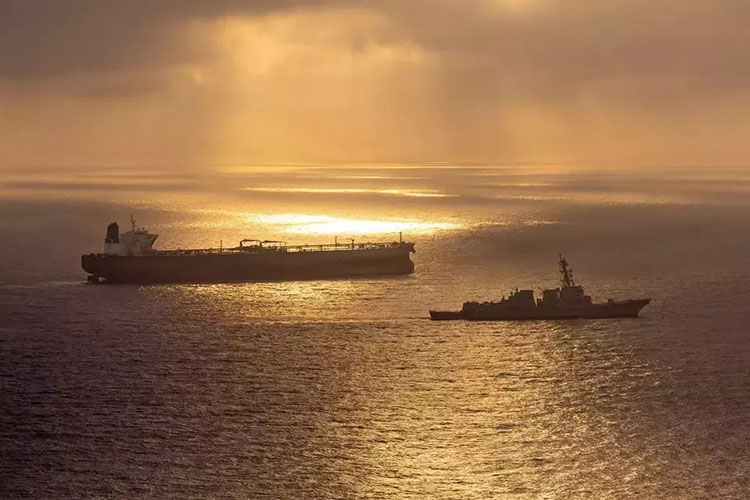
(AFP) Sri Lanka’s maritime authorities were monitoring a fleet of 11 US-sanctioned Iranian oil tankers just off the island’s southern coast, the foreign minister said Wednesday.
The tankers were spotted close to the Galle harbour where an Iranian frigate, IRIS Dena, was sunk by a US submarine in March, killing 104 sailors. Sri Lanka’s navy rescued 32 Iranian sailors from that frigate.
Iranian vessels have been in limbo, unable to return to their home port because of a US blockade.
Sri Lanka’s Foreign minister Vijitha Herath said the tankers were in international waters where they had freedom of navigation.
“These ships are away from our territorial waters… we have no hold on them, nor have we facilitated them,” Herath told AFP.
The military deployed reconnaissance aircraft and patrol boats to monitor the vessels outside Sri Lanka’s 12-nautical-mile territorial waters, a military official told AFP on condition of anonymity.
“There is no indication of any ship-to-ship transfer of oil or illegal discharge of pollutants, so there is no basis for Sri Lankan authorities to take action against them,” the official said.
Many Iranian merchant vessels moved east towards the Strait of Malacca and Singapore due to US sanctions, while several remained near Sri Lankan waters, authorities said.
Sri Lankan officials said Washington had not formally notified Colombo about sanctioned Iranian-flagged vessels
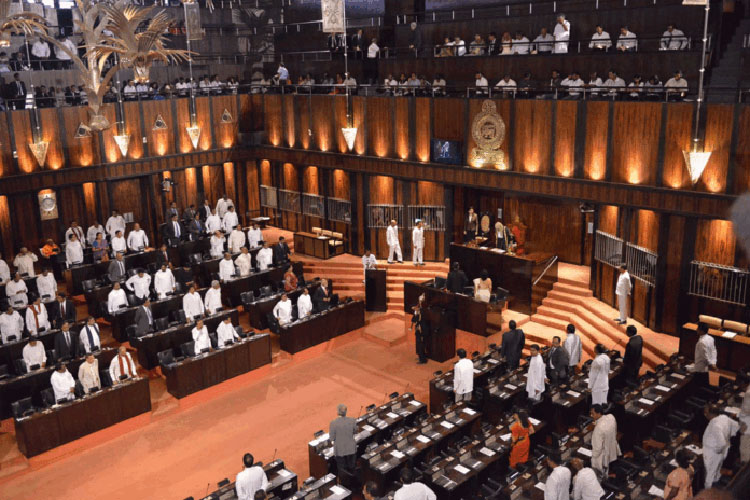
Parliament is to debate next Wednesday the Government’s proposal to abolish the post of Chief of Defence Staff (CDS), with the Second Reading of the Chief of Defence Staff (Repeal) Bill scheduled for September 9.
The Bill seeks to repeal the Chief of Defence Staff Act No. 35 of 2009, which was introduced shortly after the end of the armed conflict.
According to Secretary General of Parliament Kushani Rohanadeera, Parliament will meet from September 8 to 11, with the business for the week approved by the Committee on Parliamentary Business chaired by Speaker Dr. Jagath Wickramaratne.
The debate on the Chief of Defence Staff (Repeal) Bill is scheduled to take place from 11.30 a.m. to 5 p.m. on Wednesday, following questions to the Prime Minister and other parliamentary business.
The CDS post was established under the 2009 Act as part of the country’s higher defence command structure.
On Tuesday, September 8, the House will consider two Orders published in Extraordinary Gazettes under the Motor Traffic Act from 11.30 a.m. to 5 p.m., followed by an Opposition motion at the adjournment.
On Thursday, September 10, Parliament will debate a Resolution under the Women’s Empowerment Act.
The final sitting day of the week, Friday, September 11, has been allocated from 11.30 a.m. to 5.30 p.m. for several Private Members’ Motions.
The motions will cover issues including regulation of the petroleum, fuel and water industries, measures to increase the birth rate, protection of the Diyagama Forest, pension deductions affecting Pirivena teachers, food-crop cultivation in mountainous areas, development of the Kithul industry and the establishment of a Faculty of Medicine at South Eastern University.
Questions at the adjournment will be taken up at the end of each sitting day.

Voting closes in Iceland’s knife-edge EU referendum

Showers in the Sabaragamuwa, Western and North-western provinces and in Galle, Matara, Kandy and Nuwara-Eliya districts

Sun directly overhead Mannar, Periyamadu, Puliyankulam, Welioya and Pulmoddai about 12.11 noon today (30)

Lanka tracks 11 US-sanctioned Iranian tankers off coast

House to debate abolition of Chief of Defence Staff post

Mass graves tragic evidence of failed states – Rathnayake

‘Dates have the highest sugar content to fight Coronavirus’

Sunday Island 27 December – Headlines

#SundayIsland 17th December – Headlines

Sunday Island – 28th March

Sunday Island Headlines – 21 March

Sunday Island – 21st February – Headlines
-

 News5 days ago
Missing doctor’s body found in Mahiyanganaya
-
 News5 days ago
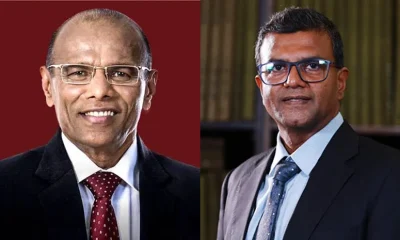
Australia declines to release Finance Secy Suriyapperuma’s citizenship details
-

 News5 days ago
22A: BASL suggests CJ recuse himself from hearing petitions
-
 News2 days ago
Eight politicians in drug kingpin probe
-

 Editorial6 days ago
Govts. drag feet as undergrads age
-
 Features4 days ago
Insights from Chieftains of Uva: Genealogy of two Kandyan Families – Part II
-

 Features4 days ago
Export diversification: Missing the wood for the trees – Part I
-
 Features2 days ago
Redefining ageing in Sri Lanka