
Opinion
Reduce waste, avert food crisis

By Herath Manthrithilake
These days, everyone is talking about a possible food crisis. The truth is that some are already experiencing it. Political leaders are calling upon the people to grow food everywhere possible. Academics are talking about wrong policies, production losses, forthcoming food shortages, and lack of fertilisers and seeds. Politicians promising fertilisers from India and China. There is a global shortage of food and fertilisers. The African continent is the worst hit. Hence, even if we got some dollars, we may not be able to import our food and fertilisers.
There is plenty of room for disruptive innovations in the food supply chain.
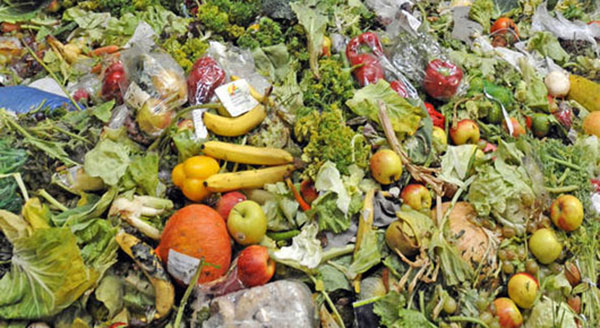
No doubt, we need to grow more. While doing so, we should reduce waste. Let us look at where the waste occurs. Yet, we do not make any effort to change existing wasteful practices. Of course, reducing waste alone would not help overcome scarcities, but that would help to ease them considerably.
1. Waste from the plate:
Most Sri Lankans have on their plates more food than they can eat. We eat more not because we are hungry but because we are greedy.
2. Waste from the kitchen
In some houses, eating freshly prepared food is considered a must. Leftover food is discarded.
If your preference is to eat freshly cooked food, simply, avoid preparing quantities that you cannot consume. This is not the time to do so.
3. Waste from bulk preparations
In high-end restaurants, weddings, parties, almsgivings, etc., people waste a lot of food.
There is some light at the end of this tunnel. A few local NGOs in Colombo collect excess food from star class hotels and restaurants and deliver it to elders’ homes, orphanages, and poor families. This is possible only in the late hours of the night when such establishments are getting ready to close. We were told some hungry recipients wait even till late at night expecting food deliveries. Therefore, the service rendered by these NGOs is praiseworthy. These organisations, dependent on volunteer support for collecting and packaging and delivering food to the hungry are regularly having issues with manpower and transport. Find and help them if possible.
A recently concluded study by IWMI/FAO in Sri Lanka shows that around 25% of prepared food goes to waste in this manner. In both the above-mentioned cases, there are enough people, with whom this food could be shared.
4. Waste between kitchen and farm gate
Estimates show about 35-40% of farm produce is wasted. Just imagine the amount lost, and if saved how that could help overcome food shortages.
A golden opportunity for a ‘disruptive innovation’. We should decentralise wholesale markets (make them smaller, and local – close to production centres), and turn them into collecting, processing, and storage with cooling. No need to collect everything in a single place and redistribute it. Let us try to introduce some basic processing (washing, sorting, grading, packaging), and storing as much as possible. Local processing shall open new employment opportunities for the rural youth instead of handouts. Such centres will have many advantages including solutions for the food shortages. Packaging will reduce losses during transport and allow to meet actual needs in regions and excess to store. Sorting and grading will allow the creation of a range of prices, accessible and affordable to all income layers of society. That will help reduce price fluctuations, and be affordable to consumers. Waste shall come down while the income of producers rises.
This would be a multi-million-dollar, long-term project if the government tries to implement it. The best is to encourage and mobilise local youth (as start-ups) with financial support from private banks and technical advice from the state and private sectors. The Ministries of Agriculture Trade and Small Industries should take the lead and involve the private sector.
5. Waste at the farm
Experience shows that a certain percentage of agricultural produce is left behind on the field after harvesting as it is considered unmarketable. It is common for all farms to have different shapes and sizes of products. In farms where tomatoes, potatoes, and perishable veggies are grown, a portion of small size and odd shape produce are left behind as no one is buying those; or even leads to lower prices for the entire stock. It is important to encourage the production of homemade products (chutneys, sauces, jams, dried or dehydrated produce, etc.) from such agricultural produce.
The waste of fruits is another matter – mangoes, papayas, bananas, pineapples, etc., popular fruits as well exotic foods could be sent to the market with some value addition.
The Agriculture Ministry/Department has a section working on this type of work for many years with negligible impact. Indigenous methods of food preservation are also available.
For instance, slightly wrong adjustments to harvesting machines (Buthaya, and Tsunami) will lose around 150 to 170 kg paddy per Ha. A little advice to operators of such machines could save those losses.
This is an area again where youth can engage with self or local financing on a small scale.
6. Crop diversification
More than 100 edible plants are available in villages, but most of us eat around seven to nine of them and even those are grown elsewhere and bought from the nearby shop. Yet, our list of imported food products from other countries is long, and the cost is high. If one does not have sufficient resources (fertiliser, agrochemicals, fuel, seeds, etc) for paddy cultivation, he/she can cultivate a part of the land with paddy and the rest with small patches of cash crops like cowpea, green gram, chilies, onions, tomatoes, green leaves, etc., which brings in harvest within shorter periods in different times. Such a cropping system, as we have seen in Mahaweli System H, provides a steady cash flow to the hands of the farmer and he/she will be protected from price fluctuations due to a sudden glut of produce. Also, helps get his family a sufficient level of nutrition.
Rearing livestock is another way India and China can produce enough milk for over one billion of their people in each country with less rainfall than ours and even sell part of it to other countries. Yet, we are dependent on New Zealand and Australia for our milk needs.
There is no other perfect opportunity for disruptive innovations than in a crisis. We should turn our agricultural practices upside down instead of tinkering with them. We should not miss this opportunity as we did many times since Independence. Let us diversify our food plate, and grow diverse crops and fruits on our farms, home gardens, and barren lands, which are abandoned.
It is a well-known fact that we live in a country with rich biodiversity and varied agro-ecological zones. We got 47 such zones, whereas India has only 14 of them. We have plenty of rain throughout the year.
Countries with less than one fifth of our rainfall are exporting food to other countries. We have sunshine for nearly 12 hours a day throughout the year, but most food-exporting countries can grow crops only half a year.
About 35% of our population is directly linked to agriculture and 60% of the population is dependent on it. At conferences, we discuss ‘precision’ agriculture, which is a new practice spreading in developed countries, but we never look at our primitive practices to improve those. We cannot afford to “jump from bullock cart to helicopter” as yet, particularly given the current situation.
We produce over 1,200 agricultural graduates per year; we have 10 faculties and several colleges of agriculture spread across the country with nearly 600 professors and over 1000 lecturers; the largest number of PhDs in the state service is concentrated in the Department of Agriculture; a wide network of agricultural research stations; a large number of agrarian development department centres; nine provincial departments with several thousands of agricultural officers for extension; thousands of experienced but now retired from service ag. experts; over 14,000 ‘Krushi Paryesaka’ and Niyamakas’ for each GN division; Large numbers of Farmer Organisations. Many other non-agricultural govt. agencies, NGOs, private firms, and the banking sector are full of agricultural graduates, thousands of unemployed youths (men and women), and an abundance of fertile lands. What more do we need to achieve our food security?
Today, we are in a critical situation; everyone wants a System Change; we got all ingredients and capacities for the task. What is missing is a consorted effort to address our food issues—besides, course, an honest and able leadership.

Sovereignty, Tourism, and the Law:
by Sasanka Perera
(The writer is on X as @sasmester)
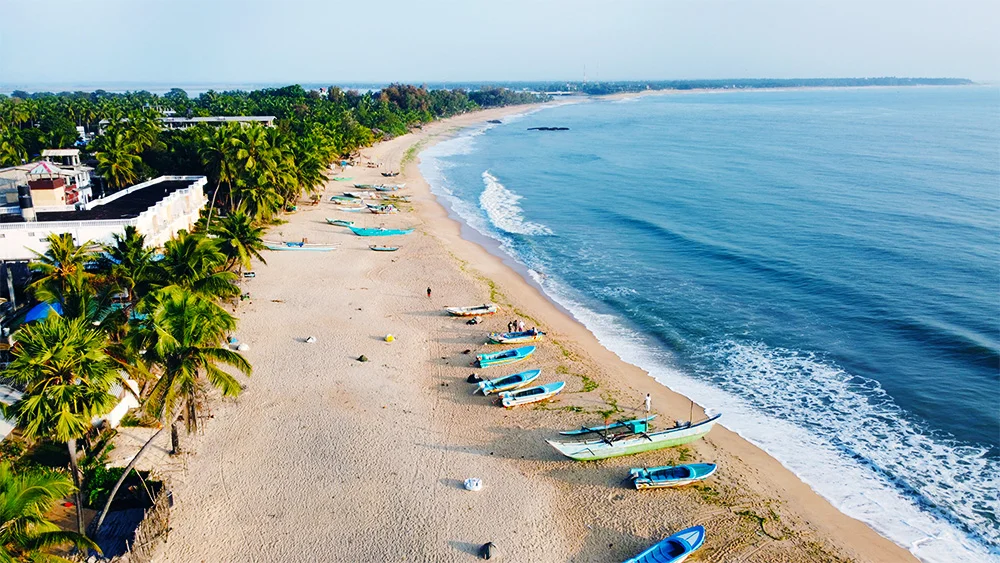
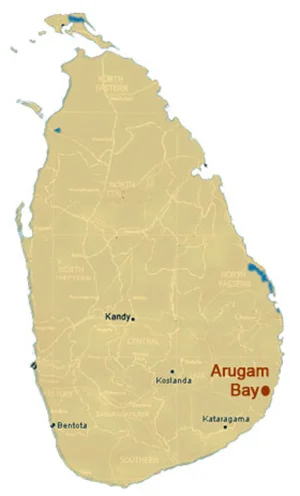
On 28 October 2024, I wrote in this column an essay, titled ‘Israelis in Sri Lanka and the Advent of a ‘Neo’ Colonialism.’ My concern then was the disruption long-term Israeli tourists, often over-staying tourist visas, were causing particularly in the Eastern Province. Government intervention was mostly visible through relative inaction. Over the past year, Sri Lanka’s pristine coastal enclaves, from Hikkaduwa and Weligama in the west to Arugam Bay in the East, have found themselves at the centre of a complex and needless geopolitically-inflected controversy. As I explained in my earlier essay, too, the rapid growth of Israeli tourism has brought to light serious concerns regarding regulatory oversight, economic fairness, and national sovereignty. The latest controversy erupted in August 2026, in Hiriketiya, near Dickwella, in the country’s south. Unlike in the east, where the protesters were mostly from Muslim communities, in Hiriketiya, the protests were led by Buddhists, including monks.
At the centre of latest public debate is the establishment of a ‘Chabad House’, essentially a Jewish community and religious centre, catering to Israeli travellers. One of the primary demands the protesters made, was to investigate if this religious entity was established legally and if the activities of Israeli residents, including running businesses, were legal. In the context of the earlier controversy, Prime Minister Harini Amarasuriya is on record for clarifying in Parliament on 8 January, 2025, that neither the Ministry of Buddhasasana, Religious and Cultural Affairs nor any other government institution had granted official permission for the establishment of Israeli religious sites. In other words, what existed was illegal.
Chabad Houses as private business entities
 Representatives of the local Chabad Houses, of which there are about six at present, claim they operate as registered private business entities. However, operating public religious and communal hubs on standard tourist or corporate permits violates local town planning and immigration guidelines. Besides, despite the claim, it is very unclear even if standard business licenses were issued in the first place. If religious entities were run under temporary business licenses, then, that itself is a clear violation of Sri Lankan law showing scant disregard to both the legal system in the country and its socio-political sensitivities.
This setup stands in stark contrast to how Sri Lanka’s own religious presence is managed in Israel. In Tel Aviv, a Sri Lankan Buddhist temple was established in 2013 to serve thousands of Sri Lankan migrant workers. The effort was facilitated by the Sri Lankan Embassy in the Israeli capital. To respect local Israeli laws and urban regulations, that temple operates discreetly inside a private apartment complex rather than as a prominent, independent public centre with an overt public religious personality as is usually the case with Buddhist temples globally. The Chief Incumbent of the temple, at the time it opened in 2013, Ven. Karavilakotuwe Dhammathilaka, is on record for stating very clearly that in keeping with the religious sensitivities in Israel, the inaugural ceremony itself was also held on a low scale without much publicity. This makes sense given the fact that Israel is one of the most religiously intolerant societies in the world as its track record amply demonstrates. This is more so in the last few years. What is important in the context of the opening of the Buddhist temple in Tel Aviv is, no laws were violated, the temple was meant for long term-residents, and respected local laws and sensitivities. It was also an effort formally facilitated by the Sri Lankan Embassy.
The comparison raises a fundamental question of parity: why should foreign nationals in Sri Lanka, including Israelis, establish public religious and cultural centres without municipal or government authorisation, while Sri Lankans abroad strictly abide by local constraints, as the nondescript Sri Lankan Buddhist temple in Tel Aviv clearly demonstrates?
The debate and anxieties around the Israeli presence in Sri Lanka occurs alongside another pressing concern. That is, the relatively precarious position of thousands of Sri Lankan workers in Israel who are mostly in the construction, agriculture and caregiving sectors. Recently, thousands of Sri Lankan migrant workers faced deportation from Israel due to job category violations, after switching from agriculture or caregiving to unauthorised sectors. The Sri Lankan Foreign Ministry reportedly actively intervened with Israeli authorities to negotiate regularisations and protect these workers. In my view, Illegality is illegality everywhere. If Sri Lankans violated Israeli law, that country had every right to deport them, and we should not have intervened. But I do understand the government’s position, too, as it relates to employment of citizens. Then, there should be a system where such regularisations are managed via the facilitation of the Sri Lankan Embassy, and if citizens do not make use of such a facility, they should clearly face the consequences of Israeli law.
Troubling double standard
Whichever way one looks at it, this highlights a very troubling double standard. That is, while Sri Lankan workers and the government have to cautiously navigate strict Israeli labour and visa laws, Israeli visitors in Sri Lanka frequently evade local visa laws without consequence. This mostly occurs as a result of the institutionalised spinelessness of our law enforcement when it comes to foreigners, and particularly seemingly ‘white’ foreigners. But surely, over 78 years after Independence, spineless meekness on our part must have clear limits. There needs to be clear reciprocity. Besides, Israelis are not here to work as the Sri Lankans in Israel are. They are supposed to be tourists. They should neither work nor establish religious edifices as they feel fit violating our laws and sensitivities as a matter of routine. This is why the ongoing Israeli activities reek of settler-colonialism.
Also, it is not only a matter of Israeli intransigence and official and public Sri Lankan apathy. The latter becomes possible when locals, who rent buildings to visa facilitate in running illegal Israeli businesses depriving their own citizens of legitimate incomes, are not even prosecuted by local law enforcement and judicial systems. As often is the case, foreign arrogance is built upon local meekness and lack of even the most basic sense of national pride. Of course, this does not apply to anyone, including Israelis who are operating a business in Sri Lanka legally, based on legitimate licenses issued by the government.
The proliferation of unlicensed, foreign-run businesses poses severe economic challenges to Sri Lanka’s local tourism industry. Many Israeli visitors enter this country on standard tourist visas but illegally set up guesthouses, surf camps, and cafes. Often operating exclusively in Hebrew, these businesses transact via informal channels or foreign accounts. When foreign visitors, including Israelis, run unregistered businesses, there are numerous local fallouts. For one thing, Sri Lanka loses substantial corporate, local government, and value-added tax revenues. Secondly, these activities severely undercut local livelihoods. Local vendors, tour guides, and small hoteliers are excluded by closed-loop and illegal Israeli operators. One of the common complaints where illegal Chabad Houses have been established is that they provide accommodation and meals to Israeli tourists, seriously disadvantaging local tourism-related businesses.
Adverse economic impact
Much of the income earned from these closed illegal operations, hardly comes to Sri Lanka in any way except for payment for supplies and rentals. Finally, since properties lease informally at inflated long-term rates to these operators, it drives up costs for Sri Lankan entrepreneurs and small business owners. But all this has become possible and so entrenched because of the established track record of relative inactivity of the Sri Lankan government in general as well as local governments and law enforcement in particular.
This brings to my mind the Israeli feature film, Arugam Bay. Directed by Marco Carmel and shot on location in Sri Lanka, including Ella and Arugam Bay. The film follows former Israeli soldiers using Sri Lanka’s coastal towns to process military combat trauma. The production received formal clearances for filming from the Sri Lanka Tourism Promotion Bureau in so far as publicly available information indicates. However, its narrative — framing Sri Lankan beach towns as retreats for Israeli military veterans — with blood in their hands and massive human rights violations to their credit, reaffirms local concerns about the island being used as a backdrop for Israeli human rights violations against Palestinians without sufficient regard for local perspectives.
It is precisely this kind of narrative, through word of mouth as well as social media, that creates an image of Sri Lanka as meek and trouble-free destination for Israelis intent on illegal activities. Do the Sri Lankan government or Sri Lankans want such a label attached to the country? I certainly don’t. It is quite shocking that the Sri Lanka Tourism Promotion Bureau gave permission for a such film to be shot locally. It shows both the Authority’s sorry view of what tourism is and scant disregard for ethical tourism.
Pushback mischaracterised as anti-Jewish sentiment
Public pushback against these illegal activities has sometimes been described by local as well as Israel supporters as anti-Jewish sentiment. But this completely mischaracterises the issue. Global condemnation of Israel’s military actions in Gaza and beyond and massive rights violations of entire Palestinian communities is rooted in international humanitarian law — not antisemitism. Differentiating between opposition towards violating state policies and hostility toward Jewish people is critical. Sri Lankans standing against Israeli military aggression or localised law-breaking are asserting human rights and national law as well as decent and legal behaviour by foreigners in our own country. This is not engaging in discrimination. That is, Israelis must be treated here as our people are treated in Israel. By law and by the book.
Sri Lanka must remain a welcoming host to international tourists. However, hospitality must not replace accountability. The government must strictly enforce visa restrictions, shut down unauthorised commercial and communal spaces, and protect local businesses. By upholding the rule of law uniformly, Sri Lanka can safeguard its economy, preserve its national sovereignty, and maintain harmony along its shores.
By A Concerned Aficionado
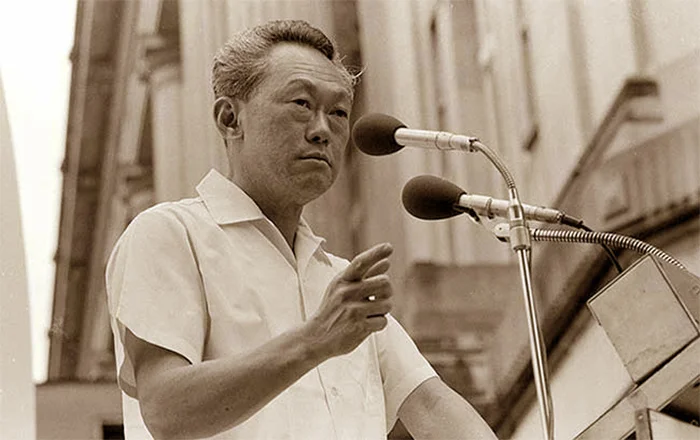
In 1959, just over a decade after Ceylon, as Sri Lanka was then known, gained Independence, a tiny, resource-barren island in many ways, named Singapore, elected a man called Lee Kuan Yew as their Prime Minister. Before that, having been ejected from the Malaysian Federation into forced independence, the founding fathers of independent Singapore looked across the Indian Ocean with envious eyes. The subject of their admiration was Ceylon: “The Pearl of the Indian Ocean.” Here was a nation in a pearl blessed with fertile land, a highly literate population, a functioning model of the civil service, robust infrastructure, and standard English education. Lee Kuan Yew openly declared that his ambition was for Singapore to emulate Ceylon.
Decades later, the tragedy that developed out of this historical juxtaposition is staggering. Singapore now sits comfortably in the first world, boasting a GDP per capita exceeding US Dollars 80,000, world-class institutions, and zero tolerance for corruption. Sri Lanka, meanwhile, lies in the ashes of sovereign default, a begging bowl in hand, passing from one economic crisis to the next, crippled by debt as well as rampant corruption and governed by political short-sightedness.
What went wrong? The answer can be found in a simple three-letter acronym popularised by Singaporean diplomat and academic, Professor Kishore Mahbubani, MPH: the acronym for Meritocracy, Pragmatism, and Honesty: the proven mantra of that country.
Mahbubani famously argued that any nation, regardless of size or origin, can achieve extraordinary success if it rigorously applies these three foundational doctrines. If Singapore stands as the global poster child for the triumph of the MPH model, Sri Lanka stands as its renowned antithesis; a tragic case study of what happens when a country systematically dismantles every single one of those three sacred creeds of good governance.
Meritocracy Dismantled: The Triumph of Nepotism and Tribalism in the Pearl
Meritocracy, in Mahbubani’s framework, demands that a nation relentlessly selects its best and brightest to lead its institutions, regardless of ethnicity, family lineage, or political affiliation. In Singapore, early leaders like S. Rajaratnam, a Sri Lankan Tamil, were elevated to the highest positions strictly on ability.
In Sri Lanka, we did the exact opposite. Almost immediately after independence, our political class realised that exploiting communal divisions was far more lucrative than building a meritocratic state. The Official Language Act of 1956 was the first lethal blow, substituting raw linguistic nationalism for competence. This was followed by media-wise standardisation policies in higher education, which effectively told our youth that their brainpower mattered less than their geographic or ethnic identity. In short, this was the political misdemeanour that destroyed the Sri Lankan nation.
The institutional decay spread rapidly into our civil service, which was once the envy of Asia. The Independent State Services Commission was systematically gutted and replaced by political patronage. State corporations, statutory boards, and diplomatic missions became dumping grounds for politicians’ children, loyalist party hacks, henchmen and henchwomen and despicable sycophants.
Instead of putting domain experts at the helm of economic, medical, and technical bodies, our rulers appointed cronies whose primary qualification was their willingness to bow and kneel before their political masters. The resulting brain drain has been catastrophic. For generations, Sri Lanka’s greatest export has not been tea or garments, but its finest minds, driven out by a system that rewards loyalty to a party over loyalty to intellectual competence.
Pragmatism abolished: Ideological Dogma and Economic Madness in the Pearl
Pragmatism means deserting ideological blinders and adopting policies simply because they work. As Singapore’s Dr Goh Keng Swee put it to Mahbubani: “No matter what problem Singapore encounters, somebody, somewhere has solved it. Let us copy the solution and adapt it.”
Sri Lanka, by contrast, has been a graveyard of economic dogmatism and harebrained experiments. Rather than copying proven global best practices, our policy decisions have consistently been driven by shortsighted populism, ideological posturing, and economic illiteracy.
Consider our economic history: alternating decades of closed-economy import substitution that strangled private enterprise, followed by unbridled, corrupt market deregulation without supervisory safeguards.
Perhaps the ultimate symbol of our anti-pragmatic hubris was the infamous overnight ban on chemical fertilisers in 2021. Ignoring every agricultural scientist and expert in the country, the government imposed a purely ideological and immediate “100% organic” policy by a Presidential Decree. The result was immediate and devastating: agricultural yields collapsed, food security evaporated, and tea production; our main foreign exchange earner, suffered disastrous damage. It was economic suicide masquerading as some kind of a vision of splendour.
Pragmatism requires looking at numbers, listening to experts, and adjusting and changing course when a policy fails. In Sri Lanka, political leaders routinely ignore basic arithmetic and even common sense to preserve their political narratives. They cut taxes when the treasury is empty, print trillions of rupees while inflation soars, and hold off on seeking IMF restructuring until the country literally runs out of foreign currency for fuel, medicines, and food.
Honesty is dead: The Culture of Systemic Corruption, the Misery of the Pearl
The third component, Honesty, is perhaps where Sri Lanka has fallen down the furthest. Professor Mahbubani notes that corruption is the single biggest reason why third-world countries fail. Singapore combated this by establishing near-zero tolerance for corruption, enforcing the strict rule of law, and ensuring that no public official, no matter how powerful, was above accountability.
In Sri Lanka, dishonesty is not merely an occasional scandal; it has become the fundamental operating system of the state. Corruption in Sri Lanka is institutionalised from the bottom to the absolute top. White-elephant infrastructure projects were financed through high-interest commercial loans: not because they offered viable economic returns, but because they offered massive kickbacks and inflated procurement contracts. Commissions were pocketed on everything from highways and airports to coal shipments, vaccines, and even basic food commodities.
Worse still, a culture of complete impunity took root. Commissions of inquiry were appointed not to uncover the truth, but to whitewash theft and buy political time. Files mysteriously vanished, prosecutors were pressured, and political deals were struck to protect corrupt figures across all political divides. The public watched in desperation as billions were drained from the national coffers, leaving the country bankrupt while the perpetrators enjoyed immunity, private jaunts, and even clandestine offshore accounts.
The Current Dispensation: Have They Got Their Wires Completely Crossed
If the public expected a sharp break from this pattern with political shifts in recent years, the disillusionment is totally complete. However, amidst a rhetoric towards a milk and honey nation, the aftermath has been everlasting desolation, as the stark reality has proven bitterly disappointing. The current political leadership appears to have got its wires completely crossed.
Instead of a sharp return to the MPH principles, what we witness is a baffling mix of improvised policies, misplaced priorities, and political double-speak. On the one hand, the government attempts to eloquently speak the language of reform and fiscal discipline to satisfy the gullible citizens and even the international lenders. On the other hand, it continues to rely on the same tired playbooks of executive heavy-handedness, administrative opacity, and political backroom deals.
Where is the true Meritocracy in the current administration? Key appointments in crucial public sectors are still dominated by political trade-offs and ideological echo chamber minions rather than competent people with independent, proven track records. Technical expertise is treated as a secondary consideration, way behind political compliance. The intense tragedy is the folly of ignoring and suppressing capable and efficient people and bringing in the henchmen and henchwomen.
Where is the Pragmatism? Rather than instituting big structural changes, modernising our public sector, and stripping away red tape to attract genuine foreign direct investment, the government remains addicted to piecemeal band-aid and bureaucratic control. Instead of fixing fundamental market distortions, it attempts to micro-manage the economy through top-down mandates, price controls, and extremely heavy taxation that burdens the middle class while leaving structural inefficiency untouched.
Where is the Honesty? Transparency remains a distant unattainable dream. Crucial state contracts, energy deals, and restructuring terms are still negotiated behind opaque doors. There is a glaring absence of genuine accountability for those whose past financial crimes pushed the nation into default. The rhetoric of “anti-corruption” is deployed aggressively against political adversaries, yet remains conveniently muted when it touches allies or organisational dishonesty within state institutions.
Instead of showing the public a clean, transparent roadmap for national recovery, the current regime seems intent on managing optics, suppressing dissent, and maintaining political survival at all costs.
The Path Forward: Can the Pearl be Restored?
Sri Lanka’s journey from being the envy of Asia in 1948 to a terribly bankrupt state in the 2020s is not a result of bad luck or external conspiracies. It is the direct consequence of our miserable choices. We chose tribalism over Meritocracy. We chose ideological populism over Pragmatism. We chose systemic corruption over sanctified honesty.
The Singapore story proves that natural resources, land size, and historical advantages do not determine a nation’s destiny. It has very clearly demonstrated that it is only the realism of proper governance that leads to prosperity. Singapore had no oil, no timber, no agriculture, and not even its own fresh water. What it had was a leadership obsessed with execution, integrity, and competence.
If Sri Lanka is ever to rise from the ashes of its self-inflicted ruin, it must abandon the political illusions that brought it to its knees. No amount of foreign loans, IMF bailouts, or geopolitical manoeuvring will save us if we do not transform the way we govern ourselves.
The formula is already written. It does not need to be reinvented. It has only to be implemented with untold dedication.
· Enforce absolute Meritocracy: Strip politicians of their power to appoint cronies to state bodies. Establish an independent, politically insulated mechanism for public sector leadership based entirely on competitive, verifiable competence.
· Embrace Pragmatism:
Kill economic dogma. Listen to experts, even when their opinions are unpleasant, copy proven global models, digitise state processes, and evaluate every public policy solely on one metric: would it or does it deliver measurable results for the people of our nation?
· Institutionalise Honesty:
Enforce an absolute, unyielding rule of law with zero tolerance for deceit and fraud. Empower independent anti-corruption agencies with real teeth, strip away immunity for financial crimes, and make asset declarations mandatory and publicly accessible for every elected official.
The time for empty political slogans, hereditary politics, and ideological arrogance should be over and, in fact, should be wiped out forever. Sri Lanka has run out of the flight runway. Until we, as a nation and the citizenry of a united nation, demand a radical pivot toward Meritocracy, Pragmatism, and Honesty, the “Pearl of the Indian Ocean” will remain nothing more than a tragic reminder of what it could have been.
It is never too late. All it needs is a supremely committed political and national obligation to the glorious vision of a prosperous future for the entire nation. However, we are forced to lament whether any of our current lot of so-called statesmen, or, for that matter, stateswomen, of any hue and rhetorically imbibed, are up to that committed task of getting the pearl back into its long-lost pristine glory.


by Viran Maddumage
Assistant Lecturer & PhD (Reading) Department of Human Geography and Migration,
Macquarie University Australia
&
Sanduni Rathnayake
Lecturer (Probationary) Faculty of Law,
General Sir John Kotelawala Defence University
When a boat carrying desperate people reaches the shores of an island, the first question should be a humanitarian one: how can these people be kept safe? But sooner or later, another question becomes unavoidable: what does the law say?
For Sri Lanka, that question is becoming increasingly important.
In December 2024, the Sri Lankan Navy rescued more than 100 people believed to be Rohingya refugees from a fishing vessel found adrift off the country’s northern coast. Among them were women and children. They were brought ashore and provided with food, water and medical assistance. The incident was not entirely unprecedented; Sri Lanka had encountered a similar arrival of Rohingya people by sea in 2022.
These incidents expose an uncomfortable gap in Sri Lanka’s legal architecture. Sri Lanka is capable of rescuing people in distress. It can provide immediate humanitarian assistance. But once those people reach our shores and seek protection, where exactly does the law take them?
Sri Lanka has not ratified the 1951 Convention relating to the Status of Refugees or its 1967 Protocol. The Convention and Protocol constitute the central international instruments defining refugee status and establishing international standards for refugee protection. More importantly, Sri Lanka does not currently have a comprehensive domestic legal framework establishing a national procedure for determining refugee status. UNHCR has consequently played an important role in registering and assessing asylum claims in Sri Lanka.
This arrangement may function when refugee movements are limited. But it is not a substitute for law.
Problem of a legal vacuum
An asylum-seeker is not simply an undocumented migrant. An asylum-seeker is a person asking another state for protection because returning home may expose them to persecution or serious harm. A refugee is a person whose circumstances meet the applicable criteria for international protection.
The distinction matters because ordinary immigration law is principally concerned with controlling entry, residence and departure. Sri Lanka’s Immigration and Emigration framework, for example, is designed to regulate the entry and departure of persons and to provide for the removal of certain non-citizens. Refugee law asks a different question: what happens when the ordinary assumption that a person can simply be returned to their country of nationality is no longer safe?
That question cannot be answered adequately through immigration enforcement alone.
At present, Sri Lanka lacks a dedicated statutory process that clearly answers basic questions. Who may apply for asylum? Who determines whether an individual qualifies for protection? What procedural rights does the applicant have? What evidence must be considered? Is there a right to appeal? What happens while an application is pending? When may detention be used? What happens when the applicant is a child? And, most importantly, what safeguards exist against returning a person to a place where they face persecution or other serious harm?
Leaving such questions to ad hoc administrative arrangements creates uncertainty not only for refugees and asylum-seekers, but also for the State itself.
Why international law alone not enough
One might respond that Sri Lanka already participates in the international human-rights system and therefore has obligations relevant to the treatment of vulnerable non-citizens. That is true. But international commitments and domestic enforceability are not necessarily the same thing.
Sri Lanka’s constitutional and legal framework has traditionally reflected a dualist approach to international treaties. The Supreme Court’s decision in Singarasa v Attorney-General is particularly significant in this regard. The judgment recognised that treaty obligations undertaken by the State do not, merely by virtue of international acceptance, automatically become enforceable domestic law; legislative implementation is required for treaties to have internal legal effect.
This principle makes the case for domestic refugee legislation even stronger.
The answer is not to pretend that international law does not matter. Nor is it to suggest that Sri Lanka has no responsibilities towards people seeking protection. Rather, the lesson is that where protection is important enough to be recognised internationally, it should also be translated into clear domestic rules that courts, public officials and affected individuals can actually understand and apply.
A refugee should not have to depend upon uncertainty about the precise relationship between an international obligation, administrative practice and domestic immigration law to know whether they can safely remain in the country while their claim is considered.
Principle of non-refoulement
At the heart of refugee protection is the principle of non-refoulement: the prohibition against sending a person back to a place where they face persecution or other serious threats to their life or freedom.
The principle is one of the foundational concepts of international refugee protection. Its significance extends beyond the formal status of a person as a recognised refugee. International human-rights law also provides important protection against removal in circumstances where return would expose an individual to serious harm.
For Sri Lanka, the question therefore cannot simply be whether the country has ratified the Refugee Convention. The more fundamental question is whether Sri Lankan law provides an effective mechanism for ensuring that a person who may require international protection is identified and assessed before removal.
Without such a mechanism, even a principle as important as non-refoulement risks becoming difficult to operationalise.
The Rohingya arrivals demonstrate why this matters. These were not abstract legal hypotheticals. They were human beings arriving by sea after fleeing circumstances in which their safety could not simply be assumed. The State had to decide what to do with them.
And whenever the State must make such decisions, law matters.
A Sri Lankan solution
The answer should not necessarily be the wholesale transplantation of another country’s refugee legislation. Sri Lanka has legitimate interests in border management, national security, immigration control and public order. A domestic refugee law can recognise those interests while also establishing safeguards for people genuinely in need of protection.
A Sri Lankan Refugee and Asylum Act could establish a clear national asylum procedure. It could define who qualifies as a refugee and who may seek asylum, establish an independent or appropriately insulated refugee-status determination mechanism, and provide applicants with basic procedural guarantees.
There should be an opportunity to present evidence, an obligation to give reasons for decisions and a meaningful avenue of review or appeal.
The legislation should also address detention. Irregular entry should not automatically transform a person seeking protection into a criminal. Where detention is considered necessary, the law should establish clear grounds, safeguards and review mechanisms, with particular protection for children and other vulnerable persons.
The framework should provide temporary documentation to asylum-seekers while their claims are being considered. It should address access to essential healthcare and education, and determine whether and under what conditions recognised refugees may work.
Most importantly, the legislation should expressly incorporate appropriate safeguards against refoulement.
Such legislation would not mean that every person arriving without a visa must be permitted to remain indefinitely. Refugee law has never required that. A functioning asylum system distinguishes between those who require international protection and those who do not. It gives the State a lawful process through which to make that distinction.
That is precisely why having a legal framework can actually strengthen immigration control rather than undermine it.
From humanitarian reaction to legal certainty
Sri Lanka has a long history of displacement. Hundreds of thousands of Sri Lankans themselves experienced displacement during the country’s civil conflict, while many Sri Lankans sought protection abroad. The experience of displacement should make the country particularly conscious of what it means to cross a border because remaining at home is no longer safe.
At the same time, Sri Lanka is not required to choose between compassion and sovereignty.
A properly designed refugee law can protect both.
It can establish who has a right to seek protection, who decides that claim, what evidence is required and what happens when the claim succeeds or fails. It can provide national authorities with procedures rather than uncertainty. It can provide courts with legal standards rather than administrative ambiguity. And it can provide refugees and asylum-seekers with something that is often more valuable than a promise of goodwill: legal certainty.
There is also a broader institutional argument. Reliance upon external humanitarian actors to fill a domestic legal gap may be understandable as an interim measure, but refugee protection should ultimately rest upon a framework for which the State itself is legally accountable.
Sri Lanka therefore faces a choice.
It can continue responding to refugee arrivals when they occur; rescuing boats, providing temporary assistance and finding administrative solutions to individual situations.
Or it can anticipate the next arrival before it happens.
The second approach is the more responsible one.
The sea surrounding Sri Lanka has never been merely a geographical boundary. It has been a route of migration, trade, conflict, escape and refuge. People will continue to cross it for many different reasons. Some will arrive as migrants. Some will arrive irregularly. Some may arrive because they have nowhere safe to return to.
When the next boat reaches our shores, Sri Lanka should not have to improvise its legal response.
A safe harbour needs more than compassion. It needs a legal map.
For Sri Lanka, the time has come to draw one.

Italian Naval Vessel ‘ITS Giuseppe Garibaldi’ arrives in Colombo

England Women appoint Leah Poulton as managing director

Bangladesh bank on bowlers in bid to bring India down

Avindu makes history with first World University gold for Sri Lanka

Establishment of National Trade Negotiation Committee (NTFC) and Trade Policy Consultation Committee.

Showers will occur in the Western and Sabaragamuwa provinces and in Galle and Matara districts

‘Dates have the highest sugar content to fight Coronavirus’

Sunday Island 27 December – Headlines

#SundayIsland 17th December – Headlines

Sunday Island – 28th March

Sunday Island Headlines – 21 March

Sunday Island – 21st February – Headlines
-

 News7 days ago
Denied of promotion to SC despite vacancies, justice Gurusinghe retires
-

 News7 days ago
22A: SC urged to suspend hearing, appoint full bench
-

 News5 days ago
Namal remanded until Sept. 18 over Airbus deal investigation
-

 Latest News4 days ago
Tharanga creates history with Diamond League crown in Brussels
-
 News7 days ago
Govt. seeks NATO assistance
-

 News4 days ago
Dispute which triggered listed company director being detained at BIA resolved
-

 Editorial7 days ago
Strange arithmetic goes unchallenged
-

 Features3 days ago
After the parade: What a traffic OIC’s walk-out tells us