
News
Modi government moves to ‘solve’ Katchatheevu issue


The Narendra Modi government is mulling restoring the traditional rights of Tamil Nadu fishermen in Katchatheevu, an uninhabited island of 285 acres, sandwiched between India and Sri Lanka in the Palk Bay, with the BJP hoping the move could lift its political fortunes in the southern state.The government will push Sri Lanka to implement “in letter and spirit” the 1974 agreement reached between Indira Gandhi and Sirimavo Bandaranaike, then prime ministers of India and Sri Lanka, on the island.This will have to be done by withdrawing the “Executive Instructions” issued in 1976 without questioning Sri Lanka’s “sovereignty” over Katchatheevu, sources aware of the internal discussions in the BJP told the Indian newspaper, Deccan Herald.
Sources added that the discussions were “ongoing” at “various levels” including reaching out to Tamil political parties in Sri Lanka. The recent visit of TN BJP chief K Annamalai to Sri Lanka is also part of the outreach. Many feel the instructions issued in 1976 “superseded the provisions of the legally valid” pact between India and Sri Lanka, thus making Katchatheevu a subject of dispute in the Palk Bay.While the 1974 agreement gave away Katchatheevu, which was part of the territory ruled by the Rajah of Ramanathapuram, to Sri Lanka, the 1976 pact drew the maritime boundary between India and Sri Lanka in the Gulf of Mannar and Bay of Bengal.
“We cannot disturb the agreement signed in 1974. We are now finding ways and means to implement the agreement in letter and spirit. All we plan is to ask Sri Lanka to invoke Article 6 of the Katchatheevu pact. If Sri Lanka agrees, the issue can be sorted through Exchange of Letters between foreign secretaries of both countries,” a source in the know said.Another source said the time is “ripe” to push forward on the issue. “With fast-changing geopolitical situation in the region, we believe Sri Lanka will slowly come around and accept the rights of our fishermen,” the source said.
“The opinion within the party is that time is ripe to push this cause, with Sri Lanka beginning to realise that India can always be relied upon, given PM Ranil (Wickremesinghe) is pro-India.”
Articles 5 and 6 of the 1974 agreement categorically assert the right to access of the Indian fishermen and pilgrims to Katchatheevu and state that the “vessels of Sri Lanka and India will enjoy in each other’s waters such rights as they have traditionally enjoyed therein”.
However, fishermen from India were prohibited from fishing in the Sri Lankan territorial waters around Katchatheevu in 1976 following the signing of an agreement on the maritime boundary. The battle for fish in the Palk Bay has often ended in Indian fishermen being attacked by Sri Lankan Navy for “transgressing” into their waters.The BJP, which is yet to make major inroads in Tamil Nadu, feels a “solution” to the long-standing issue will give the party the much-needed momentum ahead of the 2024 Lok Sabha polls and provide a chance to get into the Tamil psyche. Political analysts feel that it might also allow the BJP to needle the DMK and the Congress by pointing out that it has restored the rights “surrendered by them,” to Tamil fishermen
Senior journalist and Lanka expert R Bhagwan Singh said: “If BJP succeeds in its efforts, it will certainly help the saffron party in the coming elections.”
But a source said the move will “take time”. “We don’t want to rush and create an impression we are forcing Sri Lanka. We will take it slow. We will take every stakeholder into confidence and reach an amicable settlement with Sri Lanka. All we want to do is restore traditional rights of our fishermen,” the source said.CM Stalin also raised the issue at an event on Thursday, telling Modi that this is the “right time” to retrieve Katchatheevu.


News
UK-led Core Group calls Jaffna mass graves a ‘stark reminder’ but stops short of calling for international accountability

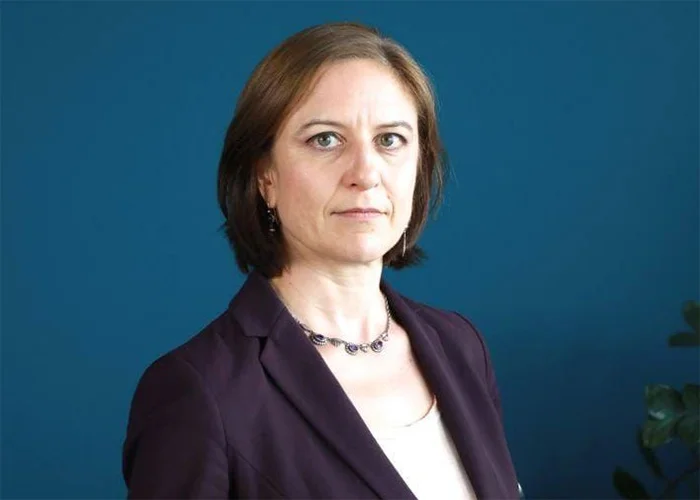
Mass grave excavations in Sri Lanka are a stark reminder that thousands of cases of enforced disappearance remain unresolved, the Sri Lanka Core Group has told the UN Human Rights Council, urging Colombo to translate its stated commitment to reform into concrete progress, while again stopping short of calling for the international accountability that Tamils have long demanded.
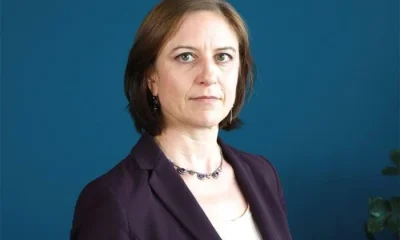
The statement, delivered in Geneva, on Tuesday (08), during the Council’s 63rd session by the United Kingdom’s Human Rights Ambassador Eleanor Sanders on behalf of Canada, Malawi, Montenegro, North Macedonia and the UK, welcomed, what it called, the High Commissioner’s balanced assessment of the human rights situation on the island.
The group acknowledged that Sri Lanka had faced considerable challenges recently, including severe weather events and global energy shocks, and welcomed positive developments, including the ratification of the ILO Convention 190 and engagement on the Convention on the Rights of Persons with Disabilities.
“However, much further action is needed to build confidence in accountability and reconciliation efforts,” Sanders said. “Progress in several emblematic cases has not yet been accompanied by a comprehensive,
victim-centred accountability process to address past violations. Mass grave excavations are a stark reminder that thousands of cases of enforced disappearances remain unresolved. And reports of intimidation, harassment, and restrictions affecting civil society, journalists and victims’ groups, including in the North and East, still raise concerns.”
The group urged progress on democratic governance, including advancing legal and institutional reforms, resolving land-related issues, ensuring respect for human rights in detention institutions and strengthening independent institutions.
The statement follows a familiar pattern. In June, the group acknowledged “developments in certain mass grave investigations” and urged that excavations meet international standards, and in March it called for the repeal of the Prevention of Terrorism Act. At the 58th session it welcomed a series of measures Tamils regarded as superficial. Neither this statement, nor its predecessors, names Chemmani, calls for international oversight of the excavation, or addresses the demand for a referral to the International Criminal Court.
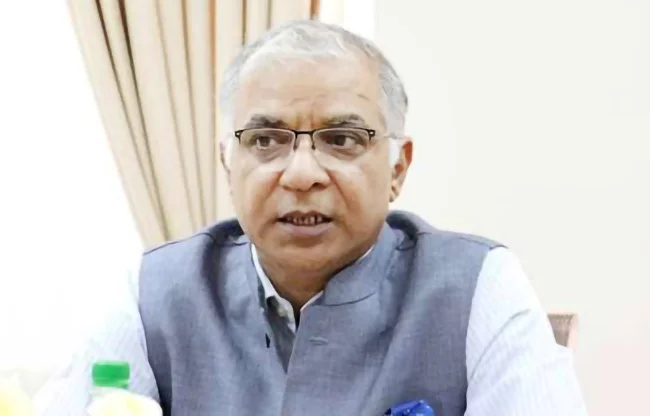
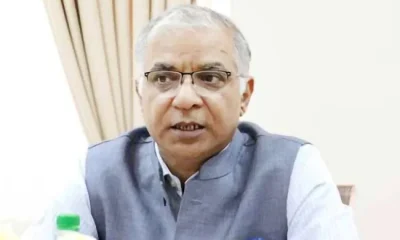
Indian High Commissioner in Colombo Santosh Jha has said that security and defence were significant aspects in the Indo-Lanka partnership.
Speaking to ANI in Colombo in the wake of Indian Defence Minister Rajnath Singh’s visit, Jha said: “If you look at the last 2-3 years, the engagement between India and Sri Lanka has acquired a new intensity. There is a regular exchange of ministerial-level visits from India to Sri Lanka and from Sri Lanka to India. We need to see this as part of that. As you know, we have several different aspects of our partnership. Security and defense are very significant aspects of that. The visit of the Defence Minister is in the context that we will be taking forward some of the ongoing initiatives. We’ll exchange notes on how far we have come so far on various defense cooperation issues. I must also request that people see it in the larger context. He’s a very senior leader from India, a person who has been at the helm for many years, and so we are looking at this as part of the larger political-level exchanges between India and Sri Lanka.”
Building upon this strategic framework, the Indian High Commissioner underscored the sweeping, multi-sectoral scale of bilateral cooperation extending far beyond security ties. HC Jha added: “We have a large developing partnership. When the Indian Prime Minister was here, we had a number of MoUs signed between India and Sri Lanka. He had also described our relationship as very expansive and across several sectors, like connectivity, energy, development, security, and defence, there are people-to-people exchanges. There is a population-level scale rollout of a unique digital identity platform that will be happening in Sri Lanka very soon. So there is this entire spectrum of relationships that is growing a bit by bit. Of course, it can’t be a dramatic growth suddenly, but one by one, we are handling these issues, and they are developing…”
Commenting further on the robust economic and commercial dimensions driving this evolving partnership, Jha pointed to surging trade, investment inflows, and tourism metrics that anchor bilateral prosperity.
Jha said: “India is now once again the largest trade partner of Sri Lanka, and more importantly, India has become the second largest destination for Sri Lankan exports. Which, if you would recall, is the original intent of the free trade agreement that India and Sri Lanka signed, because the idea is that there should be greater access for our neighbours to the Indian market, and they should benefit through access to the Indian market, and that was the intent of the free trade agreement. This is really showing up in figures as well. India is also the largest source of investment in Sri Lanka. In 2025, more than 50% of the investment into Sri Lanka came from India, including those that came from Indian companies in third countries. But I would regard them as investments from India because they’re coming from Indian companies, and India has always been the biggest source of tourism traffic, which is a major source of prosperity in Sri Lanka.” Aligning with these extensive diplomatic exchanges, Defence Minister Rajnath Singh touched down in Colombo today to commence a three-day official visit centred on augmenting bilateral maritime and security cooperation.

Frontline Socialist Party (FSP) yesterday urged the government to disclose the three agreements signed with India on defence matters.
Top FSP spokesman Pubudu Jayagoda, of the breakaway JVP group, said that the seven MoUs signed in early April 2025 when Indian Prime Minister Narendra Modi visited Colombo hadn’t been presented to Parliament yet. “We have to examine the latest agreements against that background, ” Jayagoda said.
Jayagoda pointed out that the declaration that Indian Defence Minister Rajnath Singh was here to exchange MoUs on upgrading of L70 guns earlier provided by India to Sri Lanka during the war and cooperation between National Cadet
Corps (NCC) and National Defence Colleges (NDC) of both the countries as well as an MoU on academic cooperation between NDC, India and NDC couldn’t be acceptable.
Such a high ranking politician couldn’t have undertaken a three-day visit to sign minor agreements, Jayagoda said. Altogether, since the last presidential election, nine MoUs had been signed and none of them made public so far, he added.
Jayagoda also questioned the government aligning itself with India and US thereby taking an extremely dangerous path. (SF)

UK-led Core Group calls Jaffna mass graves a ‘stark reminder’ but stops short of calling for international accountability

India underscores security and defence in overall partnership with SL

If Sri Lanka wants ‘real’ stability, only one way to achieve it, in a short time

Human dignity comes centre stage in Afghan refugee deportation crisis

22A: Flawed logic and mistruths

Selectors play it safe, perhaps too safe

‘Dates have the highest sugar content to fight Coronavirus’

Sunday Island 27 December – Headlines

#SundayIsland 17th December – Headlines

Sunday Island – 28th March

Sunday Island Headlines – 21 March

Sunday Island – 21st February – Headlines
-

 News7 days ago
22A: SC urged to suspend hearing, appoint full bench
-
 News5 days ago
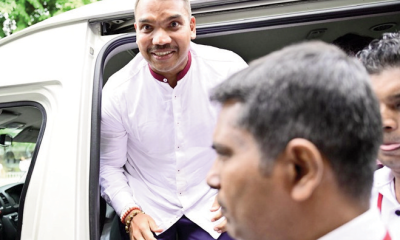
Namal remanded until Sept. 18 over Airbus deal investigation
-

 Latest News4 days ago
Tharanga creates history with Diamond League crown in Brussels
-

 News4 days ago
Dispute which triggered listed company director being detained at BIA resolved
-

 Features3 days ago
After the parade: What a traffic OIC’s walk-out tells us
-
 Opinion6 days ago
In Memory of Dr Upatissa Pethiyagoda
-

 Editorial5 days ago
Power vs Equality
-
 Latest News6 days ago
SLPP MP Namal Rajapaksa arrested by CIABOC