
Business
SLT-MOBITEL doubling the cloud with country’s first-ever VMware Cloud Foundation deployment, changing cloud dynamics


Understanding the importance of breaking new ground to reap the benefits of Enterprise premium cloud services, SLT-MOBITEL, the National ICT Solutions Provider, has become the country’s first-ever service provider to enable VMware Cloud Foundation (VCF) deployment in the island and importantly the first telco provider to have two clouds. Amidst the changing dynamics, the deployment milestones are supporting SLT-MOBITEL’s Cloud programme in accelerating digital transformation.
SLT-MOBITEL Enterprise premium cloud was launched in 2018. Having a successful journey for over three years, the new mobilization now elevates and transforms the premium cloud through VMWare Cloud Foundation. Importantly, SLT-MOBITEL is the first local organisation to partner VMWare as a Business Continuity Certified Planner (BCCP) and initiate VMWare Cloud Foundation in Sri Lanka.
VMware Cloud Foundation is a suite of VMware products that provide building blocks necessary to implement an integrated software-defined data center platform. Its components combine to automate deployment and lifecycle management, helping to simplify IT operations and reduce administrative overheads for enterprises.
With its Cloud Verified Status and as a VCF Enabled Partner, SLT-MOBITEL is now in the forefront as the only service provider in the country offering a range of new differentiated services such as automate infrastructure and application delivery with self service capabilities to help organizations plan, manage and scale their data center operations especially dramatically reduce provisioning times and cut operational costs.
The SLT-MOBITEL VMware VCF deployment ensures customers transition to the industry’s most advanced cloud platform with a complete set of software-defined services for compute, storage, networking, security and cloud management to run enterprise apps in private or public environments.
By doubling the cloud SLT-MOBITEL establishes customers have both production and disaster recovery sites with different scales, located at two different Data centres with required ROP and RTO. The Disaster recovery site can be deployed at any scale with respect to production sites according to the enterprise customer’s requirement. SLT-MOBITEL also provides migration as a service with the features from NSX –T.
Through VCF, SLT-MOBITEL is offering customers the benefit of real disaster recovering services, a Software-defined Data Center (SDDC) and monitoring services, latest networking enablers with NSX – T up-to-date versions of VMware software vSphere, vSAN and intelligent, advanced VMware capabilities including ESXI and VSAN and efficient and effective migration services.
SLT-MOBITEL also provides IaaS services, Virtual Machines, and Virtual Data Centers along with a range of other support facilities such as Disaster avoidance with Stretch Cluster (RPO 5 minutes), Disaster Recovery as a Service, and Backup as a service.
Above VCF deployment is directly done by Vmware Professional Service team to ensure the highest quality deployment .


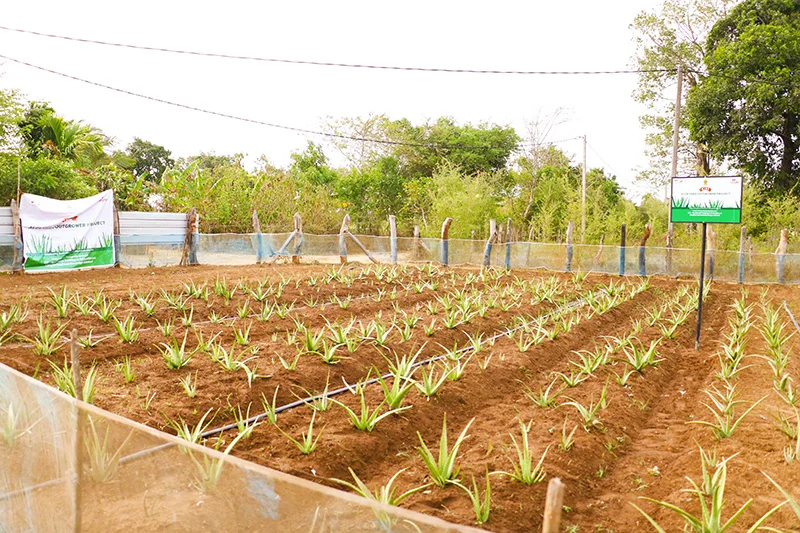
When the doors of the Cargills Kist primary food processing plant first opened in Kilinochchi’s Ariviyal Nakaram area in 2013, there were no advertisements, public announcements, or grand promotional campaigns. Yet, stretching down the dusty road, a long, quiet queue of local residents had formed. They were war-battered northerners looking desperately for a fresh start, and among them, an overwhelming majority were young women and war widows.
On that single day, 70 women were interviewed and hired, stepping into a facility that promised the exact same salaries, perks, and allowances as the Kist plant in Colombo. Today, thirteen years after the factory first opened its doors, many of those senior employees still walk just a kilometer or two from their homes to the factory floor every morning. They stand as living monuments to a corporate intervention that chose to build futures where everything else had been flattened. Enhancing the vibrancy on the factory floor, a new generation of young employees now works closely alongside these original mentors.
Sowing Hope in Scorched Earth
When the Cargills team first arrived in Kilinochchi after the war concluded, it was a town in name only; not a single roof remained standing, shops were non-existent, and the population survived in displacement camps. A baseline survey of 2,000 locals conducted by the company revealed a profound disconnect: an entire generation had been completely separated from agriculture and lacked the know-how, seeds, or market access to restart their lives. However, they possessed one hidden, resilient asset – hardy Jaffna mango trees that had miraculously survived the crossfire.
Partnering with international agencies like USAID and IFAD, Cargills spent three grueling years navigating the absence of a proper civil administration to construct the Kilinochchi primary processing facility. They taught locals how to harvest and pack mangoes without bruising, introduced commercial passion fruit cultivation to the region, and established a reliable buyback system for the outgrowers. Today, the plant absorbs 30 to 35 tons of local fruits and vegetables daily from them -including woodapple, melon, passion fruit, and now, aloe vera – pumping direct liquidity into a community once starved of cash.
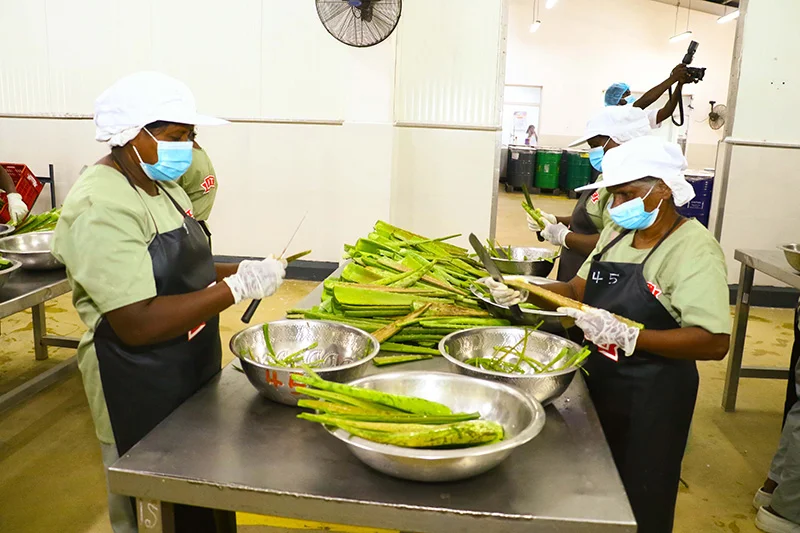
Aloe vera extraction process on Cargills Kist Factory Floor in
Kilinochchi. (Pix by Nishan S. Priyantha)
The Financial Architecture of Inclusion
With its 70-year legacy of providing nutritious, farm-fresh products to consumers, Kist’s latest project in Kilinochchi highlights how structural corporate responsibility can systematically erase regional disparities. A year ago, the company identified a rising global and local demand for aloe vera, an ingredient heavily used in beverages and personal care items that Sri Lanka was frequently forced to import. To root the supply chain locally, Cargills selected 100 stay-at-home women in Kilinochchi to pioneer commercial aloe vera cultivation. But the barriers to entry were steep: setting up a single quarter-acre required an initial capital of roughly Rs. 200,000 – an impossible sum for a low-income family. Worse, nearly 60% of smallholder farmers in Sri Lanka are blacklisted by the Credit Information Bureau (CRIB) due to past unpaid debts or a lack of physical collateral, locking them out of traditional banking ecosystems.
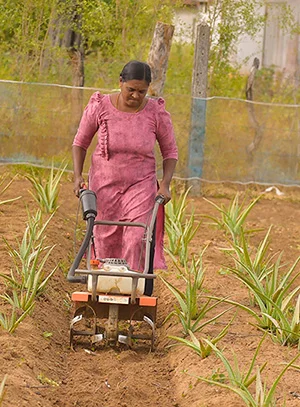
Female farmer cum owner
Vigneswaran Kamalanayaki at
work
To bypass this systemic gridlock, Cargills Food & Beverage Limited Managing Director Arjuna Kumarasinghe stepped forward with a corporate guarantee from the parent company, enabling Cargills Bank to issue micro-loans without demanding collateral.
Alongside technical assistance and irrigation equipment funded by the German development agency (GIZ) – a collaboration facilitated by Haridas Fernando, Group Manager of Agribusiness at Cargills Ceylon PLC – Cargills Bank rolled out mobile banking units to bring true financial inclusion directly to the doorsteps of the North.
To further insulate farmers from volatile market forces, the company integrated a dual-channel model. When market prices spike, farmers are entirely free to sell to any buyer of their choice. However, if the market crashes or surpluses build up, Cargills honours a guaranteed floor price of Rs. 90 per kilo at its processing plant, absorbing the risk and ensuring the farmer never loses.
The Rise of the Agripreneur

Arjuna
Kumarasinghe,
Managing Director,
Cargills Food &
Beverage Limited
The real-world metrics of this intervention are vividly visible in the backyards of Mankulam. Vigneswaran Kamalanayakie, a 37-year-old mother, manages a quarter-acre aloe vera plot adjacent to her home while caring for her young child. Utilising a modern “rain hose” irrigation system that waters the entire plot in just a few minutes, she has fundamentally altered her family’s financial trajectory. Even before her first formal leaf harvest, Kamalanayakie earned Rs. 50,000 simply by selling the aloe vera shoots generated by her crop. With her initial leaf harvest projected to bring in Rs. 100,000, she is entering a monthly earning cycle that scales up to an estimated Rs. 1,200,000 annually. She is already making active plans to double her plot to secure a multi-million rupee income.
Through Agronomy Extension Officers and dedicated field animators, these women are coached in crop management, pest control, and year-round continuous harvesting methods. They are no longer subsistence farmers vulnerable to the whims of middleman collectors; they have transitioned into bankable agripreneurs.
A Solid Pulp of Purpose
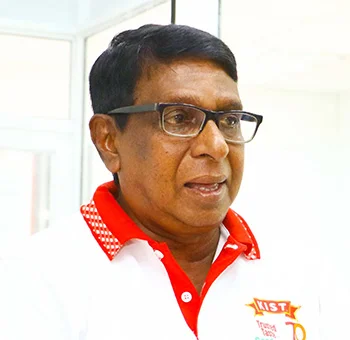
Haridas Fernando,
Group Manager,
Agribusiness,
Cargills Ceylon PLC
By leveraging its 14 collection centers across Sri Lanka, its main manufacturing facility in Katana, and over 500 retail outlets operating across all 25 districts, Cargills has built an incredibly resilient, closed-loop domestic supply chain.The Kilinochchi factory stands as the ultimate thesis statement for this corporate strategy.
Without beating the drums of self-adulation, Kist has blended humanity, national duty, corporate responsibility, and business ingenuity into a solid pulp.
In doing so, it has proven that the most delicious and wholesome aspect of a brand’s legacy isn’t just the product it puts on store shelves, but the dignity it restores to the people who grow it.
By Sanath Nanayakkare

Sampath Bank PLC has received three major honors at the World Finance Banking Awards 2026, being named Sri Lanka’s Best Retail Bank, Best Commercial Bank, and Best Corporate Governance – Sri Lanka. Presented by the UK-based World Finance magazine, these awards recognize excellence in performance, innovation, customer value, leadership, sustainability, and governance. This marks the 12th consecutive year that Sampath Bank has won the retail and commercial banking titles, underscoring its long-standing ability to serve individuals, businesses, and communities effectively. The new governance accolade highlights the bank’s strong commitment to transparency, accountability, ethical leadership, and responsible stewardship.
Managing Director Sanjaya Gunawardana expressed pride in the achievements, noting they reflect customer trust, employee dedication, and stakeholder confidence. He emphasized that while the retail and commercial awards recognize consistent value and innovation, the governance honor affirms the strong principles guiding the bank’s decisions. World Finance uses a rigorous evaluation process based on financial performance, innovation, customer experience, sustainability, and leadership. Sampath Bank’s governance recognition stems from robust Board oversight, proactive risk management, and a culture of responsibility. Together, these awards reinforce the bank’s mission to build a resilient, future-ready institution that contributes to Sri Lanka’s progress.
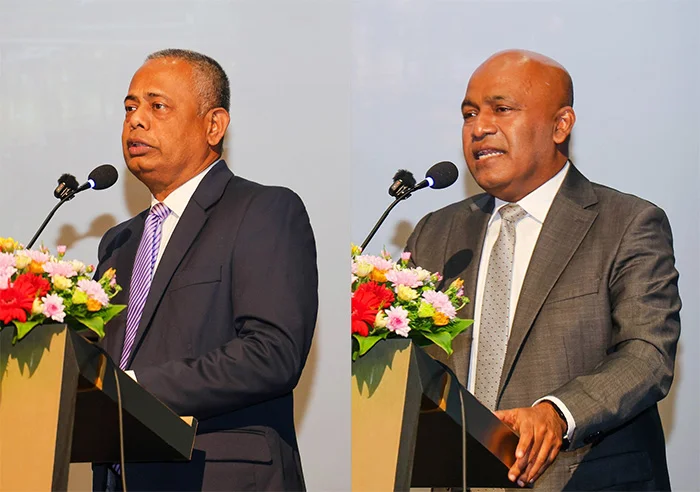
People’s Bank commemorated its 65th Anniversary on 1st July. The Bank commenced its anniversary celebrations with a special event held at People’s Tower in Colombo.
The gathering was addressed by the Chairman of People’s Bank, Prof. Narada Fernando, and the Chief Executive Officer/General Manager, Clive Fonseka. Coinciding with its 65th Anniversary celebrations, People’s Bank also launched the latest edition of the Economic Review magazine under the theme, ‘Sri Lanka’s Export Renaissance: Diversification, Innovation and Global Competitiveness’.

Death toll in violent clashes at Negombo Prison rise to 25

The Government is committed to equipping children with new technology and knowledge – PM

Bellingham inspires 10-man England to beat Mexico 3-2 in last-16 thriller

Haaland scores twice as Norway stun Brazil 2-1 in World Cup 2026 last 16

A few showers will occur in the Western and Sabaragamuwa provinces and in Galle, Matara, Kandy and Nuwara-Eliya districts

Appointment of SPO to probe AG on hold until establishment of Ind. Public Prosecutor’s Office

‘Dates have the highest sugar content to fight Coronavirus’

Sunday Island 27 December – Headlines

#SundayIsland 17th December – Headlines

Sunday Island – 28th March

Sunday Island Headlines – 21 March

Sunday Island – 21st February – Headlines
-

 Features7 days ago
Climate action to bring South Asia together
-

 News7 days ago
Chamuditha to seek removal of injunction on Youtube programme
-

 News2 days ago
Singapore-based Buddhist monk marks nearly four decades of humanitarian service
-

 News3 days ago
Freedom 250: US Embassy celebrates America’s 250th Independence Day through magic of American cinema
-

 News4 days ago
CIABOC to question Harak Kata on Rs. 200 mn bribery allegation
-

 Opinion7 days ago
Matara Maha Keralla– Uprising against the Dutch
-

 News4 days ago
SLAF conducts successful rescue mission under UN command in Central African Republic
-

 Business7 days ago
The US occupation of the Indian Ocean ‘Zone of Peace’