
Editorial
Ranil with president, people or both?


New Prime Minister Ranil Wickremesinghe told a British journalist at the Walukaramaya temple where he had gone to obtain blessings after being sworn as prime minister for the sixth time in his 73 years that Churchill became Britain’s prime minister in 1939 with only four MPs. He’s become Sri Lanka’s with one! This was typical Wickremesinghe parrying questions with debating flair. He knows European history, perhaps a little better than he knows Sri Lanka’s. But there too he is no neophyte. Hours after his swearing, Ven. Omalpe Sobhitha, today a very visible political monk in the anti-Gotabaya camp declared this was a “deal.” What else can it be? How else can the man who brought the UNP down to zero in the incumbent parliament, and thereafter procrastinated for months in filling their only national list seat before taking it himself become the prime minister of a government not yet into its second year?
What can be the bottom line of any alleged deal? Obviously there will be no chasing Ali Baba and his forty thieves. That said, there will be many who will believe that Ranil is the best man for the present moment. He has more experience than any of his rivals in the political field and he is certainly no fool. His pro-western and pro-business tilt is a given. That perhaps was why one of the earliest congratulatory tweets was from the U.S. ambassador in Colombo. Mahinda Rajapaksa and Namal too were among the early tweeters. Maybe they feel less hounded now. GR obviously would not have made his pick without the confidence that the majority of the SLPP will back his choice. That however may not be unanimous. Vasudeva Nanayakkara for instance cannot be expected to support a UNP prime minister. But there are many that can be influenced by office; others by protection and not a few must watch their backs. Aiyo (or Cheerio) Sirisena can tilt either way; but however that be, he will not he able to chart the course for the whole group of SLFP MPs. Also, will Sajith Premadasa who has clearly dropped a catch by procrastinating in taking an offer he now feels he should not have refused be able to hold his group together?
There are capable, untainted MPs in the SJB with the ability to selflessly serve a national revival government that the country desperately needs. Wickremesinghe will be glad to have them. But whether they will chance their future political careers by serving a government created by a political horse deal remains to be seen. Public opinion is near unanimous that what GR has done is in the Rajapaksa interest including his own. Anybody coming on board will not be cheered. No doubt many Pohottuwa MPs, bleeding from the blows that their personal property have taken from the ugly turn of what was at first an idealistic, non-violent protest to get the Rajapksas out of the national polity, will now do what’s best for themselves: protection from further attack and, perhaps, compensation down the road. They will remember REPIA (Rehabilitation of Property and Industries Authority) that followed Black July 1983 when victims were compensated.
That Gotabaya must go remains the national demand and it is unlikely (if not impossible) that the president has appointed a prime minister who is out for his blood. Mahinda Rajapaksa, before he succumbed to lunacy and let loose an organized horde on the Galle Face protesters appeared confident of his numbers in parliament. Despite all that has happened since, the likelihood is that the no confidence vote against the president, like the touted impeachment, remains a long shot. If that is the way the process unravels and the outcome favours Gotabaya Rajapaksa, then Ranil Wickremesinghe is home and dry. But for how long is an imponderable in the context of what cinema-goers brand as a “fast breaking serial.”
The Colombo stock market reacted positively to the political developments with both the broad based All Share Price Index and S&P SL20 covering more liquid shares gaining sharply on Friday on a respectable turnover. That, of course, does not mean that investors are now confident that Sri Lanka has turned the corner and is back on track towards regaining political and economic stability. Stock indicators are volatile and their signals are for the day; not even for the short term. Important considerations on whether a new prime minister and government are going to be good for the country will include the external view. The West is likely to favour present developments and India may fall in line. Whether China will come on board is an open question.
Soon after his swearing, Ranil Wickremesinghe said that the Galle Face protests will be allowed to continue as at present and there will be no interference. But hours before he said that police warned over loudspeakers on the green that a curfew was on and nobody was permitted in public places. But they didn’t enforce their threat. Already burnt by their tepid response to the Temple Trees horde setting upon the ‘Gota Go Home’ crowd, the Rambukkana shooting and perhaps what happened to SDIG Deshabandu Tennekoon, the cops were pussyfooting. But the ‘clear the green’ announcement would not have been made without clearance from the top. Now there’s a ‘lay off’ order from the new PM. So let’s wait and see how events unfold.



Friday 10th July, 2026
The latest bout of prison violence has brought the appalling conditions of Sri Lanka’s prisons to light once again. Whenever riots erupt in prisons and lives are lost, issues such as prison congestion, squalor, etc., attract the attention of legislators and other policymakers, but hardly any remedial action is taken, and no wonder the status quo remains. Governments only pay lip service to prison reforms, which have become mere political slogans.
Over the past few days, many members of Parliament have been shedding copious tears for the victims of the Negombo prison violence, which claimed about 28 lives, including those of seven officers, but sadly nothing comes of their so-called discussions and debates. Cynics say Sri Lanka has a NATO (No-Action-Talk-Only) parliament, where its members talk the talk, but seldom walk the walk. They ought to sink their political differences and find ways and means of improving the conditions of prisons, which are widely considered hellholes. Haphazard prison reforms won’t do.
Meanwhile, as for remand prisons, there is a crucial issue that needs to be addressed urgently. Even a brief stay in a Sri Lankan remand prison is tantamount to punishment in itself before conviction, as is public knowledge. Suspects are so vulnerable in prisons that they even run the risk of being beaten to death, as we saw the other day in Negombo. Successive governments have abused the PTA (Prevention of Terrorism Act), the Offences against Public Property Act, etc., to have suspects arrested and remanded for prolonged periods.
Many people languish in remand prisons due to politically motivated arrests and selective enforcement that the police have earned notoriety for. The police ought to conduct thorough investigations and gather credible evidence before moving to arrest suspects who are not hardcore criminals posing a danger to society. It defies comprehension why so many suspects are arrested and kept in remand prisons for months on end even when there is no reason to suspect that they will flee the country, interfere with witnesses, suppress evidence, commit further serious offences, or pose a significant danger to the public.
Pretrial arrests, remand or detention should be the exception and not the rule, especially in a country like Sri Lanka, which cannot even ensure the safety of convicts and remand prisoners. The police make arrests swiftly and thereafter drag their feet on investigations while objecting to bail for suspects. Most suspects who are arrested and remanded in this manner are political opponents of the governments in power. There have been numerous such cases during the past several decades. Ruling party politicians use arrests to vilify their opponents and gain political mileage. They abuse their parliamentary privileges to defame suspects in custody and hold social media kangaroo trials with impunity. They apparently presume suspects guilty until proven innocent. When they do so, the police cannot be expected to conduct impartial investigations; the police dare not do anything that might cause the ruling party politicians to lose face. It is no surprise that the police have been accused of fabricating evidence against suspects who have incurred the wrath of ruling party politicians.
Holding a person on remand indefinitely until the conclusion of investigations is not consistent with due process and international best practices. The rule of law demands that the police or other investigators establish reasonable grounds to suspect an offence, collect and preserve evidence, interview witnesses, question suspects and assess the facts objectively before depriving anyone of personal liberty. They must not act according to their whims and fancies or at the behest of their political masters.
Premature arrests risk wrongful detention, reputational damage, hardships and expensive legal challenges for suspects. They could also compromise public confidence in law enforcement and lead to perceptions that investigations are influenced by political pressure or public sentiment rather than facts. When the rule of law is undermined, the justice system becomes weak.

Thursday 9th July, 2026
The latest episode of prison violence has come to an end, after claiming 28 lives and leaving more than 100 others injured. But political battles are still raging over it. The government and the Opposition continue to clash; they traded allegations and insults in Parliament on Tuesday and Wednesday. The Opposition is all out to lay the blame for the prison violence squarely on the government. It is demanding the resignation of Minister of Justice and National Integration Harshana Nanayakkara.
The government has struck back, asking whether any Yahapalana politician resigned over the Easter Sunday terror attacks in 2019. Many of the SJB politicians were in that failed administration. That argument is however self-defeating in that the JVP was a partner of the dysfunctional Yahapalana government in all but name and defended it to the hilt in Parliament.
Moreover, there were devastating terror attacks on military and civilian targets during the Eelam war. A considerable number of military installations, including the Mullaitivu camp and the Elephant Pass base were overrun by the LTTE, which killed hundreds of military personnel, but no politician resigned. There have also been several major incidents of prison violence. As we pointed out yesterday, in 1983, 53 Tamil prisoners were massacred inside the Welikada Prison in two separate attacks. In 2012, about 27 inmates were killed during a riot in the same prison, following a search operation conducted by the STF for weapons, drugs and mobile phones. In 2020, violent clashes in the Mahara Prison left 11 inmates dead. But ministers in charge of prisons did not resign. So, it may be argued that neither the SJB nor the UNP nor the SLPP has any moral right to call for anyone’s resignation over the Negombo Prison riots.
Opposition politicians and their propagandists may go on shouting until they are blue in the face, but their efforts to see the back of Minister Nanayakkara will be in vain. Sri Lankan governments are notorious for shielding politicians and officials loyal to them, no matter what. The incumbent dispensation is no different. One may recall that it went to the extent of bringing two senior CID officers out of retirement, elevating them to high posts in the public security sector and entrusting them with the task of probing the Easter Sunday carnage, which they themselves failed to prevent despite repeated warnings, while they were at the helm of the CID in 2019. So, it is only wishful thinking that the government will ever ask Minister Nanayakkara to resign over the Negombo Prison killings.
Interestingly, an NPP MP’s attempt to distract Parliament and the public from the Negombo Prison violence by bashing the former rulers, boomeranged on the government. Deputy Minister Mahinda Jayasinghe displayed a picture in the House, claiming that it showed Namal Rajapaksa with notorious criminal Julampitiye Amare at a public event. His claim prompted Opposition MP Chamra Sampath Dassanayake to remind the government that it was the JVP that had enabled Mahinda Rajapaksa, accused of shielding the likes of Julampitiye Amare, to win the 2005 presidential election and paved the way for the rise of the Rajapaksa family in national politics.
Worryingly, more often than not, parliamentary debates descend into slanging matches. They cost the public an arm and a leg. A parliamentary sitting costs taxpayers about Rs. 32.2 million, according to research conducted by some civil society organisations. It behoves the government and the Opposition to stop wasting public funds, and use parliament time productively to discuss issues of national importance seriously, manage state funds frugally and make progressive laws.
As for prison violence, the focus of parliamentary debates must be on structural problems in Sri Lanka’s prison system, including overcrowding, delays in court proceedings, gang rivalries, drug peddling, inadequate facilities, corruption and difficulties in maintaining security in large custodial institutions, the causes of the latest prison riots, and what needs to be done to improve prison conditions and prevent violent clashes and human rights violations in prisons. Parliament, maintained at public expense, is not the place for verbal slugfests, which can be staged elsewhere, if at all.
Wednesday 8th July, 2026
Prison riots in Negombo have claimed 27 lives including those of seven officers and left more than 100 others injured. It is believed that a clash between a group of drug peddlers among inmates and those who opposed their illegal operations led to the deadly mayhem. A committee has been appointed to probe the violence.
The drug Mafia has flexed its muscles again. The government has embarked on an ambitious campaign to rid the country of narcotics, and rightly so. The ongoing nationwide drug bust deserves the fullest public cooperation. However, if the latest outbreak of prison violence is anything to go by, a special programme needs to be launched to root out the scourge of narcotics in prisons, where some corrupt officers are in league with drug dealers.
The mastermind behind the Negombo Prison riots has been identified. He is an associate of a powerful drug dealer, according to media reports. The netherworld of narcotics and crime has emerged so powerful that it can plunge the country’s prison system into utter chaos at will. Worse, in 2023, an underworld gang planned a commando-style operation to free a drug dealer, called Nadun Chinthaka alias Harak Kata, detained at the CID headquarters. The STF managed to scuttle their plan. We reported that the gang had enrolled some serving military personnel and a sniper for the attack to spring its leader free. Another drug leader had High Court Judge Sarath Ambepitiya and his MSD bodyguard Inspector Upali Ranasinghe gunned down in late 2004. An underworld gang attacked a prison bus in Kalutara, killing five of its rivals and two prison guards, in 2017. Successive governments have only made half-hearted attempts to neutralise powerful crime syndicates run by drug dealers.
It is puzzling why the prison authorities did not transfer all troublemakers responsible for Sunday’s clash in Negombo to other prisons, after bringing the situation under control. On Monday morning, they gave the all-clear. It was the calm before the storm; violence erupted again soon afterwards. There was a total intelligence failure. If the rioters had been sent to other prisons on Sunday itself, Monday’s violence could have been averted.
Sadly, incidents of prison violence lead to political clashes between the government and the Opposition. There have been several deadly riots in prisons during the past several decades. In 1983, about 50 Tamil prisoners were massacred inside the Welikada Prison in two separate attacks. In the same prison, 27 inmates were killed in 2012 during a riot that followed a search operation conducted by the STF for weapons, drugs and mobile phones. In 2020, violent clashes in the Mahara Prison left 11 inmates dead. All those incidents triggered political battles, with Opposition politicians flaying their ruling party counterparts for failure to ensure the safety of prisoners. If they had put their heads together and taken action to eliminate the root causes of prison unrest and violence, instead of fighting political battles, perhaps the Negombo prison riots would not have occurred.
There have been some half-hearted attempts at prison reforms under successive governments. But the structural problems in Sri Lanka’s prison system remain unresolved. They include overcrowding, delays in court proceedings, gang rivalries, drug peddling, inadequate facilities, corruption and difficulties in maintaining security in large custodial institutions. The Negombo prison is reported to have been experiencing a shortage of officers. These issues have to be resolved urgently as part of a multi-pronged strategy to make prisons safe. Rhetoric won’t do.
Following the Mahara prison violence in 2020, President Anura Kaumara Dissanayake, who was an Opposition firebrand at that time, went ballistic in Parliament, condemning the then SLPP government for its failure to protect prisoners. A video of his fiery speech is doing the rounds in the digital realm. It has become grist for the Opposition’s mill.
Opposition politicians are now doing what the JVP did in the past; they are tearing into the JVP-NPP government over the Negombo prison violence. But prisons will not be any less vulnerable to violence even if the holders of power change; those who are berating the current administration may find themselves in the dock one day if they form a government.

Dharmaraja and Kingswood set for historic rugby clash on Saturday

Sri Lankan singer Mariazelle Goonetilleke passes away at the age of 68

Tensions erupt in Indian state after 11-year-old raped and murdered

US and Iran trade attacks as Khamenei is buried

Several spells of showers will occur in the Western, Sabaragamuwa and North-western provinces and in Galle, Matara, Kandy and Nuwara-Eliya districts

Canadian PM visits Saudi Arabia to strengthen energy, mining partnerships

‘Dates have the highest sugar content to fight Coronavirus’

Sunday Island 27 December – Headlines

#SundayIsland 17th December – Headlines

Sunday Island – 28th March

Sunday Island Headlines – 21 March

Sunday Island – 21st February – Headlines
-

 News5 days ago
Singapore-based Buddhist monk marks nearly four decades of humanitarian service
-

 News6 days ago
Freedom 250: US Embassy celebrates America’s 250th Independence Day through magic of American cinema
-

 News4 days ago
AI concerned over proposed SL military deployment in Haiti
-

 Midweek Review2 days ago
Unexpected focus on ‘pieces of tin’ worn by military men
-

 Features5 days ago
The NPP’s New Challenge: Balancing Easter Lawfare and Economic Welfare
-
 Latest News3 days ago
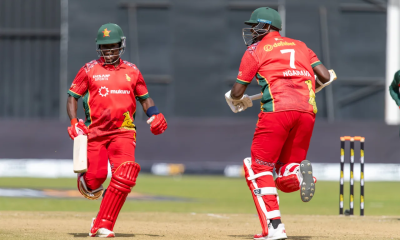
Nyamhuri and Ngarava stun Bangladesh by defending 141
-

 Latest News6 days ago
Ukrainian suspect hunted by police after Monaco bomb attack was ‘disguised as a man’
-

 News1 day ago
Negombo Prison riot: Ensuring protection of prisoners fundamental responsibility of the state – UN