
News
AI calls for protection of human rights of everyone

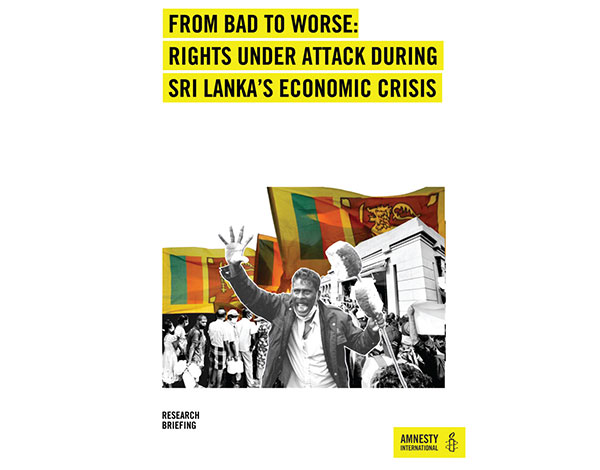
As the people in Sri Lanka are facing a catastrophic economic crisis, the government must protect the human rights of everyone and ensure an enabling environment for peacefully expressing dissent, Amnesty International (AI) said.
In a report titled ‘From Bad to Worse: Rights Under Attack During Sri Lanka’s Economic Crisis’, the AI also called for the international community to support Sri Lanka in its recovery in line with obligations around international cooperation and assistance, with a particular focus on marginalized groups who are at grave risk.
“The crisis in Sri Lanka is a prime example of the interdependence and interrelatedness of economic and social rights and civil political rights. As such, human rights must be at the heart of discussions on Sri Lanka’s economic future,” said Yamini Mishra, South Asia Regional Director for Amnesty International.
“We urge the international community to step in where possible to support Sri Lanka with necessary financial and technical assistance, such as debt relief and aid, in line with a human rights based assessment of the situation to ensure the economic crisis does not deteriorate into a humanitarian crisis.”
Sri Lanka is facing a balance of payment crisis and a severe foreign exchange shortage compounded by Covid-19 lockdowns, pre-pandemic tax cuts and loss of access to international capital markets. As it stands, foreign exchange reserves are critically low, making the import of essential medicines, food items, cooking gas and fuel, immensely difficult. This is affecting all major sectors, including education, health and livelihoods.
At least five individuals have died while standing in line for essentials and, to date, a total of 75 individuals have reached Tamil Nadu in India seeking economic refuge. Thousands of people in Sri Lanka have taken to the street in a show of resistance using creative slogans, art, theatre, dance, music and technology. Their demands are for the resignation of the President and the Prime Minister, but also include calls for accountability for wide-ranging human rights violations, inter-ethnic, religious unity and harmony. According to the information collected by Amnesty International, the protests have been largely peaceful; however, in several instances, the Sri Lankan authorities have unlawfully restricted their right to freedom of peaceful assembly, including the use of force, tear gas and arbitrary detentions.
The authorities must uphold human rights to freedom of movement, liberty and security of person. Also, Sri Lanka has ratified the International Covenant on Economic, Social and Cultural Rights, and has an obligation, both individually and through international assistance and cooperation, to guarantee economic and social rights. These rights include the rights to health, education, social security, adequate food, and an adequate standard of living.
In February this year, the International Monetary Fund (IMF) recommended that “social safety nets should be strengthened, by increasing spending, widening coverage, and improving targeting, to mitigate the adverse impacts of macroeconomic adjustment on vulnerable groups,” however, to date, the only proposals approved by the Sri Lankan Cabinet have been to provide ad-hoc handouts for a period of three months for low-income families. The government must urgently fund and expand social security systems and ensure that all people, including marginalised groups, are protected from the impacts of the crisis.
Amnesty International has observed that austerity measures introduced previously in several other countries in the context of economic crises have seriously impacted economic and social rights protections. In Greece and Spain, for example, austerity measures made healthcare less accessible and affordable, which had a disproportionate impact on those with lower incomes, and particularly on the elderly, those needing mental health care and treatment, those with disabilities, and with chronic health conditions.
“Lessons must be learnt from similar experiences from across the world to avoid serious repercussions,” said Yamini Mishra. “Any austerity measures introduced in Sri Lanka must be based on a human rights assessment, should be open for public scrutiny and feedback in an inclusive and participatory process, and all alternatives must be explored before they are introduced. Austerity measures must not disproportionately impact the marginalized groups and must be strictly temporary.”

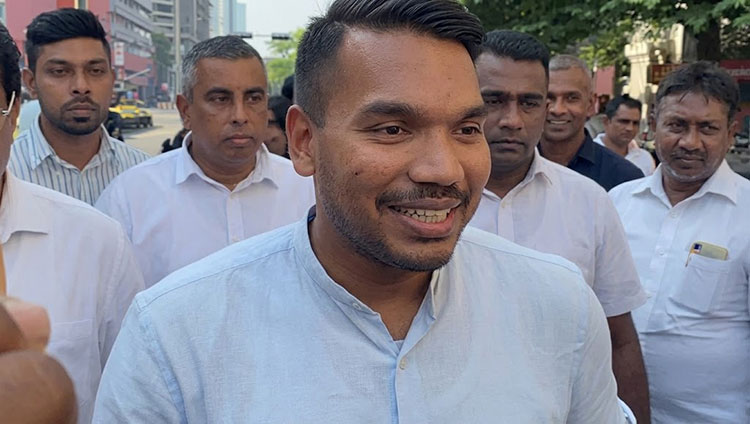
Sri Lanka Podujana Peramuna (SLPP) Member of Parliament Namal Rajapaksa has been arrested by the Commission to Investigate Allegations of Bribery or Corruption (CIABOC).
Namal Rajapaksa had been summoned by CIABOC to provide a statement in connection with investigations into the controversial Airbus deal. He was subsequently arrested by CIABOC after recording his statement for over 5 hours.
Latest News
Sun directly overhead Nittambuwa, Algama, Malwana, Aranayake, Meegahakiula and Panamkadu about 12.09 noon today (04)


The sun is going to be directly over the latitudes of Sri Lanka from 28th of August to 07th of September due to its apparent southward relative motion.
The nearest places of Sri Lanka over which the sun is overhead today (04) are Nittambuwa, Algama, Malwana, Aranayake, Meegahakiula and Panamkadu about 12.09 noon.

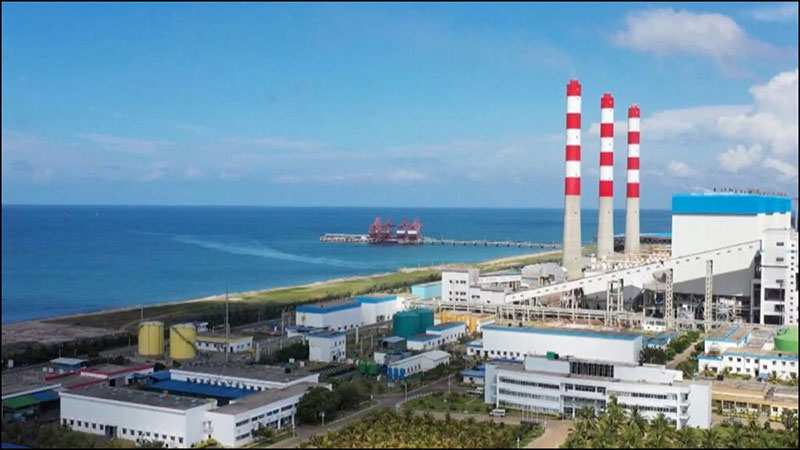
Plant’s output cut from 270 MW to 140 MW amidst dwindling stocks; energy analysts warn system remains “at a razor’s edge”
By Ifham Nizam
The Norochcholai coal-fired power plant is now digging into the last dredges of its coal stock, with two operational units forced to slash generation from around 270 MW to just 140 MW on Sunday as the plant ran critically short of fuel, according to independent energy analysts and sources familiar with the National System Operator (NSO).
The sudden reduction of approximately 130 MW in coal generation has once again exposed the fragile state of the country’s power supply arrangements, with the plant understood to have coal stocks sufficient only until Friday night.
“This is not how a coal plant is expected to operate. They are digging up the last dredges of coal from the plant,” an independent energy analyst told The Island.
The analyst questioned why the units had been allowed to reach this stage without earlier intervention, arguing that at least one unit should have been deloaded around 10 days ago to conserve the remaining coal.
Had that been done, the analyst said, the country could also have reduced its dependence on more expensive diesel-fired generation during the period when
coal stocks were being conserved.
The latest NSO generation figures highlight the continuing pressure on the system.
Around 7 p.m. on Sunday, when the night peak was reached, total demand stood at 2,552.7 MW. Coal contributed only 282 MW, while major hydro accounted for 1,215.8 MW and thermal-oil generation for 791.9 MW.
The night peak of 2,552.7 MW was substantially higher than the daytime peak of 2,246 MW, according to the NSO Generation Summary for August 30.
The most immediate concern is the remaining coal stock at Norochcholai.
Sources said the plant has coal only to Friday night, making the timing of the next shipment critical.
The first shipment under the emergency arrangement is expected to arrive on Friday, September 4, but the coal unloading will have to begin on the same day if
the power plant is to continue operating without further significant deloading.
That creates another potential vulnerability, with rough sea conditions posing an additional challenge to unloading operations.
Energy sector sources said that even the arrival of the September 4 shipment would not completely eliminate the danger.
The next shipment under the new coal tender would need to commence unloading around September 15. Any significant delay beyond that could again force the Norochcholai units to operate at reduced output.
“We are still at a razor’s edge”
The independent energy analyst said the situation should not be viewed merely as a question of whether a particular vessel arrives on time.
The situation also means that any further reduction in coal generation could have a direct impact on the use of oil-fired power generation, potentially increasing the cost of electricity generation.
The latest NSO figures already show the important role being played by thermal-oil generation during the evening peak, when demand rises sharply.
The analyst questioned the rationale behind allowing the coal units to continue operating at higher loading until stocks reached critically low levels instead of taking measures earlier to stretch the available inventory.

SLPP MP Namal Rajapaksa arrested by CIABOC

Devapathiraja clinch U15 Division I title with 33-run win over Royal

Mandhana’s record ton powers India into semi-finals

Sun directly overhead Nittambuwa, Algama, Malwana, Aranayake, Meegahakiula and Panamkadu about 12.09 noon today (04)

Showers expected in the Uva, Central and Eastern provinces and in Polonnaruwa and Mullaittivu districts after 2.00 p.m

Norochcholai digs into dwindling coal stocks, two units slash generation

‘Dates have the highest sugar content to fight Coronavirus’

Sunday Island 27 December – Headlines

#SundayIsland 17th December – Headlines

Sunday Island – 28th March

Sunday Island Headlines – 21 March

Sunday Island – 21st February – Headlines
-

 Features5 days ago
“Wrap Me Up in My Blazer”— A Gentlemanly Bradby Reminiscence
-

 Features4 days ago
When Sri Lankan stories find their own voice
-

 Features5 days ago
JVP/NPP government as seen from outside by Lionel Bopage now domiciled in Australia
-

 News4 days ago
BASL takes exception to Justice Ganepola being denied a place in SC
-

 Editorial6 days ago
Govt. trying to dupe UN Rapporteur?
-

 Features5 days ago
Prof. Savitri Goonesekere: What has she done?
-

 Features5 days ago
World Trade Politics: Canada rebuffs Trump’s tariff blackmail
-

 News1 day ago
Denied of promotion to SC despite vacancies, justice Gurusinghe retires