
News
Lanka can overcome its problems while avoiding foreign debt traps Prof.TISSA VITARANA

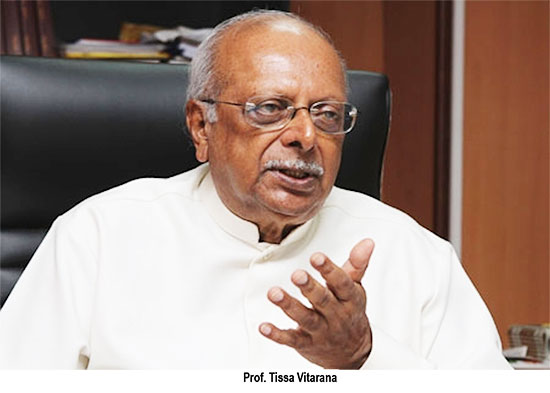
Sri Lanka faces a severe economic, social and political crisis. More than sixty per cent of families have incomes below the poverty line and manage on one or at most two meals per day, many going to bed hungry. The level of malnutrition is 18.4%, close to twenty per cent. That is one out of five children are malnourished, and both mental and physical development will be retarded, with grave consequences to our future generation. The floating of the Rupee and the widening budget deficit has made matters worse. The present SLPP government has aggravated this situation by publicly stating that there will be no price control and traders are free to charge whatever they like. The trader middle men are making enormous profits and prices , specially of food, are going sky high. The massive printing of currency notes, without a commensurate increase in production, has led to very high inflation. Incomes have remained static or even dropped due to staff cuts or closures affecting the private sector. On this May Day, international Labour Day, one is sad to see that the trade union movement is too weak to fight back. The horrible contract labour system has undermined the strength of the unions. On this May Day the LSSP and the socialist Left state that we are categorically opposed to the above policies and are ready to support the workers to rebuild the Trade Union movement to what it was in the 1970s. Dr.NM Perera as Finance Minister in the 1970 Coalition Government overcame the severe economic crisis (when there was little or no local industry and the country depended on imports, and the price of a ton of sugar rose from 40 pounds to 600 pounds), not only balancing the budget but even showing a surplus. Through a dual value for the Rupee, locally and in relation to the dollar, the rupee and the country remained stable, and exports were promoted.
Besides the above rupee crisis, there is a massive dollar crisis. Most governments, whether green or blue, have resorted to loans from foreign sources to bridge the adverse foreign trade gap. As a result we have a massive foreign debt burden of US$ 52 Billion and the cost of debt servicing alone is about US $ 6 Billion per year. But our foreign reserve which averaged around US $ 7 to 8 Billion is now down to well below US $ 1 Billion, nearer 500 million. Internationally accepted rating agencies like Fitch and Moody have dropped us down to the bottom value of a single C in their scale. This means that our importers cannot get their requirements quickly for the market by sending letters of credit (LCs) through our major banks. They have to send dollars. But if there are no dollars available in the banks in the country the inevitable result is an acute shortage of medicines that endanger the lives of people. The import of essential food items, of fuel, of LP gas etc. is the result. More and more queues to torture the people, the middle class as well. Galle Face and “Gota go home” is the inevitable outcome. Is it that we in Sri Lanka cannot produce these items.
Development of the national economy can make us self- sufficient in food, and healthier through a gradual shift to proper organic farming ( Eco- Agriculture). The Medicinal Drug policy of Prof.Senaka Bibile ( a member of the LSSP) enabled every Government Hospital to provide every medicine to practically every disease free of charge in the 1970 – 1975 Coalition Government period. More than 100 Third world countries have adopted his policy under WHO leadership. Some like Bangladesh have become leading exporters. Senaka created the State Pharmaceutical Corporation (SPC)for the bulk purchase of all Sri Lanka’s entire needs at rock bottom prices under the pharmaceutical name. An off-shoot, the SPMC, manufactured over 50 essential and much used drugs. A good pharmaceutical industry will prevent patients’ lives being put at risk as at present, and also give many jobs for our youth and earn dollars abroad.
The import of LP Gas, can be replaced by popularizing the Bio-gas cookers developed by the Government owned NERD institution in Jaela. The team of engineers and technicians led by Sunil Weliwita have developed this so that the energy is obtained from kitchen waste and trees and plants in the garden. There is no need to pay nearly Rs 5,000 for imported LP gas as at present. We only need some Sri Lankan entrepreneurs to invest in setting up some factories to mass produce them. Under the theme ” Smart Home Garden” it not only achieves waste disposal, but also helps to produce water.
One of the major factors provoking the peoples’ protest is the cut in electricity supply, often at unexpected times, not according to the published time schedules. This can be better organized. The shift to renewable energy ( solar, wind, and water has been extremely slow. This must be speeded up. The anaerobic fermentation of all types of waste collected in towns can be used to produce good organic fertilizer and also bio-gas. We tried to introduce this to Colombo but it failed, but I am happy that it has worked in Yatiyantota and Balangoda and a few other towns.
There is no need to go begging to the IMF for dollar loans. These take over 3 months to arrive and the amounts are small e.g. US $ 300 to 600 million. The conditions are harmful to us e.g. the insistence that Sri Lanka permits uncontrolled imports, the major cause of our present problem. We get into more debt. Instead what should be done is to negotiate a Moratorium on our debt with our creditors. This is common practice when countries are faced with crises like ours. I am told that Uruguay and Argentina have done so this time. The principle is to delay our annual debt servicing payments, which was US $ 6 Billion last year, for about 5 years. This would mean that we save about US $ 30 Billion , which can ensure our peoples’ needs as well as be used for productive development. Why has the SLPP Government not done this yet?
Why are we sending out valuable raw material at rock bottom prices, as was done during British rule. We have the best graphite in the world in Bogala and other places which is being converted into the wonder material, Graphine, which is being used to produce a whole range of goods in UK and Europe. The latter is spending over one billion Euro on related research. Why are we sending the mineral rich earth from Pulmoodai in ship loads abroad. The Ilmenite alone is a source of Titanium dioxide, a base for all paints. From the latter is obtained Titanium , a highly priced substance essential for the aeronautics industry. What about the Phosphate deposits in Eppawela that the McMorran Co. of USA tried to steal from us for a pittance. But the LSSP stopped with our former General Secretary, Batty Weerakone, defeating the move in the Supreme Court.
We have so many raw materials as the basis for industry. As the Minister of Science and Technology I targeted setting up one technology transfer centre in in each Administrative Division. I succeeded in 263 out of the 341 ( LTTE was a obstacle). In the 5 years I was Minister 12,643 entrepreneurs emerged, all SMEs, a majority also providing jobs. I am glad to learn that more than a thousand of them are exporting their products. Hi Tech is important for large industry. I planned and developed SLINTEC as the only Nanotechnology Centre in South Asia, the 18th in the world. One benefit is that Dr. Kottegoda and her team have produced in a pilot plant, nanoparticles with 43% nitrogen. But our SLPP Government chooses to buy from India Nanoparticles with only 4.7% Nitrogen at a huge cost.
When are we going to think of developing our country, and not to line certain peoples’ pockets. It is also high time that the tax policy is changed and the upper limit raised from 14% to 75%.

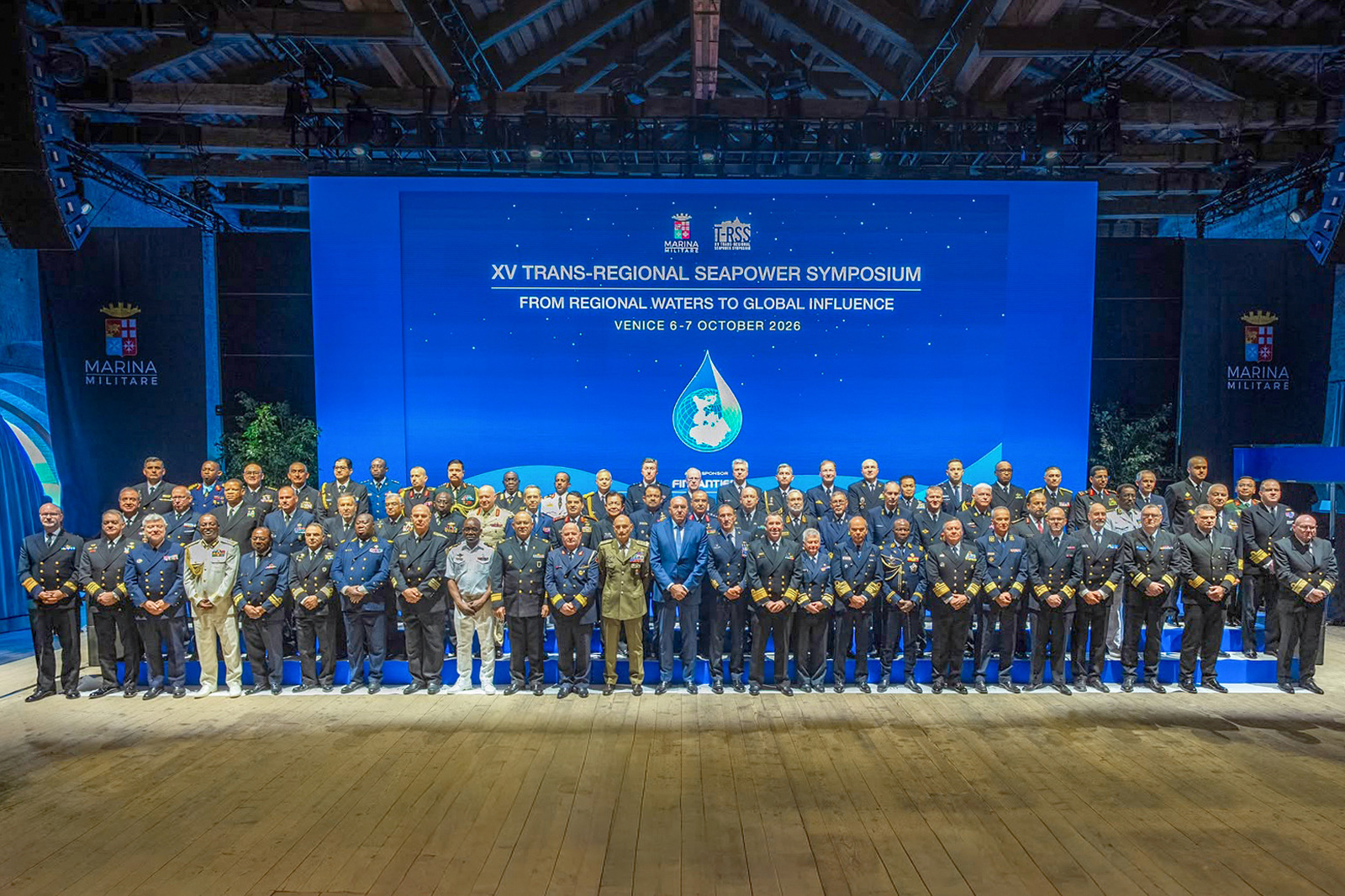
The Commander of the Sri Lanka Navy, Vice Admiral Damian Fernando attended the 15th edition of Trans-Regional Seapower Symposium, organised by the Italian Navy in Venice in Italy, on 6 and 7 October 2026.
The symposium was held at the Italian Navy‟s historic Arsenal in Venice under the theme “From Regional Waters to Global Influence: Generating Effects Across the Midland Seas of the World”.
Organised biennially by the Italian Navy since 1996, the symposium brings together heads of foreign navies, naval representatives, academics, industry representatives and scientific researchers to discuss maritime security and the role of regional maritime dynamics in shaping the global balance.
The sessions of the symposium aimed to present an analysis of the relevance and influence of regional dynamics on global balances and their relative implications within the maritime domain.
Thus, topics discussed included; ‘Geopolitical Background: Global and Regional Dynamics in Comparison,’ ‘Pivotal Role of Cooperation among Regional Alliances as Security Providers,’
‘Maritime Regional Security Complexes, Global Order and Sea-Based Flows – What Role for Navies?,’ ‘New Arctic Chessboard: Seapower, Resources and the Race for Connectivity,’ ‘Future-
Proof Capabilities: A Naval Force Designed to Operate Across Oceans, Act Within Regions and Deliver Effects on the Ground,’ ‘Future Seas: Industrial Scale, Decisive Mass and Innovation –
Securing the Maritime Domain’ and ‘Future-Proof Leadership: Preparing Maritime Commanders and Sailors for Complexity,’
Cooperation fostered through symposiums of this nature, which bring together a multitude of global maritime stakeholders, will enable the Sri Lanka Navy to respond collectively to maritime
challenges, in pursuit of maintaining a safe, secure, prosperous and a stable ocean region.
Latest News
Heavy showers about (100-150) mm are likely at some places in the Central, Sabaragamuwa, Uva and Southern provinces


WEATHER FORECAST FOR 13 October 2026
Issued at 2.00 p.m. on 12 October 2026 by the Department of Meteorology
A low-pressure area may form over the southeastern Bay of Bengal by 13 October.
Under the influence of this system, an increase in rainfall is expected over the island and the deep and shallow sea areas around the island during the next few days from tomorrow (13).
The general public, as well as the naval and fishing communities, are requested to be attentive to the future forecasts and bulletins issued by the Department of Meteorology in this regard.
Heavy showers about (100-150) mm are likely at some places in the Central, Sabaragamuwa, Uva and Southern provinces.
Fairly heavy showers above 75 mm are likely at some places in the other areas of the island. Showers or thundershowers will occur in most parts of the island.
The general public is kindly requested to take adequate precautions to minimize damage caused by temporary localized strong winds and lightning during thundershowers.
Misty conditions can be expected at some places in the Sabaragamuwa, Central and Uva provinces during the early hours of the morning.
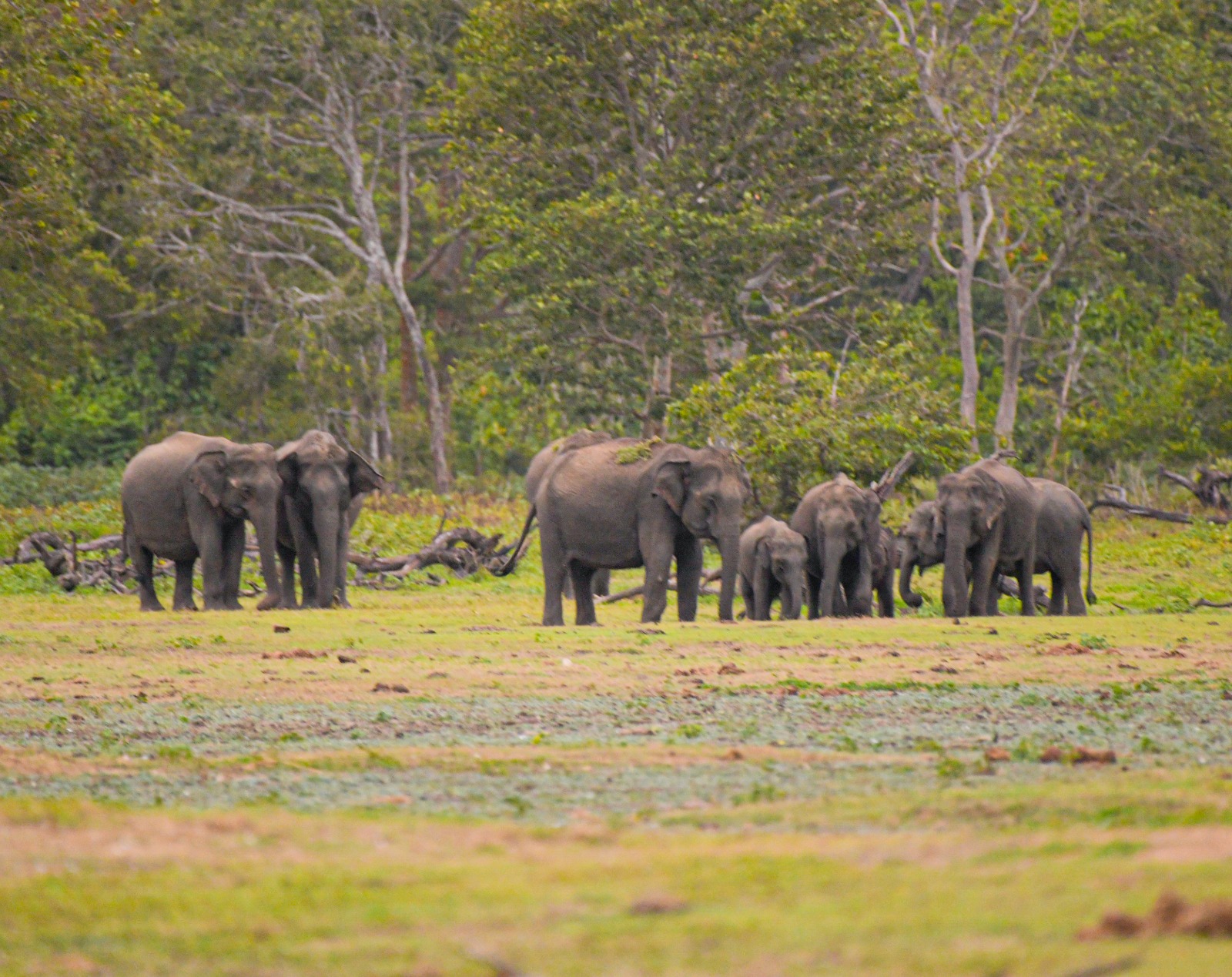
As part of the new government’s initiative to formulate scientifically grounded, long-term solutions to the human-elephant conflict, a programme aimed at sustainably fulfilling the natural food and water requirements of wild elephants within forest ecosystems is being successfully implemented.
Spearheaded by the Ministers of Environment, guided by the Secretary to the Ministry of Environment, and supported by all affiliated institutions, this initiative transforms tanks (reservoirs) and forest tracts in high-conflict areas into enriched zones for wild elephants.
To facilitate this forest enrichment drive, 113 forests have already been declared protected reserves under the Vanaspathi National Programme. The initial phase of establishing tank enrichment zones was launched around the Kala Wewa and Thabbowa reservoirs.
Accordingly, the Ministry of Environment and ‘Clean Sri Lanka’ jointly carried out an initiative to develop these reservoir
catchments into designated enrichment zones.
A year ago, an operation to eradicate invasive plant species that posed a severe environmental threat to the Thabbowa reservoir precinct was conducted with the comprehensive labour and
technical support of government officials, environmental scientists, the tri-forces, and residents.
Since the new government’s policy of “A Sustainable Biosphere, An Evergreen Life” is practically implemented at the ground level, officials from the Department of Wildlife Conservation and the Department of Forest Conservation have been continuously monitoring the ongoing progress and
field conditions of this collaborative project under ministerial directives.
During these field reviews, it was observed that following the removal of invasive flora, the tendency of wild elephants to wander into villages searching for sustenance has notably declined; instead, they increasingly frequent the naturally regenerated grasslands along the reservoir fringes.
Having proven this ecological model’s success through trials at Thabbowa and Kala Wewa, the Ministry of Environment has finalized all necessary blueprints to swiftly replicate it across other sensitive wetland systems and reserve zones where human-elephant conflict is prevalent.
By enriching wildlife habitats, this sustainable, eco-friendly, and scientific strategy protects human lives and cultivated farmlands while securing space for wild elephants in their native habitats, continuing to show promising results across high-conflict regions.

Navy Commander attends Trans-Regional Seapower Symposium in Italy

Heavy showers about (100-150) mm are likely at some places in the Central, Sabaragamuwa, Uva and Southern provinces

Elephant enrichment programme centred on the Thabbowa Reservoir proves successful
Showers above 75 mm are likely at some places in the Western, Sabaragamuwa, Central, Southern, Uva and North-Western provinces and in Anuradhapura and Mannar districts.

New prison regulations for monks serving jail terms soon: President’s Office

CP alleges NPP has taken the blame for illegal US sanctions on Iranian vessels

‘Dates have the highest sugar content to fight Coronavirus’

Sunday Island 27 December – Headlines

#SundayIsland 17th December – Headlines

Sunday Island – 28th March

Sunday Island Headlines – 21 March

Sunday Island – 21st February – Headlines
-

 Features5 days ago
The Sri Lankan who made Scottish history
-
 Features7 days ago
Preventing grievances from becoming communal
-

 Sports5 days ago
Nissanka absence opens door for Sri Lanka’s young guns
-

 News6 days ago
Gnansara Thera to be assigned to prison printing section: Officials
-

 News4 days ago
NDB fraud Rs 60mn more than reported
-

 News4 days ago
Removing monk’s robes matter for Sangha to decide: Mahanayake Theras
-

 Features5 days ago
Future of Sri Lanka’s state university system: Should it be shut down and reopened?
-

 News6 days ago
OIC of FCID summoned before Maligakanda Magistrate