
Features
A Proposal for a new Paradigm in Foreign Policy for Sri Lanka

by Dharshan Weerasekera,
Attorney-at-Law
Legend has it that when King Vijayabahu was in hiding and regrouping to fight the Cholas an old woman advised him that just as it is easy to break a single stick of firewood but much harder to break a bunch of sticks when held together he should first find the right allies to advance his objectives. The story is very useful when thinking about how to address Sri Lanka’s present-day foreign policy challenges the most important of which is the “Pivot to Asia” by the United States.
The Pivot has the potential to affect the sovereignty, national security and territorial integrity of our country now and in the years to come. Unfortunately, to the best of my knowledge there is very little discussion in local academic journals or newspapers on ways of dealing with this threat other than appeals to “neutralism” and “non-alignment.” Without prejudice to the efficacy of those concepts in meeting present needs, it is in the public interest to explore new ways of responding to the Pivot.
The purpose of this article is to suggest such a way. I argue that Sri Lanka should take the lead in forming a new alliance of the low to middle-income countries that come under China’s Belt and Road Initiative (BRI). In this article, I shall briefly discuss: a) the most urgent challenges related to the Pivot that Sri Lanka is facing at the moment, b) the failure of the traditional alliances such as the Non-Aligned Movement, SAARC and others to protect Sri Lanka’s interests on issues that really count, c) the plan.
1) The challenges
There are two urgent challenges. First, the recent blacklisting of leading Chinese companies by the United States. Since Sri Lanka is a poor country and heavily dependent on the US and its allies for economic support, it is unreasonable to suppose that the GOSL can or will do anything on its own to protest against unilateral actions by the US against China or any other country even if such actions indirectly harm this country.
However, if Sri Lanka is in an alliance with a group of nations all of whom are harmed by the actions in question they could more easily protest against them. Also, by providing a market for each other’s goods the members can help each other dissipate the effect of any retaliatory actions the US might take against an individual member.
Second is the continuing effort by the pro-LTTE groups active overseas to get the international community to endorse a purported right to self-determination of the Tamils in Sri Lanka. It goes without saying that this effort benefits certain powerful nations that for their own reasons wish to destabilise Sri Lanka. Under these circumstances, the worst-case scenario would be for such nations to push for a resolution at a UN organ such as the UNHRC suggesting a “two-state solution,” “referendum on secession” or suchlike thing on the grounds that the government is not doing enough to address the ‘grievances’ of the minorities.
The initial resolution could be expanded over time in the same way that the UNHRC resolutions starting in 2012, which called for an international war crimes investigation against Sri Lanka, were expanded at successive sessions of the Council until the sought for goal was achieved in March 2014. It is crucial that if there is the slightest attempt at a repeat performance except this time in regard to a “two-state solution” the GOSL nip such attempt in the bud. The value of an alliance of nations that would stand with Sri Lanka in this situation is incalculable.
2) The Failure of the Traditional Alliances
a) Non-Aligned Movement
Pandit Nehru, one of the architects of non-alignment explained that the purpose of the movement was to help the former colonies pursue an independent foreign policy without getting dragged into military alliances either with the US or the Soviet Union. In 1961, at the first summit of the movement held in Belgrade he said:
“We call ourselves non-aligned countries. The word ‘non-aligned’ may be differently interpreted, but basically it was coined and used with the meaning of being non-aligned with the great power blocs of the world. ‘Non-aligned’ has a negative connotation. But if we give it a positive connotation, it means nations which object to living up for war purposes, to military blocs, to military alliances and the like”
Unfortunately, today, the NAM is all but dead because of three reasons: a) many NAM members including India are now firm allies and “partners” of the US, b) the common experience of colonialism no longer evokes the same passion among the various members as it once did and many members especially in Africa are racked with internal conflicts including the rise of Islamist extremism, and c) regional organizations such as the African Union, Organization of Islamic Cooperation and others now cater to the needs of their members far more than the NAM.
The NAM has failed Sri Lanka specifically in recent years when the series of UNHRC resolutions mentioned earlier were being brought against this country. It is now universally recognized that the culminating resolution in that series, resolution 30/1 of October 2015 contains provisions inimical to Sri Lanka’s sovereignty. To my knowledge, the NAM did not utter a word of official condemnation at what was being done and key NAM members such as India even voted for the resolution.
b) SAARC
SAARC was established in 1985 as a forum to address the security and economic concerns particular to South Asia. However, many critics have pointed out that SAARC has been perennially impeded in reaching its goals because of two reasons: a) the continuing rivalry between India and Pakistan, b) India’s hegemonic ambitions. Pervaiz Iqbal Cheema, the Pakistani scholar says, “South Asia’s structure is such that there exists the overwhelming predominance of India contained by the presence of Pakistan, which is strong enough to resist the domineering attempts of India. The feelings of being subjected to a hegemonic system are not conducive to accelerated evolution of collectivity.” (Gonzalvez and Jetly 1999: 95)
c) Commonwealth
The Commonwealth is based on the shared experience of its members as former colonies of Great Britain. Presumably, these members are committed to the institutions that Britain bequeathed to them chief amongst which are: the tradition of the Common Law, respect for the rule of law, democracy and individual rights. The Commonwealth has failed Sri Lanka in recent years by not protesting when the UNHRC resolutions mentioned earlier were being brought against it. Worse, a number of Commonwealth nations most notably the UK played a key role in pushing the said resolutions.
The UK also remains a staunch supporter of resolution 30/1. Recall that, the GOSL withdrew from the co-sponsorship of that resolution in March 2020 stating that it was harmful to Sri Lanka’s interests. However, the UK along with four other nations—the so-called “core group” on Sri Lanka—told the Council this past June: “We reiterate our profound disappointment at this development. We remain firmly committed to advancing the resolution’s goals.” (30th June 2020, www.gov.uk.) In sum, the question arises whether with friends like this one needs enemies.
3) The Plan
The BRI is a vast network of roads, railroads and harbours connecting Asia with the Middle East, Africa and Europe. There is no question that the network offers the low to middle-income countries along the route an unparalleled chance to achieve rapid economic growth. Accordingly, the BRI is a resource that these nations share and it is in their mutual interest to ensure that the network is maintained and indeed developed to its full potential.
This economic self-interest is a powerful incentive for the nations concerned to band together regardless of differences in ideology, religion, language and culture in order to oppose powerful nations—whether the US and its allies on the one hand or China on the other—if they impede their ability to enjoy the full benefits of the BRI.
The main difference between this alliance and previous alliances is that this is forward-looking, meaning that the physical infrastructure of the BRI is the basis for the relationship and so an intellectual and social culture common to the network can develop over time based on mutual cooperation. Sri Lanka is in a unique position to initiate a dialogue on the alliance because of its history as a vital link in the ancient ‘Silk Road’, of which the BRI is the modern-day incarnation. Sri Lanka has had contacts with most of the nations along the route for hundreds of years.
Conclusion
The “Pivot to Asia” by the U.S. poses challenges that Sri Lanka simply cannot face alone. The BRI offers a basis for an alliance with nations similarly situated to Sri Lanka, which it is in this country’s interest to explore.






 Reports that the Israeli authorities have given the ‘go ahead’ for the repatriation and integration into the Israeli populace of some survivors in parts of India from what are described as the ‘Lost Tribes of Israel’, bring up a subject that merits continuous and focused research. The contemporary observer of international politics seeking to understand more thoroughly the factors fueling the Middle East conflict and the crucial role identity issues play in it would, no doubt, be the biggest beneficiary of such research.
In the global South in general there has hitherto been a tendency to soft peddle what may be called ‘the Israeli side of the story’. While the situation of the Palestinians has generated wide-spread empathy for them and very rightly so, an understanding of the causes prompting the Israelis to think and act as they do has gone comparatively unaddressed. This is a glaring lacuna in Southern scholarship in particular on the Middle East question. But if the international community is to pave the way for even a measure of reconciliation in the region the points of view of both sides to the conflict need to be more thoroughly understood.
A news report on page 3 of this newspaper on December 12, 2025 titled, ‘ Israel is moving Lost Tribe Jews from India’, is compulsory reading for those seeking to understand the history of Israel in its essentials. Going by Biblical History in particular the stark truth is that the Israelis were as persecuted as the Palestinians. It could be said that this process began in ancient times even before the birth of Jesus Christ a little over 2000 years ago.
The Old Testament of the Bible is essential reading for an understanding of the history of the Israelis, who are also referred to as ‘The Chosen People of God’. It is a history replete with persecution, mind-numbing war and suffering. The Israelis were continually harassed, subjected to extreme suffering and were displaced from the land they were settled in; which roughly corresponds to today’s Palestinian territories.
The Books of the Old Testament tell us that right through ancient times the Jews, today’s Israelis, suffered displacement, particularly at the hands of the then regional powers, Egypt, Persia and Assyria, and were taken captive to the lands of the conquerors or were reduced to slavery in their own territories. Consequently, displaced Jews escaped to the most distant parts of the world. This is how they happened to be in India as well. However, the fact to note is that the Jews were at one time a settled community with territories of their own.
What is exemplary about the Israeli or Zionist state that was established in 1948, under the overlordship of the old imperial powers, such as Britain, is that it invited the Jews spread virtually all over the world to return to their homeland, the Zionist state. Accordingly, as the report of December 12 reveals, the remnants of the Jewish tribes in India, for example, numbering some 5,800 persons, are being taken back to Israel from India’s Mizoram and Manipur states. Also of note is the fact that the Jews were originally members of 12 tribes, which figure thought-provokingly corresponds to Jesus’ 12 apostles.
According to the news report, these repatriation moves by the Israeli state are not bereft of some strategic motives, such as the strengthening of the Israeli presence in areas bordering Lebanon, for example, which are seen as vulnerable to Hizbollah attacks. The repatriation moves are also interpreted as part of efforts to ‘Judaize’ the Galilean region in particular with a view to reducing the Arab-Islamic presence there, since these areas are also home to a considerable number of Arabs. Since the possibility of friction between the Israeli settlers from India and the Arabs cannot be ruled out, we could very well be seeing the prelude to stepped-up ethnic cleansing exercises by the Israeli state in these security-sensitive border areas.
The larger problem for the international community, given this backdrop, is ‘ where we could go from here’ with regard to making forward moves towards realizing even a measure of peace and reconciliation in the Middle East. The Israeli state is doing well to open its doors to the returning Jewish diaspora readily but given the current power configurations in Israel, transitioning to Middle East peace could remain a distant prospect.
To ascertain why peace remains elusive in the region one would need to factor in that the Netanyahu regime in Israel is of a Far Right orientation. Such regimes usually keep countries internally divided and virtually at war with themselves by exploiting to their advantage, among other things, identity issues. The settlement of persons hailing from ‘Lost Israeli Tribes’ in security-sensitive regions offers the Netanyahu regime the latest opportunity to pit one community against the other in these regions and thereby consolidate its influence and power over the Jewish majority in Israel.
Ethnic-cleansing exercises orchestrated by the Israeli centre take this process to a ‘new high’ and are based on the same destructive reasoning. Basically, the underlying logic is that the Jewish nation is under constant attack by its rivals and should be on a constant war footing with the latter.
Unfortunately the US is at present not doing anything constructive or concrete to further the cause of a fair Middle East peace. Its peace effort in the region has, to all intents and purpose, run aground; presuming that the US was, indeed, intent on pursuing a Middle East settlement. Nor is the US bringing pressure to bear on Israel to make some headway towards some sort of solution. In the absence of these essential factors the Middle East is bound to remain in a state of war.
While it ought to be granted that the Jews have a long history of persecution and victimization, the Israeli state is not doing its citizens any good by keeping these harrowing memories alive for the purpose of power-aggrandizement and by following a policy of pitting one community against the other. While the Jewish legacy of victimhood needs to be abandoned, the Jewish people would be doing themselves immense good by guarding against voting into office Right wing governments that thrive on the ruthless exploitation of identity issues.
Keynote Address Delivered at the International Research Conference of the Faculty of Law, University of Colombo, on 12 December 2025.
1. The Policy Dilemma
One of the great challenges of modern public law is to reconcile traditional principles relating to the rule of law and the separation of powers with the exigencies of crises which threaten the destruction of society itself. To what extent must protective mechanisms developed by systems of law over the ages give way to the need for physical survival in the throes of life-threatening crises? What is the right balance to be struck, as a matter of public policy?
The classic statement is by John Locke, who insisted that, in emergencies, the government should have legally unfettered power “to act according to discretion, for the public good, without the prescription of the law, and sometimes even against it” (Second Treatise of Government). This is an ancient idea which goes back to Roman times, when Cicero, in his famous oration, Pro Milone, declared: “Inter arma silent leges” (“Amid the clash of arms, the laws are silent”).
This received expression in the present century in the work of Carl Schmitt, who insisted that “The sovereign is he who decides on the state of exception” (Political Theology:Four Chapters on the Concept of Sovereignty). According to him, not only is the sovereign’s authority untrammelled during emergency, but the declaration of emergency is his right alone, dependent solely on the exercise of his subjective judgment. This unqualified power springs from the supreme law of nature—-the safety of the people.
Judicial pronouncements across the world explicitly reflect this point of view. Justice Story, on behalf of the Supreme Court of the United States, famously declared: “The question arises, by whom is the exigency to be judged and decided? We are all of opinion that the authority to decide whether the exigency has arisen, belongs exclusively to the President, and that his decision is conclusive upon all other persons” (Martin v. Mott).In Ghulam Sarwar v. Union of India, Subba Rao CJ, speaking for the Supreme Court of India, observed: “The question whether there is grave emergency is left to the satisfaction of the Executive, for it is obviously in the best position to judge the situation”.
There is, however, equally emphatic opinion to the contrary. Khanna J, in a celebrated dissent, was scathing in his denunciation of the opposite approach: “The position would be that, so far as executive officers are concerned, in matters relating to life and personal liberty of citizens, they would not be governed by any law, they would not be answerable to any court, and they would be wielding more or less despotic powers” (Additional District Magistrate, Jabalpur v. Shivakant Shukla).
These competing postulates have been articulated with equal passion.
II. A Landmark Pronouncement by the Supreme Court of Sri Lanka
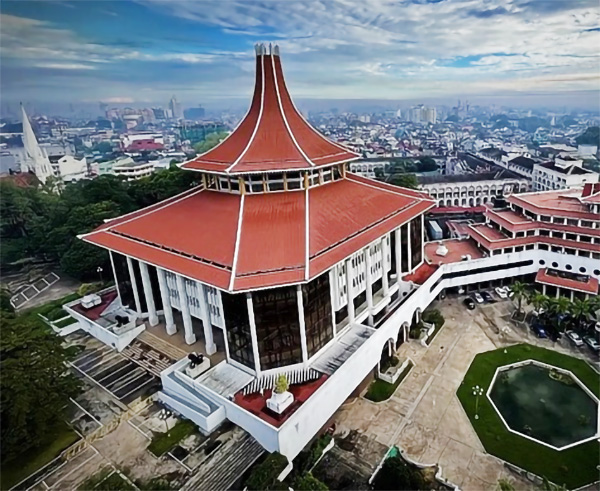
The Supreme Court of Sri Lanka had recently to deal with this issue frontally (Ambika Satkunanathan v. Attorney General). This is a watershed decision because, for the first time in our legal history, the Supreme Court held that an Acting President of the Republic had violated the fundamental rights of the People, enshrined in the Constitution, by the declaration of a State of Emergency.
The circumstances against the backdrop of which this historic ruling was made, are well known. A serious depletion of foreign reserves resulted in a severe shortage of basic amenities like fuel, cooking gas, electricity, staple food items, and medicine. In the context of an unprecedented default in the repayment of foreign loans and significant depreciation of the rupee, extended power cuts and galloping inflation led to acute economic hardship. These circumstances culminated in unrest on a scale never seen before on the Island.
Violence included the brutal murder of a Member of Parliament, the torching of residences of the Prime Minister and more than 70 other political personalities, forcible occupation of the Presidential Secretariat, the President’s official residence and the Office of the Prime Minister, with almost a million people gathered in Colombo demanding the resignation of the President. The elected President had fled the country, and a date had been set for an urgent meeting of Parliament to elect the President in accordance with procedure spelt out in the Constitution. An unruly mob had encircled Parliament, threatening to prevent this meeting from taking place. This was the situation in which Acting President Ranil Wickemesinghe declared a State of Emergency.
He did so in terms of provision in the Public Security Ordinance, which empowered him to take this action, if he was of opinion that this was “expedient in the interests of public security and the preservation of public order, or for the maintenance of supplies and services essential to the life of the community”(section 2).
The decision was that of a divided Supreme Court. The majority consisted of Murdu Fernando CJ and Yasantha Kodagoda J, while there was a vigorous dissent by Arjuna Obeyesekere J. The minority held that the circumstances warranted the opinion entertained by the Acting President, while the plurality declared themselves prepared to make this assumption. This, then, was common ground. The difference of opinion pertained to another vital issue.
Once the Acting President (hereinafter referred to as the President), had reached this conclusion, he had four optional courses of action available to him:
(i) He could have recourse to the routine law, principally the provisions of the Penal Code and the Criminal Procedure Code, to deal with the situation;
(ii) He could invoke Part III of the Public Security Ordinance, which would enable him to take particular actions such as calling out the Armed Forces to supplement the Police, prevent public gatherings on highways and in the vicinity of bridges and other specified locations, and declare curfew. These measures could be taken, short of proclamation of a State of Emergency;
(iii) He could take the “drastic step”, under Part II of the Public Security Ordinance, to bring into force the provisions contained within that section, in terms of which an Emergency could be declared, applicable to the whole Island;
(iv) While declaring an Emergency under Part II, he could confine its operation to particular parts of the Island.
This is where the difference of opinion between the plurality and the minority of the court manifested itself. The majority was of opinion that the President’s satisfaction relating to the existence of objective conditions justifying declaration of Emergency did not automatically entitle him to go the full length of bringing into being a nationwide Emergency under Part II, but obligated him further to consider whether measures of a more limited nature, contemplated by Part III, would be sufficient to deal effectively with the situation.Failure to do so, according to their ruling, would involve a breach of the Constitution.
By contrast, the minority was convinced that “Once the President has come to the conclusion that a state of public emergency exists, there is no purpose in mandating a consideration of other options”, and that “Requiring the President to embark on whether the ordinary laws or other various provisions or options would be adequate to deal with a public or national emergency, would be unreasonable and an unprecedented step”. On this basis, the minority held that the President’s actions were entirely within the Constitution, and entailed no liability for contravention of fundamental rights.
A great deal hinged, in practical terms,
on the divergence between these points of view.
III. Categories of Emergency: Uniform or Disparate Rules?
Contemporary trends in the law acknowledge marked differences in scale, intensity, and duration among types of emergency which precipitate varying degrees of government paralysis.
South African law incorporates one comprehensive definition of a State of Emergency, capable of invocation when “the life of the nation is threatened by war, invasion, general insurrection, disorder, natural disaster, or other public emergency” (Constitution, Article 37(1)(a)). Preferable, by far, is the position under the Emergencies Act of Canada, which recognises four different kinds of emergencies— natural disasters, threats to public order, international emergencies, and states of war (Section 18(2)). This enables different degrees of Parliamentary scrutiny and control.
The Constitution of India provides another example of this approach. Article 352 envisages a threat to the security of India or any part of the country by reason of war, external aggression or armed rebellion, while Article 356 contemplates a failure of constitutional government in any Indian state, and the context of Article 360 is jeopardy to the financial stability or credit of India.
In the spectrum of gravity, peril to the very existence of the state, in the degree present in the Sri Lankan situation, attracts the highest concern. In circumstances of potential government breakdown, “facile distrust” is not the recommended counsel. The courts of India have cautioned that “When there is a crisis situation, it is necessary to trust the government with extraordinary powers in order to enable it to overcome such crisis” (Bhagvati J. in Shivakant Shukla).
Undue concern about a lawless situation, typified by unbridled executive power, is not realistic. Emergency legislation has rightly been characterized as “extra-legislative legislation”. Far from there being a legal vacuum, systems of law have furnished practical safeguards, while enabling public order to be maintained.
One of these is the imaginative “super-majority escalator” technique, characteristic of South African law. Only a simple majority of Parliament is required to approve a State of Emergency operative for a maximum period of 21 days, and to extend it up to 3 months. Beyond that, a 60% majority is compulsory for further extensions (Article 37). Here, then, is a successful reconciliation of competing objectives.
Article 16 of the Constitution of the Fifth Republic in France empowers the President to determine not only the sufficiency of conditions warranting the declaration of a State of Emergency, but also its appropriate duration. Restraints on Presidential power in France are weak because the President, although required to consult the Conseil Constitutionel (Constitutional Court), is not bound by its advisory opinion, in the event of contrary advice.
Relative amplitude of Presidential power in emergency situations in France has been justified by a prominent French jurist, François Saint-Bonnet, on the basis that the curtailment of emergency powers at the disposal of the Executive carries the risk of deprivation of the very tools which the government finds indispensable to combat the threat.
Germany’s Basic Law, although wary of emergency powers because of the harrowing experience of Article 48(2) of the Constitution of the Weimar Republic, which paved the way for the rise of Hitler, nevertheless does not balk at recognizing “internal emergencies” which enable intervention by the Executive, albeit subject to control by the Federal Parliament.
Constitutional provisions in different jurisdictions, irrespective of the approach selected, envisage substantial executive power in times of emergency, curtailed by surveillance on the part of the elected Legislature.
IV. Restraints on Judicial Intervention
The decided cases in many countries are replete with examples of indicia which concede to the Executive great latitude in these contexts. The recurring feature is the urging of restraint in the exercise of judicial review in keeping with a suitably benign construction, consistent with constitutional standards. This is reflected in unimpeachable academic authority, as well.
It has been insisted that executive decisions “should be taken seriously as a bona fide attempt to solve whatever social problem they set out to tackle”(Aileen Kavanagh).The caution has been administered that judges should exercise great caution before concluding that the government has violated constitutional rights(Prof. T. R. S. Allan) and,in public emergencies threatening the life of the nation, elected officials should be permitted “to err, if at all, on the side of safety”(Lord Bingham).The courts “should resist the temptation to substitute their own preferred solutions to questions of public policy”(Allan).
This is so, for a number of reasons. One of them is that the public authority is entitled to latitude because it has “a kind of responsibility to advance the public interest that a court does not have”(Brooke L.J.).This is reinforced by other considerations. For instance, possession of special expertise by the executive authority is an important factor.
The nature of the subject matter, for this very reason, has a vital bearing on the issue. Judges have been conscious that “the more political the question is, the more appropriate it will be for political resolution, and the less likely it is to be an appropriate matter for judicial decision”(Lord Bingham).
A responsible and representative system of democratic governance brings into sharp focus “the degree of democratic accountability of the original decision maker, and the extent to which other mechanisms of accountability may be available”(Murray Hunt).Basic values of constitutionalism identify Parliamentary controls as infinitely preferable, in this regard, to judicial intervention.
This has to do with the nature and legitimate confines of the judicial function. Mirza Beg J, speaking for the Supreme Court of India, has candidly conceded that “the judicial process suffers from inherent limitations”(Shivakant Shukla).This is essentially because a court “can neither have full and truthful information, nor the means to such information”(Chandrachud J in Shivakant Shukla),especially in respect of classified information.
An absolute imperative is that the distinction between judicial review and substitution of judgment must be scrupulously observed. Admittedly contextual, this principle is of overriding significance because it is “wrong to expect executive bodies to replicate the style of analysis adopted by courts in determining allegations of violation of rights”(T. R. S. Allan).
It is crucial for the rule of law that the dividing line between these two distinct functions should not become inadvertently blurred. It is not necessary for the public authority to address itself to the same legal arguments as the court(Court of Appeal of England in the Begum case),the judicial function being restricted by the consideration that “the court is usually concerned with whether the decision maker reached his decision in the right way, rather than whether he got what the court might think to be the right answer”(Lord Hoffmann).
The raison d’etre underpinning executive intervention in these extraordinary situations should be constantly borne in mind. The reality is the absence of a practical substitute. “Neither the legislature nor the judiciary is capable of swift, energetic action, which leaves the executive by default as the authoritative body”(David Dyzenhaus).For this inescapable reason, there has been constant emphasis that executive actors “should not be deterred from engaging in the very activity needed,and contemplated, to deal with the crisis”.
The overarching object of policy is the preservation of public confidence. “The faster and more effective the response, the smaller the overall damage to society, as a whole. The best way for government to respond to these fears is to do something large and dramatic to reassure the populace”(Bruce Ackerman).
The weight attaching to these elements of public policy is self-evident. (To be continued)
 By Professor G. L. Peiris
D. Phil. (Oxford), Ph. D. (Sri Lanka); Rhodes Scholar,Quondam Visiting Fellow of the Universities of Oxford, Cambridge and London; Former Vice-Chancellor and Emeritus Professor of Law of the University of Colombo.

The Lanka Sama Samaja Party was formed on the 18th of December 1935. Its four leaders were Dr. N. M, Perera, Dr. Coivin R, de Silva, Philip Gunewardena and Leslie Goonewardene, who also became the General Secretary. (Prior to this, in 1933, the Wellawatte Mills strike first led to their getting together in action). It must be mentioned that The LSSP was the first properly constituted political party in the country. It was also the first genuine Left party and its political philosophy was based on Marxism-Leninism. It took the name ” Sama Samaja”, which means ” Equal Society”, as, at that time, the people in Sri Lanka were unfamiliar with the terms Socialism and Communism. It was quickly accepted by the people and, despite the use of state power and thuggery against the LSSP by the local capitalist class, backed by the British rulers, the Party rapidly gained popularity among the people. In the General Election of March 1936 Dr. N. M. Perera was elected to represent the Ruwanwella electorate and Philip Gunawardena the Avissawella electorate. Unfortunately, Dr. S. A. Wickramasinghe was unable to retain Akuressa, which he had won in the 1931 Election, and Leslie Goonewardene failed to win Panadura due to the use of caste and money unfairly against him. Leslie, throughout his political career, refrained from descending to such a low level of politics But the LSSP stand helped in the process of uniting and politicisation of the people which was necessary to generate the confidence of the people in their ability to win Complete Independence through the democratic process.
Throughout its history a major role in the success of the LSSP was its provision of support to the struggles of the working class to win its rights. Dr. N. M. Perera formed the Ceylon Federation of Labour and, as its President, he organised the trade union movement to focus on winning their genuine demands as a class. He negotiated with the employers and won many demands across the table, and resorted to strike action as a last resort. He won the respect of both employees and employers as a leader who did not misuse the trade unions for personal vendettas. He used Parliament in a responsible manner to fight on behalf of the workers, while informing the public who suffered as a result of the strikes that the demands were just, and winning their support as well. The LSSP unions have maintained these values and continue to serve the working class
The LSSP was aware of the problem of poverty leading to hunger as a major factor that affected the life of a majority of our people. A survey done at the MRI, about two years ago, showed that 63% of families had an income below the poverty line. They could not have three adequate meals per day. Some had two meals and others only one that met their nutritional needs. The children and mothers were particularly vulnerable. The malnutrition level in that study was 14.3%. But the situation appears to be worse now. The Suriyamal Movement led NM to one of the worst affected areas, Kegalle. The focus was on malaria eradication, but they had to also address the problem of poverty and hunger. Rice, dhal and coconut sambol were provided. NM came to be known as “Parippu Mahaththaya” as a result. The LSSP is reviving the Suriyamal Movement which has become an urgent need after the Climate Change. Any help will be welcome.
We celebrate Independence Day alone, but India also celebrates Republic Day. It is the latter that gave India sovereignty, without which independence is empty. They won it within three years, with Ambedkar drafting the Republican Constitution. The LSSP kept on pressing for it but the comprador capitalist class, led by the UNP, kept delaying as they were happy with Dominion status. The LSSP joined the SLFP and CP to form the coalition government, led by Sirimavo Bandaranaike, in 1970, and Dr. Colvin R. de Silva was made the Minister of Constitutional Affairs. He finally drafted the Republican Constitution in 1972. Sri Lanka took 24 years to do this and we can hold our heads up as we are now politically a truly independent sovereign nation. But we remain a poor underdeveloped country with widespread unemployment and underemployment, especially among the youth. The number of those in poverty is rising while the rich are becoming super rich. The rich/poor gap is widening and it may explode. It is sad to see that Sri Lanka is far away from the Welfare State that the LSSP, led by Dr. Perera, strove to build. As Minister of Finance, he kept the cost of living down, balanced the Budget and did not tax the poor. He had a high direct tax on those who could afford to pay this. Unlike now, the priority was given to use the limited forex to buy essential medicines,not luxury vehicles.
As Minister of Science and Technology, I started the Vidatha Movement to provide the technology and finance for Small and Medium Enterprises (SMEs) countrywide, one centre headed by a science graduate in each division. I am told that more than 50,000 entrepreneurs have emerged marketing their products sustainably. More than one thousand are exporting their products. I appeal to the NPP government to continue to support them. We must develop into an industrial nation if we are to emerge from poverty. I and the LSSP will give all support. By the way, our armed forces can defend our country. We do not need American forces.
by Prof. TISSA VITARANA
(Leader and General Secretary, LSSP)

Conway 178* and Latham 137 grind West Indies to dust in Mount Maunganui

Australia have the urn in their sights as England self-destruct again

FIFA World Cup 2026 winners’ prize money doubles to $50m

Winter storms worsen Gaza humanitarian crisis as UN says aid still blocked

Vice Chairman of the Standing Committee of the National People’s Congress of China meets Prime Minister Dr Harini Amarasuriya

Indra Traders (Pvt) Ltd contribute Rs. 100 million to the ‘Rebuilding Sri Lanka’ Fund

‘Dates have the highest sugar content to fight Coronavirus’

Sunday Island 27 December – Headlines

#SundayIsland 17th December – Headlines

Sunday Island – 28th March

Sunday Island Headlines – 21 March

Sunday Island – 21st February – Headlines
-

 Features4 days ago
Why Sri Lanka Still Has No Doppler Radar – and Who Should Be Held Accountable
-

 Features6 days ago
Ditwah: A Country Tested, A People United
-

 News6 days ago
Rs 1. 3 bn yahapalana building deal under investigation
-

 Business6 days ago
Fluctuating fortunes for bourse in the wake of selling pressure
-

 News6 days ago
Former SAARC SG Esala Weerakoon calls for ‘South Asian Climate Compact’
-

 Opinion6 days ago
Comfort for some, death for others: The reality of climate change
-
 News10 hours ago
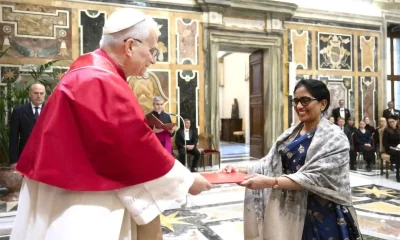
Pope fires broadside: ‘The Holy See won’t be a silent bystander to the grave disparities, injustices, and fundamental human rights violations’
-

 Latest News4 days ago
Landslide early warnings in force in the Districts of Badulla, Kandy, Kegalle, Kurunegala, Matale, Nuwara Eliya and Ratnapura