
News
UNICEF urges to put children’s needs first in tackling current crisis in Lanka

Cautioning that Sri Lanka is facing a crisis that risks taking a significant toll on children, the UNICEF said as the Government of Sri Lanka and partners work to resolve the current crises, the needs of children must come first and their right to education, health, food and protection safeguarded.
The UNICEF Sri Lanka in an op-ed article given below said as the situation evolves, it is crucial that Government efforts include closely monitoring the impact on Sri Lanka’s youngest citizens—the future of the country, but currently the most vulnerable.
In tackling the current crisis in Sri Lanka, put children’s needs first
Article 3(1) of the United Nations Convention on the Rights of the Child (CRC) states that, “ln all actions concerning children the best interest of the child shall be a primary consideration”
This simply means that when adults make decisions, they should think about how their decisions will affect children. All adults should do what is best for children; not what is best for themselves. Adults include parents, caregivers and Government decision-makers.
The CRC adopted on 20th November 1989 is an important agreement by countries who have promised to protect children’s rights. Sri Lanka was among the first countries to sign the CRC in 1990 and ratified it in 1991.
In partnership with UNICEF, the Government of Sri Lanka has over the years made significant strides in improving the health, education and protection of children across the island: from achieving Universal Child Immunization (1989), to establishing the National Child Protection Authority (1998) to providing decades of crucial relief in the wake of devastating conflict and natural disasters.
But now we face a crisis that risks taking a significant toll on children.
Although the exact impact of the current crisis on children is yet to be established, like in any crises, children are often the worst affected when access to adequate food, education, health and protection services are disrupted.
17-year-old Jithmini recently told UNICEF, “my school in Colombo had to close before the end of the term. I was not able to go to school because there was no fuel. I am worried about what will happen next. I just need fuel for my school van.”
12-year-old Senuni added, “my little sister cries in the night because it is too hot. No electricity and no generator. Even I can’t sleep peacefully. We all wake up tired in the morning and feel sick all day.”
Distressing testimonies from children continue to come in as the crisis takes its toll on their schools, health centres and their access to nutritious food. This is even more worrying in a country where poverty has been aggravated by the COVID-19 pandemic. According to the recent Multidimensional Poverty in Sri Lanka, more than four out of every ten (42.2%) children under the age of five lack at least two basic rights.
The combined burden of poverty, COVID-19 and the current crisis disproportionately affects children, especially the most vulnerable girls and boys, with far reaching consequences for the future of the future of Sri Lanka.
As the Government of Sri Lanka and partners work to resolve the current crises, the needs of children must come first and their right to education, health, food and protection safeguarded.
UNICEF is recommending the following to ensure children do not bear the brunt of the crisis:
Firstly, when making decisions on children, they must be listened to and their views taken seriously. The responsibility falls on the Government and all adults to give children the opportunity to meaningfully voice their own concerns and participate in matters that affect their futures. In doing so, children must not be manipulated and all fundamental guarantees for the protection of children must remain applicable, at all times.
Protect the education of children to avoid further learning losses. COVID-19 has already wreaked havoc on the schooling of children globally, including here in Sri Lanka. Sri Lanka was among the countries with the longest school closures experienced in the world. The disruption caused by the pandemic has resulted in widening inequalities and learning losses that threaten to reverse and, in the worst case, completely erase the gains made over the past decades. With the current power-cuts in the country, home-based online learning is even more difficult for children and adolescents. Even before the pandemic, the most marginalized children were being left behind. It is therefore crucial that the Government of Sri Lanka prioritizes the continued operation of schools for in-person learning.
Cushion social protection systems on which the most vulnerable depend, including the voucher for pregnant and lactating mothers. For many such women, the voucher is a lifeline, enabling them to afford some of their basic needs. This, together with continuous maternity services and provision of vitamin supplements for children between 6 -24 months, are crucial to prevent another crisis among these vulnerable groups.
Guarantee access to all other essential services for children, including health and clean water. Reported shortages of essential medicines should concern all of us. Water taps could as well run dry due to lack of electricity or fuel for pumps. Communities often turn to unsafe water sources when clean water is unavailable, making them susceptible to common diseases. Coupled with a shortage of medicines, this can be a recipe for disaster for Sri Lanka’s children.
As the situation evolves, it is crucial that Government efforts include closely monitoring the impact on Sri Lanka’s youngest citizens—the future of the country, but currently the most vulnerable.
Sri Lanka has demonstrated a good example in tackling complex crises before, including most recently the COVID-19 pandemic. UNICEF firmly believes that Sri Lanka can turn things around by investing where it matters most – in safeguarding the rights of its children.
Now is the time.


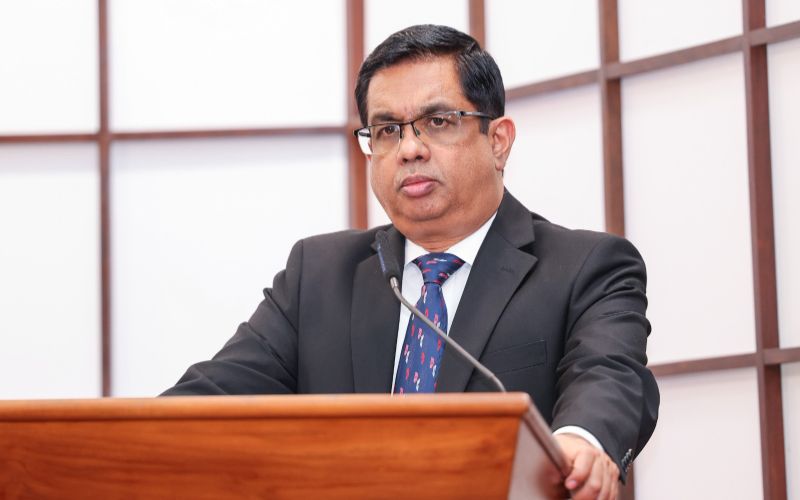
The Memorandum of Understanding (MoU) relating to the project to provide technological solutions to prevent wild elephants from being hit by trains was signed yesterday (01) afternoon at the President’s Media Centre, under the patronage of Secretary to the President Dr Nandika Sanath Kumanayake.
Coordinated through the “Clean Sri Lanka” programme, the project is being implemented as a public-private partnership, with the Railway Department, the Department of Wildlife Conservation and the Forest Conservation Department working together, with full financial support from People’s Bank.
The system consists of three-beam detection, passive infrared (PIR) sensors, automatic temperature sensors and a tamper alarm system to detect animals weighing more than 20 kilogrammes and unauthorised interference. Signal lights (red/yellow/green) installed on either side of the railway tracks, together with a special screen installed inside the locomotive cab, will alert the driver in advance to the exact location of an elephant.
A demonstration test of the system was successfully conducted at the Pinnawala Elephant Orphanage premises in the presence of the relevant officials, following which a report on the system was prepared.
The system will be implemented as a pilot project from next month at 13 locations where wild elephant accidents are frequent. A newly developed website is also scheduled to be launched to enable the progress of the project to be viewed live.
Additional General Manager of Railways P.D.S.B. Chandrasena, Director General of Wildlife Conservation M.S.L.R.P. Marasinghe, Conservator General of Forests S.C. Palamakuumbura and Chairman of People’s Bank Chandana Guniyangoda signed the relevant MoU. Officials from the Clean Sri Lanka Secretariat, including Presidential Additional Secretary (Clean Sri Lanka) Engineer S.P.C. Sugeeshwara, as well as senior officials from the Railway Department, Department of Wildlife Conservation, Forest Conservation Department and People’s Bank, were also present.
[President’s Media Division]

The Commissioner General of Examinations has announced that the results of the 2026 Grade 5 Scholarship Examination have been released online, and can be viewed on the department’s official website: www.doenets.lk

Prime Minister Dr. Harini Amarasuriya departed Sri Lanka on Monday, 31 August, to undertake an official visit to Bhutan to participate in the Global Conscious Food Systems Summit, scheduled to be held in Bhutan.
During her visit, Prime Minister Dr Amarasuriya participated in the opening plenary of the Summit on 1 September, where she delivered a keynote address under the theme “Rising to the Moment: Igniting Consciousness to Address the Polycrisis.”
The Prime Minister will also engage in discussions with international leaders and representatives on strengthening cooperation towards sustainable food systems, food security and resilient communities.

[Prime Minister’s Media Division]

MoU signed for technology to prevent wild elephant-train collisions

Grade 5 scholarship exam results released

Prime Minister participates in Global Conscious Food Systems Summit in Bhutan

Bouchier century sets England up for record 282-run chase against Ireland

Muneeba, Pakistan’s spinners knock Thailand out of Asia Cup

Showers will occur in the Western and Sabaragamuwa provinces and in Galle, Matara, Kandy and Nuwara-Eliya districts

‘Dates have the highest sugar content to fight Coronavirus’

Sunday Island 27 December – Headlines

#SundayIsland 17th December – Headlines

Sunday Island – 28th March

Sunday Island Headlines – 21 March

Sunday Island – 21st February – Headlines
-

 News6 days ago
Eight politicians in drug kingpin probe
-

 Features4 days ago
“Wrap Me Up in My Blazer”— A Gentlemanly Bradby Reminiscence
-

 Business6 days ago
Sri Lanka opens up: A new season of direct connectivity
-
 Features6 days ago
Redefining ageing in Sri Lanka
-
 Latest News6 days ago
Nepal-Tibet floods: What happened, what caused them and who is missing?
-

 Features3 days ago
When Sri Lankan stories find their own voice
-

 Editorial7 days ago
Unfolding El Niño and burning issues
-

 Editorial6 days ago
The toxic legacy of two lakes