
News
Protests will grow until government caves in says Vijitha Herath

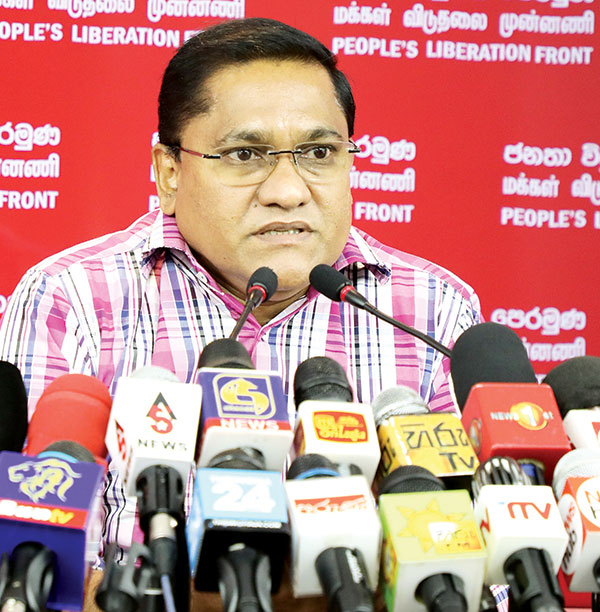
People have no way but to fight harder for longer
by Saman Indrajith
The JVP, after the LSSP and CP, has the longest Marxist history in this country. It subscribes to a Hegelian dialectic where contradiction between a proposition (thesis) and its antithesis is resolved at a higher level of truth (synthesis).
This is illustrated by a stone mason or sculptor chipping away at a block of stone. Perhaps a hundred hammer blows would not create a crack in the stone but it would split into two at the 101st blow. The stone mason knows that it was not the last blow that did but all that had preceded it.
The JVP led NPP has commenced throwing its fullest weight against the government in support of the ongoing protest on Galle Face green. The party is scheduled to commence a march from Beruwala today (17) and to proceed along the Galle Road to reach the Town Hall in Colombo on Tuesday (19), NPP MP Vijtha Herath said in an interview with the Sunday Island.
“The protest at Galle Face is growing with increasing pressure applied on the government. Artistes, lawyers and almost all prominent and leading professionals have either joined the protest or extended their support. It has the blessings of leaders of all religions except a few monks in the pay of the Rajapaksa family who show no sign of stepping down. Yet, if we continue to apply further pressure it is only a matter of time before the beleaguered government gives up. We believe in this struggle. There is no turning back now. It should end in nothing but victory,” Herath said.
Excerpts:
Q: The protesters have rejected the call by Prime Minister Mahinda Rajapaksa for talks. Do you approve of that rejection?
A: What is there to discuss with him? He first tried to ignore this struggle. Thereafter he and his cronies tried to intimidate the protesters and also to denigrate them. Thereafter, they tried to arouse communal disharmony. After all these tactics failed, he has now invited the youth for talks. We emphasize that none in the struggle has anything to talk about with this government or the president.
The first and foremost demand of the struggle is that Gota goes home. The second is for the government to resign. Third is to put an end to the 74-year long political culture that has become the bane of this nation. There is nothing to discuss in these demands. The President and government should step down. The youth want nothing less than that.
The proposal for talks is with the intention of weakening this struggle, by creating divisions. Such tactics would not work because those in the struggle are not like those in the SLPP parliamentary group willing to change their stance for money or privileges. The president and the prime minister are not even genuine and honest to their own parliament group. How could others trust them and go for talks with them?
Q: There is no indication that the government would give up that easily. It is after all a democratically elected government. How could a government make up its mind to give up power just because there are protests?
A: If you look back at the world’s political history in recent decades you will find ample instances where governments had to step down owing to pressure from the people. The ongoing public protests have already achieved victories. They got the cabinet and the Central Bank Governor to resign. There are more heads to fall and the struggle is not yet over.
Either this government does not understand this struggle or it so pretends. This is not a simple demonstration and it is not limited to Galle Face. People all over the country stage protests demanding that Gota goes home. They did not have that slogan at the beginning. First the protests started demanding that government delivers what they promised the people to get their votes.
They hit the streets demanding their rights. The government could not even provide the basic rights and needs of people. First the farmers came out demanding fertilizer. The mothers followed demanding milk powder for their children. There were protests demanding gas and fuel.
The government did not listen to any of them. Its ministers promised there would be no power cuts and there was enough diesel and petrol in the country. Those were sick jokes. Now the situation has changed for the worse. Doctors say that there are no medicines at hospitals. Soon people in hospitals will die without medicine. Already six people have died in petrol and gas queues.
The situation is changing for the worse by the hour. Meanwhile the government is waiting to for the protesters to become fed-up and tired of the struggle. In the meantime it has started the process of buying over MPs to replenish the numbers of those who dissented and decided to be independent. None of these tactics will work. Power of the people is greater than the power of money. The government should step down.
Q: The President has invited the Opposition parties including the SJB and its leader Sajith Premadasa to join the government. What is your response?
A: We cannot think of forming a government with other corrupt parties while Gotabaya Rajapaksa is still the President. That is not the change expected by the people. We reject invitations for such governance.
Q: The supporters of the government are staging ‘We want Gota’ protests countering yours. Where would this lead?
A: That is a flop. The government has got some of its ministers to conduct such protests. That did not work. People are more intelligent than the government thinks. People know that pro-government protests are meant to create a conflict and are used as a diversionary tactic. They know that such plans would not solve their problems of fuel and gas shortages and many more.
Q: The President has said he will not resign. People demand his resignation. How long will this impasse continue? Prime Minister Rajapaksa in his recent address to the nation said that every second the people protest, the country loses dollars.
A: The country lost dollars not because of the peoples’ protests. What we see is an economy ruined by a single family and its cronies. That was done by frauds and theft by manipulating government machinery. The economy suffered Rs 150,000 million loss because of the sugar tax fraud.
They came to power promising to recover the Rs 120,000 million loss by the Treasury Bond scam. But they did better. The economy suffered blow after blow because of the coconut oil fraud and garlic scam. The meagre amount of dollars available had to be spent on the nano-nitrogen fertilizer scam. Compensation was paid for a Chinese fertilizer ship. This is only the tip of the iceberg.
The answer to the first part of your question is that not only the President but also the Prime Minister have said they would not resign. That means they do not have an answer to the crisis. The MPs who announced they would be independent in the House demand that a cabinet should be appointed without the Rajapaksas. The President has not agreed to that demand either.
The crisis will grow further. People have no other way but to fight harder for some more time because the fall of this government is inevitable. It is only a matter of time. So, we have to stay in the same line a little longer and fight harder.

Latest News
Sun directly overhead Madampe, Thorayaya, Thotagamuwa, Rattota and Kalavanchikudy about 12.09 noon today (03)


The sun is going to be directly over the latitudes of Sri Lanka from 28th of August to 07th of September due to its apparent southward relative motion.
The nearest places of Sri Lanka over which the sun is overhead today (03) are Madampe, Thorayaya, Thotagamuwa, Rattota and
Kalavanchikudy about 12.09 noon.
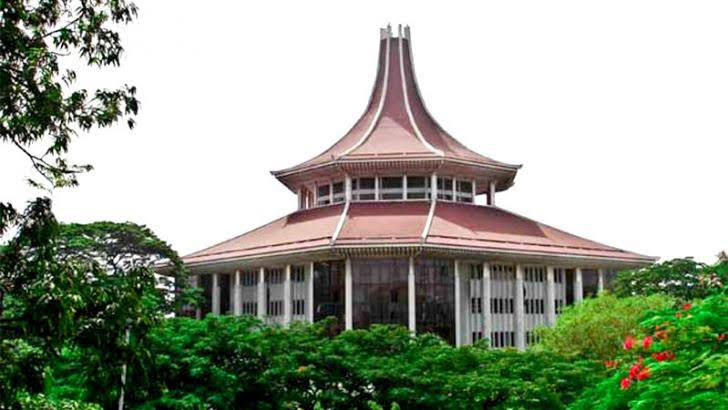
Attorney-at-Law Sugandhika Fernando, on behalf of the Vinivida Foundation, petitioned the Supreme Court yesterday (02), seeking a full bench, excluding Chief Justice Preethi Padman Surasena, to hear the petitions challenging the 22nd Amendment Bill. She also requested that the hearing be suspended immediately until the matter was fully heard and determined.
Among the respondents are Chief Justice Surasena, the first respondent, and Attorney General Parinda Ranasinghe. Justices Yasantha Kodagoda, Shiran Gooneratne, Achala Wengappuli and Priyantha Fernando have also been named as respondents.
The petitioner has sought to have quashed the decision of the first respondent to appoint a five-member bench, which she alleged was made in violation of the norms of public law. She also sought a bench comprising all Supreme Court judges, excluding those cited as respondents, to hear the special determination applications on the 22nd Amendment.
The petitioner further contended that Chief Justice Surasena, who is due to retire on December 1, 2026, would be the main beneficiary of the 22nd Amendment.
The hearing of the petitions continued for a second day yesterday (02) before a five-member Supreme Court bench comprising Chief Justice Preethi Padman Surasena and Justices Achala Wengappuli, Arjuna Obeyesekere, Sampath Abeykoon and Gihan Kulatunga.
The hearing, which commenced on Tuesday morning, continued for nearly 12 hours, until 10:30 p.m.
Solicitor General Viraj Dayaratne, appearing for the Attorney General, submitted yesterday that the Government had presented the 22nd Amendment Bill to the Constitution and the Judicature (Amendment) Bill with the objective of expanding and streamlining the country’s judicial system.
After the Solicitor General’s submissions concluded, counsel representing the petitioners requested an opportunity to respond to the Solicitor General and the intervening petitioners. However, the Chief Justice declined to allow the petitioners’ counsel to make further oral submissions, concluded the determination hearing and directed them to file written submissions instead.
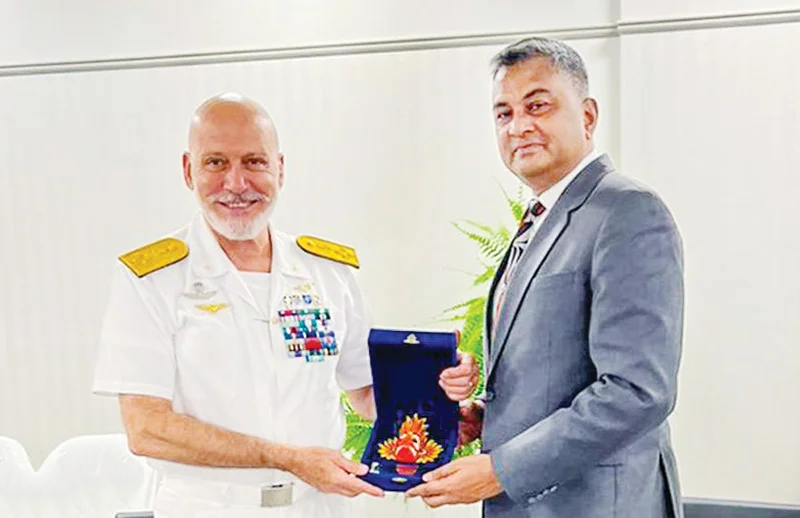
Sri Lanka has formally requested assistance from the North Atlantic Treaty Organisation (NATO).
According to a press release issued by the Defence Ministry, Defence Secretary Air Vice Marshal (retd) Sampath Thuyakontha has discussed defence cooperation with NATO, with discussions focusing on military modernisation, advanced technology, cyber capabilities and disaster response.
This was during talks between AVM Thuyakontha and NATO Military Committee Chairman Admiral Giuseppe Cavo Dragone on the sidelines of the Chiefs of Defence Conference in Victoria, Canada.
During the meeting, Secretary Thuyacontha outlined Sri Lanka’s defence requirements and areas of interest, including the modernisation of military hardware, acquisition of advanced technologies, and strengthening cyber capabilities and surveillance platforms, the Ministry of Defence said in a statement.
The two sides also discussed opportunities for greater technical cooperation, including the exchange of military personnel, expanded education and training programmes, and increased sharing of expertise and information.
Humanitarian Assistance and Disaster Relief (HADR) was also identified as an area for potential cooperation. The discussions included the exchange of expertise and the effective use of unmanned aerial vehicles (UAVs) in disaster response and related operations.
Defence Secretary Thuyacontha invited NATO to further strengthen its engagement with Sri Lanka, emphasising sustained dialogue, information sharing and practical cooperation in areas of mutual interest.

Sun directly overhead Madampe, Thorayaya, Thotagamuwa, Rattota and Kalavanchikudy about 12.09 noon today (03)

Afternoon thundershowers in the Northern, North-central, Eastern and Uva provinces in next few days, starting from today (03).

22A: SC urged to suspend hearing, appoint full bench

Govt. seeks NATO assistance

Recent ‘Ice’ detection at the Colombo Port made on US intelligence – Embassy

Sri Lanka launches National Food Safety Policy with support from FAO and EU

‘Dates have the highest sugar content to fight Coronavirus’

Sunday Island 27 December – Headlines

#SundayIsland 17th December – Headlines

Sunday Island – 28th March

Sunday Island Headlines – 21 March

Sunday Island – 21st February – Headlines
-

 News6 days ago
Eight politicians in drug kingpin probe
-

 Features4 days ago
“Wrap Me Up in My Blazer”— A Gentlemanly Bradby Reminiscence
-

 Business6 days ago
Sri Lanka opens up: A new season of direct connectivity
-

 Features3 days ago
When Sri Lankan stories find their own voice
-
 Latest News7 days ago
Nepal-Tibet floods: What happened, what caused them and who is missing?
-

 Features6 days ago
Redefining ageing in Sri Lanka
-

 Editorial6 days ago
The toxic legacy of two lakes
-
 Business6 days ago
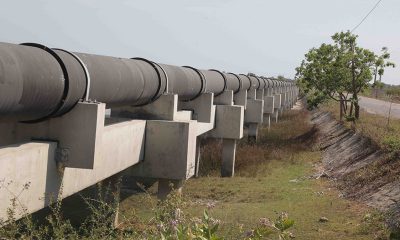
Jaffna Teaching Hospital secures lifeline water supply via ADB-funded Thalaiyadi sea water desalination plant