
Business
Sri Lanka needs ‘bridge financing’ to last next six months, says Indrajit Coomaraswamy

by Sanath Nanayakkare
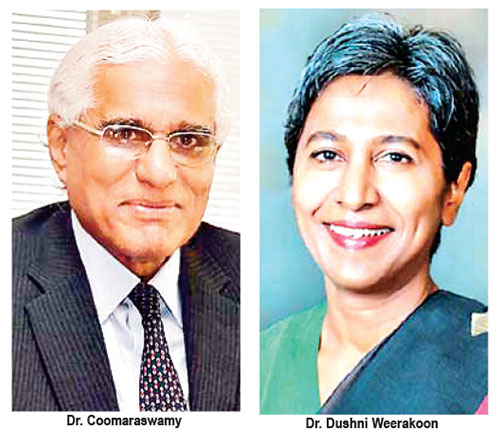
Sri Lanka needs to take steps on getting to a framework programme with the IMF, restructure its external debt and bring some bridge financing to last for next six months until negotiations with the IMF on external debt is completed,”former central bank governor Dr. Indrajit Coomaraswamy said recently, at a forum hosted by CT CLSA.
“IMF won’t be able to transact with Sri Lanka until we fix the unsustainable situation in the country,” he said.
Dr. Coomaraswamy highlighted the fact that IMF may include fiscal consolidation in a programme of debt restructuring for Sri Lanka.
CT CLSA, a leading capital market service provider that offers investment banking, stockbroking and wealth management services , conducted the forum on the timely topic ‘ The IMF and the Order of Priorities for Reforms.”
Elaborating on the topic, he said, “In fact, we have a solvency problem on our external debt. Trying to treat it as a cash flow problem and addresing it with short-term measures may create a bigger problem. However, we are beginning to see light at the end of the tunnel due to the policy measures taken by the government recently. Now having approached the IMF, and the government considering some external debt restructuring; we are shifting to the right path, but this is going to be tough.”
“Interest rates are about to rise. As per previous levels where inflation was high, 91-day treasury bill yield was 16%, SLFR was 12% and SDFR was 10.5%. According to former deputy governor of the central bank, Dr. W. A. Wijewardena, the interest rates are expected to double from the current levels.”
Responding to a question on the upward movement of the exchange rate, he said, “I think we could have taken measures to reduce the imbalance between demand and supply of foreign exchange before letting the exchange rate float.”
Referring to domestic debt, Dr. Coomaraswamy said,”We should not suggest or ever take into consideration to restructure our domestic debt. If we restructure the domestic debt, it will lead to serious undermining of the stability of the financial system. Such a situation may not help Sri Lanka in meeting its commitments with external creditors.”
“In fact, the crisis was two years in the making from the time the government cut taxes after the presidential election The country’s banking system is highly exposed to sovereign debt because in recent years, the banking system provided for bridging the budget deficit of the country. And therefore, if there is any restructuring of domestic debt, the impact of such a move could spill over to the balance sheets of the banks and would likely create a crisis in the financial sector. And some of the banks would be affected in the event of external debt restructuring. However, this effect could be managed through regulatory programmes of the central bank. The only way to solve this problem on a sustainable basis is to create a primary surplus in the budget,” he emphasised.
“All creditors of Sri Lanka would seek equality of treatment, and therefore, multilateral debt; namely, World Bank, ADB and the little bit of IMF debt should not be restructured. If it were to be restructured, those institutions could stop their operations in Sri Lanka, and even their financing in the pipeline may not be disbursed.”
“Bilateral debt, mainly OECD which is West + Japan are part of the Paris Club. As China and India are not part of the Paris Club, one of the possibilities for us is to see whether we are eligible for B20 framework earmarked for low-income countries. [B20 proposes to consider the issue of public debt management within the international financial architecture reform].
Dr. Dushni Weerakoon, the Executive Director of the Institute of Policy Studies of Sri Lanka (IPS) was also a panelist at the CT CLSA forum.
When she was asked how Sri Lanka should put the reforms in a particular order to be implemented, she said,”We no longer can afford sequential reforms. What is most critical for Sri Lanka in terms of its economic outlook is to gain some sense of macro stability as a first priority.”
“We are currently witnessing a clear shift in policy. We have to work on several fronts simultaneously with well-coordinated action on three fronts; namely, monetary policy front, exchange rate front and fiscal front. We have entered a monetary policy tightening cycle. The moves of the central bank led to a market-driven exchange rate. But the fiscal side is missing. As long as this is neglected the progress made on monetary and exchange rate fronts will not bring stability. This will put pressure on other two fronts.”
“There is slowness on fiscal adjustment maybe because it’s difficult to do it. Fiscal adjustment will require to raise taxes on the revenue side, and the spending side will require to freeze expenditures. Clear communication of these reforms to the general public is important as these changes should not create more social unrest. The way to do this could be that greater sacrifices would have to be made by those who have greater ability to pay taxes. The richer segment of the Sri Lankan population may have to bear a larger burden of the tax adjustments”.
“On the expenditure side, government spending may have to be frozen and public sector wages and salaries may also have to undergo changes. In such a context, there will be the need to try as much as possible to provide social safety nets for needy segments. It could be provided by implementing a cash transfer programme to reduce the potential social unrest.”
“The other reforms include State Owned Enterprise (SOE) reforms, labor market reforms and banking sector reforms,” she said.
When asked about the possible scenario of debt restructuring with debt to equity swaps, she said,” The possible cost of that is; you will face a prolonged negotiating process with the threat of legal action on the country. Unlike in the past, now our creditor landscape is huge. Our creditors are mostly based in the U.S., and then we have bilateral debt providers such as China and India. we will have to bring all these stakeholders to a common ground and ensure equality of treatment.”
“Another risk is that we need to know that the bonds issued by Sri Lanka has clauses where the majority of the bond holders can buy the minority. If not, there could be a hold off problem where we may have to face legal consequences.”
“The recent debt restructuring of Ecuador and Argentina only had restructuring of interest rate adjustments and maturity extensions and did not receive a haircut,” she pointed out.
Sri Lanka for the first time in 63 years achieved a Rs. 21.9 billion surplus in the primary balance of the fiscal account during the first 10 months of 2017. The country recorded a primary surplus of 0.6 percent of GDP in 2018, the second year running. Dr. Indrajit Coomaraswamy was the governor of the central bank at that time.

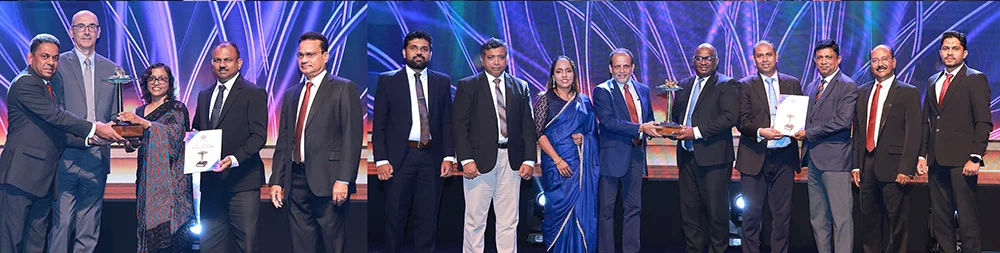
Corporate accolades underscore the alignment between its operational excellence and national development
In an era where national competitiveness is intrinsically tied to digital connectivity, strengthening the country’s digital backbone has become an urgent priority. Within this context, the evolving role of Sri Lanka’s leading telecommunications provider, SLT-MOBITEL, offers valuable insight into how technological infrastructure can underpin broader economic resilience.
Telecommunications and digital networks are foundational to economic transformation. By expanding high-speed broadband access, upgrading enterprise cloud capabilities, and bridging the urban-rural connectivity divide, SLT-MOBITEL helps reduce business transaction costs, streamline supply chains, and enable micro, small, and medium enterprises to reach global markets.
Recent corporate accolades further underscore this alignment between operational excellence and national development. SLT-MOBITEL’s triple triumph at the National Business Excellence Awards 2026 – winning in the Infrastructure and Utilities sector, Performance Management, and ICT Services categories – highlights its growing impact. Notably, the recognition of eChannelling’s contributions to digital healthcare reflects a broader strategic pivot toward integrated technology solutions.
“Institutional efficiency of this nature is critical for attracting foreign direct investment, as global partners increasingly assess a country’s digital maturity and systemic stability before committing capital,” noted industry observers.
Moreover, the company’s transition from a conventional telecom utility to a comprehensive digital solutions provider aligns seamlessly with Sri Lanka’s national digitalisation agenda. As the country pursues public sector modernisation, enhanced e-governance, and a competitive knowledge economy, the private sector must step up to deliver secure, scalable, and future-ready networks. Investments in data centres, cybersecurity frameworks, and advanced ICT infrastructure act as strategic buffers, ensuring that Sri Lanka’s economic apparatus remains agile and resilient amid future global uncertainties.
However, industry experts caution that while these achievements are commendable, SLT-MOBITEL still has a considerable distance to cover in fully enabling a truly digital economy.
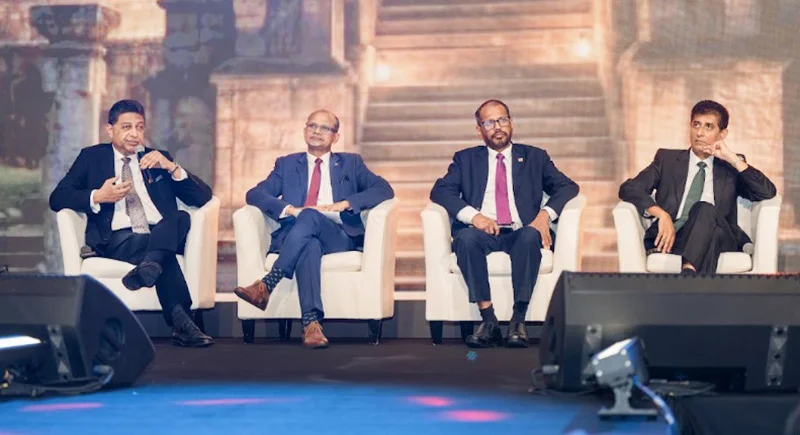
Port City Colombo (PCC) took a prominent role as Platinum Sponsor at the second edition of Sri Lanka Beyond Your Dreams, a high-level diplomatic and investment engagement hosted by the Consulate General of Sri Lanka in Dubai and the Northern Emirates. The event, held on 2nd September 2026 at the Hilton Dubai Al Habtoor City, brought together over 400 senior UAE-based business leaders, investors, diplomats, and institutional stakeholders, alongside Sri Lanka’s most senior government representatives.
The gathering was graced by Dr. Thani bin Ahmed Al Zeyoudi, UAE Minister of Foreign Trade, as Guest of Honour, and Vijitha Herath, Sri Lanka’s Minister of Foreign Affairs, Foreign Employment and Tourism. A high-level Sri Lankan delegation – including the Secretary to the Prime Minister, the Chairman of the Board of Investment, the Chairman of the Export Development Board, and the Director General of Commerce – underscored the government’s strong commitment to deepening economic diplomacy with the UAE.
In his keynote address, Minister Herath reaffirmed the centuries-old ties between Sri Lanka and the Arab region, emphasising the UAE’s vital role as a key economic partner. He stressed the urgency of finalising a Comprehensive Economic Partnership Agreement (CEPA) with the UAE, which would establish a robust framework to elevate trade, investment, and bilateral cooperation. Declaring Sri Lanka “open and ready for business,” he positioned Port City Colombo as the physical embodiment of this economic mission – a modern Special Economic Zone (SEZ) with a dedicated legal framework and competitive incentives, offering UAE investors a natural gateway to South Asia while maintaining strong Gulf connectivity.
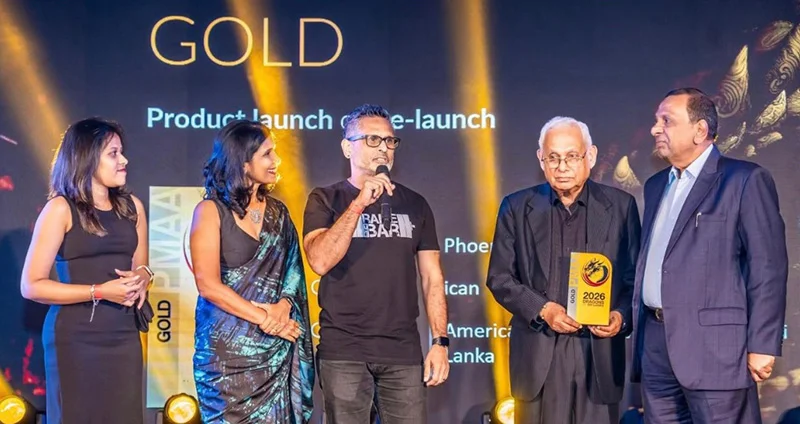
American Premium Water has secured four wins at Dragons of Sri Lanka Awards 2026, including three Gold Dragons and one Black Dragon, marking a significant milestone for the brand following its relaunch last year.
Part of the prestigious Dragons of Asia awards, Dragons of Sri Lanka brings the program’s regional platform to the local market, celebrating creative and effective marketing communications, with entries evaluated on strategic thinking, creativity, execution and impact. Established in 2000, Dragons of Asia is one of Asia’s premier results-driven marketing awards programs.
For American Premium Water, the achievements are particularly significant given that the company’s debut at the Dragons awards has resulted in four Dragons across four categories. In the distinction of Gold Dragons, American Premium Water was recognized across three categories including Product Launch or Re Launch, Cause, Environment or Sustainability and Creative Excellence while the Black Dragon was awarded in recognition of Small Budget.
Competing alongside leading brands and agencies in Sri Lanka, American Premium Water’s four wins demonstrate the strength and effectiveness of its recent work. Winning three Gold Dragons across three distinct categories highlights the breadth of the brand’s achievements, while the Black Dragon for Small Budget further emphasizes its ability to create meaningful impact through focused and efficient investment.


Sri Lanka reiterates its territory won’t be used against India

UK-led Core Group calls Jaffna mass graves a ‘stark reminder’ but stops short of calling for international accountability

India underscores security and defence in overall partnership with SL

If Sri Lanka wants ‘real’ stability, only one way to achieve it, in a short time

Human dignity comes centre stage in Afghan refugee deportation crisis

‘Dates have the highest sugar content to fight Coronavirus’

Sunday Island 27 December – Headlines

#SundayIsland 17th December – Headlines

Sunday Island – 28th March

Sunday Island Headlines – 21 March

Sunday Island – 21st February – Headlines
-
 News5 days ago
Namal remanded until Sept. 18 over Airbus deal investigation
-

 Latest News4 days ago
Tharanga creates history with Diamond League crown in Brussels
-

 News4 days ago
Dispute which triggered listed company director being detained at BIA resolved
-

 Features3 days ago
After the parade: What a traffic OIC’s walk-out tells us
-
 Opinion6 days ago
In Memory of Dr Upatissa Pethiyagoda
-

 Editorial5 days ago
Power vs Equality
-
 Latest News6 days ago
SLPP MP Namal Rajapaksa arrested by CIABOC
-
Editorial3 days ago
Arrests as theatre