
Business
Kia wins European Car of the Year, 2 Red Dot Design awards + 8 Travel Safety awards


New cars are in short supply in Sri Lanka, but owners of Kia automobiles have cause to cheer the popular Korean nameplate which has roared into 2022 winning the coveted European Car of the Year award, two Red Dot Design awards and a remarkable eight Top Safety Pick (TSP) awards from the Insurance Institute for Highway Safety (IIHS).
Kia’s revolutionary EV6, the brand’s first dedicated battery electric vehicle (BEV), which stands out for its ultra-fast charging, swift acceleration and zero emissions, has been crowned the ‘2022 Car of the Year’ at the prestigious European Car of the Year (COTY) Awards, beating the shortlisted Hyundai IONIQ 5, Ford Mustang Mach-E, Škoda Enyaq iV, Cupra Born, Renault Mégane E-Tech and Peugeot 308. Notably, the EV6 is the first Kia automobile to win an European Car of the Year award.
The EV6 also claimed overall victory at the prestigious 2022 Red Dot Design Awards, one of the largest design competitions in the world, winning the ‘Red Dot: Best of the Best’ accolade for its pioneering and forward-looking design and the Red Dot category award for ‘Innovative Products.’
Meanwhile, the Kia Telluride, Sorento, Seltos and Carnival built after March 2021 (with specific headlights), as well as the Kia Sportage and Soul (with optional front crash prevention and specific headlights) have all received TSP awards, while the Kia K5 and Stinger sedans have qualified as TSP+ winners.
All 2022 TSP winners earned “Good” ratings in six crashworthiness tests – driver-side small overlap front, passenger-side small overlap front, moderate overlap front, original side, roof strength and head restraint tests – as well as an “Advanced” or “Superior” rating for vehicle-to-vehicle and vehicle-to-pedestrian front crash prevention evaluations. In addition, the vehicle must have at least one available headlight system that earns a “Good” or “Acceptable” rating. For a TSP+ designation, the “Good” or “Acceptable” headlight system must be standard equipment.
Kia Motors (Lanka) Managing Director Mr Andrew Perera described the news of these awards as electrifying news for Kia enthusiasts in Sri Lanka who have been unable to experience the latest models due to import restrictions to conserve foreign exchange. “The EV6 in particular is an exciting sign of what’s still to come in our evolving electrified line-up, and we look forward to the time when we can resume the import of new world-class models from Kia, including the award winning EV6 which combines the best of eco-friendly operation with adrenaline-pumping performance,” he said.
The Kia EV6 is positioned as the embodiment of the new Kia. It can accelerate from 0-100 kmph in just 5.2 seconds in the standard version and in an eye-watering 3.5 seconds in the GT version, can reach a top speed of 260 kmph, can cover up to 528 kms on a single charge in the long-range version and achieve 800V high-speed charge from 10 to 80 per cent in just 18 minutes, all with zero emissions.
At the 2022 European Car of the Year awards, the Kia EV6 was voted the overall winner by a 61-strong jury consisting of highly respected motoring journalists from 23 European countries. The SUV was initially listed for consideration for the ‘European Car of the Year’ Award alongside over sixty models that launched in 2021. In November 2021, the COTY jury whittled this longlist down to a seven-strong shortlist, six of which were electric vehicles (EVs), further demonstrating the growing importance of electric vehicles to consumers as society transitions towards a new mobility future.
The EV6 is the first of seven dedicated EV models Kia plans to launch by 2026. The all-electric crossover will play a key role in the company’s plans to become a leading global sustainable mobility solutions provider.
The 2022 European Car of the Year award is the latest in a growing number of top-notch awards bestowed on the Kia EV6 since its introduction last year. Other titles recently won include: 2022 Irish Car of the Year; 2022 What Car? ‘Car of the Year’; ‘Crossover of the Year’ at the TopGear.com 2021 awards; ‘Premium’ winner in the German Car of the Year 2022 awards; and joint winner of the inaugural ‘Best Cars of the Year’ 2021/2022 awards.
Kia Motors (Lanka) has represented the Kia brand in Sri Lanka since 1996 and has been instrumental in making it one of the best-regarded automobile brands in the country. The Company’s Rs 800 million Logistics Centre in Malabe is supported by a sales and service network spearheaded by wholly-owned subsidiaries Carplan and Autopoint (Kurunegala) as 3S dealers. Kia Motors (Lanka) also has showrooms in Kandy and Matara, has appointed Service Dealers in Ampara, Galle and Ratnapura, and franchised spare parts dealers in Colombo, Moratuwa, Gampaha, Kandy, Ratnapura, Anuradhapura, Batticaloa and Matara.


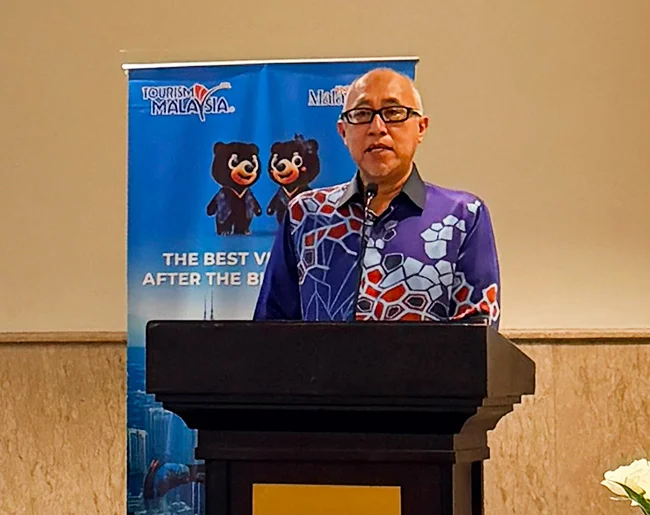
Malaysia is intensifying efforts to attract more Sri Lankan travelers by promoting its diverse tourism offerings, strong air connectivity, Muslim-friendly facilities and expanding business partnerships ahead of the ‘Visit Malaysia 2026’ (VMY2026) campaign.
Addressing the Tourism Malaysia product presentation yesterday in Colombo, Malaysian High Commissioner to Sri Lanka Badli Hisham Adam said tourism remains one of the strongest pillars of the long-standing bilateral relationship between Malaysia and Sri Lanka, helping strengthen cultural understanding, business links and people-to-people ties.
The event, organised by Tourism Malaysia Chennai in collaboration with the High Commission of Malaysia in Colombo, brought together Malaysian tourism stakeholders, airline representatives, Sri Lankan travel industry professionals and members of the media to explore new business opportunities.
The High Commissioner said Sri Lanka continues to be an important source market for Malaysia, with growing numbers of Sri Lankan travelers seeking destinations that combine diversity, affordability, quality experiences and convenient connectivity.
“As part of ‘Visit Malaysia 2026’, we warmly invite Sri Lankan travelers to discover the richness of Malaysia, he said.
Highlighting Malaysia’s tourism strengths, the envoy said the country offers a wide range of attractions, including multicultural cities, UNESCO World Heritage Sites, pristine beaches, tropical rainforests, cool highlands and unique wildlife.
These are complemented by world-class shopping, family-friendly attractions, educational opportunities, wellness and medical tourism, business events and internationally renowned hospitality.
He also stressed Malaysia’s position as the world’s leading Muslim-friendly destination, supported by an extensive halal ecosystem with internationally recognised certification, halal-certified restaurants, easily accessible prayer facilities and family-oriented amenities across the country.
Despite ongoing geopolitical uncertainties around the world, the High Commissioner said Malaysia remains a stable, peaceful and welcoming destination for international travelers.
He urged Sri Lankan travel agents to strengthen collaboration with Malaysian tourism providers by developing innovative travel packages targeting leisure travelers, business visitors and event participants.
The presentation featured leading Malaysian tourism partners, including Wyndham Ion Majestic, Lotus Desaru, Key Term Holidays representing the Sabah Tourism Board and Asian Overland representing The PULSE Group, showcasing Malaysia’s diverse tourism experiences and investment in the Sri Lankan market.
The envoy also acknowledged the contribution of airline partners and the media in enhancing Malaysia’s visibility and improving travel connectivity between the two countries.
Looking ahead to ‘Visit Malaysia 2026’, he said the future growth of tourism would depend on stronger collaboration, innovation and meaningful partnerships between industry stakeholders.
He expressed confidence that closer cooperation between Malaysia and Sri Lanka would generate fresh business opportunities while encouraging more Sri Lankan visitors to experience Malaysia’s culture, diversity and hospitality.
The High Commissioner concluded by expressing hope that the networking session would lead to stronger commercial partnerships and contribute to the success of ‘Visit Malaysia 2026’, further deepening tourism and economic ties between the two friendly nations.
By Ifham Nizam
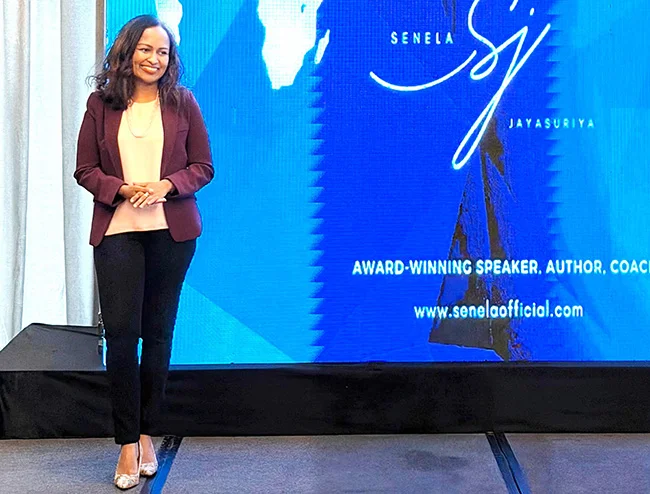
Women Empowered Global (WEG), a network of award‑winning female leaders, corporate CXOs and entrepreneurs, experts and thought leaders dedicated to empowering women from six continents, unveiled the ‘WEG Leadership Lab’, a 24‑week virtual intensive programme, commencing 26 September. The programme is designed exclusively for women leaders who are ready to accelerate their careers, amplify leadership visibility, and drive transformational growth.
The women‑only leadership experience breaks the mould of conventional training, offering a powerful blend of masterclasses, mentorship, and practical leadership tools tailored for rising leaders, managers, and senior professionals. Participants will gain international exposure, sharpen essential skills, and the opportunity to join a vibrant knowledge‑sharing community which fosters confidence, resilience, and impact.
“The WEG Leadership Lab is not for casual growth. It is for women who are serious about transforming their leadership journey,” said Senela Jayasuriya, Founder/CEO, Women Empowered Global. “By combining global expertise with local delivery, we are creating pathways for women across manufacturing, trading, finance, marketing, technology, and management, as entrepreneurs, business owners, fractional executives, or corporate leaders, to thrive and build a more inclusive leadership landscape.”
WEG’s platform facilitates international exposure and career development for professionals and connects more than 4,000 members worldwide. The Leadership Lab builds on WEG’s flagship initiatives, including the 1 Million Women in Power campaign, the African Women Leadership Forum, the Business Hub, and the Global Online Academy. The programme aims to deliver a transformative journey equipping women to step boldly into leadership roles locally and internationally.
Led by Senela Jayasuriya (MBA, UK), an internationally recognized and awarded leadership & empowerment coach and innovation partner, keynote speaker, and certified expert, WEG collaborates with DEI specialists, corporate boards, Business and HR leaders, to design programmes which advance women’s careers, leadership visibility, equity, and inclusion. To date, she has successfully delivered leadership development programmes to more than 20,000 professionals.
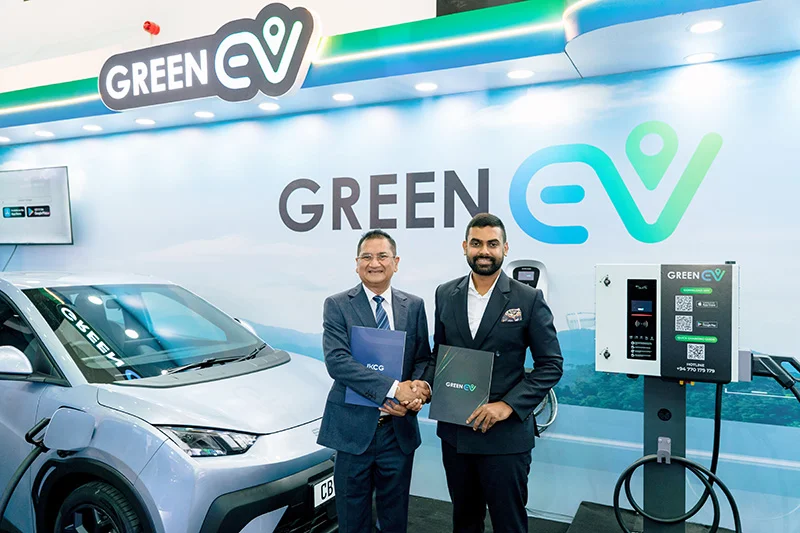
John Keells CG Auto (JKCG Auto), the authorised distributor of BYD and Denza in Sri Lanka, has launched a strategic partnership with Green EV on 26th June 2026 to significantly expand the charging infrastructure available to its customers across the island. The collaboration, formalised through a Memorandum of Understanding (MOU), marks a pivotal step in JKCG Auto’s ongoing commitment to building a comprehensive and reliable New Energy Vehicle (NEV) ecosystem in Sri Lanka.
Through this partnership, BYD and Denza owners will gain seamless access to Green EV’s public charging network of 100+ DC fast chargers and 70 AC chargers, spanning 20 districts and all nine provinces of Sri Lanka, from Jaffna in the north to Hambantota in the south, and from Puttalam on the northwest coast to Trincomalee and Ampara on the eastern seaboard, encompassing a mix of 40kW, 60kW, and 120kW fast-charging infrastructure. The network has been designed to ensure that customers can charge conveniently and confidently, whether in the heart of Colombo or in suburban and outstation communities, removing one of the most commonly cited barriers to EV adoption in Sri Lanka. Further strengthening customer confidence, Green EV has partnered with SLIC to provide a comprehensive insurance cover of LKR 100 million for every Green EV charging station, offering protection against potential damages and ensuring complete peace of mind for every user.
The initiative reflects JKCG Auto’s broader strategy to invest in the foundations of sustainable mobility, ensuring that the transition to electric vehicles is supported not only by world-class vehicles, but by a dependable ecosystem that addresses the practical needs of everyday ownership.
“If the future of mobility in Sri Lanka is going to be electric, success will hinge on how accessible we are able to make the actual vehicles, as well as the enabling infrastructure around them. JKCG Auto is proud to partner with other visionaries like Green EV to ensure that we eliminate range anxiety, so that every customer – whether in Colombo or anywhere in Sri Lanka will have the confidence to go electric,” JKCG Auto Chief Executive Officer, Charith Panditharatne.

A few showers will occur in the Western, Sabaragamuwa and North-western provinces and in Kandy, Nuwara-Eliya, Galle and Matara districts

Customs asked to resume probe or face legal action

Outgoing Chinese Ambassador Qi Zhenhong bids farewell to Mahanayake Theras

Move to extend retirement age of top judges: BASL asks govt. to stop process pending meaningful consultations

Govt. mum on identities of JVP founder’s wife and children

Three high-profile alleged suicides shaping key investigations

‘Dates have the highest sugar content to fight Coronavirus’

Sunday Island 27 December – Headlines

#SundayIsland 17th December – Headlines

Sunday Island – 28th March

Sunday Island Headlines – 21 March

Sunday Island – 21st February – Headlines
-
 Business3 days ago
‘Giving up was never an option’: The fisherman who fought back after losing millions in SL
-
 Features3 days ago
Two memorable excerpts from a former SLAF commander’s memoir
-
 Latest News4 days ago
Davis cup Asia/Oceania Group IV 2026 to be held in Colombo from 20th to 25th July
-
 Features3 days ago
Erdoğan’s New Republic
-
 Life style3 days ago
Taste of the Swiss Alps comes to Colombo
-
 News4 days ago
Dengue outbreak gallops ahead: Infections surpasses 73,455, leaving 50 dead
-
 News4 days ago
Evidence recorded in money laundering case against Yoshitha Rajapaksa
-

 News5 days ago
Money laundering case against Yoshitha, fixed for pre-trial conference