
Sports
Gamini – My friend


Today marks the 80th birth anniversary of visionary SLC President Gamini Dissanayake
by Nuski Mohamed
Gamini Dissanayae was my mentor and friend. My first interaction with him was in 1969 at the Institute of Chartered Accountants of Sri Lanka, when he was a lecturer in Company Law. Since then, we had been in close touch in terms of politics, cricket and corporate management.
In 1981 when Gamini was elected the President of the Board of Control for Cricket in Sri Lanka, I was the Treasurer. That was the year we famously became a Full Member of the International Cricket Council. Gamini’s leadership and the role he played towards Sri Lanka obtaining Full Membership is only too well known and need not be elaborated upon.
The following year, I was elected as Secretary of the Cricket Board and worked alongside Gamini until 1989 for a continuous period of seven years and was in constant contact with him. Gamini had a personality and a mind of his own, thought creatively and acted fearlessly. His leadership was unmatched. His decision making was precise in order to achieve timely and optimum results. One of those decisive moments was in 1982 when he took action with the blessings of the ExCo to ban the cricketers who went on the Rebel tour to South Africa for a period of 25 years without any hesitation whatsoever. It was an eye opener for younger generations.
Following the conclusion of the ICC meeting in 1985, over a coffee in the Long Room at the Lord’s Cricket Grounds, Gamini asked me whether I could take over the Chairmanship of the Sri Lanka Land Reclamation and Development Corporation almost overnight. It took me by surprise, since I knew that the responsibility of heading a State Corporation was demanding besides being a full time job. I was then with the Private Sector since the early 1970’s post qualified.
Although I was on a few Director Boards of State Corporations, the task of taking over a Corporation appeared to be a challenge. However, knowing Gamini’s thinking that he will not take ‘No” for an answer, I requested a few days’ time, to ponder over same.
But that was not to be and on our return to Sri Lanka two days later, he summoned me to the Ministry of Lands and issued me with the letter to take charge of the Corporation immediately. He had obviously made up his mind long before though it was not communicated to me. On hind sight it was a pleasure working with a personality of Gamini’s stature including the experience and knowledge I gained. We always had mutual respect for each other in our work ethics. I enjoyed every bit of our working relationship.
In the early to mid 1980s, the bid for the 1987 World Cup was a tussle between Australia/ New Zealand on the one hand and India/ Pakistan representing the Asian region. Australia had been very helpful to Sri Lanka in terms of exchange of tours which at that time was rare due to our not so strong cricket strength with the exit of key players on account of the rebel tour. Domestically too in coming tours were hampered as a result of the LTTE terrorist activity. Besides, the fact that Australia supported us positively during the crucial vote at ICC without exercising the veto following the visit of ACB Chairman Fred Bennet to Sri Lanka was foremost in Gamini’s mind.
In the midst of the ICC meeting Gamini mentioned to me that Sri Lanka should show some gratitude and thereby initiated a dialogue with the Aussie delegation which included David Richards, to explain to them the circumstances that will compel Sri Lanka to extend support to the bid from the Asian Region. This was well received and appreciated by the Australian delegates. Regional politics did eventually play a dominant role with the Prime Minister of India Rajiv Gandhi speaking to his Sri Lankan counterpart President J.R.Jayewardene and SLC had very little choice.
Gamini’s concluding speech on behalf of the Asian Region Countries on the concept that the World Cup should be rotated as a part of promoting the game globally received overwhelming applause and support from the ICC membership.
Lt. Gen Safdar Butt, President of the Pakistan Cricket Board was a great friend of Gamini. Lt.Gen Safdar was very commandeering and had a personality of his own. During the Pakistan tour of Sri Lanka in 1986 there was a fair amount of upheaval between the Sri Lankan umpires and the captain of the Pakistan team Imran Khan.
The current Prime Minister of Pakistan threatened to abandon the tour and take his team back home. That would have also jeopardized the Asia Cup in 1986 which was to immediately follow the Pakistan tour. Gamini using his personal friendship immediately phoned his counterpart Lt. General Safdar Butt who promptly took a flight and arrived in Sri Lanka at Gamini’s request to settle the dispute. Sanity prevailed and the tour continued with a change of Umpires for the final Test at the P. Sara Oval. A major catastrophe was thus averted.
Gamini never mixed cricket with politics. It was during our regime that the long felt need of a headquarters for the Cricket Board was identified and the project commenced at the SSC grounds. Gamini was able to negotiate terms with President J. R. Jayawardene who was also the President of SSC to construct the headquarters and the award was given to the State Engineering Corporation. We had no funds, but Gamini used his offices and found sponsors with the Sri Lanka Cricket Foundation, Gamini’s creation also chipping in.
During completion stage Turnor Wickremasinghe, Engineer in charge of the project at SSC told me that he would use light green and black paint to the front of the building and that he has consulted the Architects etc. They also opined it would blend well with the green grass in the background. As Secretary of the Board the State Engineering Corporation Consultants were in touch with me on a daily basis on all routine matters during construction and I gave the green light to go ahead.
A couple of weeks later, I happened to travel to the SLC with Gamini for a board meeting and he was fuming when he saw the external walls in a light green shade and questioned me as to whose bright idea it was to use green colour on the walls. I must say he was very polite and I admitted that I had given the go ahead since it came from the Architects. He requested me to get them to substitute the green colour immediately with white at whatever cost since the public perception would be that we used green as he was the President of the Board as it was his party colour. It remains white to date.
During the early 1980s, Gamini appointed me as the Treasurer of the Lanka Jathika Estate Workers Union with the blessings of HE the President when he took over the reigns of the Union as the President. He set out his program of work in such a manner always conscious of the fact that LJEWU being a Trade Union its paramount commitment should be towards the welfare of the members that is the plantation workers employed mostly in the tea, rubber and coconut plantations who were suffering untold hardships.
Gamini was particularly grieved to note that the worker’s relationship with the Estate Management left much to be desired. He realized a new dialogue was a pre requisite and it was time the Management recognised this new challenge. He succeeded in bringing about this change through persuasive powers which included seeking government intervention from time to strike deals for the estate workers beyond wage hikes. That was the hallmark of Gamini as a Trade Union leader.
Dame Betty Boothroyd, former Speaker of the House of Commons of the UK once said “From the numerous occasions that I have interacted with Gamini, it is clear that he has a huge vision for Sri Lanka and its people. While one could consider him an idealist, the very fact that he delivered in terms of the gigantic Mahaweli Project illustrates that he is also an extraordinary performer. It is a testimony to Gamini’s pragmatism and determination.
Finally, back to the Cricket Board Presidency, it is my view that he carried out his responsibilities with consummate ease and tact. He was well aware of the divide and the club rivalries in cricket, yet he always endeavored to make the Cricket Board a place that is accessible to all both players and administrators alike, so long as it was in the best interest of cricket. I am so proud and privileged to have been closely associated with Gamini, the personality who took Sri Lanka Cricket to such great heights during his regime.
Sports Editors’ note:
Mr. Nuski Mohamed was the right hand man of late Gamini Dissanayake having functioned as Secretary and Treasurer of the Board of Control for Cricket in 1980s. He served the cricket board up until 2015. He is still actively involved in cricket dedicating time to club cricket.


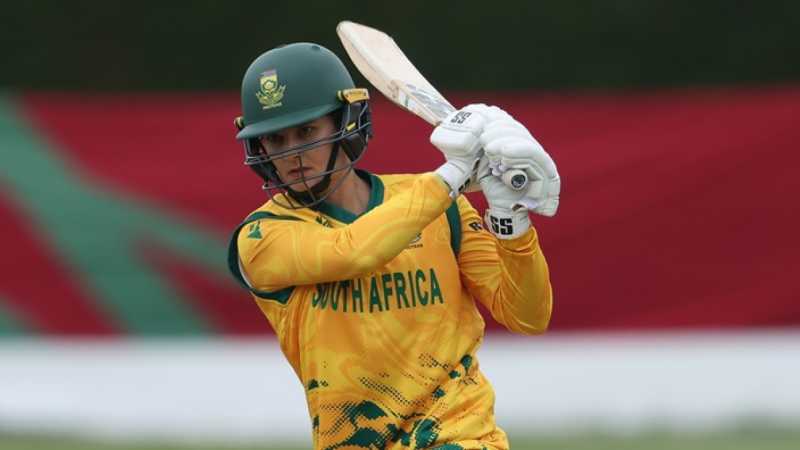
South Africa successfully defended 136 in an 18-over game against Ireland in the Women’s T20 World Cup warm-up fixture in Loughborough . The experienced Marizanne Kapp led the way with the ball, her 4 for 24 helping South Africa dismiss Ireland for 120 in 17.4 overs. Shabnim Ismail, who had recently reversed her retirement, picked up 1 for 25 in her four overs.
Leah Paul was the only Ireland batter to pass 20 in their chase. Apart from Paul, only four Ireland batters got to double figures.
After South Africa were asked to bat first, they posted 136 for 8 on the back of captain Laura Wolvaardt’s 65 off 37 balls, including seven fours and three sixes.
SCORES:
South Africa Women 136 for 8 in 18 overs (Sune Luus 17, Laura Wolvaardt 65, Annerie Dercksen 26, Nadine de Klerk 11, Aimee Maguire 1-13, Arlene Kelly 3-29, Cara Murray 2-13, Ava Canning 2-08) beat Ireland Women 120 in 17.4 overs (Rebecca Stockel 19, Leah Paul 29, Alice Tector 17, Louise Little 13, Arlene Kelly 15; Marizanne Kapp 4-24, Shabnim Ismail 1-25, Tumi Sekhukhune 2-18, Nadine de Klerk 1-16, Nonkululeko Mlaba 1-25) by 16 runs
(Crickinfo)
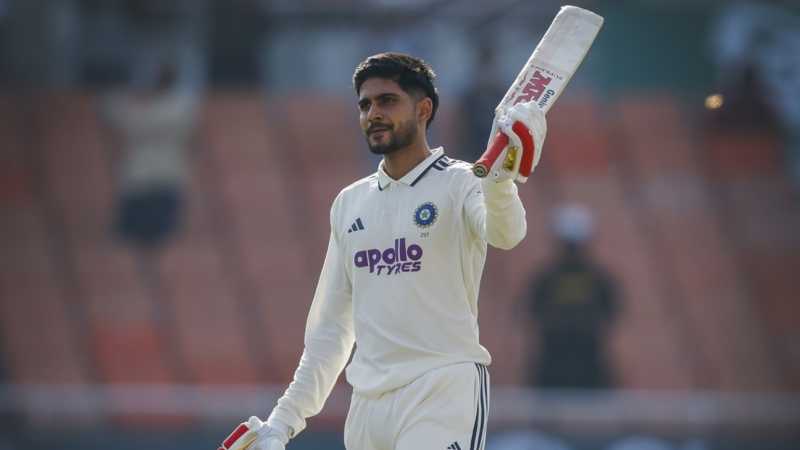
In the 11th over, KL Rahul edged a cut to the keeper off Ziaur Ahmed when he was on 16. Afghanistan did not review the not-out decision. In the 61st over, Rahul flicked a full ball off his pads, bringing up a gritty century – his 12th in Test cricket. Afghanistan’s bowling attack had been worn down in the intervening period. They could not cash in on their half-chances aplenty, in their first Test against India since their format debut in 2018. Instead, Rahul – alongside a regal Shubman Gill – headlined India’s march to 368 for 3 on day one in New Chandigarh.
The city was hosting a men’s Test for the first time. Temperatures soared up to 40 degrees Celsius, and India captain Gill opted to bat first, expecting the pitch to worsen as time wore on in the match. However, Afghanistan’s new-ball bowlers – Azmatullah Omarzai and Mohamed Saleem – extracted uneven bounce off the pitch right away. They kept bowling back-of-a-length deliveries to Jaiswal and Rahul, moving the ball away from the openers.
Rahul reached for deliveries far from his body early in the day, often mistiming his shots. He ambled away to 16 off 34 by the end of the 10th over. At the other end, Jaiswal pounced on fuller deliveries with more regularity to race to 20 off 26.
Then, in the 11th over off Ziaur, Rahul slashed at a wide delivery and both bowler and keeper went up with a big appeal. However, they opted out of the review. Replays later showed Rahul had edged the delivery. Rahul rode his luck thereafter, leaving balls outside off, and dead-batting fuller ones that gripped in the pitch.
In the next over – the 12th – Jaiswal leaned into a front-foot drive off Mohammad Saleem. Then he jumped at an inswinger drifting down leg, and tried to flick it off his hips. He edged it to the keeper instead. Against the run of play, Jaiswal departed for a 32-ball 24, giving Saleem his maiden Test wicket.
Soon after, the new-ball swing dissipated and the bounce became less treacherous. B Sai Sudarshan made full use of this period of play at the back end of Saleem and Omarzai’s extended spells. He laced three fours in his first 15 deliveries.
In the 35th over off Ziaur, Sai Sudharsan stepped out of his crease for a tentative defense outside off. His edge dissected the wicketkeeper Afsar Zazai and first slip. Eight overs later, with Sai Sudharsan looking set for his maiden Test century, the batter played an expansive drive outside off against Saleem. Once more, the ball flew into the slip cordon, but was snared by Zazai with a one-handed stunner to his right. Sai Sudharsan was dismissed for 81. The second-wicket partnership was aborted at 131, with Rahul still steady at the other end.
As the day wore on, the New Chandigarh surface began gripping and turning more. Afghanistan’s captain Hashmatullah Shahidi was their most effective spinner. He bowled slowly, often keeping his speeds under 80 kph, and used drift to troublealla batters. Still, he never induced any real chances, with edges off him flying past short leg or the keeper.
From the other end, debutant Nangeyalia Kharote induced a thin edge off Sai Sudharsan with just his fourth delivery. Rahmanullah Gurbaz dropped the consequent one-hander, diving to his right at first slip. On his return spell, Kharote – as well as part-timer Abdul Malik – both strayed into leg-stump lines too often.
With Afghanistan’s fast bowlers erring in discipline too, Gill took full toll on them, especially after the tea break. If Rahul’s knock was a product of battling against the early swing and seam, Gill’s imperious century – his 11th in the format – was aided by a worn-down attack. Still, he pounced on good-length deliveries outside off as he unfurled his drives, and cut close to his body, in trademark fashion to rack up 11 fours and one six.
Gill had Rahul for company through the beginning of his knock, during a 67-run partnership for the third wicket. However, just one delivery after bringing up his century, Rahul perished for the third time in Test cricket on exactly a 100 – the joint-second most times in Test cricket, right behind England’s Len Hutton (4). Rahul had been out playing a loose waft away from his body, off Ziaur, straight to short extra cover.
Once Rishabh Pant walked out to join Gill, the brief was clear: by their standards, India had already shut up shop for the final hour of play. An unusually restrained Pant, also playing his 50th Test for India, batted within his means until his eyes lit up against offspinner Abdul Malik in the 68th over. He took advantage of half-trackers to flat-bat three sixes in trademark Pant style. Tellingly, these would also be Pant’s only sixes of the evening.
Gill brought up his century just a few minutes before close of play, off a flick to square leg, in the 83rd over off Saleem. Afghanistan had opted not to choose the new ball, bowling through till the close of play with a battered ball. Pant manipulated a thinly spread leg-side field in these final overs to bring up his own fifty off 70 balls, on the penultimate delivery of the day’s play.
SCORES:
India 368 for 3 in 85 overs (Shubman Gill 103*, KL Rahul 100, B Sai Sudharsan 81, Rishabh Pant 50*; MohaSaleem 2-67) vs Afghanistan
(Cricinfo)
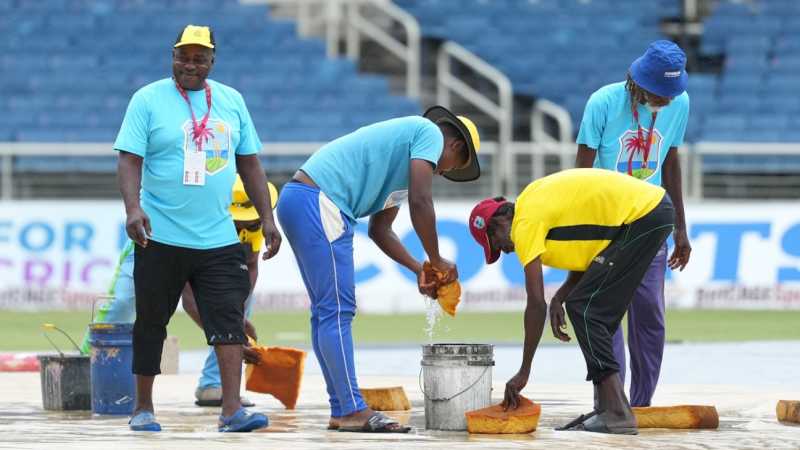
West Indies won the toss and put Sri Lanka into bat, but that was the extent of the action from thesecod ODI at Sabina Park, as persistent rain put an end to proceedings before they had even begun.
The washout means West Indies’ hopes of winning the series are wiped out, but they can still draw level in the final game on Monday. Perhaps more importantly, a win there will give the hosts a much needed rankings boost, with qualification for next year’s World Cup hinging on their final position come March next year.
The toss itself had been delayed by 30 minutes following rain earlier in the day, and it was the possibility of rain intervening later on that had influenced Shai Hope’s decision to field first.
Both teams had also made changes, with Amir Jangoo due to get a game for the injured Matthew Forde, while Eshan Malinga had been drafted in for Asitha Fernando. Shai Hope, playing his 150th ODI for West Indies, received a special jersey before rain came along.
(Cricinfo)

Huge crowds throng Madrid streets for Pope’s open-air mass

Women’s T20 World Cup 2026 warm-up: Kapp, Wolvaardt take SA past Ireland

Women’s T20 World Cup 2026 warm-up: Chamari Athapaththu’s 94 helps Sri Lanka beat Pakistan

Rahul, Gill hit centuries as India dominate Afghanistan on opening day

Persistent rain in Kingston washes out second ODI between West Indies and Sri Lanka

Heavy showers about 100 mm are likely at some places in the Western and Sabaragamuwa provinces and in Galle, Matara, Kandy and Nuwara-Eliya districts

‘Dates have the highest sugar content to fight Coronavirus’

Sunday Island 27 December – Headlines

#SundayIsland 17th December – Headlines

Sunday Island – 28th March

Sunday Island Headlines – 21 March

Sunday Island – 21st February – Headlines
-

 News6 days ago
Lankan duo emerge winners in Latin dance championship held in Blackpool, UK
-

 Business7 days ago
IMF’s unstated rate:Sri Lanka’s $695m loan costs about 5.33% per annum
-
 Latest News3 days ago
Kusal Mendis, Pathum Nissanka, bowlers put Sri Lanka 1-0 up
-
 News4 days ago
New US tariffs proposed on 60 countries, including Sri Lanka
-

 Business7 days ago
Sri Lankan scientist-innovator Milinda Edirisinghe introduces AI-integrated gem testing system to gemological world
-
 Features3 days ago
Power crept into the Sangha and is now tearing it apart
-

 News7 days ago
UNP challenges NPP move to amend Vihara – Devalagam Act
-

 News6 days ago
Sri Lankan teen killed in Chennai clash; three arrested