
News
Women leaders present solutions to Lanka’s woes

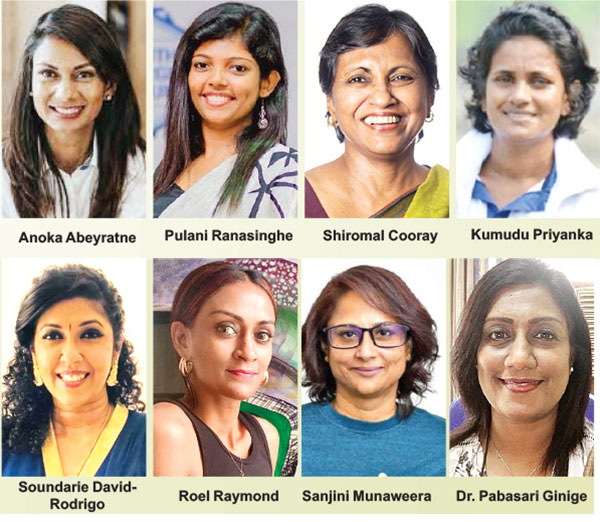
Eight highly accomplished women from diverse industries came together on one stage sharing their leadership perspective for Sri Lanka at the second second chapter of iLead – the International Women’s Day event jointly organized by NextGenSL and the Friedrich Naumann Foundation for Freedom in Sri Lanka.
They spoke under the theme “What will I do differently if I ever get the opportunity to lead the country” and shared their insights on what needs to be done to resuscitate Sri Lanka from the current state of peril.
The speakers included Dr. Pabasari Ginige, Consultant Psychiatrist and Senior Lecturer at the Faculty of Medicine, the University of Peradeniya, Sanjini Munaweera, Country Director – Sri Lanka ADA, Soundarie David Rodrigo, Music Director, Pianist and Lawyer, Roel Raymond, Editor-in-Chief, Roar Media, Kumudu Priyanka, Sri Lankan Paralympian, Shiromal Cooray, Chairperson Jetwing Travels, Anoka Abeyratne, Conservationist and Environmentalist and Pulani Ranasinghe, Technopreneur and Founder – Loons Lab.
Dr. Ginige, an adult psychiatrist with a special interest in child abuse, Intellectual Disability, Autism and LGBTIQ mental health issues, and women’s mental health made a moving speech on Sri Lanka’s current situation and her potential solutions.
“In my lifetime, I have witnessed Presidents stripping my country of its dignity and sovereignty. I have witnessed Presidents ripping off the trust of the majority voter whose political literacy is pitiful whether they are illiterates or scholars- viyathun. I have witnessed pathetic oppositions promising people an unrealistic utopia promoting a beggar culture with ‘sahana malu’ or free takaran. I have also witnessed oppositions, the self-professed political puritans who pleasure themselves in their comfort zones preaching to their own followers, Sermons on the Mount. Today I am standing in a country where the saubhgayaye dakma- vistas of prosperity and splendor- has become yet another joke like yahapalanaya!
Meritocracy will be a guiding principle of my government. I will champion the introduction of Minimum qualifications to enter politics. If I am president NO BODY with a record of child or women abuse or corruption will be given nominations. The people will have a choice of candidates with integrity and basic human decency.
If I am President, I will bring major educational reforms. Children will not be abused in the name of education. Major examinations will not be stressors leading to anxiety and depression in the country I lead. The regressive method of segregating schools according to sex, religion, and race will be prohibited. So students learn equality, kindness, and respect for differences. I will modernize school and university education to suit the job markets locally and globally. If I am President within 24 hours of being appointed I will outlaw all forms of ragging in the HEIs. I will invite the students to review their conduct and see whether that is any different from the state oppression they complain about.” she said.
Sanjini Munaweera, who has nearly three decades of experience across multiple industries, bringing great success to the FMCG, Telco, Technology, BFSI, Travel, as well as Retail and Manufacturing industries locally and globally, said as President of the country she would encourage more women to break the barriers and take a ‘leap of faith’ to challenge the existing stereotypes.
“Sometimes you just need to be courageous enough to take that leap of faith,” she said in her speech.
“If I am given the leadership of the country, I will create a culture of collective responsibility — something that is sadly lacking in Sri Lanka. There is no growth for a country without a culture of collective responsibility. This will drive a narrative of inclusivity and bring people together towards a common purpose,” Munaweera added.
“What is it that makes women — even high achievers like the ones on this panel right now — decline to get involved? It is the very thing that keeps some very capable men away from national politics. The knowledge that their expertise and achievements wouldn’t make an iota of a difference if they were to actually enter the fray,” Roel Raymond, Editor-in-Chief at Roar Media and a senior journalist with experience in both the private and state sectors and has worked with print, radio, television, and online formats, said.
“So what do you need to be successful in politics in Sri Lanka today?” she asked.
“You need to know how to bend the rules. You need to believe that there is no right and wrong. You need to be able to lie; to your constituents, to your family, to your friends, and most damningly and damagingly, to yourself. You need to believe your lies. You need to be able to justify unjust actions. You should relish backstabbing and betrayal. You should be able to get rich illegally and not feel bad about it. You shouldn’t care about the future of this country or about future generations.
You should be able to take what doesn’t belong to you and build a legacy for your family and feel good about it. You should be able to stand by and watch as injustices are perpetrated. You should be able to keep silent; see no evil, hear no evil but by all means, perpetrate evil. You should be able to abuse power – in fact, the less you know about the limits to power the better. You should be grossly unethical and unremorseful about it. You need to be thick-skinned and not have a conscience. And, if you are not any of these things, you need to be — at the very least — ineffectual.
I would abolish the Executive Presidency which gives the President – any President – more power than he or she needs, repeal the Prevention of Terrorism Act which is so ambiguous that it allows for the abuse of a law that should protect, and in fact, ensure that laws that are meant to protect, are not used to stifle dissent, remove the 20th Amendment to the Constitution which, among other things, enhances the powers of the Executive Presidency, reintroduce the 19th Amendment to the Constitution which introduces independent commissions.
“If there is the need for a brand new constitution, I will make sure fundamental rights, the balance of power and accountability are ensured. I will stand firm against discrimination on the basis of race, religion, sexual orientation, sexual preference, ethnicity and gender and ensure that the rights of girls and women are protected in Muslim Marriage and Divorce Act. I will strengthen rule of law to protect children, women, the vulnerable and minorities and ensure the protection of orphans, who, after the age of 18, cease becoming wards of the state, and are at the mercy of society,” she added.
Soundarie David-Rodrigo, the Founder and Music Director of Sri Lanka’s premiere female ensemble ‘Soul Sounds,’ the first choir in Sri Lanka to perform and win awards internationally, was also featured as one of the speakers at iLead Chapter 02. Over the last ten years, Soul Sounds has given highly acclaimed performances in many countries
“Despite the challenges we place, we must not forget that Sri Lanka is a beautiful country to live in and we have every potential to do well. But, in order to get there, we, as a country, must embrace our differences and act in harmony,” Soundarie said stressing that she, as the leader of the country, would bring about education reforms and safeguard freedom of expression.
“It is true that we educate our children on religion during school days. But, there is no room for inter-faith dialogue. We do not give them opportunities to discuss similarities between religions and learn from each other,” she said.
She added that her education reforms would focus more on arts, culture, sports and creating harmony. “Even during the time I spent at the Law Faculty as an English medium student, I did not have many opportunities to mingle with Sinhala medium students. The youth should be given opportunities to work in harmony.”
“I would not waste my time pointing fingers at various parties on what went wring although I believe that justice should prevail. The approach should be to analyze, learn from our mistakes and to rectify them,” she stated.
Sri Lankan Paralympian Kumudu Priyanka, in a brief yet moving speech, said she would use all her experience as a Paralympian and as a person with disabilities to ensure the well being of the people going through the same challenges in life. “I will encourage them to get involved in sports and use sports as an avenue to empower them.” Priyanka is the current world record holder in the women’s 200m T45 category. She made her maiden Paralympic appearance representing Sri Lanka at the 2020 Summer Paralympics.
Chairperson of Jetwing Travels Shiromal Cooray said Sri Lanka seemed to have torn between two worlds. “One world says there is nothing wrong in our country everything is going well and some mischief-makers are causing fears. The other world is grappling with a number of insurmountable problems such as fuel shortages, gas shortages and power-cuts. The industry I represent deals with severe problems on a daily basis and is suffering immensely due to the current situation in the country.
“As President, I would appoint a diverse group of economic experts to advise me on the current situations. I would not appoint my relative and friends to advise me but I rely on people who tell me the truth. I would communicate with the public and keep them informed on a regular basis. Look at what President Zelenskyy is doing in Ukraine amidst severe difficulties and when his own life is under threat!
“I would not treat my citizens as idiots. I personally hate when someone tries to take me for a ride. So, I would not do that to my citizens. I believe this is time our country, Sri Lanka, needs us the most. If you tell the truth to the country and start leading it with a vision and a purpose, people will do their part.
“I am a strong believer of a liberalized economy. I don’t believe in a system where one has to be ‘politically connected’ in order to get license to do certain businesses. Anyone who is willing to invest and take risks should be permitted to engage in business. Anyone with money and experience should be allowed to compete in the market on a level playing field. The state should not try to quell competition in the market and pave way for monopolies,” she said whilst adding that she would get women involved in the country’s decision-making process.
“Women do not have to wear men’s shoes. They have their own shoes,” Cooray added.
Anoka Abeyratne, an activist on sustainable development issues who served as the Asia-Pacific representative to UNHabitat YAB shared her leadership perspectives on sustainability and Sri Lanka’s future. She is the elected Environment Lead of the Royal Commonwealth Society. In 2019, Abeyrathne appeared in a list of ‘Iconic Sri Lankan Women Who Have Shaped History.’
“I remember a discussion we once had with a Sri Lankan lawmaker on the Animal Welfare Act. At one point, he said, “well, you know, animals can’t vote!” How can we progress in this regard when they have such a mindset,” she said.
“When you look at Sri Lanka, it’s all about understanding the root cause and bringing forward sustainable solutions,” she stated stressing the importance of ‘sustainability’ in every aspect of the country’s decision-making process.
“For instance, look at a lake. You find mangroves and wetlands around the lake. So many people as well as animals rely on this eco-system. The moment you destroy it, you end up disrupting a lot of communities,” she added stating that becoming ‘eco-friendly’ should not become a “privilege-issue”.
“A friend of mine recently went through a very tough time because her trust was broken. As a country, we are going through a similar situation. A culture of honour, ethics, and integrity should be introduced to the country and the President must embody that,” she added.
Pulani Ranasinghe, who leads a fast-growing innovation-friendly, software start-up company in Sri Lanka that delivers a wide range of services in the latest technologies to a diverse portfolio of local and global clients, said her reforms, as the President of Sri Lanka, would focus on education, innovation, entrepreneurship and digitalization.
“As the first thing on my list, I will work to formulate a national growth strategy for the next 20 years. We see amazing concepts in bits and pieces in election manifestos but they don’t progress. I will build consensus across the political spectrum to formulate this 20-year national growth strategy,” she said.
“Then I will make an action plan on the implementation of the growth strategy. I will introduce major reforms to promote education, IT, digitalization, and media.”
“The biggest issue I see with Sri Lankan education is that it does not promote entrepreneurship. It turns a blind eye to key aspects of entrepreneurship such as managing finances,” she added.
“Only 16000 out of 300,000 students who sit for the Advanced Level Examination become eligible for tertiary education. Isn’t this a great anomaly? I, as President, will open up more avenues for students in the tertiary education sector and the professional education sector,” she said.
Media Minister Dullas Alahapperuma, Opposition MPs Dr. Harsha de Silva, Mayantha Dissanayake, a number of diplomats, civil society figures and corporate leaders attended the event.

News
Food Security is vital to ensuring a Nation’s Sovereignty and National Security – Prime Minister

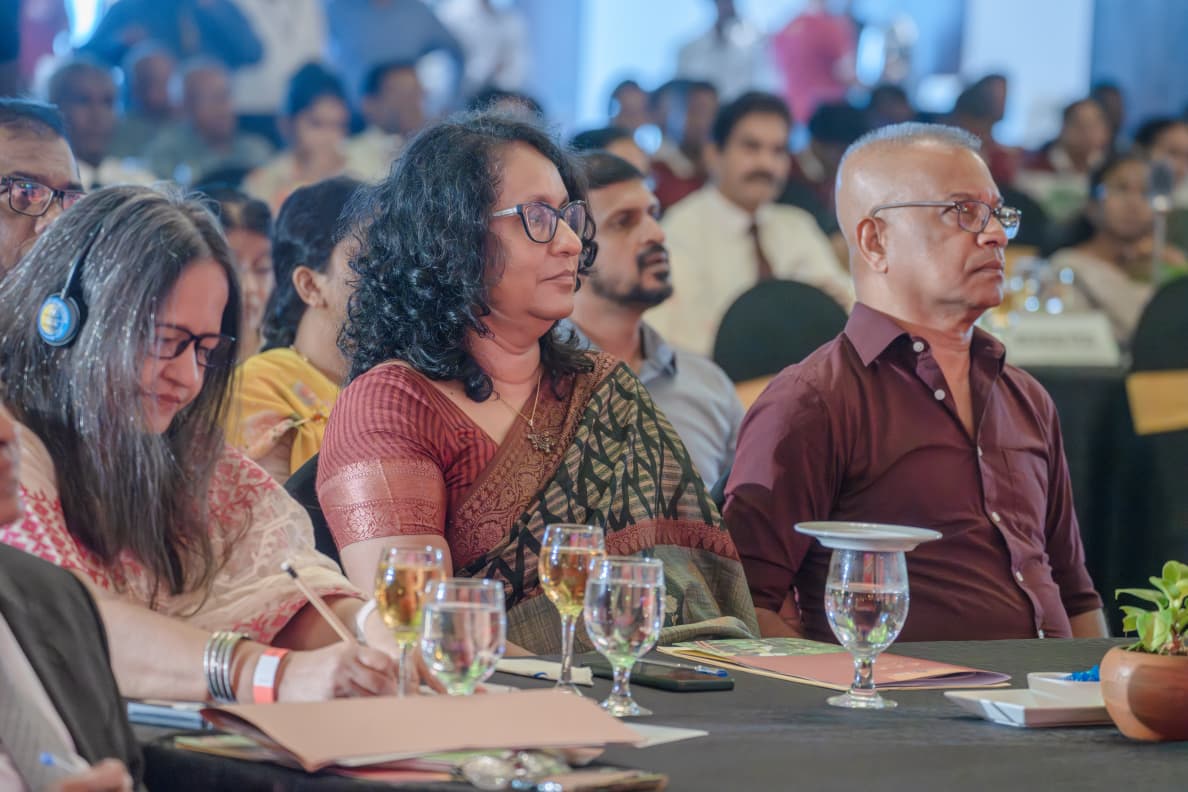
Prime Minister Dr. Harini Amarasuriya stated that, in the face of the turbulent global environment prevailing today, agriculture is confronting significant challenges, and that food security is a crucial factor affecting a country’s stability, sovereignty, and national security.
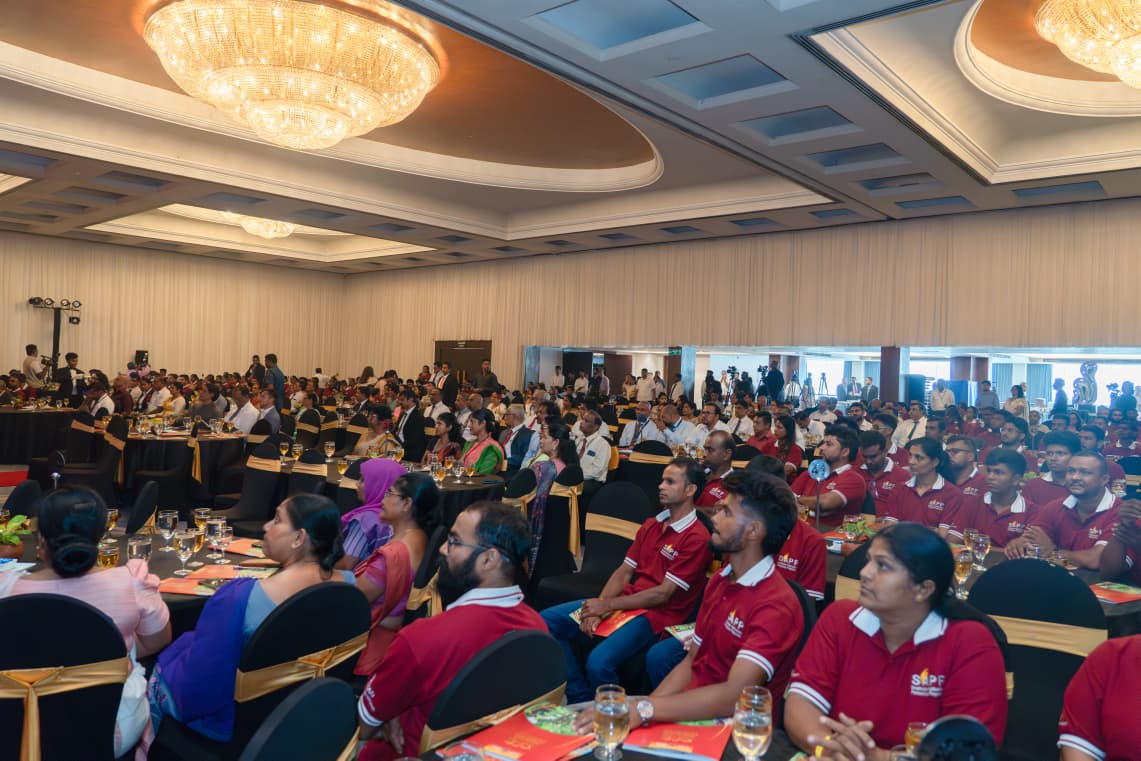
The Prime Minister made these remarks on 28 of April at the Waters Edge, Battaramulla, while addressing the National Youth Agripreneur Showvase and B2B connect Conference organised under the Smallholder Agribusiness Partnership Programme (SAPP), funded jointly by the International Fund for Agricultural Development (IFAD) and the Government of Sri Lanka. The programme aims to empower rural youth to engage in agribusiness ventures.
Addressing the gathering, the Prime Minister further stated:
“I commend the organisers for successfully conducting this event despite the various challenges faced by the country.
You are playing an important role in both the agricultural sector and the national economy. I am happy to witness talented agri-entrepreneurs such as yourselves.
Food security, founded on agriculture, directly impacts a nation’s national security. Concepts such as ’Grow and Sell’ contribute significantly to strengthening the production economy.
During the COVID crisis, as well as amidst the current conflicts in the Middle East, it has become evident that if countries lack food security, their economies become vulnerable. Even a minor decision taken by leaders can disrupt supply chains.
Climate change also poses serious challenges to agriculture. When climatic and environmental conditions become difficult to predict, agriculture itself is threatened. In such a context, your contribution as agri-entrepreneurs goes beyond earning an income. It is also a direct contribution to the nation’s food security and, consequently, to national security. Your talents and innovations are important not only to yourselves, but to the people of the country as a whole”.
The Prime Minister also expressed gratitude for the support extended by institutions such as IFAD and SAPP, and conveyed best wishes to the country’s creative entrepreneurial youth.
The occasion was attended by the Minister of Agriculture, Livestock, Land and Irrigation K.D. Lalkantha; Deputy Minister of Industry and Entrepreneurship Development Chathuranga Abeysinghe; Secretary to the Ministry of Agriculture, Livestock, Land and Irrigation D.P. Wickramasinghe; Additional Secretary of the Ministry Lathisha Priyanthi; Director of SAPP Sunimal Chandrasiri; and several other distinguished guests.
(Prime Minister’s Media Division)
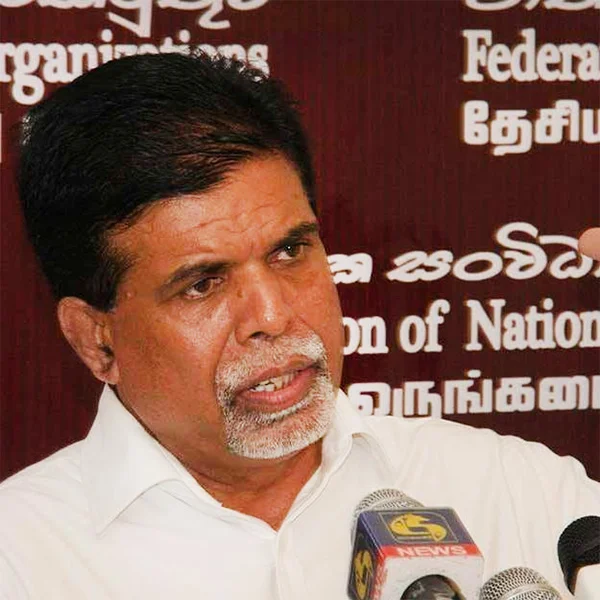
The National Patriotic Front (NPF) has said the NPP government owes the public an explanation regarding the status of negotiations with Russia to secure energy supplies.
NPF General Secretary Dr. Wasantha Bandara said that Sri Lanka was in such a desperate situation, the current dispensation couldn’t, under any circumstances, miss the opportunity to reach consensus with Russia in this regard.
Dr. Bandara was responding to The Island query in the wake of the NPF, in a letter, dated 27 April, warning President Anura Kumara Dissanayake of the catastrophic consequences for the country if it failed to obtain energy supplies on affordable terms.
Alleging that various interested parties, within the government, and the Western diplomatic community, hindered the successful conclusion of an agreement/agreements between Sri Lanka and Russia, Dr. Bandara pointed out that those in authority seemed to have conveniently forgotten that Sri Lanka received two Russian delegations. In late March and early April 2026, Russian Deputy Energy Minister Roman Marshavin and Deputy Foreign Minister Andrey Rudenko, visited Colombo where the focus was on long-term fuel supplies, investment, and tourism.
Dr. Bandara said that Anura Karunatilleke, who succeeded Energy Minister Kumara Jayakody, embroiled in the coal scam, was yet to meet the Russian Ambassador in Colombo Levan Dzhagaryan, who wants to explore ways and means of expediting the process. Instead,
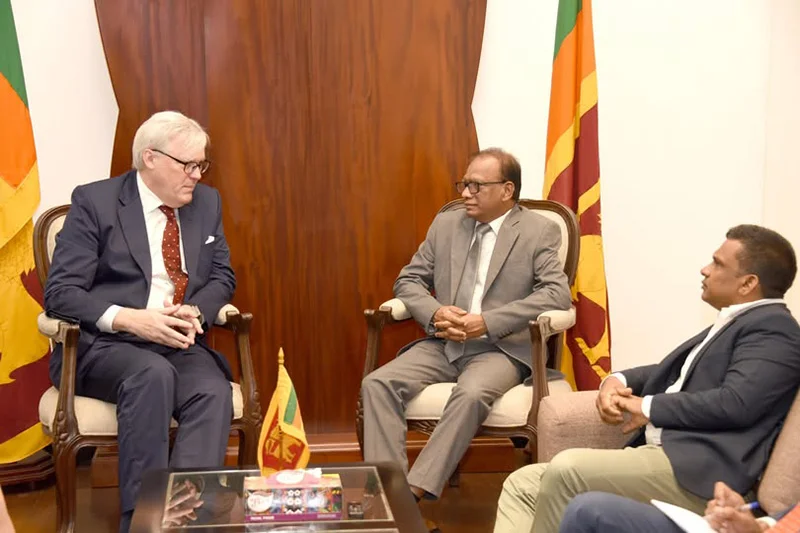
British High Commissioner Andrew Patrick meets Energy Minister
Karunatilleke and Deputy Civil Aviation Minister Janaka Ruwan Kodithuwakku
Karunatilleke and Deputy Civil Aviation Minister Janaka Ruwan Kodithuwakku recently met British High Commissioner Andrew Patrick, Dr Bandara said. Referring to BHC post that they discussed how Sri Lanka could maximise its ports and airports, including through existing and new UK partnerships, alongside UK support for green energy, particularly offshore wind, Dr. Bandara emphasised that the UK and EU struggling to meet their own energy demands couldn’t help Sri Lanka.
In the NPF letter to President Dissanayake, Dr. Bandara alleged that Sri Lanka could secure a barrel of Russian crude for USD 150 to 160 whereas procurement through India cost a lot more. The NPF emphasised the responsibility on the part of the NPP government to maintain close relations with China, Russia and Iran, Sri Lanka’s long-time friends.
The NPF has urged President Dissanayake to intervene without further delay to ensure national interest in this matter is given utmost importance.
Dr. Bandara pointed out that those in charge of coal procurement told a parliamentary committee how the trouble started after Sri Lanka moved from Russian coal to South African products through disgraced Indian firm Trident Chemphar Ltd. Dr. Bandara asserted that political parties, represented in Parliament, should take up this matter vigorously and shouldn’t be distracted by vile NPP strategies.
By Shamindra Ferdinando
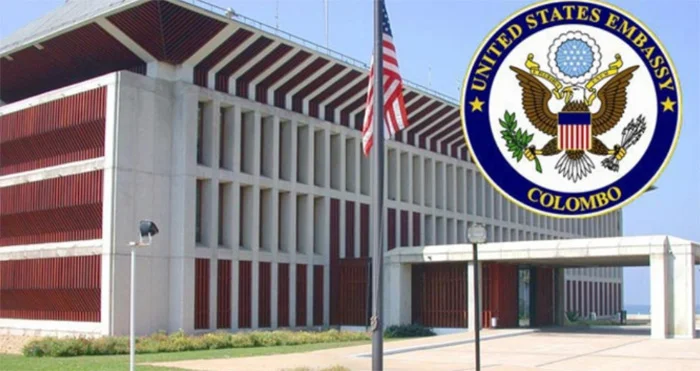
The US Embassy in Sri Lanka, on April 26, celebrated the 15th anniversary of American Corner Jaffna (ACJ), highlighting its longstanding role in connecting communities in Northern Sri Lanka with the United States through programmes focused on education, innovation, and American values. The Embassy also inaugurated the new “Freedom 250 Pavilion,” part of the global Freedom 250 initiative commemorating 250 years of American independence, the Embassy said in a press release issued yesterday (27)
Speaking at the event, US Embassy Public Affairs Officer Menaka Nayyar said: “American Corner Jaffna reflects the United States’ commitment to sharing American values, culture, and ideas with the people of Northern Sri Lanka. On July 4, 2026, the United States will celebrate 250 years of independence—a milestone that highlights our founding ideals and partnerships around the world, including here in Jaffna. Through the new Freedom 250 Pavilion and our programs, we invite the community to engage with the United States and learn more about our history, society, and innovation.”
In 2025 alone, ACJ hosted nearly 400 programmes, reaching more than 10,000 participants. Located at No. 23, Athiyady Road, Nallur, Jaffna, American Corner Jaffna provides free access to resources on the United States, English language learning, educational advising, and skills-based programming.
Established in 2011, in partnership with the Jaffna Social Action Centre, American Corner Jaffna was created as a platform for direct engagement with local communities—offering opportunities to learn about the United States while building skills in critical thinking, leadership, and innovation.
Launched in the post-conflict period, the Corner has played a key role in connecting emerging leaders in Northern Sri Lanka with ideas, resources, and opportunities rooted in American experience and perspectives. The Freedom 250 Pavilion expands ACJ’s capacity to host interactive programmes and community events, reinforcing the Corner’s role as a dynamic space for collaboration, dialogue, and learning.
Individuals can take part in free programmes by visiting American Corner Jaffna in person, contacting the Corner at 021 222 0665 or via email at info@americancornerjaffna.com, and following American Corner Jaffna on Facebook (facebook.com/amcornerjaffna) for the latest updates on events, registration, and membership opportunities.

Food Security is vital to ensuring a Nation’s Sovereignty and National Security – Prime Minister

Showers or thundershowers will occur in the most parts of the island after 1.00 pm

Explanation sought from AKD on ‘Russian energy supplies’

US reiterates its commitment to enhancing relations with Northern Sri Lanka

Rooftop Solar at Crossroads as Sri Lanka Shifts to Distributed Energy Future

Indonesia-SL agreement on Visa Exemption for Diplomatic and Official passports soon

‘Dates have the highest sugar content to fight Coronavirus’

Sunday Island 27 December – Headlines

#SundayIsland 17th December – Headlines

Sunday Island – 28th March

Sunday Island Headlines – 21 March

Sunday Island – 21st February – Headlines
-
 News7 days ago
Whistleblowers ask Treasury Chief to resign over theft of USD 2.5 mn
-

 News7 days ago
No cyber hack: Fintech expert exposes shocking legacy flaws that led to $2.5 million theft
-

 News4 days ago
BIA drug bust: 25 monks including three masterminds arrested
-

 Business5 days ago
Nestlé Lanka Announces Change in Leadership
-
 News2 days ago
Treasury chief’s citizenship details sought from Australia
-

 News4 days ago
Banks alert customers to phishing attacks
-
 News5 days ago
Hackers steal $3.2 Mn from Finance Ministry
-
 Business7 days ago
Dialog Enterprise partners Star Garments: Pioneering 5G innovation in Sri Lanka’s apparel industry