
Features
Filial piety in Buddhism


By Dr. Justice Chandradasa Nanayakkara
Society consists of network of relationships which are mutually interdependent and interrelated. According to Sigalavoda Sutta the society is sustained by a network of interlocking relationships such as the relationship of parents and child, teacher and pupil, employer and employee and husband and wife etc. Members in these relationships are expected to fulfill their reciprocal duties and responsibilities in a spirit of kindness and sympathy. In the strong web of relationships, parents and child relationship is considered the most fundamental as it nurtures the physical emotional and social development of the child. Moreover, filial piety displayed by children towards their parents in the context of parents and child relationship is seen as the basis for an orderly harmonious society.
Filial piety and providing care for aging parents is not only considered a central virtue in many religions it was also deeply rooted and ingrained in many Asian cultures including Lankan. Traditional filial piety emphasises compliance, courtesy, manners and support to one’s parents and
Children are deeply indebted to their parents. When a child is born it is unable to live even for a few days unassisted. It is the parents who look after and nurse him by providing him all the necessary care and attention until the child is grown up and is in a position to live without the help of others. The love and affection of parents towards their children is indescribable and boundless. Parents do everything within their power in the interests of their children. They spend sleepless nights and keep vigil at the bedside of their ailing children when they are afflicted with illnesses. Parents are even prepared to spend their entire wealth by forgoing their own comfort for the sake of their children. They wish to see their children prosper and live happily. When children are worried and sad, parents too are distressed and sad. Parents never stop worrying about their children even when they are all grown up have children of their own. Such is the parental love towards their children. It is self-sacrificing and selfless. No superior can equal parents not even any devas. They can be likened to God in human form. Their unconditional love cannot be found anywhere else in the universe.
Children learn various lessons under various teachers during their formative years, but the most important lessons such as how to talk, how to eat, how to clean themselves and how conduct themselves learn from their parents, for this reason, parents are known as first teachers (Braham and Pubbachariya).
In bringing up children parents apply essential meditation practices of Four Immeasurable minds (Brahma Vihara). Four immeasurables are Loving Kindness (Metta). Compassion (Karuna). Sympathetic Joy (Muditha), and Equanimity (Uppekka). Parents maintain these four excellent qualities towards their children at all times from the moment a child is conceived. Lord Buddha advised his adherents to honour their parents as Brahma Supreme God as parents have done much for their children.
The Buddha explained the greatness of parents thus. “Monks, Brahma is a term for mother and father. “worthy of offerings”. Because mother and father do much for their children, they bring them up, nourish them and introduce them to the world.”
When the Buddha was questioned as to who could be considered as the God. Buddha replied, “let your father and your mother be your Gods.”In the Katannu Suttas of Anguttara Nikaya, the Buddha said there were two persons whom men could not easily repay. They are your parents, even if you were to carry your mother on one shoulder and your father on the other shoulder for hundred years, and were to minister to them in every possible way by anointing, massaging, bathing, rubbing their limbs cleaning them of their urine and excrement or even one was to establish parents in absolute sovereignty as universal monarch (chakka catti raja).you cannot repay them.” From this it is clear, parents are the most amazing people children can find around the world for all the sacrifices they have made for them.
The practice of filial piety is good karma in the moral teaching of buddhism. It teaches its followers to pay their debts to parents by supporting and respecting them, actions that are considered to be great meritorious deeds or wholesome kamma in Buddhist moral teachings. Sigalovada Sutta which deals with the code of conduct for laity while enumerating five duties that should be performed by parents towards their children sets out following five duties that should be done by children towards their parents as a form of filial love. 1. Children should support their parents as they have been supported by them. It is one of the paramount duties of children. They should obey them and not displease, ill-treat disrespect them in any manner. They should attend to their needs when they are sick. 2. Children should do necessary duties by the parents. Children should understand what are the requirements and necessities of their parents. 3. Children should uphold the family tradition and lineage. It is important duty of children to continue the good work started by the parents. 4. Children should act in such a way as to be worthy of their inheritance. Whatever legacy or property they receive from their parents should be protected. 5. Children should offer alms in honour of their departed relatives. It is a noble duty and custom to remember and revere parents after their death. According to Buddhist teaching matricide and patricide are considered two of the five gravest karma the consequence of which could rebound in this very life.
When the Buddha on one occasion bowed respectfully at a pile of bones, which was lying on his path Bhikku Ananda questioned him as to why he bowed at the pile of bones. Lord Buddha replying said “from an inscrutable beginning comes transmigration. A beginning point is not evident though beings hindered by ignorance and fettered by craving are transmigrating and wandering on. A being who had not been your mother at one time in the past is not easy to find, a being who had not been your father, your sister brother, your son and your daughter one time in the past is not easy to find. That is the reason why I bowed down.”
According to the Maha Mangala sutta, when deity from the celestial world requested the Lord Buddha to enumerate the great blessings that would lead to one’s success and welfare in the world, the Buddha while describing thirty-eight such blessings referred to support extended to one’s parents as a great blessing in following terms. Mata pittu Upatthanametam Mangalam uttam (supporting the mother and father is a great blessing).
In Dhammapada to the Buddha has disclosed being dutiful to one’s mother and father would bring happiness in this world (Sukka matteyya loke atho petteyyata suka). Which means “respect for one’s mother and father brings happiness.”
In Anguttara nikaya Buddha mentioned the ways how to repay love, kindness, and gratitude to one’s parents thus “Oh, Bhikkhus, whoever encourages their faithless parents and settles and establishes them in morality, or whoever encourages their stingy parents and settle and establishes them in generosity, or whoever encourages their foolish parents, and settles and establishes them in wisdom such a person, in this way repays, more than repays what is due to their parents.
Three types of children have been identified in the Buddhist scriptures, they are children who are inferior to their parents in every respect (avajatha). Children who are on the same level with their parents (anujatha) and lastly children who excel their parents in every way (atijatha). Parents would be happy if the children would surpass them and would be unhappy if they fall below their expected standard.
It is a matter of immense regret and grief that with the western influence, urbanisation and fragmentation of family life more and more adult children are becoming insensitive to their moral obligations and evading them. Even the adult children who are capable of caring and looking after their feeble aging parents are leaving them in old age homes and run away from their moral obligations. Many elderly parents suffer violence, neglect, isolation on a daily basis at the hands of their children. A large number of elderly parents live all alone. While some who live alone have taken a conscious decision to do so, many others do this because of lack of option. They have been isolated, neglected, hounded out of the houses built by them at their own expense and housed in old age homes, because they are victims of fast eroding social values at the hands of their own children and society at large. Traditional Sri Lankan society cared and respected the old age and the wisdom, abilities and confidence that came with it.
Along with the growing number of elderly citizens in the country abuse and neglect of aged parents is bound to become a widespread issue in our society. Most children do not realise the amount of affection and care their parents have extended to them. They must realise parental love far greater than filial love.
Old parents should not feel abandoned by adult children they raise. Children could see how the relentless and inevitable change of time has taken its toll on their parents and it should serve as a lesson for them right before their own eyes. We must treat our aging parents just as we hope to be treated in the future, and care giving should living example to their own children and grandchildren. In the past adult children with their life partners used to take care of their parents out of goodness of their heart, as abdication of care giving responsibility, unlike the western societies was considered culturally and morally unacceptable.
Time was when ageing parents were taken care of by their adult children. There was a moral obligation to make sure their aging parents were cared for. It was considered a tenet of filial piety.
Ageing parents usually undergo pangs of loneliness and boredom, and, therefore, need companionship. There is always a tendency for aging parents to develop a pessimistic approach to life, which can be avoided if the adult children provide them with abundant love, care and empathy. They expect their children to sit with and talk to them about the happenings of their life in calm in a cordial manner in their twilight years.
Parents consider children are a great comfort in their old age. Therefore, we must treat our old parents with loving care. It should be remembered that parents gave every moment of their happiness for our comfort and joy. They have cared for us ever since we were infants. We never know the sacrifices they went through for us. We should not despise or repulse and we should not look at them as a burden but speak to them humbly and graciously. It is regrettable today children forget that the foundation of their life was built by parents.
Our parents showed us the world and in return we should not show them old aged homes. We will only realise their value when they are gone and see their empty chairs. When our parents are old and cannot take care of themselves it is our duty to pay back their love, efforts by serving them in every possible way, even at the cost of personal sacrifice.
Adult children should realise that ageing is a continuous and irreversible process. Everyone undergoes this phase of life at his own time and pace.
We should bear in mind that life is a cycle and one day roles will be switched, ageing parents may need you now, but day will come when you need your children as you grow old. Old age has been referred to as the most delicate period of life, and it is the time parent’s health problems become more obvious. It is also the time they need loving care and affection as they become, physically, emotionally weak at this time. Therefore, it is of paramount importance that children should be mindful of heir filial duties and take care of their frail and aging parents.





By Prof. M.W. Amarasiri de Silva
Malnutrition in Sri Lanka’s tea-producing regions represents a significant public health challenge. Defined as a state where an individual’s dietary intake does not meet their nutritional needs, malnutrition can manifest in various forms, including undernutrition and micronutrient deficiencies. Addressing malnutrition is crucial, particularly in vulnerable communities like those within the tea plantations, where socioeconomic factors compound the problem. These areas are home to marginalised populations that have historically faced barriers to essential services, resulting in alarming rates of malnutrition, especially among children.
The tea plantations of Sri Lanka not only contribute to the country’s economy but also reflect deep-rooted social inequalities. Many families rely on these plantations for their livelihoods, yet they often struggle with inadequate access to nutritious foods, further exacerbating their health issues. With alarming statistics indicating a high prevalence of underweight, stunting, and wasting among children, immediate action is necessary to reverse these trends.
Understanding the current state of malnutrition, especially within these tea communities, is vital to developing effective interventions. As the dietary landscape changes, traditional practices clash with the rise of unhealthy processed foods, leading to a complex cycle of malnutrition. This interplay lays the groundwork for exploring the current state of malnutrition in Sri Lanka’s tea country, where the urgent need for comprehensive solutions is clearer than ever.
Current state of malnutrition
The current state of malnutrition in Sri Lanka’s tea plantation communities reveals concerning statistics that highlight the severity of the issue. Reports indicate that around 35.6% of children, between the ages of 01 and 15, are classified as underweight, while 26.9% experience stunting, and 32.9% face wasting. These figures starkly contrast with national averages, suggesting that children in these areas suffer more acutely from nutritional deficiencies compared to their counterparts in other regions of the country. The high rates of undernutrition not only reflect immediate health risks but also indicate long-term consequences for child health, including impaired cognitive development, reduced academic performance, and increased susceptibility to chronic diseases later in life.
The prevalence of stunting and wasting is particularly alarming, as these conditions can hinder children’s growth and development, affecting their physical and mental well-being. This situation is compounded by the rise of cheap, processed foods that are easily accessible but nutritionally inadequate. As the dietary patterns shift, families often struggle to maintain traditional dietary practices that could provide necessary nutrients.
Understanding these statistics and their implications leads naturally to a closer examination of the socioeconomic factors that contribute to malnutrition. These underlying influences, such as income levels, education, and access to healthcare, are key to addressing the challenges faced by these vulnerable communities and developing effective interventions.
Socioeconomic factors influencing malnutrition
The socioeconomic factors influencing malnutrition in Sri Lanka’s tea plantation communities are intertwined with various dimensions of daily life, including employment, income, and education. Maternal employment plays a critical role in shaping nutritional outcomes, as many mothers in these communities are engaged in labour-intensive jobs that demand long hours and provide little flexibility. This often limits their ability to prepare nutritious meals at home or attend to their children’s dietary needs, resulting in increased risks of malnutrition among their children.
Household income is another significant factor. Many families in the plantations depend on seasonal wages, which can lead to periods of financial instability. Low incomes constrain access to diverse and healthy food options, forcing families to rely on cheaper, unhealthy alternatives that can exacerbate nutritional deficiencies. Consequently, these economic pressures create a cycle of poor health and limited opportunities for better livelihoods.
Education levels within these communities also contribute to malnutrition. Limited educational attainment restricts awareness of nutrition and healthy dietary practices. Parents who lack knowledge about balanced diets may not prioritise essential nutrients for their children, further deepening the cycle of undernutrition and its long-term consequences.
Understanding these socioeconomic challenges requires a look back at the historical context of tea plantations in Sri Lanka. The legacy of colonialism and economic marginalisation continues to shape the lives of plantation workers today, affecting their access to resources, education, and opportunities for improving their health and nutrition.
Historical context of tea plantations
The historical context of tea plantations in Sri Lanka reveals a complex interplay of colonial legacy, social isolation, and economic disparity that continues to shape the lives of local communities. Initially established during British colonial rule, tea plantations relied on imported labour, primarily from South India, creating a workforce that was segregated from both the local populations and urban centres. This separation fostered social isolation, restricting access to essential services, such as healthcare and education, which are crucial for nutritional well-being.
Over generations, the descendants of these labourers have faced enduring economic disadvantages. The plantation system, designed to maximise profit for colonial interests, often left workers with meager wages and poor living conditions. This economic hardship is a significant factor contributing to malnutrition, as families struggle to afford nutritious food. The reliance on a narrow selection of low-cost, processed foods has intensified nutritional deficiencies, leaving many communities vulnerable to a range of health issues.
The transition from traditional diets to reliance on cheaper, unhealthy options illustrates how historical conditions have impacted dietary practices. Today, this has resulted in a triple burden of malnutrition, where undernutrition, micronutrient deficiencies, and diet-related diseases coexist. Understanding this historical backdrop is vital for addressing current malnutrition challenges, highlighting the need for interventions that consider both the past and present of these communities.
Triple burden of malnutrition
The triple burden of malnutrition in Sri Lanka’s tea country refers to the coexistence of undernutrition, micronutrient deficiencies, and diet-related noncommunicable diseases. This term encapsulates the various dietary challenges faced by communities where traditional food practices are increasingly overshadowed by modern, processed food options. As these communities have shifted from nutrient-rich diets to cheaper, less healthy alternatives, they encounter unique health implications.
Children, in particular, suffer from this transition. The alarming rates of undernutrition among young ones not only lead to immediate health risks but also hinder long-term development, impacting cognitive abilities and future productivity. Moreover, the intake of processed foods often lacks essential vitamins and minerals, contributing to deficiencies that can have lasting effects on growth and immunity. Concurrently, the rise of diet-related diseases, such as obesity and diabetes, presents a growing concern, often linked to a sedentary lifestyle and poor eating habits.
Understanding the triple burden is essential for crafting effective community-based interventions. By addressing dietary challenges through localised strategies, such as promoting nutritious food options and educational programmes, health practitioners can help shift behaviours and improve health outcomes. This focus on community engagement is vital for creating sustainable change and overcoming the barriers that have historically limited access to healthy foods in these marginalised areas.
The next step involves exploring specific community initiatives that can promote better nutritional practices and empower local families.
Community-based interventions and initiatives
Community-based interventions and initiatives are crucial in addressing malnutrition in Sri Lanka’s tea plantation communities. These programmes depend significantly on the involvement of Community Development Officers (CDOs) and Plantation Family Welfare Officers (PFWOs), who are essential in fostering local engagement. Through targeted training programmes, these community leaders acquire the knowledge and skills necessary to promote better nutritional practices.
The training emphasises hands-on cooking techniques and the importance of using locally available foods, enabling CDOs and PFWOs to act as educators within their communities. They organise workshops that create spaces for collective learning and sharing, which is essential in building trust and collaboration among families. This communal approach not only disseminates nutritional knowledge but also strengthens community ties, making it easier for families to adopt healthier eating habits.
Engagement strategies play a vital role in the success of these initiatives. By involving community members in the planning and execution of programmes, the initiatives become more relevant and culturally appropriate. This grassroots involvement fosters a sense of ownership and accountability, encouraging families to prioritise nutrition in their daily lives.
As these local leaders gain momentum in their efforts, it becomes evident that sustainable improvements in health and nutrition are possible through community-driven actions. Looking ahead, the emphasis must shift towards consolidating these grassroots efforts and exploring how to institutionalise support systems that enhance the impact of community interventions.
Conclusion and future directions
Addressing malnutrition in Sri Lanka’s tea plantation communities requires a comprehensive understanding of the unique challenges faced by these populations. Key findings highlight alarming rates of undernutrition, with many children suffering from conditions such as stunting and wasting. Socioeconomic factors, including low incomes and limited access to education, compound these issues, creating a cycle of poor health and wellbeing.
Sustainable approaches to improving nutrition are essential for long-term success. Empowering local leaders, such as Community Development Officers and Plantation Family Welfare Officers, has proven effective in promoting better dietary practices. Their grassroots initiatives foster trust and engagement within communities, making it easier to introduce healthier food options and nutritional education.
Future policy recommendations should focus on expanding these community efforts. This includes integrating nutritional education into health staff training, promoting organic farming, and regulating the availability of unhealthy processed foods. Additionally, enhancing access to nutrition information through digital platforms can help bridge knowledge gaps and support healthier choices.
Ultimately, the path forward lies in ensuring that local communities are equipped with the knowledge and resources needed to make sustainable changes. By prioritising these strategies, Sri Lanka can tackle malnutrition effectively, paving the way for healthier futures for its tea plantation residents.

by Mahil Dole
Senior Superintendent of Police (Retd.);
former Member, Sri Lanka Wakfs Board
On 03 September. 2026. the Sri Lanka Police marked 160 years with the full ceremonial apparatus of the State. At the Field Force Headquarters, in Thimbirigasyaya, President Anura Kumara Dissanayake received a guard of honour, a commemorative stamp was presented, long-service promotions were conferred, and a new mobile application and website were unveiled. He promised a new uniform by mid-2027, a risk allowance, a proper promotion scheme, official housing, vehicles, a modern headquarters, and approval to recruit 10,000 officers. He also warned that officers who can be purchased by the underworld should leave the uniform. It was a day of history, optics and declared intent.
Two days later, the Officer-in-Charge of the Traffic Division, at Dehiwala Police Station, made an entry in the routine information book, left his post and went home. He wrote that he could no longer cope with the workload and the pressure of the job. Mount Lavinia Division SSP Ashoka Gunasekara ordered the Crimes Investigation Bureau to inquire. Statements were recorded from the Inspector and the supervising ASP after advice from the Police Legal Division. The SSP’s reported worry was not only the officer’s welfare. It was precedent: that other traffic officers might follow.
That reflex is understandable. A disciplined force cannot treat walking off a post as ordinary industrial action. An OIC holds keys, files, exhibits, court dates and daily command of men and women on the road. Desertion of duty, even when dressed as despair, is a breach. But if the inquiry stops at the man and the entry in the book, the service will have treated a symptom as if it were the disease. The episode is not interesting because one Inspector lost his nerve. It is interesting because the nerve was lost in the same week the State spent public money and presidential time announcing that a new police service is being built.
The numbers behind the pageant
The Sri Lanka Police is not a decaying relic. It runs some 609 stations across 47 territorial and 78 functional divisions. In the past two years it has recorded the largest narcotics seizures in recent memory, more than five tonnes of heroin, nearly 10 tonnes of crystal methamphetamine, tens of tonnes of Kerala cannabis, and more than 16 million tablets, and has brought armed fugitives home from abroad. That record is real.
The same institution is running on a deficit no parade can conceal. Police Headquarters has acknowledged more than 30,000 vacancies, on some official reckonings closer to 32,000. Since 2020 more than 4,300 officers have left. Departures peaked in 2025 and remained high through the first half of 2026. Thousands more are due to retire in the next two years.
Applications have thinned as young people look overseas and serving officers leave early for work that pays better and humiliates less. Approval to take in 10,000 recruits is not trivial. It is also not a cure. A force that loses about two thousand people a year and starts 30 thousand short cannot be restored by a single intake, especially if training, housing and supervision cannot absorb newcomers without breaking them.
The President was right to say that officers work 12- to 18-hour stretches. Traffic OICs in the Colombo suburbs live inside a particular version of that grind. Dehiwala sits on one of the island’s most congested corridors. It absorbs school runs, funerals, political motorcades, night-time drunk driving and a motoring public that treats lane markings as optional. Accident files multiply. Court lists lengthen. Every fatal crash must be walked through the Magistrate’s Court, the JMO, insurers and grieving families. The same officer is then pulled into VIP movements, festivals, flood deployments, elections and the expanding list of “other duties” that have little to do with traffic law and everything to do with the State’s habit of using the police as a general-purpose labour pool. Firearm offences and narcotics have not stood still while traffic thickened. A single video of an officer losing his temper on Galle Road travels farther in an hour than a year’s worth of quiet competence. The public sees the outburst. It rarely sees the 16th hour.
The household the uniform does not protect
Work pressure is only the official half of the story. The unofficial half is the household. A constable’s or inspector’s pay still does not absorb the cost of living without anxiety. Quarters are scarce, often poor, and frequently far from the station. A sudden transfer turns schooling into a private crisis. Medical bills, tuition and the small humiliations of falling behind civilian neighbours accumulate. Job security, once the great consolation of the service, feels thinner when overseas markets offer an exit and a disciplinary file, sometimes necessary, sometimes political, can end a career in a week.
Teachers, nurses and soldiers carry their own weights; the police have never had a monopoly on hardship. What is distinctive is the bargain the State still recites and no longer quite honours. In harder years the compact was simple and was taught as S.S.S.: loyalty to the State, the Service and the Superior. That instruction was never a one-way street. It assumed a Superior who would not spend subordinates as disposable hours; a Service that would shield its own from avoidable misery; and a State that would not treat the policeman as both first responder and last resort for every failure of other institutions. When the roster is left to rot, when quarters and schooling are treated as private inconveniences, and when an officer’s first public mention after distress is “precedent,” the compact is already broken. Pageantry cannot put it back together.
Trust from top to bottom is what is fraying. Juniors already hear the message when welfare is announced at an anniversary and felt only as a circular months later, and when promotions stall for years before arriving in a ceremonial bundle. Loyalty cannot be drilled into people who no longer believe the institution will stand behind them when the file, the politician, the video or the debt collector arrives.
Discipline is not denial
An inquiry into the Dehiwala OIC is in order. The information book is an official record; walking off a post has consequences; other officers will watch what happens next. If the Inspector was in genuine distress, the professional response is medical and administrative support, not a theatrical charge designed to frighten the traffic branch. If misconduct is mixed with the distress, deal with the misconduct without using it to bury the distress. The worst outcome would be a finding that treats the episode as a one-man failure of character. Character is not irrelevant. It is not a staffing plan.
Sri Lankan policing already knows what happens when exhaustion is ignored: suicides after double shifts, public confrontations that began as fatigue, quiet desertions that never made the papers. Burnout studies here are not new. They describe too much demand, too little recovery and too little support from above. Research and Development does not need a five-year consultancy to discover this. It needs permission to say it in language headquarters cannot file away.
Immediate, short and long
Immediate measures are unglamorous. Audit actual hours at traffic divisions in the Western Province and cap them. Stop treating leave as a favour. Put a working counselling line in every division that an Inspector can use without becoming a case for the Legal Division. Temporary reinforcement of Dehiwala and similar corridors would cost less than another viral incident. Publish, internally, a simple rule: an officer who records distress in the information book is first a welfare case, then, if needed, a disciplinary one.
Short-term measures are already half-promised and must be made real on a calendar, not a podium. Stagger the 10,000 recruits so trainers and barracks are not overwhelmed. Let the risk allowance reach the constable on the road. Weigh schooling years in transfers. Treat quarters as operational infrastructure.
Reorganise court duty so the same handful of officers are not living in Magistrate’s Courts while the road goes unsupervised. Use the new app and cameras to cut paperwork, not to add another layer on top of the old books.
Long-term measures are political, which is why they are postponed. The police cannot remain the residual employer of every State anxiety — drugs, school gates, temple crowds, politician security, disaster relief and traffic. Some of those tasks belong to other agencies, or to a properly staffed traffic police with its own career path and rest rules. The President’s warning about purchasable uniforms was necessary, but integrity campaigns fail when the honest officer is the poorest man in the room.
None of this requires sentimentality. The public has reasons for anger: corruption cases, rough handling, political servility, the officer mysteriously unavailable until a call from above. Those failures are part of the same story. An understaffed, poorly housed force is easier to buy, easier to bully and quicker to snap. Reform that only lectures the ranks on ethics while leaving the roster untouched is not reform. It is a speech.
What the week actually said
The 160th anniversary was entitled to its dignity. A service that has buried officers in war, tsunami, pandemic and ordinary crime has a right to stand in formation and be thanked. Promises of uniforms, allowances and buildings are not empty if they arrive. But a uniform does not shorten a shift, an app does not find a school for a transferred child, and a commemorative stamp does not sit with an OIC at midnight while the next accident file is opened.
The Dehiwala Inspector may be right or wrong in the particular. That is what the inquiry is for. The conditions he pointed to are not in dispute: cadre shortfall, thinning applications, thin welfare, long hours, growing crime, traffic and court work, and daily media humiliation. Trust between the top and the bottom is weaker than the anniversary photographs suggest.
If Research and Development is good for anything this month, it should take the entry in that information book as a research question, not a disciplinary exhibit: actual weekly hours of traffic OICs in the Western Province, vacancy rates on those rosters, applications for early release or overseas no-pay, and access to counselling that is not a rumour. The answers will be uncomfortable. They will be more useful than another circular on loyalty.
S.S.S
. still has a meaning. Loyalty to the State requires a State that does not consume its own guardians. Loyalty to the Service requires a Service that tells itself the truth between parades. Loyalty to the Superior requires superiors who are alarmed by exhaustion, not only by precedent. The Inspector who went home from Dehiwala did not invent the pressure. He only wrote it down. The test of the next year is whether the men who stood on the saluting dais on 03 September are prepared to read that sentence as an order of the day.
Mahil Dole, SSP (Retired), is the former Head of the Counter-Terrorism Division of the State Intelligence Service and a former Director of the Police Special Branch.
by Dr B. J. C. Perera
MBBS(Cey), DCH(Cey), DCH(Eng),
MD(Paediatrics), MRCP(UK), FRCP(Edin),
FRCP(Lond), FRCPCH(UK), FSLCPaed, FCCP,
Hony. FRCPCH(UK), Hony. FCGP(SL)
Specialist Consultant Paediatrician and Honorary Senior Fellow,
Postgraduate Institute of Medicine,
University of Colombo, Sri Lanka.
An independent freelance medical correspondent.
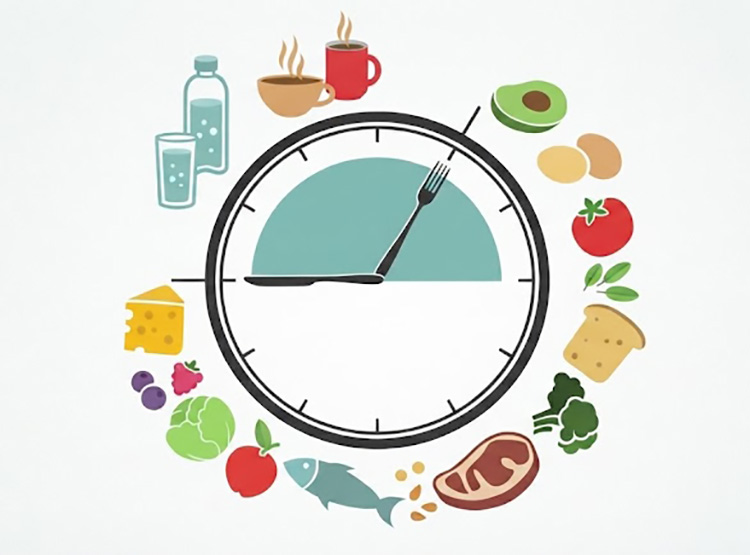
Could the spectacle of taking timed breaks from eating be the missing link to human health, or is it another fad or just a fleeting modern craze? Let us see the scientific picture and arrive at an evidence-based guide to how planned fasting works, its distinct styles, the proven benefits, and the essential safety guidelines.
In a culture accustomed to round-the-clock snacking, late-night refrigerator and kitchen raids, and endless food delivery apps, the concept of voluntarily abstaining from food can sound rather counterintuitive and radical. Yet, periodic fasting has evolved from an ancient spiritual ritual into one of the most rigorously researched health interventions of modern medicine. Over the past two decades, the medical fraternity of cardiologists, endocrinologists, and neuroscientists has shifted their gaze from what we eat to when we eat. Medical research has demonstrated that giving the digestive system structured pauses can trigger a cascade of cellular repair mechanisms, refine metabolic efficiency, and support long-term vital health.
However, voluntary fasting is not a single, one-size-fits-all prescription. From daily eating windows to multi-day fasts, the approaches vary widely in intensity, suitability, and clinical impact. Presented here is a comprehensive look at what happens inside the body when you fast, the primary methods available, the science-backed benefits, the potential drawbacks, and who should or should not give it a try.
The Biology Behind the Break: What Happens When You Fast?
To understand why fasting works, it helps to view the human body as a hybrid vehicle capable of running on two distinct energy sources: glucose (sugar derived from carbohydrates) and ketones (fatty acids broken down from stored body fat).
When you eat regularly throughout the day, your body constantly secretes the hormone insulin from the organ pancreas to transport glucose into your cells for immediate energy or store it in the liver and muscles as glycogen. As long as insulin levels remain elevated, your body stays in “storage mode,” rarely needing to tap into its long-term fat reserves. When you refrain from food for several consecutive hours, insulin levels drop significantly. Once the body exhausts its readily available liver glycogen reserves, typically after 12 to 16 hours of fasting, it reaches a metabolic turning point known as the metabolic switch. The liver begins converting stored body fat into ketones, shifting the body into a “burning mode.”
Beyond burning fat, extended periods without food trigger a fundamental cellular maintenance process called autophagy, derived from the Greek words for “self-eating“. During autophagy, cells clean the house, recycling damaged proteins, clearing out useless cellular debris, and stimulating mitochondrial regeneration; mitochondria being the multi-functional powerhouses of cells. Think of it as your body’s internal spring-cleaning service, which remains largely dormant when energy is constantly coming in.
The Main Types of Fasting: Methods and Their Pros and Cons
Periodic and intermittent fasting encompass several distinct protocols. Choosing the right pattern depends entirely on your lifestyle, health goals, and personal schedule.
1. Time-Restricted Eating (The 16:8 or 14:10 Method)
This is the most popular and accessible form of fasting. It involves limiting your daily food intake to a specific window of time each day and fasting for the remaining hours.
· How it works: In a typical 16:8 routine, you fast for 16 hours overnight and during the morning, restricting all meals to an 8-hour window (for instance, eating only between 11:00 AM and 7:00 PM).
· Pros:
Highly sustainable, easy to integrate into social schedules, does not require calorie counting or special meal plans.
· Cons:
Less dramatic autophagy response compared to longer fasts; easy to overeat or consume poor-quality foods during the feeding window if unmindful.
2. The 5:2 Protocol (The Weekly Fast)
Popularised by medical journalists and researchers, the 5:2 diet approaches fasting on a weekly rather than daily cycle.
· How it works: You eat normally for five days of the week. On the remaining two non-consecutive days (e.g., Tuesdays and Thursdays), you limit calorie intake to approximately 500 to 600 calories per day.
· Pros:
Offers flexibility since you only modify your habits two days a week; yields significant improvements in insulin sensitivity.
· Cons:
The two low-calorie days can cause persistent hunger, irritability, and low energy, especially during the first few weeks of adaptation.
3. Alternate-Day Fasting (ADF)
A more intensive protocol often studied in clinical trials for rapid metabolic improvement and weight loss.
· How it works: You alternate between days of unrestricted eating and days where you either consume zero calories or a single micro-meal of about 500 calories.
· Pros:
Highly effective for weight reduction and blood sugar regulation; triggers robust physiological adaptations.
· Cons:
Difficult to sustain long-term for most individuals; high risk of evening hunger pangs and social disruption on fasting days.
4. Prolonged Periodic Fasting (24 to 48 Hours)
This involves taking extended breaks from food once or twice a month, or once a season.
· How it works: Abstaining from all caloric intake (water, herbal teas, and black coffee are allowed) for a full 24 to 48 hours.
· Pros:
Maximises deep cellular repair (autophagy), immune system reset, and ketone production.
· Cons:
Requires strict medical awareness and psychological readiness; carries higher risks of light-headedness, electrolyte imbalances, and muscle loss if done too frequently or without adequate nutrition afterwards.
What Medical Research Shows: The Health Benefits
Clinical research published in many reputed medical journals highlights several major biological benefits associated with periodic fasting:
· Weight Loss and Visceral Fat Reduction: By narrowing the eating window, most people naturally consume fewer calories. Furthermore, lower insulin levels combined with elevated noradrenaline levels make it easier for the body to access stubborn visceral fat (E.g. the metabolic fat stored around abdominal organs).
· Improved Insulin Sensitivity and Type 2 Diabetes Management:
Fasting gives the pancreas a rest and reduces chronic insulin exposure. Studies show marked drops in fasting blood glucose and resting insulin levels, significantly reducing the risk of developing insulin resistance.
· Cardiovascular Support:
Regular fasting patterns have been associated with improvements in key heart health markers, including reduced systemic inflammation (reduced C-reactive protein), lower blood pressure, decreased resting heart rate, and improved blood triglyceride levels.
· Brain Health and Mental Clarity:
Fasting stimulates the production of a protein called Brain-Derived Neurotrophic Factor (BDNF). It promotes the growth of new neurons and protects against neurodegenerative decline. Many practitioners report heightened focus and mental sharpness once their body adapts to burning ketones.
· Cellular Renewal and Reduced Inflammation:
By clearing out damaged cellular components through autophagy, fasting helps suppress chronic low-grade inflammation; a fundamental driver of premature ageing, heart disease, and autoimmune conditions.
Undesirable Effects and Possible Pitfalls
While periodic fasting offers substantial benefits, it is not without potential downsides, particularly during the initial adaptation period or when practised incorrectly.
· The “Adaptation Phase” Symptoms: During the first 1 to 2 weeks, as the body transitions away from constant sugar reliance, individuals frequently experience headaches, fatigue, brain fog, irritability, and mild dizziness.
· Digestive Disturbances:
Changes in meal timing and volume can lead to constipation, heartburn, or loose stools as gut motility adapts.
· Nutritional Deficiencies and Muscle Loss:
If you do not eat nutrient-dense meals during your eating windows, fasting can lead to deficiencies in essential vitamins, minerals, and protein. Insufficient protein intake combined with fasting can cause the body to break down lean muscle mass alongside fat.
· Disrupted Relationship with Food:
For individuals prone to disordered eating, strict fasting windows can trigger unhealthy cycles of restriction followed by severe binge eating during open windows.
· Sleep Problems:
Fasting raises cortisol and adrenaline levels slightly to maintain blood glucose. For some, late-evening hunger or elevated alertness can interfere with sleep.
Age Groups: Who Should Fast, and Who Should Avoid It?
Fasting affects the human body differently depending on life stage, hormonal status, and metabolic demands.
Recommended Age Groups (Healthy Adults Ages 18 to 65)
· Young & Middle-Aged Adults (18–50):
They generally tolerate all forms of fasting exceptionally well. This age bracket stands to gain significant preventative metabolic benefits against lifestyle diseases.
· Older Adults (51–65): Benefit greatly from improved insulin sensitivity and cardiovascular support. However, they need to pay careful attention to maintaining adequate muscle mass by consuming sufficient protein and performing resistance exercises.
Groups Who Must Exercise Caution or Seek Supervision
· Seniors Over 65–70:
Older individuals face higher risks of unintended weight loss, sarcopenia (muscle wasting), and frailty. Any fasting regimen for seniors should be mild (e.g., 12 to 14 hours) and supervised by a physician.
· Individuals with Chronic Conditions: Anyone taking medications for high blood pressure, thyroid function, or diabetes (especially insulin or sulfonylureas) must consult their doctor before fasting, as dosage adjustments are often necessary to prevent severe low blood sugar (hypoglycaemia).
Groups Who Should Avoid Fasting Completely
· Children and Adolescents (Under 18):
Developing bodies require continuous, reliable nutrients and energy for growth, organ development, and hormonal balance.
· Pregnant or Breastfeeding Women: Nutrient and energy demands are significantly elevated to support foetal development and milk production. Restricting food can harm both mother and child.
· Individuals with a History of Eating Disorders:
Fasting rules can exacerbate behaviours related to anorexia, bulimia, or compulsive bingeing.
· Underweight Individuals:
Those with a Body Mass Index (BMI) below 18.5 should not fast, as fat stores are insufficient to support metabolic switching safely.
Practical Tips for Starting Safely
If you decide to incorporate periodic fasting into your life, keep these medical best practices in mind:
· Start Slowly: Don’t jump straight into a 24-hour fast. Begin with a simple 12-hour overnight fast (e.g., 7:00 PM to 7:00 AM) and gradually extend it to 14 or 16 hours over several weeks.
· Prioritise Hydration:
Fasting means abstaining from calories, not fluids. Drink plenty of water throughout the day. Black coffee, plain green or black tea, and herbal infusions without sugar or milk, do not break a fast and help suppress mild hunger.
· Electrolytes Matter:
As insulin drops, the kidneys excrete sodium and water more rapidly. If you experience headaches or light-headedness, adding a tiny pinch of salt to your water can help restore balance.
· Focus on Food Quality:
Fasting is not a free pass to eat junk food during your feeding window. Centre your meals around whole foods: lean proteins, healthy fats (olive oil, avocados, nuts), complex carbohydrates, and plenty of vegetables.
· Listen to Your Body:
Mild hunger pangs that come in waves are normal; severe weakness, persistent dizziness, nausea, or confusion are not. If you feel genuinely unwell, break your fast calmly with a light meal.
The Key Takeaway
(the witticism and pun is intended!)
Periodic fasting is not a quick-fix diet or a magical remedy. Rather, it is a flexible, cost-free tool that aligns our eating patterns with human evolutionary biology. By giving your body regular, structured breaks from digestion, you allow internal repair systems to kick in, sharpen metabolic efficiency, and support long-term vitality.
Whether you choose a gentle 14-hour daily rest or a structured 5:2 weekly routine, the key to success in periodic fasting lies in consistency, the provision of adequate nutrition despite fasting, good hydration and listening closely to your body’s signals. Fasting should be designed and undertaken to empower your life and health: not overtake it and take complete control of it. It is another voluntary mechanism that humans can undertake to stay healthy, but it definitely is NOT a panacea for all ills.

Sun directly overhead Galle, Angulugaha, Imaduwa, Telijjawila, Yatiyana and Tangalle about 12.08 noon today (07)

Showers above 50 mm are likely at some places in the Uva and Eastern provinces.

Harshitha’s composed knock seals Sri Lanka’s semi-final berth

‘Choka Malli’ slips out of country before travel ban

Dengue death toll rises to 73

Ranil accuses govt. of undermining democracy

‘Dates have the highest sugar content to fight Coronavirus’

Sunday Island 27 December – Headlines

#SundayIsland 17th December – Headlines

Sunday Island – 28th March

Sunday Island Headlines – 21 March

Sunday Island – 21st February – Headlines
-

 News5 days ago
Denied of promotion to SC despite vacancies, justice Gurusinghe retires
-

 Latest News5 days ago
Grade 5 scholarship exam results released
-

 News5 days ago
22A: SC urged to suspend hearing, appoint full bench
-

 Midweek Review6 days ago
The local and global dynamics of Sri Lanka’s 22nd Amendment
-
 News3 days ago
Namal remanded until Sept. 18 over Airbus deal investigation
-
 News5 days ago
Govt. seeks NATO assistance
-

 Latest News2 days ago
Tharanga creates history with Diamond League crown in Brussels
-

 News6 days ago
40 professional organisations and TU oppose proposed 22A