
Sports
Historic 100 metres feat and country’s relay chances


by Reemus Fernando
With Italy based sprinter Yupun Abeykoon claiming the national record in the 100 metres on Tuesday, Sri Lanka now has three current athletes who have run the glamour event of the track and field sport under 10.30 seconds, a strong position not many countries of this region can boast of. The recent performances of these three sprinters and the other emerging athletes are indicate a bright prospect in the 4×100 metres relay. Leading athletic analyst and Sri Lanka Athletics statistician Saman Kumara says that a strong team inclusive of these sprinters can strive for sub 39 seconds in the 4×100 metres relay. Sub 39 seconds will help the country strive for Olympic qualifying rankings for the postponed Tokyo event.
Incidentally, the former national record holders of the 100 metres Himasha Eshan and Vinoj Suranjaya were part of the team that established the current National men’s 4×100 metres record in 2018. Shehan Ambepitiya who was part of that team has retired. You need only simple mathematics to understand what four inform sprinters, inclusive of the incumbent record holder of the 100 metres and two former record holders, could do to the 39.08 seconds 4×100 metres national record established during the Gold Coast Commonwealth Games in 2018.
Sri Lanka won the 4×100 metres relay at the regional South Asian Games ousting India in December. But that doesn’t get Sri Lanka anywhere closer to an Olympics spot in the 4×100 metres. You need to be ranked within the first two dozen teams in the World Athletics rankings to be eligible for an Olympic spot in the 4×100 metres relay.
It will be too early to predict the country’s prospects, with the locally trained athletes still waiting to flex their muscles in the aftermath of the covid 19 pandemic but authorities can be optimistic about chances at Asian events. It is incumbent upon authorities to look after these promising athletes as the country’s current pool of men’s 100 metres sprinters are in a historic position.
The country’s 100 metres had experienced somewhat similar position in the early 50’s when the likes of Sumanthiran Nawaratnam (Summa Nawaratnam), Oscar Wijesinghe and B.C. Henricus, all who had held the record, used to form formidable relay teams in the illustrious company of Duncan White.
The men’s 100 metres record had remained stranded for more than one and half decades when Himasha Eshan broke it in Guwahati in 2016. After the exploits of Sriyantha Dissanayake, country’s only 100 metres medalist at an Asian Games (1990 Beijing) and Chinthaka Soyza in the 90s, no Sri Lankan had run an Olympics 100 metres. But since Himasha’s feat the record has changed hands three times a promising sign for better days ahead.
After the world moved to 100 metres from the 100 yards Sri Lanka had only 11 record holders from 1949 to 2020. The record had improved 17 times within that period.
The coveted record had been under the belt of some outstanding individuals who were household names. Osmand de Silva (10.2 secs, hand timing) who held the record for three years from 1931 later became country’s Inspector General of Police. Double international Summa Nawaratnam who improved the record more than once was once called the fastest in Asia. Olympian Sunil Gunawardena who held the record for two decades since 1970 later became national coach and was an influential head of the Athletics Association of Sri Lanka. K.L.F. Wijedasa who took the record in 1955 was the national coach in 70s and 80s. Upali S. Gunaratne who held the record when the event was conducted as 100 yards in 1938 later became a Vice President of the Athletics Association of Sri Lanka.



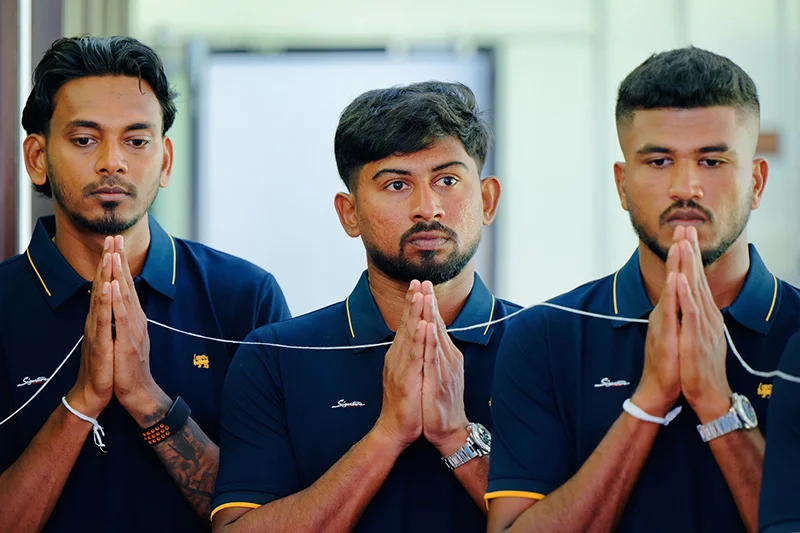
by Rex Clementine
Despite the disappointment over how Sri Lanka’s cricket teams have fared in recent years, there is one format in which they have managed to hold their heads high, ODI cricket. There are a couple of notable feathers in their cap too, having beaten Australia and India, the world’s two top ranked teams and finalists at the last World Cup.
Those impressive performances against the heavyweights have ensured that Sri Lanka are out of the woods this time around. Unlike ahead of the 2023 World Cup, they will not have to endure the indignity of a qualifying tournament to book their ticket to South Africa in 2027.
How they fare once they get there, of course, is another question altogether.
Sri Lanka failed to progress beyond the first round in both 2019 and 2023, a sharp contrast to their impressive run from 2003 to 2015. Across those four World Cups, they twice finished runners-up, reached a semi-final on another occasion and made the quarter-finals in the other.
If Sri Lanka are to make an impact in South Africa, one thing they must do is wrap their fast bowlers in cotton wool. Fast bowling has been one of the brighter areas of Sri Lankan cricket in recent years and there can hardly be a better place to cash in than South Africa, where hard, bouncy surfaces tend to put a spring in the step of any quick worth his salt.
The key man, obviously, is Dushmantha Chameera. The quickest bowler in the country, Chameera is now being used only in white ball cricket and that should make workload management considerably easier. Sri Lanka would be wise to count how many limited overs games they have between now and the World Cup rather than wheel him out for every bilateral contest.
Keep him for the important assignments, such as the Asia Cup. Then there is the IPL, where he will understandably want to ply his trade. Manage him sensibly and by the time the World Cup comes around this time next year, Sri Lanka could have a fresh and firing Chameera rather than one held together by strapping and hope.
Then there is Asitha Fernando, whose progress over the last five years has been remarkable. Currently ranked just outside the top ten among Test bowlers, he has earned admiration for his ability to make things happen, particularly with the older ball. He keeps asking questions even when conditions are against him.
A stint with Glamorgan last year appears to have added a few more tricks to his armoury as well. Asitha is no longer simply a wholehearted fast bowler. He is developing into a clever one.
Lahiru Kumara is another serious weapon. The second quickest bowler in the country behind Chameera, he can be devastating when fully fit. His career should probably have produced far more by now, but, like Chameera, injuries have repeatedly applied the handbrake.
Eshan Malinga, meanwhile, has arguably been the most improved fast bowler in the country over the last 12 months. He has pace, guile and every time you watch him, there seems to be another little trick added to his repertoire. The upcoming series against England should tell us plenty about how far he has come.
Eshan has already become a regular fixture for his IPL franchise. It should only be a matter of time before he establishes himself in similar fashion for Sri Lanka.
Then there is Dilshan Madushanka to provide the left-arm variety. When in full flow, he is a treat to watch. His ability to strike with the new ball makes him particularly valuable and when batters attempt to force the pace against him, he can be deadly. Used aggressively during the Power Play, he should provide plenty of early breakthroughs.
That makes Sri Lanka’s use of their quicks during the upcoming tour of England, particularly in the ODIs, worth watching closely. With the World Cup in mind, there is little sense in flogging the same men game after game. Rotate them, manage them and make sure the main weapons are still firing when the bigger battles arrive.
There are also Matheesha Pathirana and Nuwan Thushara, the two slingers, although that style of bowling increasingly looks as though it is losing some of its novelty as batters become accustomed to it.
One man Sri Lanka should certainly not overlook is Milan Rathnayake. He bowls at a decent pace, bats beautifully and is probably the best fielder among the fast bowlers. That package could prove invaluable in South African conditions.
Sri Lanka have spent years searching for a pace attack with depth. They finally appear to have one. The challenge now is to preserve them. South Africa will reward pace. Sri Lanka’s job over the next year is to make sure their quicks land in Johannesburg fit.
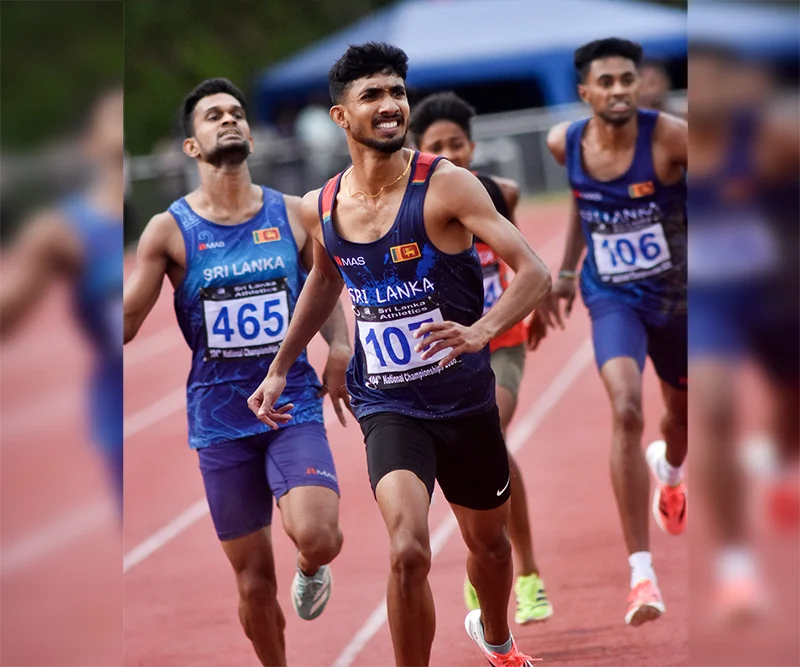
Harsha Karunaratne produced one of the highlights of the 104th National Athletics Championship, clocking 1:47.80 to win the men’s 800 metres on the final day on Sunday. His performance shattered the meet record and became the fastest 800m ever run by a Sri Lankan on home soil.
Trained by veteran middle-distance coach Susantha Fernando, Karunaratne’s run carried an extra edge as he is the only gold medallist from the 2025 South Asian Championship who has not been picked for the Mission Olympic programme. His performance at the Nationals looked very much like a statement to selectors. His training partner, Shehan Dilranga, backed up the effort with a personal best of his own, finishing second in 1:48.43.
Karunaratne is also the brother of Tharushi Karunarathna, the Asian Games gold medallist, keeping the family name prominent in Sri Lankan track and field.
Former Ratnayake Central Walala athlete came almost close to breaking the national record of Indunil Herath.
Indunil Herath, who also emerged from the same school established the national record (1:47.13) at the Kenyan President’s Cup in 2018.
The gap is just 0.67 seconds — a small margin in an event where fractions of a second separate medals. Herath, a Sri Lanka Army athlete, set his mark abroad after trining in Kenya, and it has stood since. Herath was also a two-time South Asian Games gold medallist (2016, 2019) and won silver at the 2017 Asian Indoor and Martial Arts Games, giving context to just how significant that record has been for Sri Lankan middle-distance running.
What makes Karunaratne’s run notable is that his was achieved on home soil, making it the fastest 800m ever recorded by a Sri Lankan athlete within the country — even if the outright national record, set overseas, remains marginally quicker.
With Herath’s mark now under genuine threat and a training partner also running a personal best alongside him, Karunaratne’s performance suggests Sri Lanka’s 800m depth is improving. It also sharpens the debate around his omission from the Mission Olympic programme — a decision that, on the evidence of this race, authorities may be forced to revisit. (RF)
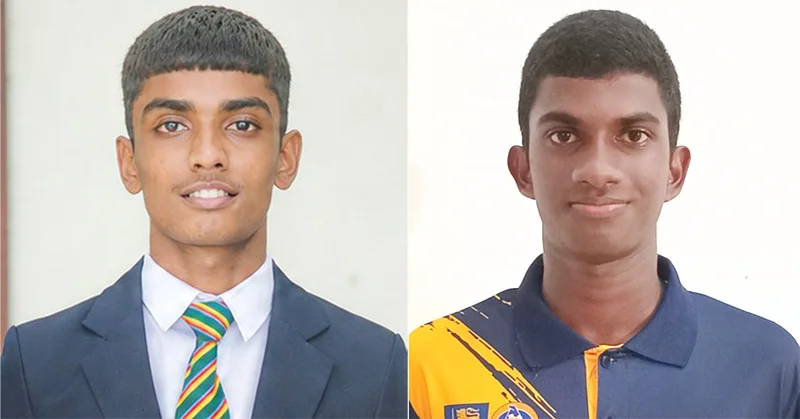
Defending champions Royal College Colombo ‘B’ will meet Sir John Kotalawala College, Kurunegala, in the semi-final of the Under-17 Division II Inter-Schools Limited Overs Cricket Tournament at Ananda Mawatha today.
Royal ‘B’, led by Thumindu Somasiri, have marched into the last four with a series of convincing knockout victories. After entering the second round as runners-up of their first-round group, they defeated De Mazenod College Kandana ‘B’, P. De S. Kularathna College Ambalangoda and Royal College Panadura in successive rounds.
Sir John Kotalawala College, captained by Pulina Jayanandana, have followed a similar path. The Kurunegala side, also group runners-up, overcame Jaffna Central College in the second round before accounting for St. Peter’s College Negombo in the pre-quarter-finals and Debarawewa National School in the quarter-finals.
The tournament began with 65 teams competing in eight groups, with the top four from each group advancing to the second round. The competition switched to a knockout format from that stage, with 32 teams battling for honours.
With the defending champions bidding to move one step closer to retaining their title and Kotalawala Kurunegala looking to extend their impressive run, a keenly contested semi-final is in prospect.
Teams
Royal College Colombo ‘B
‘ (from): Thumindu Somasiri (Captain), Rasula Madarasinghe, Isuka Wickaramasinghe, Vinuka Kodithuwakku, Manish Wijesundara, Sithuka Alwis, Aadam Rahimdeenm Senuth Perera, Kumuthulu Goonathilake, Dinuja Wellahewage, Dulna Nimnal, Binara Kulasekara, Senesh Rathnayaka, Harin Mendis, Nethuka Gamage, Mindula Madev, Gangulsara Jayasinghe
Officials: Nayana Devendra (Master in charge), Gamini Perera (Head coach), Prageeth Ferdinando (Assistant coach), Charith Fernando (Asst. coach), Kasun Madusanka (Asst. Coach)
Sir John Kothalawala College (from): Pulina Jayanandana (Captain), Keneesha Yashmika (Vice Captain), Vihaga Kumarasinghe, Hesith Nelumdeniya, Janidu Jayasundara, Indeepa Karunanayake, Thimal Witharana, Videw Thennakoon, Niphwas Al Hasan, Gagana Weerasinghe, Leshan Bandara, Sayura Siriwardhana, Sasanka Premasiri, Yashen Pathmalal, Mohomad Nafees, Udula Amarasuriya, Romidu Hasaral
Officials: A M W. Eriyawa (Master in Charge), A. M. R. D. B.Abesinghe (Master in Charge), S. Y. Gayashan Samarathunga (Head Coach), A M. Chamidu Yasanga Adhikari (Asst. Coach)

Justice Minister hits back at CLA

First visit by an Indian Defence Minister since IPKF deployment

“I’m not a war criminal, I fought for my country”: Shavendra Silva

Govt. tells UN 22nd Amendment meant to strengthen judicial independence

Legacy of enforced disappearances: Vital facts conveniently forgotten to whitewash LTTE and India

Quicks, rotate them and look after them

‘Dates have the highest sugar content to fight Coronavirus’

Sunday Island 27 December – Headlines

#SundayIsland 17th December – Headlines

Sunday Island – 28th March

Sunday Island Headlines – 21 March

Sunday Island – 21st February – Headlines
-

 News6 days ago
Denied of promotion to SC despite vacancies, justice Gurusinghe retires
-

 Latest News7 days ago
Grade 5 scholarship exam results released
-

 News6 days ago
22A: SC urged to suspend hearing, appoint full bench
-

 News4 days ago
Namal remanded until Sept. 18 over Airbus deal investigation
-

 Latest News3 days ago
Tharanga creates history with Diamond League crown in Brussels
-

 News6 days ago
Govt. seeks NATO assistance
-

 Editorial6 days ago
Strange arithmetic goes unchallenged
-

 News3 days ago
Dispute which triggered listed company director being detained at BIA resolved