
News
IMF tells SL how to save economy

The Executive Board of the IMF has asked Sri Lanka to reform state-owned enterprises and adopt cost-recovery energy pricing, the Fund said yesterday in a press release.
They also called for prudent management of the Colombo Port City project, and continued efforts to strengthen governance and fight corruption.
The IMF stated that further efforts are needed to diversify the economy, phase out import restrictions, and improve the business and investment climate in general.
The Directors also called for renewed efforts on growth-enhancing structural reforms and stressed the importance of increasing female labor force participation and reducing youth unemployment.
Below are the rest of the IMF release: “(IMF) concluded the Article IV consultation with Sri Lanka on February 25, 2022. Sri Lanka has been hit hard by COVID-19. On the eve of the pandemic, the country was highly vulnerable to external shocks owing to inadequate external buffers and high risks to public debt sustainability, exacerbated by the Easter Sunday terrorist attacks in 2019 and major policy changes including large tax cuts at late 2019. Real GDP contracted by 3.6 percent in 2020, due to a loss of tourism receipts and necessary lockdown measures. Sri Lanka lost access to the international sovereign bond market at the onset of the pandemic.
The authorities deployed a prompt and broad-based set of relief measures to cope with the impact of the pandemic, including macroeconomic policy stimulus, an increase in social safety net spending, and loan repayment moratoria for affected businesses. These measures were complemented by a strong vaccination drive. GDP growth is projected to have recovered to 3.6 percent in 2021, with mobility indicators largely back to their pre-pandemic levels and tourist arrivals starting to recover in late 2021.
“Nonetheless, annual fiscal deficits exceeded 10 percent of GDP in 2020 and 2021, due to the pre-pandemic tax cuts, weak revenue performance in the wake of the pandemic, and expenditure measures to combat the pandemic. Limited availability of external financing for the government has resulted in a large amount of central bank direct financing of the budget. Public debt is projected to have risen from 94 percent of GDP in 2019 to 119 percent of GDP in 2021. Large foreign exchange (FX) debt service payments by the government and a wider current account deficit have led to a significant FX shortage in the economy. The official exchange rate has been effectively pegged to the U.S. dollar since April 2021.
“The economic outlook is constrained by Sri Lanka’s debt overhang as well as persistently large fiscal and balance-of-payments financing needs. GDP growth is projected to be negatively affected by the impact of the FX shortage and macroeconomic imbalances on economic activities and business confidence. Inflation recently accelerated to 14 percent (y/y) in January 20223 and is projected to remain double-digit in the coming quarters, exceeding the target band of 4–6 percent, as strong inflationary pressures have built up from both supply and demand sides since mid-2021. Under current policies and the authorities’ commitment to preserve the tax cuts, the fiscal deficit is projected to remain large over 2022–26, raising public debt further over the medium term. Due to persistent external debt service burden, international reserves would remain inadequate, despite the authorities’ ongoing efforts to secure FX financing from external sources.
“The outlook is subject to large uncertainties with risks tilted to the downside. Unless the fiscal and balance-of-payments financing needs are met, the country could experience significant contractions in imports and private credit growth, or monetary instability in case of further central bank financing of fiscal deficits. Additional downside risks include a COVID-19 resurgence, rising commodity prices, worse-than-expected agricultural production, a potential
deterioration in banks’ asset quality, and extreme weather events. Upside risks include a faster-than-expected tourism recovery and stronger-than-projected FDI inflows.
“Executive Directors commended the Sri Lankan authorities for the prompt policy response and successful vaccination drive, which have cushioned the impact of the pandemic. Despite the ongoing economic recovery, Directors noted that the country faces mounting challenges, including public debt that has risen to unsustainable levels, low international reserves, and persistently large financing needs in the coming years. Against this backdrop, they stressed the urgency of implementing a credible and coherent strategy to restore macroeconomic stability and debt sustainability, while protecting vulnerable groups and reducing poverty through strengthened, well-targeted social safety nets.
“Directors emphasized the need for an ambitious fiscal consolidation that is based on high-quality revenue measures. Noting Sri Lanka’s low tax-to-GDP ratio, they saw scope for raising income tax and VAT rates and minimizing exemptions, complemented with revenue administration reform. Directors encouraged continued improvements to expenditure rationalization, budget formulation and execution, and the fiscal rule. They also encouraged the authorities to reform state-owned enterprises and adopt cost-recovery energy pricing. Directors agreed that a tighter monetary policy stance is needed to contain rising inflationary pressures, while phasing out the central bank’s direct financing of budget deficits. They also recommended a gradual return to a market-determined and flexible exchange rate to facilitate external adjustment and rebuild international reserves. Directors called on the authorities to
gradually unwind capital flow management measures as conditions permit.
“Directors welcomed the policy actions that helped mitigate the impact of the pandemic on the financial sector. Noting financial stability risks from the public debt overhang and sovereign-bank nexus, they recommended close monitoring of underlying asset quality and identifying vulnerabilities through stress testing. Directors welcomed ongoing legislative reforms to strengthen the regulatory, supervisory, and resolution frameworks.
Directors called for renewed efforts on growth-enhancing structural reforms.”


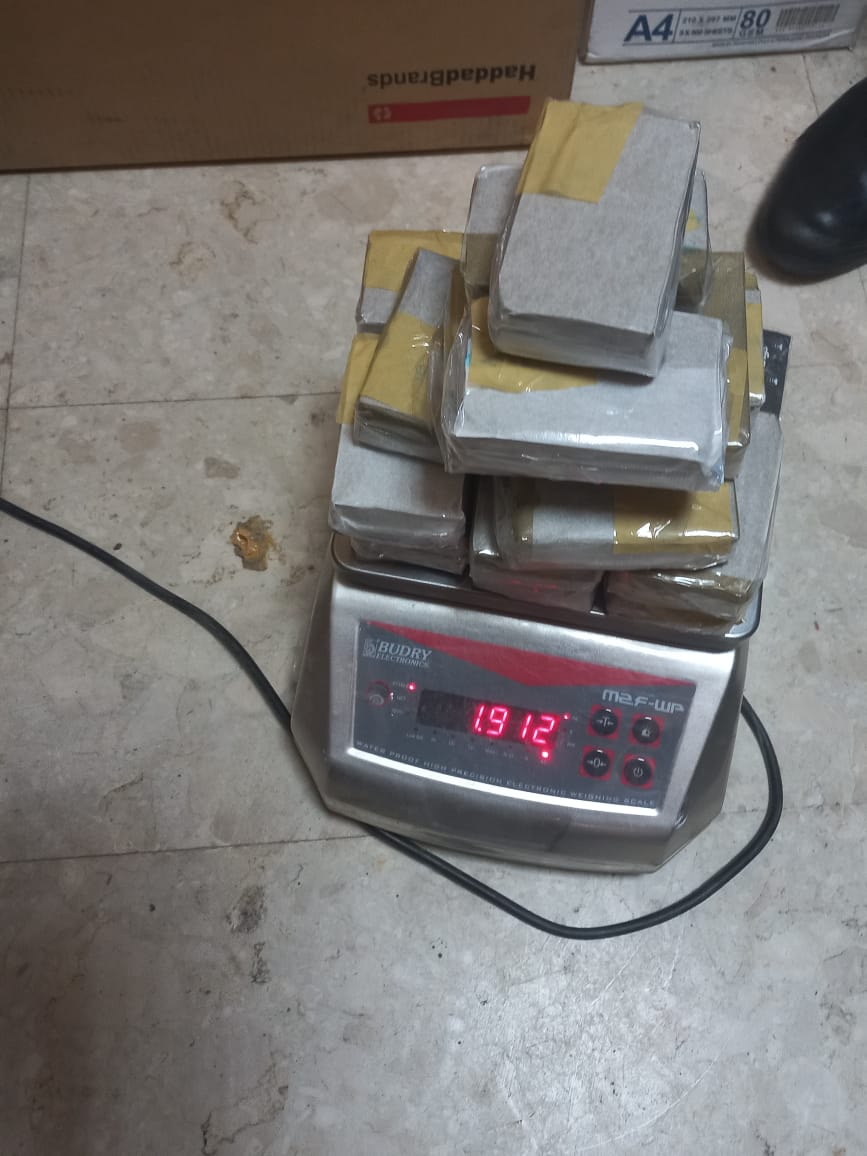
Three Sri Lankan male passengers who arrived from Muscat by flight no. OV 437 on Saturday (24) have been arrested by officers attached to the NCU at BIA as they were found to be carrying 12,306 grams of Cannabis class narcotics (suspected as Hashish & Kush) valued at 123 million rupees.
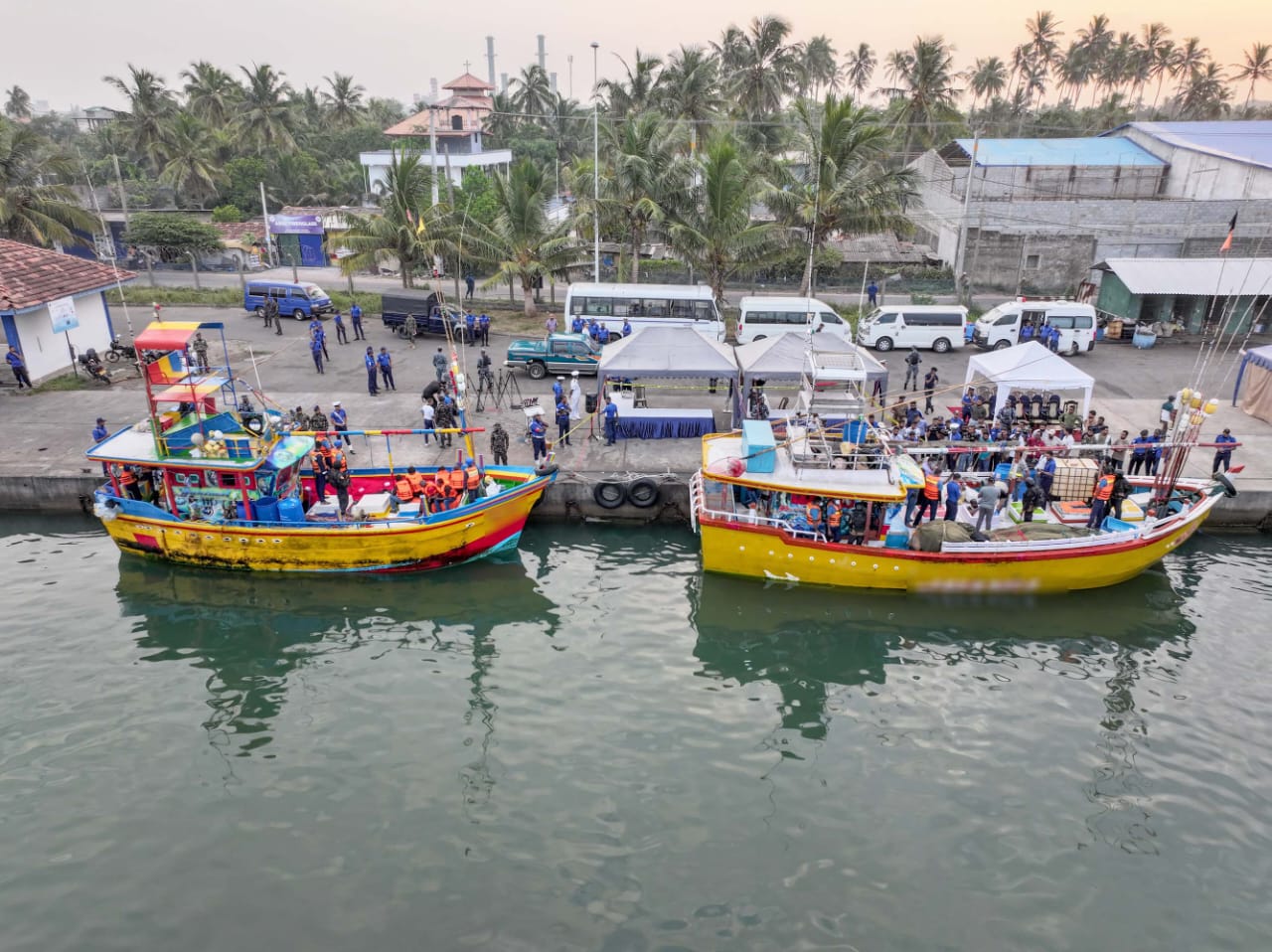
Building on its success in seizing major narcotic stocks in 2025, the Navy continued to support the “A Nation United” National Mission in 2026. In continuation of these efforts, during an
operation conducted on the high seas south of Sri Lanka, the Navy apprehended eleven (11) suspects aboard two local multi-day fishing trawlers suspected of drug smuggling.
Based on shared information, by the Sri Lanka Navy and Police, this special operation was conducted off the southern coast, deploying the Navy‟s Offshore Patrol Vessels. The operation
resulted in the interception of a multi-day fishing trawler suspected of smuggling narcotics, and the apprehension of five (05) suspects on board.
During further operations in the same area, naval units seized another multi-day fishing trawler (01), along with communication equipment and six (06) additional suspects, also believed to be involved in drug smuggling.
This morning (25 Jan 26), the two intercepted fishing trawlers, along with fourteen (14) sacks laden with suspected narcotics and the suspects, were brought to the Dikovita Fisheries Harbour.
An expert examination by the Police Narcotic Bureau confirmed that the fourteen (14) sacks contained more than 184 kilograms of heroin and over 112 kilograms of ‘Ice’ (crystal methamphetamine).
The Deputy Minister of Defence, Major General (Retd) Aruna Jayasekara, the Commander of the Navy, Vice Admiral Kanchana Banagoda, and the Inspector General of Police, Priyantha Weerasuriya, inspected the narcotics at the Dikovita harbour.
The Deputy Minister of Defence said that the current administration has initiated several projects for national development. As a flagship initiative, under the directives and guidance of the President, and under the supervision of the
Ministry of Defence, well-coordinated anti-narcotic raids have been launched.
This effort, part of “A Nation United” National Mission, involves the tri-forces, police, and all intelligence agencies working together under a coordinated plan to ensure that drug smugglers have no opportunity to bring narcotics into the country, he opined. He further stated that despite the national disaster situation, the state machinery, including the tri-forces, the police, and the public at large, remains united in rebuilding the nation, no room will be left for drug trafficking, which poses a severe threat to national security and public safety. Those
who engage in or support drug trafficking, under the cover of fishing activities, will find no escape, he added.
The Deputy Minister also reaffirmed that the tri-forces, police, and all law enforcement agencies are fully committed to their duty of suppressing this menace.
The Deputy Minister of Defence reported that, throughout 2025, a series of highly successful operations were conducted leading to numerous arrests. This was achieved through close coordination and mutual cooperation among the tri-services, the police, the Special Task Force, Police Narcotics Bureau, local law enforcement and international agencies. He noted that this
same spirit of cooperation and commitment has continued into 2026, resulting in the seizure of a large stockpile of drugs.
On behalf of the Honourable President, he extended gratitude to all who contributed to these efforts, specifically acknowledging the Commander of the Navy, the Inspector General of Police, the Police Narcotic Bureau, and the crews of the Navy’s Offshore
Patrol Vessels.
Moreover, the Deputy Minister declared that drug smuggling has become a national crisis, fueled by youth involvement and social crime. With borders secured under the “Nation United” National Mission, he warned traffickers to cease operations and urged users to abandon the destructive habit.
The Deputy Minister urged the public to report suspected drug smugglers to law enforcement via the hotlines 1818 or 1997 and also commended the role of media institutions and journalists in raising public awareness about the dangers of narcotics through responsible reporting.
Meanwhile, the two (02) multi-day fishing trawlers, along with a haul of narcotics, eleven (11) suspects, and communication equipment, were handed over to the Police Narcotic Bureau for
further investigation and legal proceedings.

Engineers at the Ceylon Electricity Board have drawn a clear red line over the government’s plan to gazette the appointed date for restructuring the utility, warning that trade union action will follow if the move is pushed through without addressing their core demands, the Sunday Island learns.
The powerful Ceylon Electricity Board Engineers’ Union (CEBEU) says preparations are already under way for industrial action, most likely after the appointed date gazette is published, should the Minister proceed without resolving outstanding issues raised repeatedly by engineers.
“If the appointed date is gazetted without addressing our demands, we will have no option but to take trade union action,” a senior electrical engineer told The Island, stressing that the warning should be taken seriously.
CEBEU sources say the engineers’ demands are aimed at preventing a structural and financial crisis in the electricity sector, rather than blocking reform. They insist that unbundling the CEB without first putting in place firm safeguards would expose the sector to instability and consumers to higher costs.
The engineers’ key demands include: legally binding financial safeguards to ensure the proposed Electricity Generation Company is viable from inception; protection against the transfer of legacy liabilities, extraordinary costs, or inefficiencies to new entities or electricity consumers; enforceable accountability for management and policy decisions that inflate system costs; genuine, structured consultation with technical professionals before irreversible decisions are taken; and a halt to gazetting the appointed date until these safeguards are formally incorporated.
Engineers warn that rushing the appointed date would lock existing weaknesses into the new structure, making them harder—and more expensive—to fix later. “Once the appointed date is gazetted, there is no rewind button,” a senior engineer said. “If the foundation is flawed, the entire structure will suffer.”
Meanwhile, according to energy analyst, Dr. Vidhura Ralapanwe, electricity sector reforms must be grounded in technical and financial reality, not driven by administrative timelines.
He has cautioned that implementing structural changes without correcting underlying governance and cost issues risks destabilising the sector and undermining public confidence.
CEBEU officials reject claims that the union is resisting reform. They say engineers are being sidelined in decision-making while being held responsible for system performance. “We are accountable for keeping the system running, but our professional warnings are being ignored,” one engineer said. “That is not reform; it is reckless governance.”
With the Minister yet to gazette the appointed date, tensions within the power sector are rising sharply.
Engineers say the government now faces a stark choice: engage with professionals and fix the problems first—or brace for confrontation in a sector where disruption will have coutrywide consequences.
By Ifham Nizam ✍️

Three arrested with narcotics valued at Rs123 million at BIA

Navy intercepts 02 narcotics-laden trawlers with 11 suspects in southern seas

U19 World Cup: Japan defeat Tanzania by nine wickets

U19 World Cup: Ambrish’s four-fer powers India to third straight win

Josh Hoey breaks world 800m short track record with 1:42.50 in Boston

Trump threatens Canada with 100% tariffs if it ‘makes a deal with China’

‘Dates have the highest sugar content to fight Coronavirus’

Sunday Island 27 December – Headlines

#SundayIsland 17th December – Headlines

Sunday Island – 28th March

Sunday Island Headlines – 21 March

Sunday Island – 21st February – Headlines
-

 Features6 days ago
Extended mind thesis:A Buddhist perspective
-
 Opinion5 days ago
American rulers’ hatred for Venezuela and its leaders
-

 Business3 days ago
CORALL Conservation Trust Fund – a historic first for SL
-
 Opinion3 days ago
Remembering Cedric, who helped neutralise LTTE terrorism
-

 Business12 hours ago
ComBank advances ForwardTogether agenda with event on sustainable business transformation
-

 Opinion2 days ago
A puppet show?
-

 Opinion5 days ago
History of St. Sebastian’s National Shrine Kandana
-
 Features4 days ago
The middle-class money trap: Why looking rich keeps Sri Lankans poor