
Business
APIIT promises 100 top IT graduates to Virtusa annually


One of the top global education entities in Sri Lanka, The Asia Pacific Institute of Information Technology (APIIT) signed an MOU with the top global IT company Virtusa, the leader in Sri Lanka which supports companies driving digital transformation innovation globally.
The MOU encompasses training and development, partnering the entity for faculty visits, priority picking of talent, soft skill training and advising on new curriculum development.
“One of the key promises agreed was that APIIT develops and provides 100 top quality IT graduates for Virtusa to interview and select, based on the different requirements of the organization”, said Chairman APIIT Bandula Egodage.
“By servicing the private sector we will be serving the country so that the IT/BPO industry can bring in a five billion dollars to Sri Lanka in the near future. We are currently are at just a billion dollars in export revenue”, he added.
One of the key features of the MOU was the launch of the ‘Digital Discovery Program’ a signature programme of Virtusa aimed at enriching practical skills and imparting an industry-relevant course curriculum to the IT students of APIIT, especially the software engineering students as APPIT is known for its top quality IT students with strong soft skills spanning a 22 year heritage under the Staffordshire University, UK.
The MOU provides for Virtusa’s representatives to work with APIIT’s students and provide them exposure to the current industrial needs and requirements. The end game is that top 100 graduates can be developed to the top private sector organisations. Some can be even seconded to overseas entities provided they are qualified at a higher level like a Master’s programme for which APIIT has built a name in the market,
The signature brand ‘Digital Discover Program’ consists of many industrial sessions enriched with core and emerging technical skills together with project management and professional skills. It will run on a twelve week module side by side to the academic studies that APIIT students will do in the Computer School. These skills will bring an advantage where undergraduates can become industry-ready while also enhancing the probability of employment.
Speaking at the event, Director of APIIT Dr. Rohantha Athukorala said that the role of educational institutes is to produce talent that will help solve the problems that the private sector is up against. “We will train students with the support of organizations like Virtusa so that we can provide 100 top IT graduates to organisations initially and then we will scale up. This in turn will ensure that an organisation like Virtusa meets the promise that cater to requirements thousands of miles away. In today’s work many companies are driving digitalisation where the backend can be done efficiently and with hundred percent accuracy in countries like Sri Lanka and India while the front end is in Europe, US and Australia. We are committed to play this role”, he said.
Head of HR – Sri Lanka for Virtusa, Sampath Thrimavithana said that “As one of the largest employers of graduates in the country we continuously look for means to improve the employability of undergraduates. This alliance is a great step forward in reinforcing Sri Lanka’s future by building on one of the most valuable skills any student could pursue. With unique insights into industry requirements and a curriculum that is custom-made to ensure success, this union will help address the required skills while uplifting our youth to meet international standards”.
Representing Virtusa at the signing of the MOU were Head of HR – Sri Lanka for Virtusa Sampath Thrimavithana, Senior Director – Delivery Asanka Gurusinghe, Director – Technology Mahesh Nithokumar, Head of Campus – HR Suweda Rajaratnam, HR Executive Aniston Leo, and HR Associate Executive Agassi Johnson.

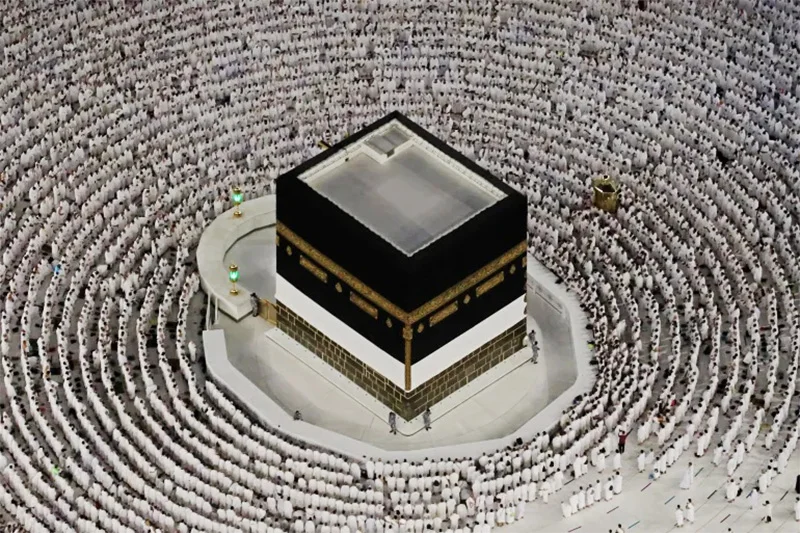
Every year, the spiritual compass of the Muslim world turns towards the holy city of Makkah, where millions of pilgrims gather for Hajj — one of humanity’s oldest and most profound journeys of faith.
This year, too, the sacred valleys of Saudi Arabia are filled with the echoes of “Labbaik Allahumma Labbaik” — “Here I am, O Allah, here I am” — as Muslims from every continent respond to a divine call that dates back thousands of years to Prophet Ibrahim (Abraham).
Among them are thousands of Sri Lankan pilgrims, dressed in simple white garments, leaving behind worldly status, wealth and identity in pursuit of spiritual purification and closeness to God.
According to Muslim Affairs authorities, the Kingdom of Saudi Arabia has allocated a Hajj quota of 3,500 pilgrims for Sri Lanka for Hajj 2026, enabling devotees from across the island to undertake the sacred pilgrimage. The annual allocation is determined through agreements between Saudi Arabia and Muslim-majority and minority nations worldwide.
Since early this month at the Bandaranaike International Airport in Katunayake, emotional scenes unfolded as families bade farewell to departing pilgrims with tears, embraces and prayers.
Elderly parents clutched prayer beads, children waved anxiously, while relatives sought blessings from loved ones embarking on the once-in-a-lifetime spiritual journey.
For many Sri Lankan Muslims, performing Hajj is not simply travel — it is the fulfilment of a lifelong dream nurtured through years of prayer, sacrifice and savings.
In villages, towns and cities across Sri Lanka, preparations for Hajj often begin months or even years in advance. Some families save gradually over decades, while elderly pilgrims regard the journey as the culmination of a lifetime of devotion.
Hajj is the fifth pillar of Islam and is obligatory for every financially and physically able Muslim at least once in a lifetime.
Yet the pilgrimage is far more than a religious obligation.
It is a journey deeply rooted in the story of Prophet Ibrahim, known as Abraham in Christianity and Judaism, and revered across the Abrahamic faiths as a towering symbol of faith, obedience and sacrifice.
Islamic tradition recounts how Prophet Ibrahim was commanded by Allah to leave his wife Hajjar and infant son Ismail in the barren desert valley of Makkah. With unwavering faith in God’s wisdom, Ibrahim obeyed.
Left in the scorching desert with little water or food, Hajjar desperately searched for water for her thirsty child, running seven times between the hills of Safa and Marwa.
Her determination, courage and trust in God are immortalised in the rituals of Hajj today.
Pilgrims reenact Hajjar’s desperate search by walking between Safa and Marwa, symbolising perseverance, faith and hope even in moments of despair.
According to Islamic belief, Allah answered Hajjar’s prayers by causing the miraculous Zamzam well to spring forth beneath baby Ismail’s feet — a well that continues to provide water to millions of pilgrims centuries later.
Another defining moment in Ibrahim’s story is commemorated during Hajj and Eid-ul-Adha — the willingness of the Prophet to sacrifice his beloved son in obedience to God’s command.
As Ibrahim prepared to carry out the sacrifice, Allah replaced Ismail with a ram, signifying that faith, sincerity and submission were greater than the act itself.
The symbolic stoning of the devil during Hajj recalls Ibrahim’s rejection of Satan’s temptations that sought to discourage him from obeying God.
Thus, every ritual of Hajj carries profound historical and spiritual meaning.
The pilgrimage is not simply movement through sacred spaces; it is a reenactment of timeless lessons in obedience, sacrifice, patience and devotion.
One of the most remarkable aspects of Hajj is the extraordinary equality it represents.
Pilgrims, regardless of nationality, race, language or social class, wear the same simple white attire, known as Ihram.
Presidents, businessmen, labourers and farmers stand side by side in prayer, under the blazing Arabian sun, erasing worldly distinctions and affirming the Islamic belief that all human beings are equal before God.
Religious scholars often describe Hajj as the world’s greatest annual demonstration of unity and humility.
The spiritual climax of the pilgrimage occurs at the plains of Arafat, where pilgrims spend hours in prayer and repentance seeking divine forgiveness.
Many Muslims believe that a sincerely accepted Hajj cleanses a believer of past sins and marks the beginning of a spiritually renewed life.
Upon returning home, pilgrims are honoured with the title “Hadji” or “Hajji,” a distinction that carries immense respect within Muslim communities, including in Sri Lanka.
Traditionally, a Hadji is viewed as someone who has fulfilled one of Islam’s most sacred obligations and returned with heightened spiritual responsibility.
However, Islamic scholars emphasise that the title is not merely ceremonial.
“The true significance of becoming a Hadji lies in personal transformation,” a Colombo-based Islamic scholar said.
“A pilgrim is expected to return with greater humility, compassion, honesty and social responsibility. Hajj is not about status; it is about becoming a better human being.”
Across Sri Lanka, mosques have been conducting special prayers for pilgrims, while families gather to seek blessings before departure.
The pilgrimage season also creates a unique emotional atmosphere within Muslim communities, where neighbours visit departing pilgrims and homes become centres of prayer and reflection.
Saudi Arabia has introduced extensive arrangements this year to facilitate the pilgrimage, including digital crowd management systems, improved transport networks, upgraded accommodation and enhanced healthcare services.
Sri Lankan diplomats and officials, stationed in Saudi Arabia, have been coordinating closely with Saudi authorities to ensure the welfare and smooth movement of Sri Lankan pilgrims throughout the pilgrimage period.
Sri Lanka’s Ambassador to Saudi Arabia, Ameer Ajwad, recently inspected facilities in Mina, prepared for Sri Lankan pilgrims, and reaffirmed efforts to provide a safe and spiritually fulfilling Hajj experience.
As millions circle the Holy Kaaba in prayer, Hajj continues to stand as one of the most extraordinary gatherings on Earth — a timeless spiritual movement connecting humanity across borders, cultures and generations.
For Sri Lanka’s pilgrims, the sacred journey is not merely a passage to Makkah.
It is a journey into the soul — a return to the eternal lessons of Prophet Ibrahim, Hajjar and Ismail — lessons of sacrifice, endurance, obedience and unwavering faith that continue to inspire humanity centuries later.
By Ifham Nizam
Business
‘Green Chilies’ returns after seven years to reignite Sri Lanka’s advertising industry spirit

After a seven-year hiatus, one of Sri Lanka’s most loved advertising industry gatherings is making a much-anticipated return. Green Chilies 2026, the iconic festival that once defined the fun, camaraderie and creative spirit of Sri Lanka’s advertising fraternity, returns on 4th June 2026 at Rise Up, Colombo 03, bringing together professionals from across agencies, media, digital, production and marketing for an evening of celebration, entertainment, and industry camaraderie.
Originally launched in 2011, Green Chilies was conceived as a platform to celebrate Sri Lanka’s Young Lions winners as they embarked on their journey to represent the country at the prestigious Cannes Lions International Festival of Creativity, while also creating a unique opportunity for the industry to come together outside boardrooms and deadlines.
This year’s revival comes at an especially meaningful time, as an entire new generation of industry professionals have entered the business without ever experiencing the culture and energy that made Green Chilies such a defining event. Some key highlights will be the recognition of the winners of the young Lions competition and the much-loved return of The Agency Idol, the wildly entertaining competition where agencies battle it out on stage in a spirited showcase of talent, humour, and creativity, bringing back one of the event’s most iconic traditions.
Speaking about the return of the festival, Ranil de Silva, Founder of Green Chilies and of Metal Factor, said: “When we first launched Green Chilies, the idea was simple. It was to celebrate our Young Lions and create something that brought the industry together as one community. Over the years it became far more than an event, it became part of our industry culture. Seeing it return after seven years is very special, particularly because so many young professionals will now get to experience the spirit that made this industry such a fun and inspiring place to be.”
Green Chilies 2026 is organized by Metal Factor and supported by the 4A’s Sri Lanka.
Event Details:
Venue: Rise Up, Alwis Place, Colombo 03
Date: Thursday, 4th June 2026
Time: From 6.30 PM onwards
Contact : Shelley +94 77 342 3123

John Keells Holdings PLC (JKH) reported a strong financial performance for FY2025/26, with Group EBITDA increasing 75% to Rs.80.01 billion, reflecting the contribution of investments made over the past several years and the continued performance of the Group’s established businesses.
Group recurring EBITDA increased 71% to Rs.78.05 billion, compared to Rs.45.69 billion in the previous year, driven primarily by Retail, Transportation and Leisure. Recurring profit before tax rose 143% to Rs.35.72 billion, while recurring profit attributable to equity holders of the parent increased 155% to Rs.13.24 billion.
The year also marked the culmination of the largest investment phase in the Group’s history, with the operationalisation of key investments signalling a shift in the capital cycle from development to contribution. Overall funding requirements reduced materially in line with expectations, while net debt to EBITDA stood at approximately 2 times and net debt to equity at approximately 31%.
City of Dreams Sri Lanka recorded positive EBITDA for the full year, following the completion and launch of the remaining components of the integrated resort. Cinnamon Life’s conference and event spaces attracted interest from local and international organisers, while casino operations showed an encouraging pick-up from the fourth quarter onwards.
Colombo West International Terminal, the project company of WCT-1, recorded strong throughput growth during the year, supported by an improving volume mix. The business delivered a positive profit after tax ahead of expectations, despite recognising depreciation relating to phase 1, and has reached full utilisation of phase 1 capacity based on its latest monthly run-rate.
John Keells CG Auto recorded an exceptional year, supported in part by pent-up demand and the brand positioning and vehicle range of BYD.
The Supermarket business recorded approximately 14% growth in same store sales, driven primarily by a 14.3% increase in footfall. The Beverages and Confectionery businesses recorded strong volume growth, with Beverages benefiting from higher margins, while Confectionery margins were impacted by higher raw material costs and expenses linked to new product introductions.

Iran says it targeted American base after fresh US strikes

Farmers Affected by the Nilwala Salinity Barrier paid Rs. 1.2 Billion in Compensation

State Vesak Festival held with the participation of the President

Let us all build a society valued with peace and harmony, guided by unity and solidarity beyond all differences – PM

Showers will occur at times in the Western, Sabaragamuwa and North-western provinces and in Galle, Matara, Kandy and Nuwara-Eliya districts

Rajitha calls for combined lists, denounces those unwilling to join as traitors

‘Dates have the highest sugar content to fight Coronavirus’

Sunday Island 27 December – Headlines

#SundayIsland 17th December – Headlines

Sunday Island – 28th March

Sunday Island Headlines – 21 March

Sunday Island – 21st February – Headlines
-

 Business7 days ago
Historic launch of CCWE Fashion Week & International Summit 2026
-

 News4 days ago
All-New GRAVITE launches at LKR 6.99 Mn
-
 Features5 days ago
The NPP’s pivot to the past
-
 News3 days ago
Police probe underway to ascertain links between criminals deported from UAE and local politicians
-
 News2 days ago
Easter Sunday carnage: Court told Maulana’s statement cannot be accepted without cross-examination
-

 Opinion7 days ago
The need to reform Buddhist ecclesiastical order
-
 Features5 days ago
End of Peacekeeping
-

 Opinion2 days ago
Undermining the democratic political framework