
News
SL’s debt crisis has aggravated due to fear of taxing the super-rich says LSSP leader


The fear of taxing the super rich has worsened Sri Lanka’s debt crisis, says SLPP MP Prof. Tissa Vitarana, leader of the Lanka Sama Samaja Party (LSSP).
Speaking in Parliament during the recent Vote on Account debate, Prof. Vitarana said he was glad that speakers from both sides of the House appeared, at least now, to accept that the country was faced with a severe economic crisis. This did not seem to be the case when promises were being made during the recent General Election campaign. But now when the money has to be found to fulfill the promises made, both sides of the House came out with the same solution, more and more loans, i.e. both local and foreign borrowing, the MP said.
“This is inadvisable as it would deepen the debt crisis facing the country and the people”, he cautioned.
Now, and in the November Budget, Prof. Vitarana called for a different approach to obtain the money the country requires. Wasteful expenditure, both local and foreign, should be minimized. In order to cut Sri Lanka’s foreign debt, instead of increasing it, strict import restriction together with increased export earnings is essential to achieve a positive trade balance. But the latter would take time as it requires proper planning, full mobilization of all the required resources and firm committed action based on science and technology by the government.
As the former Minister of Science and Technology, having established 263 Vidatha resource centres at divisional level across the country and helped to produce over 12,300 micro, small and medium entrepreneurs (17 exporters and 64 suppliers to the food chains and 57 to hotels – refer IPS report), Prof. Vitarana said that he would have liked to make a contribution when the country is facing a difficult time. However, it would appear that there are more capable people available.
“I wish them all success in the national interest. In the interim, less reliable short-term funding solutions, like tourism and repatriated incomes are being promoted, but alas they too have fallen and will take time to revive in the context of the deepening global crisis of capitalism aggravated by Covid-19”, he noted.
Internally, as the Treasury is averse to deficit financing, taking money from the Central Bank, for fear of inflation etc., other ways have to be found to increase government revenue. Rather than taking more loans and getting deeper into debt, Prof. Vitarana suggested that the government should raise the required money by increasing the tax on the super-rich. This was the way out of the debt crisis for the country and the government and the next logical step now that the government has returned to the correct policy of developing the national economy by reducing, and where possible banning, the import of foreign goods.
This was done when Dr. N. M. Perera was the Finance Minister in the SLFP/LSSP/CP Coalition Government led by Mrs. Sirimavo Bandaranaike after it came to power in 1970, the MP recalled.
In Sri Lanka, the upper limit of direct taxation on individuals, mainly the super-rich is one of the lowest in the world, a mere 18%, while the average in Europe is around 45%. In some Scandinavian countries that provide their citizens with a welfare state, the money required is obtained through a higher direct tax with an upper limit of about 60%, which targets the super-rich, he said.
When faced with the severe triple crisis (debt, oil and food) Dr. N. M. Perera as the then Finance Minister in 1970 enabled the country, when faced with a severe global food scarcity, to avoid the deaths of thousands due to starvation, unlike in most other Third World countries, by raising the upper limit of direct taxation to 75%. The funds generated enabled him to provide a measure of rice free and all essentials at low prices through the excellent cooperative outlets, Prof. Vitarana further said.
He was able to not only to balance the Budget but also to produce a budget surplus. This enabled him to cut foreign loans and get the country out of the debt trap. Not only was the foreign debt reduced to the lowest level in the country’s history, he also achieved the economic stability that was required for development, Prof. Vitarana further recalled.
The IMF promotes indirect taxation, like VAT, as the main source of government revenue and in the recent past, 87% of tax revenue was obtained this way. Only 13% was obtained through indirect taxation, and as the upper limit was lowered to 18%, the class of the super-rich (a mere 1% who some estimate as having 30% of the total personal wealth in the country) were practically unaffected and did not contribute their share to the burden, he said.
At this time of crisis, Prof. Vitarana proposed that the government should increase the upper limit of direct taxation to 70% so that while the required funds are obtained, the import of luxuries and non-essentials would drop. It would also narrow the huge gap between the super-rich and the poor, which not only has a bad psychological demonstration affect, but also leads to more crime and social instability. Globally economists have warned of this danger, he added.

News
Showers will occur in the Western and Sabaragamuwa provinces and in Galle, Matara, Kandy and Nuwara-Eliya districts

WEATHER FORECAST FOR 02 SEPTEMBER 2026
Issued at 05.30 a.m. on 02 September 2026 by the Department of Meteorology
The atmospheric conditions are getting favorable for afternoon thundershowers in the Northern, North-central, Eastern and Uva provinces in the next few days.
Several spells of showers will occur in the Western and Sabaragamuwa provinces and in Galle, Matara, Kandy and Nuwara-Eliya districts. Showers or thundershowers may occur at a few places in the Eastern and Uva provinces and in Mullaitivu district after 2.00 p.m.
Fairly strong winds of about (30-40) kmph can be expected at times over the Western slopes of the Central hills, the North-central and North-western provinces and in Hambantota and Matale districts.
The general public is kindly requested to take adequate precautions to minimize damage caused by temporary localized strong winds and lightning during thundershowers.
Latest News
Sun directly overhead Anamaduwa, Moragollagama, Dambulla, Manampitiya and Valaichchenai, at about 12.10 noon today (02)

The sun is going to be directly over the latitudes of Sri Lanka from 28th of August to 07th of September due to its apparent southward relative motion.
The nearest places of Sri Lanka over which the sun is overhead today (02) are Anamaduwa, Moragollagama, Dambulla, Manampitiya and Valaichchenai, at about 12.10 noon.
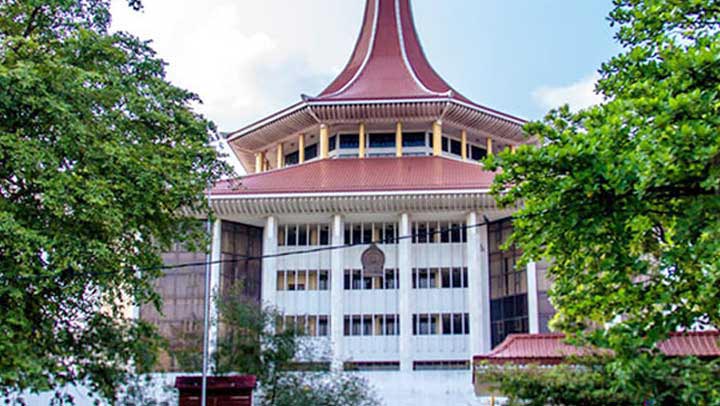
The Supreme Court yesterday rejected a request that the petitions challenging the 22nd Amendment to the Constitution be heard by a full bench of the Supreme Court.
Rejecting the request, Chief Justice Preethi Padman Surasena said the consideration of the petitions would proceed before the five-judge bench.
Appearing on behalf of one of the petitioners, President’s Counsel M. A. Sumanthiran made the request when the petitions were called for hearing yesterday before a five-judge bench of the Supreme Court, headed by Chief Justice Surasena.
President’s Counsel Saliya Pieris, Ali Sabry, Geoffrey Alagaratnam, Eraj de Silva, Srinath Perera, Anura Meddegoda, and Maithri Gunaratne, along with other counsel appearing for several other petitioners, also made the same request.
Solicitor General Viraj Dayaratne, appearing on behalf of the Attorney General, pointed out that the authority to determine the composition of a judicial bench rested with the Chief Justice. Refering to Article 132(3) of the Constitution, the Solicitor General argued that the discretion to determine the number of judges on a bench lay with the Chief Justice and that no other party had the authority to interfere in the matter.
Counsel including President’s Counsel Nigel Hatch, appearing for an intervening petitioner, also made submissions pointing out that the discretion to determine the composition of a bench rested with the Chief Justice.

Showers will occur in the Western and Sabaragamuwa provinces and in Galle, Matara, Kandy and Nuwara-Eliya districts

Sun directly overhead Anamaduwa, Moragollagama, Dambulla, Manampitiya and Valaichchenai, at about 12.10 noon today (02)

SC rejects petitioners’ request for full bench

Seven years RI for former Civil Aviation Minister Piyankara Jayaratne

40 professional organisations and TU oppose proposed 22A

Ai-CHA expands Lankan footprint with new Negombo outlet

‘Dates have the highest sugar content to fight Coronavirus’

Sunday Island 27 December – Headlines

#SundayIsland 17th December – Headlines

Sunday Island – 28th March

Sunday Island Headlines – 21 March

Sunday Island – 21st February – Headlines
-

 News5 days ago
Eight politicians in drug kingpin probe
-

 Features3 days ago
“Wrap Me Up in My Blazer”— A Gentlemanly Bradby Reminiscence
-

 Business5 days ago
Sri Lanka opens up: A new season of direct connectivity
-

 Features5 days ago
Redefining ageing in Sri Lanka
-
 Latest News6 days ago
Nepal-Tibet floods: What happened, what caused them and who is missing?
-

 Editorial6 days ago
Unfolding El Niño and burning issues
-
 Foreign News7 days ago
At least eight killed, hundreds missing after Nepal flash flood
-
 Latest News7 days ago
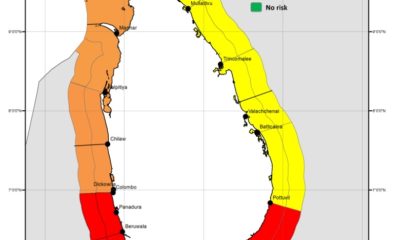
Advisory for High Waves for the sea areas extending from Colombo to Pottuvil via Galle, Matara and Hambantota