
News
MEPA urged to ensure safety of workers engaged in clearing toxic debris from X-Press disaster

By Ifham Nizam
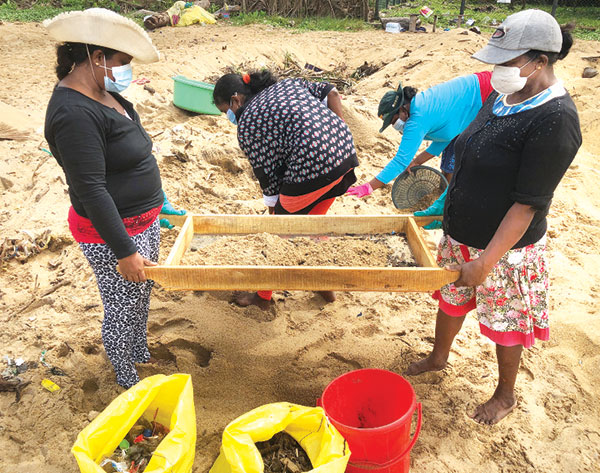
Nearly 70 people engaged in the cleaning and collecting of nurdles from the ill-fated X-Press Pearl Ship, which sank off the port of Colombo in May 2021, were at a severe risk due to being exposed to harmful chemical substances, warns a team of experts covering a wide spectrum.
Hemantha Withanage, Senior Advisor, Centre for Environmental Justice/Chairman, Friends of the Earth, told The Island yesterday that they had informed the Marine Pollution Prevention Authority (MEPA) of the carcinogenic effects and the potential disasters in waiting.
“There are some 70 odd women at work and they are exposed to higher risk and it is the paramount duty of MEPA to ensure their safety. This should be scientifically handled,” Withanage strongly believes.
Withanage said that going by the scientific evidence, the ship’s chemical spill would have a negative impact for 500 years.
According to Withanage the International Maritime Organization’s Maritime Safety Commission is currently discussing how to address the loss of plastic pellets at sea and better track containers lost at sea.
Sri Lanka has submitted a proposal to classify plastic pellets as hazardous substances, and Vanuatu has presented one addressing the reporting of containers lost at sea.
Withanage added: “It is significant that developing island states located along the busiest maritime routes are taking a lead here. As global trade grows, their coastal communities are threatened by toxic chemicals and plastic pollution from shipping disasters that could cause them long-lasting or irreversible damage.,”
The ship was carrying 1,680 tonnes of plastic pellets. After the incident dead fish, turtles, dolphins, and whales washed up on local beaches, along with huge quantities of plastic pellets. Fishing bans were imposed and clean-up operations began. To better understand the potential toxicity of the plastic pollution, CEJ collected samples of pellets and ‘burnt lumps’ (plastic debris from the ship) from four coastal locations.
The samples were analyzed for heavy metals, benzotriazole UV (BUV) stabilizers, per- and polyfluoroalkyl substances (PFAS), bisphenols, and polyaromatic hydrocarbons (PAHs).
“The X-Press Pearl disaster reveals the complexity of shipping chemicals. All steps should be under scrutiny to ensure this accident is not repeated. Our report shows these accidents have huge consequences on the environment and economies,” says Chalani Rubesinghe, project planning and management officer with CEJ.
Therese Karlsson, IPEN science and technical advisor, said: “Around 90% of the world trade in goods is shipped by sea. As container ships are becoming bigger and transporting increasingly complex mixtures of chemicals, this incident must be considered the oil spill of our times. To protect coastal communities, it is therefore crucial that prevention, mitigation, and regulatory measures are adapted to tackle the risks associated with today’s shipping patterns.”

Latest News
Maldivian President plants a sapling to mark 60 years of Sri Lanka–Maldives Diplomatic Relations

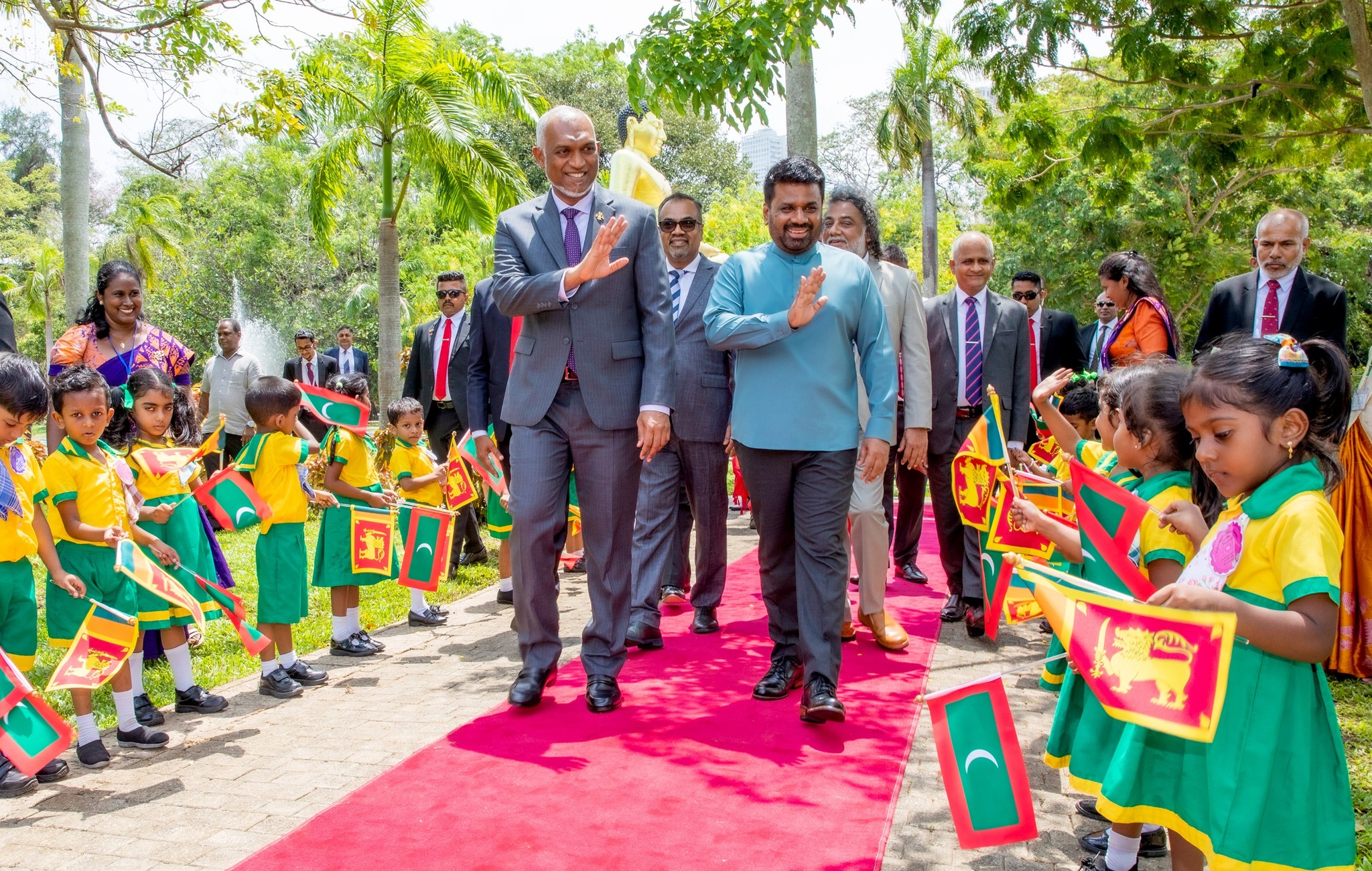
President of the Maldives, Dr Mohamed Muizzu, who is on a State Visit to Sri Lanka at the invitation of President Anura Kumara Dissanayake, planted a sapling this afternoon (04) at Viharamahadevi Park in Colombo to commemorate 60 years of diplomatic relations between Sri Lanka and the Maldives.
Upon arrival at the Viharamahadevi Park in Colombo, President Dr Mohamed Muizzu was warmly received by President Anura Kumara Dissanayake. Children lined both sides of the pathway holding the national flags of the two countries and paid tribute to the visiting Maldivian President.
Among those present at the occasion were Deputy Speaker Rizvi Salih, Minister of Foreign Affairs, Foreign Employment and Tourism, Vijitha Herath and the Mayor of Colombo, Vraie Cally Balthazaar, along with several other dignitaries.
[President’s Media Division (PMD)]
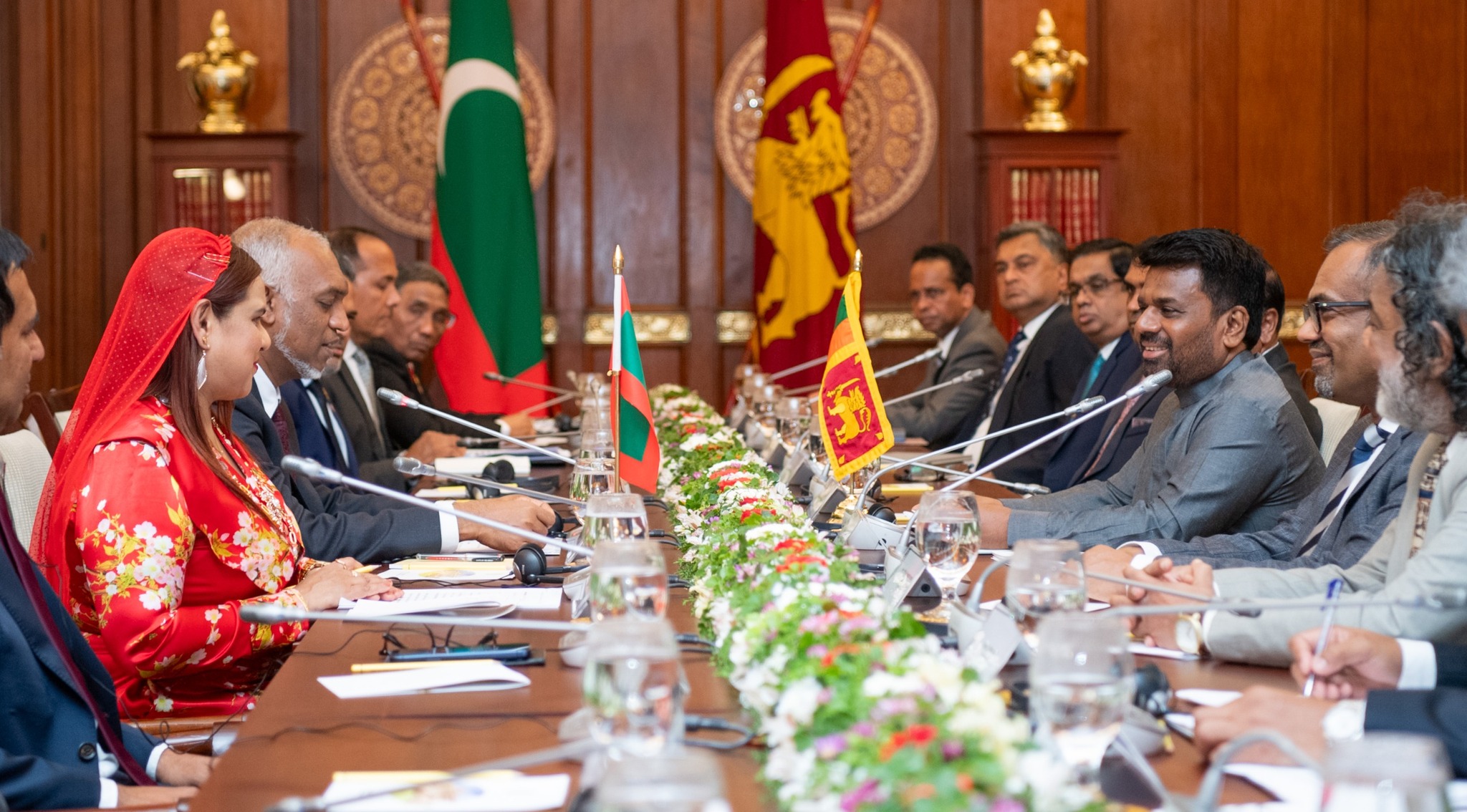
Following the bilateral meeting between President Anura Kumara Dissanayake and President Dr. Mohamed Muizzu of the Maldives, who is currently on a State visit to Sri Lanka, official-level bilateral discussions between the delegations of the two countries were held this morning (04) at the Presidential Secretariat.
The discussions commenced after the formal welcome ceremony accorded to President Dr. Mohamed Muizzu earlier this morning within the Presidential Secretariat premises.
Extending a warm welcome to the Maldivian President, President Anura Kumara Dissanayake expressed his appreciation for accepting the invitation to visit Sri Lanka.
President Dissanayake noted that President Muizzu’s visit, taking place as the two nations mark 61 years of diplomatic relations, reflects the strong partnership, mutual trust and longstanding friendship between Sri Lanka and the Maldives. The President further expressed confidence that the visit would mark a new phase in bilateral relations.
The two leaders engaged in extensive discussions on ways to further expand and diversify multifaceted cooperation, including economic, cultural and social ties, in a manner that delivers mutual benefits to the people of both countries.
Key areas of focus included tourism promotion, educational cooperation, youth and sports development, challenges faced by both nations in the fisheries sector within the Indian Ocean region, education and vocational training, as well as defence training and broader security cooperation.
Representing the Government of Sri Lanka were Minister of Foreign Affairs, Foreign Employment and Tourism, Vijitha Herath, Minister of Labour and Deputy Minister of Finance and Planning, Anil Jayantha Fernando, Minister of Science and Technology, Krishantha Abeysena; Deputy Speaker Rizvie Salih, Secretary to the President, Dr. Nandika Sanath Kumanayake, Secretary to the Ministry of Defence, Air Vice Marshal Sampath Thuyacontha (Retired), Additional Secretary to the Ministry of Foreign Affairs (covering Europe, North America, East Asia and Oceania, Southeast Asia and Central Asia, South Asia, the Middle East and Legal Affairs) M. R. K. Lenagala, Sri Lanka’s High Commissioner to the Maldives, Mohamed Rizvi Hassan and Director (South Asia and SAARC) of the Ministry of Foreign Affairs, Foreign Employment and Tourism, Mahesha Jayawardena.
The Maldivian delegation included Minister of Foreign Affairs Iruthisham Adam, Minister of Economic Development and Trade, Mohamed Saeed, Minister of Fisheries, Agriculture and Marine Resources, Ahmed Shiyam, Minister of Homeland Security and Technology, Ali Ihusaan, Chief of Staff to the President, Abdulla Fayaz, Principal Secretary to the President on Foreign Relations, Mohamed Naseer; Chief Government Spokesperson, Mohamed Hussain Shareef, High Commissioner of the Maldives to Sri Lanka,Masood Imad; Minister of State for Foreign Affairs and Chief of Protocol , Mohamed Shahudy, Deputy Minister at the President’s Office, Mr Mohamed Hassaan and Minister Counsellor at the Maldives High Commission in Sri Lanka, Mr. Ismail Mamdhooh.
[President’s Media Division (PMD)]
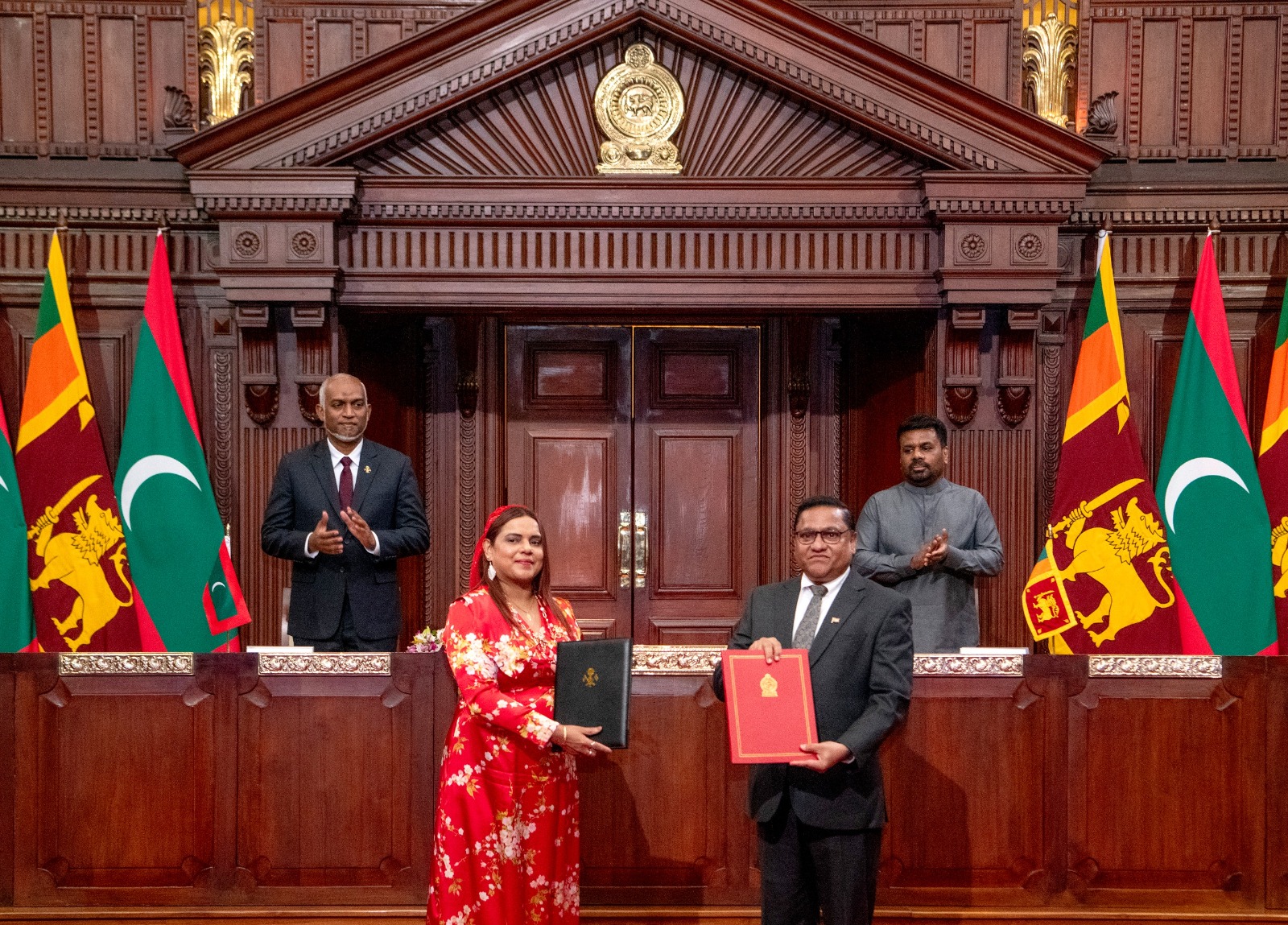
Seven Memoranda of Understanding (MoUs), signed across several sectors between the Maldives and Sri Lanka, were formally exchanged this morning (04) at the Presidential Secretariat in the presence of President Anura Kumara Dissanayake and President Dr. Mohamed Muizzu of the Maldives.
Marking a new chapter in Maldives–Sri Lanka relations, the MoUs cover cooperation in the fields of health, sports, tourism, education and defence.
Accordingly:
1. MoU on Tourism Cooperation between the Democratic Socialist Republic of Sri Lanka and the Republic of Maldives was exchanged by Maldives Minister of Foreign Affairs, Ms Iruthisham Adam and Sri Lanka’s Minister of Foreign Affairs, Foreign Employment and Tourism, Vijitha Herath.
2. MoU on Archiving Cooperation between the Department of National Archives of Sri Lanka and the National Archives of the Maldives was exchanged by Maldives Minister of Foreign Affairs, Ms Iruthisham Adam and Sri Lanka’s Minister of Foreign Affairs, Foreign Employment and Tourism, Vijitha Herath.
3. MoU on Training and Professional Development of Teachers and School Leaders between the Ministry of Education, Higher Education and Skills Development of the Maldives and the Ministry of Education, Higher Education and Vocational Education of Sri Lanka was exchanged by Maldives Minister of Foreign Affairs, Ms Iruthisham Adam and Sri Lanka’s Minister of Foreign Affairs, Foreign Employment and Tourism, Vijitha Herath.
4. MoU on Sports and Youth Development Cooperation between the Republic of Maldives and the Democratic Socialist Republic of Sri Lanka was exchanged by Maldives Minister of Foreign Affairs, Ms Iruthisham Adam and Sri Lanka’s Minister of Youth Affairs and Sports, Sunil Kumara Gamage.
5. MoU on Defence Cooperation between the National Counter Terrorism Centre of the Maldives and the Ministry of Defence of Sri Lanka was exchanged by the Maldives High Commissioner to Sri Lanka, Masood Imad, and the Secretary to the Ministry of Defence, Air Vice Marshal Sampath Thuyacontha (Retired).
6. MoU between the Ministry of Defence and National Service of the Maldives and General Sir John Kotelawala Defence University of Sri Lanka was exchanged by the Maldives High Commissioner to Sri Lanka, Masood Imad and the Vice Chancellor of General Sir John Kotelawala Defence University, Rear Admiral Dammika Kumara.
7. MoU on Academic Cooperation between the University of Colombo of Sri Lanka and the Ministry of Health, Family and Welfare of the Maldives was exchanged by Maldives High Commissioner to Sri Lanka, Masood Imad and the Vice Chancellor of the University of Colombo, Professor Indika Mahesh Karunathilake.
The state visit of President Dr Mohamed Muizzu, undertaken at the invitation of President Anura Kumara Dissanayake, aims to further strengthen economic, cultural and social ties between the two countries, while enhancing their multifaceted partnership.
Cabinet Ministers, government officials and members of the Maldivian delegation, representing both Sri Lanka and the Maldives, were present at the occasion.
[President’s Media Division]

Maldivian President plants a sapling to mark 60 years of Sri Lanka–Maldives Diplomatic Relations

Sri Lanka and Maldives strengthen ties with productive bilateral talks

Maldives and Sri Lanka exchange seven MOUs

Warm Welcome Accorded to the President of the Maldives at the Presidential Secretariat

Modi’s BJP conquers Bengal, one of India’s toughest political frontiers

PM participated in ’Swarnabhivandana 2026,’ Sacred Relic Veneration Ceremony

‘Dates have the highest sugar content to fight Coronavirus’

Sunday Island 27 December – Headlines

#SundayIsland 17th December – Headlines

Sunday Island – 28th March

Sunday Island Headlines – 21 March

Sunday Island – 21st February – Headlines
-
 News6 days ago
Treasury chief’s citizenship details sought from Australia
-
 News5 days ago
Rooftop Solar at Crossroads as Sri Lanka Shifts to Distributed Energy Future
-
 News4 days ago
“Three-in-one blood pressure pill can significantly reduce risk of recurrent strokes”
-
 News7 days ago
Govt. assures UN of readiness to introduce ‘vetting process’ for troops on overseas missions
-
 Business7 days ago
ADB-backed grid upgrade tender signals next phase of Sri Lanka’s energy transition
-

 News6 days ago
Central Province one before last in AL results
-

 Sports6 days ago
Well done AKD!
-

 Business7 days ago
Update on independent forensic review